• About
  • Donate!
  • EVENTS
  • Ottawa’s “Energy Evolution”: wind turbines coming to rural communities
  • Thinking of signing a wind turbine lease?
  • Wind Concerns Ontario
  • Wind turbines: what you need to know

Ottawa Wind Concerns

~ A safe environment for everyone

Ottawa Wind Concerns

Tag Archives: wind power

Wind power: a “wolf in green clothing”

28 Monday Jul 2014

Posted by Ottawa Wind Concerns in Uncategorized

≈ 1 Comment

Tags

cost-benefit renewables, Feed In Tariff subsidy, FIT, green energy, PTC, renewable energy, renewable power, subsidies wind power, The Hill, Warren Buffett, wind energy, wind farm, wind farms environment, wind power

It’s clean, it’s “green,” and it wants your land and your money too

Here from The Hill, a US blog for policy-makers, a posting on wind power and the US form of subsidy, the Production Tax Credit.

July 25, 2014, 10:00 am

Wind power production tax credit: Wall St. wolf in green clothing

By Curtis Ellis, The Hill, July 25, 2014

The tax incentive for wind power expired last year, and the battle over its extension is now underway. Opponents say the wind power production tax credit, PTC, is a wasteful boondoggle while supporters say it’s crucial for renewable energy and jobs. The Sierra Club calls it “one of the best bets we’ve made on clean, domestic energy.”

But it’s a misplaced bet.  The PTC actually blocks the green energy technologies that hold the most promise.  Rather than helping an infant industry, the PTC is a handout to Wall Street.

Congress created the PTC in 1992, a tax credit of roughly 2 cents per kilowatt-hour of wind electricity, to nurture the infant wind energy industry. Government incentives to promote crucial industries are time-honored. That’s not the problem with the PTC.What’s important is that only big investors who want to offset tax liabilities on other investments need apply. The PTC can only be taken against “passive income” – income from other investments. Private equity firms put together investors who need a tax write-off courtesy of the PTC. Warren Buffett admits he uses the PTC to lower his Berkshire taxes: “we get a tax credit if we build a lot of wind farms. That’s the only reason to build them.”

The PTC doesn’t help the average Joe who wants to put a small wind turbine on his ranch to generate electricity and reduce the taxes he pays on his farm income.

But while the PTC boosts Wall Street investment schemes in large-scale wind farms, the fact is small-scale, individually owned generation facilities hold the most promise for renewable energy.

Noted environmentalist Bill McKibben writes, “One of the great side effects of moving to renewable power is that we will replace vulnerable, brittle centralized systems that are too big to fail with spread out democratic energy sources.” Unfortunately, the PTC only encourages more “brittle centralized systems.”

California’s Local Clean Energy Alliance (which includes the San Francisco Bay Area chapter of the Sierra Club) concurs. It’s report, Community Power, states “local, decentralized generation of electricity offers many benefits to California’s communities relative to large central-station solar or wind power plants in remote areas.”

The Institute for Local Self Reliance, a green energy cheerleader, says renewables work best “at small scales across the country,” what’s known as distributed generation, “a network of independently-owned and widely dispersed renewable energy generators” rather than “a 20th century grid dominated by large, centralized utilities.”

In fact the Institute explicitly says the PTC is a significant barrier to greater investment in renewable energy. Removing this barrier “makes smaller projects more accessible to the local community, and draws local investors back into the process,” says John Farrell of the Institute for Local Self-Reliance.

Utilities are also taking local-scale renewable energy seriously.  A report by the Edison Electric Institute, Disruptive Challenges expects small-scale solar and wind “to challenge and transform the electric utility industry” with “adverse impacts on revenues, as well as on investor returns.”

David Crane, CEO of NRG Energy, a wholesale power company that operates coal-fired plants, told Blooomberg Businessweek  “the grid will become increasingly irrelevant as customers move toward decentralized homegrown green energy.”

So, if local-scale wind and solar generated close to the end user makes the most sense, why do we have a PTC pushing large-scale wind farms? It’s a Wall Street play.

Environmentalists supporting the PTC mean well, but they fail to see the wolf of Wall Street hiding beneath the green clothes. Ironically, the national green organizations are fighting for the kind of massive generating stations and power lines their local chapters often fight against.

The PTC is an anachronism and an obstacle to developing the decentralized, independently owned power generation system appropriate for wind, solar and other renewables.

Anyone who believes in renewable energy should be happy to see the PTC expire. It’s time to replace this tax write-off for the financial services cabal with something that benefits everyone.

Ellis is executive director of the American Jobs Alliance.

Read more: http://thehill.com/blogs/congress-blog/energy-environment/213183-wind-power-production-tax-credit-wall-st-wolf-in-green#ixzz38c15D4Uf

Brinston wind farm noise complaints lead to monitoring

28 Monday Jul 2014

Posted by Ottawa Wind Concerns in Health, Ottawa, Renewable energy, Wind power

≈ 1 Comment

Tags

Brinston, EDP Renewables, infrasound, MOE, MoE Spills Line, Ontario Ministry of the Environment, Ottawa area wind farm, South Branch wind farm, South Dundas, wind farm, wind farm noise, wind power, wind turbines

And this is a SMALL one...

And this is a SMALL one…

The South Branch wind “farm” has been operating since mid-March, but it didn’t take long for the first noise complaints to be registered. This wind power generation facility is the first of the 3-megawatt machines to operate in Ontario; many more, mostly in southwestern Ontario, are to follow. The increased capacity is a concern to people who have done research on wind turbines, as they are more likely to produce infrasound or sound pressure, which disturbs some people.

Noise complaints lead to monitoring

by Sandy Casselman
Press staff

BRINSTON – It has been more than six months since the blades of the South Branch Wind Farm turbines began to spin, leaving more than one nearby resident with some sleepless nights.

“I call when it gets to the point I can’t tolerate it anymore and I go to the basement [to sleep],” Brinston resident Leslie Disheau, former president of the South Branch Wind Opposition Group, said. “It is an issue and I’m not the only person in town with the issue.”

Disheau, who is running for the Municipality of South Dundas’ deputy-mayor seat in this fall’s municipal election, has been staying close to home since the Ministry of the Environment (MOE) installed noise-monitoring equipment at her Brinston Road property last week.

“MOE contacted me and asked if they could put this noise monitoring equipment up,” Disheau said.

The two pieces of equipment measure wind speed and direction, barometric pressure, rainfall, and more, she said.

She has submitted three separate noise complaints so far. Every complaint must be filed with EDP Renewables’ project leader Ken Little and local MOE representative Terry Forrester to be officially registered.

During EDP’s first open community liaison meeting in March, a Brinston man spoke out about his own sleep disturbances, suggesting the turbines be shut off for a period during the early hours of the morning, beginning around midnight. At that time, Little confirmed that there had been one official complaint already registered. He also said an acoustic audit had been ordered, which he expected to get underway within two months of the meeting.

“EDP has not released their post-construction noise audit report,” Disheau said during an interview with the Winchester Press Fri., July 18.

In conversation with one of the MOE officials who installed the equipment, Disheau said she learned that the provincial authority also had not seen a report from EDP.

“They can take a long as they want,” she said, crediting the Green Energy Act with the responsibility for not specifying a deadline. “There is a 40-decibel limit [on the noise the turbines can make], and we have no idea if they’re in the threshold or not.”

To describe what the sound is like, she used Highway 401 versus airplane noise as an example, pointing out that the highway noise is more of a hum, and when she lived near it, the sounds did not bother her at all.
However, the turbines produce something more in line with the “drone of an airplane that goes into your head,” she said. “It’s a deeper tone, and that’s where you get the disturbance of sleep.”

Explaining the noise and its effects on her is not easy, she said, but it is similar to the sensation people get in their chest when listening to bass guitar.

Disheau said she explained her experiences to MOE’s acoustical engineer, adding that the sensations are at their worst when the blade tips of the turbine across the road (south of Brinston) and the one to the north behind her home (west of Brinston) are facing one another.

“The acoustical engineer said ‘yes, that it all makes sense,’ ” Disheau added. “This is not normal. You should not be in sleep disturbance in your own house.”

Meanwhile, Disheau is the only one in her home experiencing the effects of the rotating blades, as her husband, who shares the second storey bedroom on the home’s vinyl-sided addition, is tone deaf, and her children sleep on the first floor of the brick-sided main house.

The noise-monitoring equipment is controlled by a switch, which has been placed inside Disheau’s home. When she notices the noise, she flips the switch and the machinery calculates and documents the findings.

“Once everything is taken down, the ministry guy goes through [the recordings] and writes his report,” she said, which will list the decibel readings for various weather conditions (wind speed and direction).

When asked what she hopes to accomplish through this procedure, Disheau said the findings could require that EDP shut down operations during specific times of the day or during specific wind conditions should they prove the decibel levels exceed the regulated amount.

Read the full story here.

People with complaints about excessive noise from the turbines at Brinston must call both the developer, EDP Renewables (1-877-910-3377 ext 3) AND the Ministry of the Environment (1-800-860-2760). 


CanWEA execs venture down to Brinston wind ‘farm’

17 Thursday Jul 2014

Posted by Ottawa Wind Concerns in Health, Ottawa, Renewable energy, Wind power

≈ 1 Comment

Tags

Brinston, Canadian Wind Energy Association, CanWEA, Eastern Ontario, EDP Renewables, law suits wind farms, legal action wind farms, property value, Prowind, sleep disturbance, South Branch, South Branch Kid Wind Day, South Dundas, wind farm, wind farm noise, wind power, wind turbines


Not from around here: just visiting for the brainwashing

The executives at the wind power developers’ lobby group, the Canadian Wind Energy Association, took a trip down the road from their offices on Carling Avenue in Ottawa to see the wind power project in Brinston, just south and east of Ottawa.

Here’s a report on the visit:

CanWEA Staff Tours South Branch Wind Farm

On June 25, several EDPR employees led a tour of the South Branch wind farm for staff members of the Canadian Wind Energy Association (CanWEA) , including CanWEA’s president, Robert Hornung, who had this to say about the visit: The siting characteristics of South Branch and how well the wind farm blends with the natural landscape are truly impressive, said Mr. Hornung. We were equally impressed by the care and attention that EDPR has taken in building a high level of enduring community acceptance. 
The tour of the wind farm, located near Brinston, Ontario, included stops in the O&M building as well as the inside of the base of a tower and the substation building. After an informative tour, CanWEA expressed interest in working with EDPR to improve its information packages for farmers.  Several CanWEA representatives also said they planned to stop by the upcoming South Branch Kid Wind Day, which will be held on Thursday, July 24, and attended by 150 kids.

The claim that EDP has “enduring community acceptance” would be laughable, were it not for the truth about this community: once the wind project was publicly announced by the original developer, Germany-based Prowind, the community became divided between the few farm owners leasing their land for turbines, and others in the community who had no choice but to watch this happen to them. A community group was organized and held several information meetings…but of course, with the Green Energy Act, there are no solutions through elected representatives. South Dundas Council voted on a resolution to say there would be no support for further wind power development as Ontario doesn’t need any more power generation.

The so-called South Branch Kid Wind Day is NOT for local families (hard for them to miss the huge, 3-megawatt turbines) but it will be for kids being bused in from elsewhere. The community has not even been informed of this PR event.

Of greater concern, though, is the news that an “information package” is being developed for farmers: this is being worked on because Eastern Ontario has a green light from the province for wind power development…it is rumoured that 5,000 more acres in North Dundas have been optioned for future wind power development.

Our question: will EDP and CanWEA provide full disclosure on noise, health problems, sleep disturbance, property value loss, and the potential for lawsuits from neighbouring landowners?

Email us at ottawawindconcerns@gmail.com


At-risk Golden Eagles to die if Prince Edward Cty wind farm built

07 Monday Jul 2014

Posted by Ottawa Wind Concerns in Renewable energy, Wind power

≈ Leave a comment

Tags

CCSAGE, Golden Eagles, Important Bird Area, migratory birds, Ontario Ministry of NAtural Resources, Ontario Ministry of the Environment, prince Edward County, Prowind, wind farm, wind farm birds, wind power, wind turbines, WPD Canada

A Prince Edward County community group has received documents via Freedom of Information that show Golden Eagles, an at-risk species of bird, would almost certainly die in significant numbers, if a 49-turbine wind “farm” is built as planned in Prince Edward County. The County is about two hours south-west of Ottawa, near Kingston, and is in the North American eastern flyway for migratory birds.

The County Coalition for Safe Appropriate Green Energy (CCSAGE) says the documents it obtained show that even with the limited number of days the wind power developer wpd Canada surveyed for the birds (just three days), substantial numbers of the birds would fly through at the height of the turbine blades, and die.

CCSAGE is also deeply concerned that this information was not made available to the public by either the developer or the Ontario government and, in addition, their request for this specific information was answered only AFTER the comment period closed. This information calls for questions about the scientific veracity of the so-called “technical review” done by the government of developer documentation.

See the posting on the Wind Concerns Ontario website here. Wind Concerns Ontario has filed a complaint with the Office of the Ombudsman of Ontario regarding the technical review process. Ottawa Wind Concerns followed suit with a letter to the Ombudsman with details on the lack of openness and transparency regarding the Prowind proposal for North Gower and Richmond.

Email us at ottawawindconcerns@gmail.com

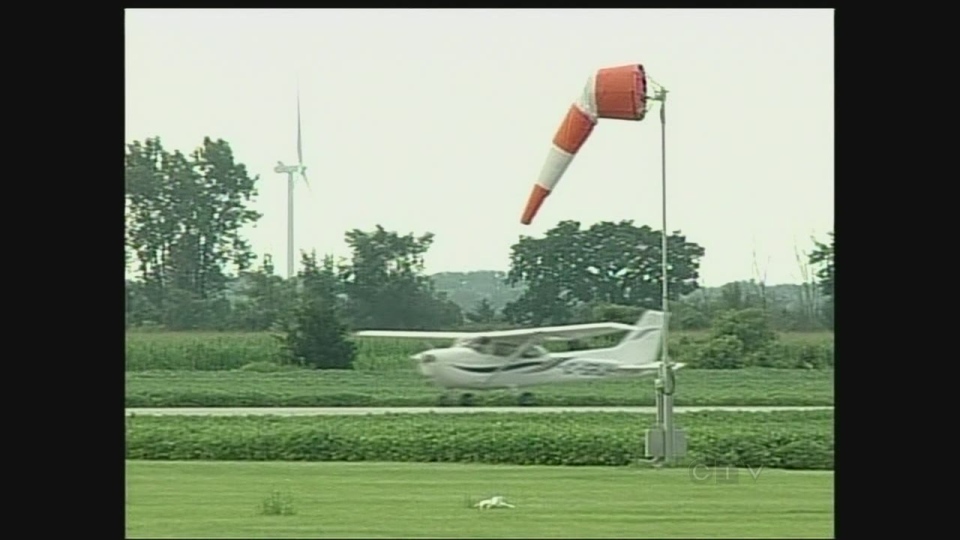
Transport Canada demands removal of airport turbines for safety

07 Monday Jul 2014

Posted by Ottawa Wind Concerns in Health, Renewable energy, Wind power

≈ 1 Comment

Tags

aviation safety, Chatham airport, Chatham-Kent, GDF Suez, Randy Hope, Transport Canada, wind energy, wind farm, wind farm safety, wind power, wind turbine, wind turbines

CTV Windsor
Published Sunday, July 6, 2014 6:14PM EDT 
Last Updated Monday, July 7, 2014 9:03AM EDT

Pro-wind power Mayor says “there is no safety issue”

Transport Canada has issued an order requiring the eight wind turbines near Cedar Springs be removed by the end of this year.

The organization originally issued a letter requesting “voluntary compliance” last year.

In a release sent out by the municipality, Chatham-Kent mayor Randy Hope, says,“there is no safety issue so we need to change the regulation rather than force the removal of the turbines.”

RELATED STORIES

  • Questions surround wind turbine removal near Chatham airport
  • Angry pilot speaks out at Chatham airport ceremony
  • Fuel siphoned from planes at Chatham airport

PHOTOS

CTV Windsor: Pilot voices Chatham airport concerns

The municipality had been waiting for a reply from Transport Canada on this proposal and was surprised this week to learn that Transport Canada had taken this new step of issuing letters demanding that the turbines be removed by Dec. 31.

The affected wind turbines are in a “no fly zone” south of the airport.

It is expected that GDF SUEZ, the owner of the affected turbines, will formally object to the order from Transport Canada and seek a hearing before the Minister of Transport through the process laid out in the Aeronautics Act.

Read more: http://windsor.ctvnews.ca/transport-canada-demanding-wind-turbines-be-removed-near-chatham-airport-1.1901446#ixzz36n9X6XXM

Read the full story and see photos here.

The Toronto wind turbine: green energy symbol

05 Saturday Jul 2014

Posted by Ottawa Wind Concerns in Renewable energy, Wind power

≈ Leave a comment

Tags

Exhibition Place, Exhibition Place turbine, Exhibition Place wind mill, green energy, investment wind power, Parker Gallant, Toronto, Toronto windmill, wind energy, wind power, wind turbine

Not as advertised?

It’s hard to visit Toronto and NOT see the single wind turbine at Exhibition Place. Today, at about 600 kW and 90 meters tall, that turbine is very small compared to what is being built and approved all over Ontario—and yet, the people of Toronto and visitors to that city, believe it is a symbol of all that is good about “green” power developed from wind energy.

The truth is a little more complicated.

Former bank vice-president Parker Gallant has written an examination of the Exhibition Place turbine: all is not what it seems. His article is in two parts.

Part 1: http://www.windconcernsontario.ca/torontos-ex-place-wind-turbine-icon-or-mirage/

Part 2: http://www.windconcernsontario.ca/the-ex-place-toronto-turbine-disappointing-investment/

A note: whenever wind power developer executives are asked by small town residents whether THEY live anywhere near a turbine, many of them (including Prowind’s president for 5 minutes, Jeffrey Segal, speaking in South Dundas) respond, yes. They mean they live in downtown Toronto, and can see the Ex Place turbine. Not quite the same thing, is it?

Email us at ottawawindconcerns@gmail.com


Wind power to be election issue in October?

27 Friday Jun 2014

Posted by Ottawa Wind Concerns in Ottawa, Renewable energy, Wind power

≈ 1 Comment

Tags

election Ontario 2014, Mayor City of Ottawa, Mike Maguire, municipal election, North Gower, Not a Willing host, Ontario, Prowind, wind farm, wind power

Turbine and home in Ontario

Turbine and home in Ontario

We would say, yes.

Mayoral candidate Mike Maguire had his formal launch last evening and after saying that hydro bills were his number one issue (and the number one concern for citizens), Mr Maguire mentioned the proposed wind power project in North Gower. He said, I will stand with the citizens there and fight against this “not environmental, fiscally irresponsible” project.

He went on to say that the “monstrous” turbines would change the community forever, for no benefit.

Residents of North Gower and Richmond already sent a petition (as a form of referendum) to Ottawa City Hall last fall, stating that the community is Not A Willing Host; the petition was accepted by Council and a motion passed unanimously noting the community’s declaration, and demanding that the province return local land use planning powers to the municipalities.

It is looking like wind power is going to be a critical issue in this year’s municipal election, to be held October 27th.

There are currently 84 communities in Ontario that have passed a resolution at Council to declare they are an unwilling host or Not A Willing Host, out of a probable 100 or so that could be vulnerable to wind power generation projects.

Email us at ottawawindconcerns@gmail.com

Nepean-Carleton Libertarian candidate statement

02 Monday Jun 2014

Posted by Ottawa Wind Concerns in Health, Ottawa, Renewable energy, Wind power

≈ 1 Comment

Tags

Coreen Corcoran, government subsidies, Libertarian Party, Ontario, Ontario election, Ontario Libertarian Party, Ontario Progressive Conservative and Green parties, wind farm North Gower, wind farm Ottawa, wind farm Richmond, wind power, wind power generation

We have already published the statements from candidates for the Ontario election from the Liberal, NDP, Ontario Progressive Conservative and Green parties; we contacted Libertarian Party candidate Coreen Corcoran, who provided us with the following, as relates to large-scale wind power generation in Ontario and in specific, the only project currently proposed for the Ottawa area, in North Gower-Richmond.

Ms Corcoran writes:

Ontario Libertarian point of view
We do not believe that any industry should be given preferential treatment by the government over another industry, to the extent that the government should be out of the subsidy business all together. There are no private companies willing to stick their necks out to fund and own the risk of running wind farms 100%. They are relying on government subsidies to create an industry that is not wanted or even viable at this point in time. We would stop risky energy programs and leave it to the market to test unproven technologies. If it could survive in a free-market, let it, but it is doubtful the current technology would have any support. If a free-market wouldn’t support it, why should the taxpayers of Ontario?

My personal point of view
I saw the documentary Windfall a couple of years ago, and after seeing that film, I knew that wind power in its current form wasn’t sustainable. The physical impacts on the people who live near the turbines, the many birds and bats that are killed by the blades, and the huge government grants required to sustain this industry are all reasons why we need to stop it in its tracks. Maybe someday there will be a way to harness wind power on a large scale, but giant turbines covering our landscape and taking people out of their homes is not the way to do it.

You have my support.

Thank You,
Coreen Corcoran


Email us at ottawawindconcerns@gmail.com or write to us at PO Box 3, North Gower K0A 2T0

Wind and solar power: the hidden costs

20 Tuesday May 2014

Posted by Ottawa Wind Concerns in Ottawa, Renewable energy, Wind power

≈ Leave a comment

Tags

cost of wind power, cost-benefit analysis wind power, electricity generation, Feed In Tariff, FIT, hydro bills Ontario, Ontario electricity bills, renewable energy, renewable energy generation, renewable energy projects, renewable power, Robert Lyman, Scott Luft, solar power, wind farms, wind power

Wind power: not free

Wind power: not free

Here, from Ottawa-based energy-specialist economist Robert Lyman, a quick look at what many people don’t know (and aren’t getting told by the government or the wind power lobby) about the costs of generating power from wind and solar.

A must-read.

THE HIDDEN COSTS OF ONTARIO RENEWABLE ELECTRICITY GENERATION 

Ontario residents can be forgiven if they fail to understand the public debate during the current (2014) provincial election about the costs of different types of electricity generation and why these have caused electricity rates for consumers to rise so much over the past ten years. The complexity of the system makes it difficult to explain the costs associated with one source of supply, namely the renewable energy generation  (industrial wind turbines and solar power generators). In this note, I will nonetheless try to explain in layperson’s terms why these costs are significant.

Electricity supply in Ontario takes place within the framework of the policy and legislative framework established by the Ontario government, an important part of which is the Green Energy and Economy Act of 2009 (GEA). Historically, the goal of Ontario electricity policy was to keep electricity rates for consumers as low as possible consistent with the goal of maintaining adequate and reliable supply. Within the current framework, however, that is no longer the goal. The GEA seeks to stimulate investment in renewable energy projects (such as wind, solar, hydro, biomass and biogas) and to increase energy conservation.  To do this, it:

  • Changed the review process for renewable energy projects to reduce environmental assessment and hasten approvals
  • Created a Feed-in-Tariff that the Independent Electricity Systems Operator (IESO) must pay, guaranteeing the specific rates for energy generated from renewable sources (typically, the rates are fixed for the full term of the twenty year contracts, with inflation escalators)
  • Established the right to connect to the electricity grid for renewable energy projects and gave renewable energy source preferential access over other sources of generation
  • Implemented a “smart” grid to support the development of renewable energy projects
  • Eliminated local approval requirements that local governments previously could impose on renewable energy projects

The guaranteed rates paid under the FIT system are not negotiated based upon the actual costs of production. In fact, the actual costs of production are largely unknown. …

Read the full analysis here: THE HIDDEN COSTS OF ONTARIO RENEWABLE ELECTRICITY GENERATION

Wind Concerns Ontario asks Ombudsman to look at wind power approval process

15 Tuesday Apr 2014

Posted by Ottawa Wind Concerns in Renewable energy, Wind power

≈ 1 Comment

Tags

Andre Marin, East Oxford Community Alliance, Green Energy Act, health effects wind farms, health effects wind turbines, James Bradley MInister of the Environment, leases wind turbines, North Gower wind farm, Not a Willing host, Ombudsman Ontario, Ontario Ministry of the Environment, Ottawa wind farm, Prowind, renewable power, Richmond wind farm, Wind Concerns Ontario, wind power, wind power approvals Ontario, wind power project, wind power projects, wind turbines

Wind Concerns Ontario has sent a letter to the Office of the Ombudsman of Ontario, asking that aspects of the approval process for wind power projects be looked at. The Ombudsman’s office has now had its role expanded to be able to look at issues of municipal concern, which may allow it to address the request of many municipalities throughout Ontario facing wind power developments and who are without any say in the siting of these projects. The Green Energy and Green Economy Act passed in 2009, over-rode 21 others Acts in Ontario, and removed local land use planning powers for Ontario municipalities with regard to renewable power projects. In the wake of municipal objections ever since, the Ontario government now says it will offer municipalities more “say” but still no veto.

That’s unacceptable says Wind Concerns Ontario, which refers to important issues:

  • documentation provided to the Ministry of the Environment is being “deemed complete” and then going to public comment; community groups performing audits on this documentation are finding, however, that the documents are often not complete and sometimes absent altogether—not acceptable
  • land leases are signed between the power developers and landowners, which means municipalities and residents can have no idea where turbines are going to be located until too late; this has the effect of halting real estate sales and “sterilizing” development
  • wind power developers (e.g., Samsung in Southgate) are now offering significant sums of money in return for municipal approval and other items such a building permits, road use, etc.
  • landowners are not being provided with the full range of information on the potential negative effects of having wind turbines on their properties

See the news release and link to the letter to the Ombudsman here.

In other news, the community near Woodstock Ontario, facing an 18-MW Prowind wind power project, has also filed a letter of complaint with the Ombudsman, citing deficiencies in documentation, and changes being made to documents AFTER the public comment period has closed. See the East Oxford Community Alliance story here. Prowind is the Germany-based developer that proposed a wind power project for the North Gower-Richmond area of Ottawa, which would have placed 10 turbines on local farm properties within 3 km of more than 1,000 families. The project is now on hold, waiting for the new large-scale renewable power procurement process to begin.

Email us at ottawawindconcerns@gmail.com

← Older posts
Newer posts →

Recent Posts

  • Pro-wind groups in Ottawa collaborate to “educate”
  • Thinking of signing for a wind turbine lease? Better get informed to protect yourself
  • High-Speed Rail opposition in Rural Eastern Ontario: a lesson for wind power developers
  • Land use conflict prompts citizen legal action over West Carleton battery storage site
  • Energy Minister Stephen Lecce speaks out on renewable power sources wind and solar; emphasizes cost, reliability

Follow me on Twitter

My Tweets

Enter your email address to follow this blog and receive notifications of new posts by email.

Tags

Bob Chiarelli Green Energy Act IESO Ontario Ottawa Ottawa wind concerns wind energy wind farm wind power wind turbines

Contact us

PO Box 3 North Gower ON K0A 2T0

Blog at WordPress.com.

Privacy & Cookies: This site uses cookies. By continuing to use this website, you agree to their use.
To find out more, including how to control cookies, see here: Cookie Policy
  • Subscribe Subscribed
    • Ottawa Wind Concerns
    • Join 379 other subscribers
    • Already have a WordPress.com account? Log in now.
    • Ottawa Wind Concerns
    • Subscribe Subscribed
    • Sign up
    • Log in
    • Report this content
    • View site in Reader
    • Manage subscriptions
    • Collapse this bar

Loading Comments...