• About
  • Donate!
  • EVENTS
  • Ottawa’s “Energy Evolution”: wind turbines coming to rural communities
  • Thinking of signing a wind turbine lease?
  • Wind Concerns Ontario
  • Wind turbines: what you need to know

Ottawa Wind Concerns

~ A safe environment for everyone

Ottawa Wind Concerns

Category Archives: Uncategorized

NOT a NO: Ottawa city staff respond on wind turbines

14 Wednesday Jul 2021

Posted by Ottawa Wind Concerns in Uncategorized

≈ 2 Comments

Tags

noise pollution, Ottawa, Ottawa wind concerns, renewable energy, wind power, wind turbines

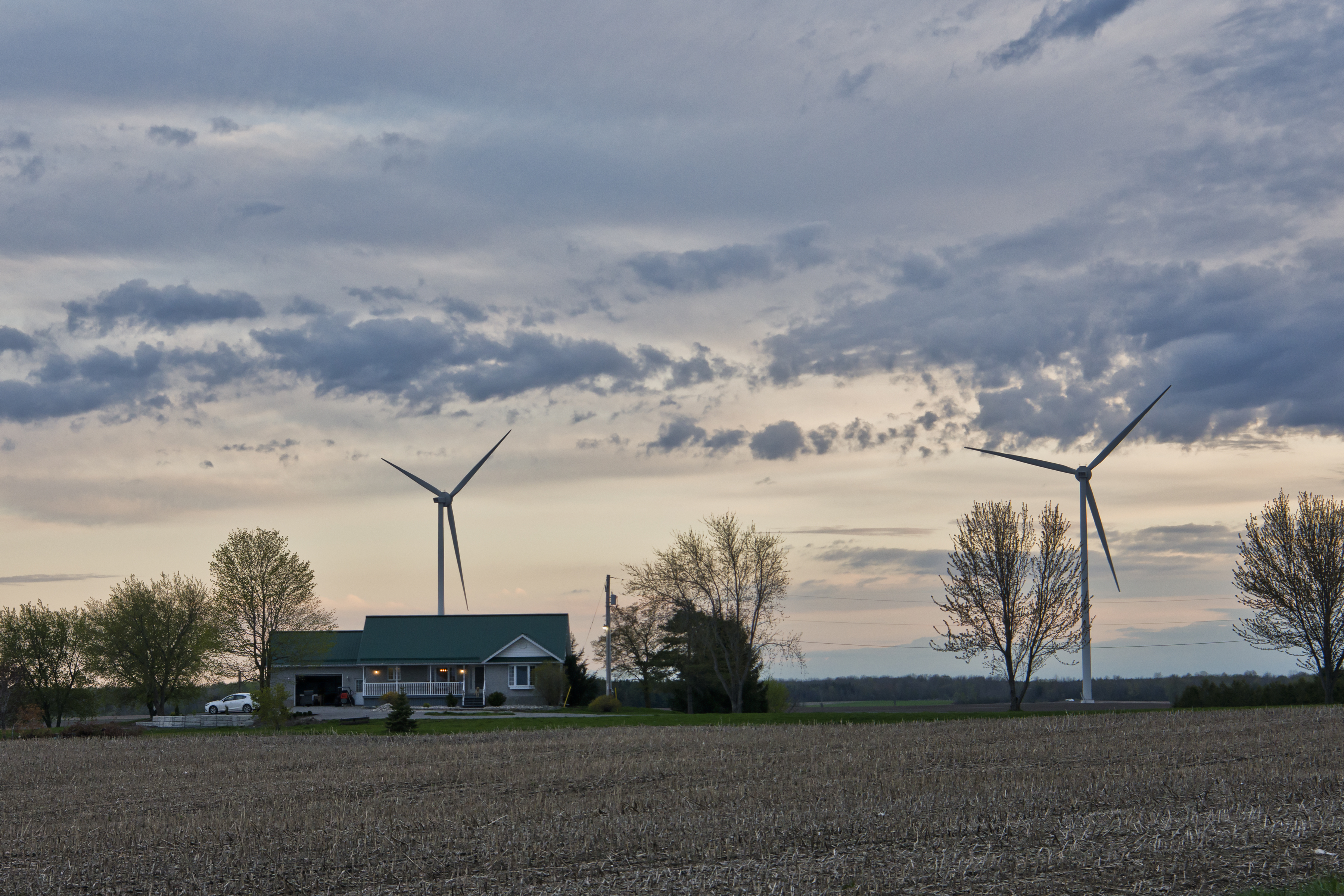
City not procuring wind power directly, but open to developers [Photo Dorothea Larsen, turbines in North Stormont]

July 14, 2021

noise pollution, Ottawa, Ottawa wind concerns, renewable energy, wind power, wind turbines

Ottawa City staff have responded to queries about whether the City is planning wind turbines in the rural areas. Here is the response from a manager in the Climate Change and Resiliency Section.

Key point: the City of Ottawa is not directly procuring wind turbines BUT they are looking at where the turbines could go when developers come forward with proposals. That is a YES.

Response:

The City of Ottawa is not planning and does not have any intention of developing or installing large scale wind or solar renewable energy generation projects.

My team is responsible for developing and coordinating strategic policies, programs and plans to reduce greenhouse gas emissions and build resiliency to climate change in Ottawa.   As part of this work, my team leads the Climate Change Master Plan and is supporting the development of the new Official Plan.  Below is background information about both relate to wind projects.


Climate Change Master Plan


The City’s Climate Change Master Plan provides Ottawa’s overarching framework to reduce greenhouse gas (GHG) emissions and respond to the current and future effects of climate change.  As part of the plan, City Council aims to reduce GHG emission 100% by 2050. Energy Evolution is the action plan for how Ottawa will meet those targets.  It modelled 39 actions and their relative GHG emissions reductions to achieve the targets and identifies 20 priority projects* to accelerate action and investment over the next five years (2020 – 2025).  Both the Climate Change Master Plan and Energy Evolution identify embedding climate considerations in the new Official Plan as a priority project.


On January 1, 2019, the Green Energy Act was repealed which restored municipal authority over the siting of new renewable energy generation projects through amendments to the Planning Act. Residential and agricultural concerns about the siting of projects are now expected to be addressed through local municipal approvals. The current Official Plan and Zoning By-law are silent on renewable energy generation (REG).


Official Plan


The Draft Official Plan was released in November 2020 included REG as a Generally Permitted Use, but it did not specify where REG was permitted.  Through public consultation, staff received feedback that renewable energy generation policies in the Official Plan should align with Energy Evolution.


Since the Draft Official Plan was released in November 2020, staff has worked to add policies to direct where large-scale renewable energy generation projects can be located in the rural area.  The following describes the revisions:


The proposed policies direct where large-scale renewable energy generation projects as well as bio-energy projects are to be located in the rural area. It should be noted that such projects would also require a Renewable Energy Approval from the province.

The proposed policies are consistent with the Provincial Policy Statement for renewable energy generation in prime agricultural areas.

The proposed policies provide direction to establish zoning by-law provisions for renewable energy generation facilities to address nuisance impacts such as noise and shadowing. Public and stakeholder consultation will be undertaken on any new proposed zoning provisions following Council adoption of the Official Plan.


The revisions to the new Official Plan will be posted on the Official Plan webpage later this month.  When it is released, additional detail will be provided about how to make public delegations at the statutory public meeting expected later this summer.


Upon approval of the new Official Plan, large scale projects that are initiated by energy developers would still require approval by the Province (i.e. under the Renewable Energy Approval or Environmental Activity Site Registry process). However, there is currently no provincial policy or procurement mechanism that allows renewable electricity to be sold to the grid (i.e., there is no immediate opportunity for large scale wind or solar development in Ottawa). Staff are currently undertaking a preliminary assessment of renewable energy generation potential within the rural areas identified in the new Official Plan to better understand how the potential compares to the Energy Evolution model requirements.  This study is expected to be complete this summer.

………………..

So City staff are trying to deflect interest in and concern about high-impact wind power generation in our rural communities with a lot of words about the Official Plan.

The people of Ottawa generally and especially rural residents need to be able to discuss these proposals NOW. We also need the protective zoning bylaws NOW—if the City waits until proposals are made, they will be unable to enact anything, or the power developers can take legal action.

*One of the 20 projects is 20 megawatts of wind by 2025

WHAT YOU CAN DO:

Go to the City’s website and read the Official Plan draft Section 4.11 HERE.

Comment on it at newOP@ottawa.ca and copy your City councillor

If you can donate to our sign campaign, please send a cheque to Ottawa Wind Concerns with a note “Signs” to

Wind Concerns Ontario

PO Box 91047

RPO SIGNATURE CTR

KANATA ON K2T 0A3

Thank you!!!!!

(We are using WCO’s mailbox as we don’t have one)

Contact: ottawawindconcerns@gmail.com

Don’t do it: community group warns Ottawa about wind turbines

13 Tuesday Jul 2021

Posted by Ottawa Wind Concerns in Uncategorized

≈ 1 Comment

Tags

Ottawa Wind Concerns Ottawa, renewableenergy wind turbines

July 13, 2021

Ottawa Wind Concerns has sent a letter by email to the members of the city’s climate team, as well as Mayor Jim Watson and environment committee chair Councillor Scott Moffatt warning them of the consequences of choosing wind power for the city’s rural areas.

The plan to encourage development of wind power in Ottawa was published in the document Energy Evolution, which was accepted by City Council last fall, and revealed on June 22 in a presentation by City planning staff on the new Official Plan.

“We’re saying that everyone is concerned about the environment,” says Ottawa Wind Concerns chair Jane Wilson, “but when it comes to selecting a renewable energy technology, a thorough analysis is needed. The authors of the report and Official Plan do not seem to have any awareness of what has happened in Ontario since 2006, and especially after the Green Energy Act passed in 2009.”

The community group listed their concerns as impact on the environment in the form of noise pollution and harm to wildlife, cost to consumers via higher electricity bills, the lack of analysis on cost-effectiveness of wind as a step to counter climate change, and the fact that wind power is unreliable and intermittent, and won’t meet Ottawa’s power needs.

“The City also needs to work on protective measures such as new zoning restrictions for grid-scale wind turbines, Wilson said. “Ontario’s regulations have not changed since 2009 but in the meantime, turbines have gone from just over one megawatt to 3.4 megawatts, as we now have south of us in the Nation Rise project.

“Change is needed, now.”

Read the letter to City staff here:

climate-team-letter-npDownload

ottawawindconcerns@gmail.com

#windturbines #ottawawindconcerns #energypoverty #wildlife #noise #ottawa #renewablenergy

City of Ottawa misses opportunity for reliable clean energy: community group

10 Saturday Jul 2021

Posted by Ottawa Wind Concerns in Uncategorized

≈ 1 Comment

City’s doomed to repeat Ontario’s failed experiment with intermittent wind and solar power via Energy Evolution plan

turbinemaststairsdark

Wind turbines are an industrial use of the land [Photo: Dorothea Larsen for WCO]

July 10, 2021

In the current edition of Ontario Farmer, is a story “Wind opponents claim Ottawa turbine plan disastrous” by Tom Van Dusen. An excerpt:

City council is ignoring the “disaster” wind power has been for Ontario in encouraging installation of industrial wind turbines in its rural areas as part of a Climate Change Master Plan.

So says the leader of an anti-turbine group Ottawa Wind Concerns (OWC) which for the past several years has been leading the charge in Eastern Ontario.

“While most of us were worrying about the pandemic, council accepted a document titled ‘Energy Evolution: Ottawa’s Community Energy Strategy’,” chair Jane Wilson stated. “What concerned us in the 101-page document is the strategy to achieve Net Zero emissions by 2050 by using industrial-scale wind power.”

The energy document calls for 20 megawatts of wind power by 2025 and 3,218 MW by 2050, the equivalent of 710 turbines…all part of a $57 billion energy transition plan.

Wilson accused the city of ignoring the role wind power played in creating energy poverty in the province “boosting electricity bills by 270 percent.” Turbines, she added, also have a high impact on the environment killing birds and bat, and produce disturbing noise emissions.

Rather, the city should adopt the current provincial position of pursuing “affordable and reliable” energy sources of which wind power isn’t one. Why not, Wilson said, take a serious look at incinerating waste into power and at modular nuclear reactors which the federal government already supports at the demonstration stage.

“Funding is supposed to come from the federal government–so every Canadian taxpayer–as Ottawa repeats the failed experiment with wind power.”

More wind power equals more natural gas.

“Higher electricity bills, more burden on taxpayers, less reliable power, industrialization of quiet communities and takeover of important food land: That’s what will happen if this goes ahead.”

Ontario Farmer was also told that Ecology Ottawa plans to fund a campaign to make sure councillors follow the Energy Evolution plan to the letter.

The story is not online at ontariofarmer.com

Contact Ottawa Wind Concerns, a community group member of the Wind Concerns Ontario coalition, at ottawawindconcerns@gmail.com 


#windpower #renewables #Ottawa #PartTimePower #OntarioFarmer #OttawaWindConcerns #environment

Unaffordable Ottawa: the cost of city’s Climate Plan

03 Saturday Jul 2021

Posted by Ottawa Wind Concerns in Uncategorized

≈ Leave a comment

No analysis, no way of knowing what the real costs might be, says energy economist Robert Lyman

CITY OF OTTAWA CLIMATE PLAN- THE FINANCIAL CONSEQUENCES

Forcing people out of Ottawa is one way to reduce emissions [Shutterstock image]

Introduction

The Climate Plan approved by the Ottawa City Council is based on the Energy Evolution documents prepared by its consultant, Sustainable Solutions, for attaining the goal of “net zero” carbon dioxide emissions by 2050. The Council’s approval of the plan does not mean that it has approved a budget. In fact, the document submitted to Council states explicitly that “all information presented represents high level estimates that are currently uncommitted and unfunded capital and operational needs.”

The Estimates

Nonetheless, the financial analysis in the plan offers an “order of magnitude” estimate of what implementing it would cost the City and its residents over the period from 2020 to 2050. The analysis projects that the cumulative community-wide expenditure from 2020 to 2050 will total $52.6 billion, with a present value of $29.7 billion. All of this is above and beyond the expenditures that are currently underway or planned. The analysis states that the returns from this investment will be $87.7 billion (unexplained) but only $12.4 billion when discounted to 2020 dollars. In other words, the net cost of the plan is estimated by the consultant to be $17.3 billion. In normal economic analysis of public policy measures, this would be a clear signal to not proceed with the plan.

There is no analysis of the costs per tonne of carbon dioxide emission avoided. In other words, there is no way based on the consultant’s analysis to know whether the proposed expenditures are cost effective compared to other options, or to make sense in terms of the alleged value of the emission reductions.

The plan foresees annual community-wide expenditures of approximately $1.6 billion per year net present value for the decade 2020-2030. Of this, $581 million per year net present value would be spent on transit and “active transportation” (bicycle and walking path) infrastructure and an additional $40 million per year net present value for municipal building retrofits, the zero-emission non-transit municipal vehicle fleet, and methane production from landfill and other sources.

Sources of Funds

The consultant acknowledges that Ottawa will not be able to meet expenditures of this size alone. It therefore assumes that a substantial (but unstated) amount of funding will come from the federal and provincial governments. This assumes, of course, that governments that support such high “climate emergency” expenditures will be in power for the next 29 years. Otherwise, the full funding obligations would have to be borne by city taxpayers.

The plan includes suggestions for several additional taxes and fees that could be imposed on city residents, the largest of which are road tolls ($1.6 billion) congestion charges ($388 million), development charges ($234 Million), road user fees ($188 million) and land transfer tax increase ($130 million). No doubt, the imposition of such charges will create some controversy.

Context

The City of Ottawa Budget for the 2021 fiscal year anticipates the spending of $4.3 billion. The proposed Climate Plan expenditures thus would increase that total by 37%. Even if the federal and provincial governments contributed half the Climate Plan funding, an extremely optimistic assumption, Ottawa taxpayers would be required to pay (one way or another) about $800 million per year, or 19% more than they now pay annually.

The magnitude of the spending anticipated over the 2020-2030 period is even more striking when compared to the city’s present sources of funds and current spending allocations.

Ottawa’s projected revenues from property taxes, the largest single source of funds, in 2021 is $1.85 billion. The Climate Plan expenditure of $1.6 billion per year would absorb 86% of that.

The largest spending item in the 2021 municipal budget is $746 million to be spent on community and social services. The Climate Plan expenditure would be equal to more than twice that.

The second largest spending item in the 2021 municipal budget is $647 million to be spent on transit. The Climate Plan expenditure would be equal to two and a half times that.

The main financial impact on an individual resident of Ottawa would be through a massive increase in the cost of owning and operating a vehicle; the plan marks an intensification of the City Council’s longstanding war on cars and car owners. If one could portray it in terms of a property tax increase, for each of the next ten years the owner of a house with an assessed value of $400,000 would see his or her property tax rise from $4,035 per year to $4,780 per year assuming senior government aid or to $5,528 per year without senior government aid.

If the costs of taxes and fees rise high enough, people will not be able to afford to live in Ottawa and they will simply move elsewhere, even if it means moving to communities just beyond the city’s boundaries.

Driving people out of Ottawa would, of course, help to reduce emissions.

Thanks to Robert Lyman for this article—Ottawa Wind Concerns

ottawawindconcerns@gmail.com

Ottawa’s bombshell announcement to rural communities

23 Wednesday Jun 2021

Posted by Ottawa Wind Concerns in Uncategorized

≈ 1 Comment

Tags

Ottawa, renewables, rural, wind farm, wind turbines

Turbines near home in Nation Rise power project south of Ottawa. New setback rules needed. [Photo: Dorothea Larsen]

June 23, 2021

Last night the City of Ottawa announced in a meeting to update rural communities on the revised Official Plan that the development of industrial-scale wind power facilities will be encouraged, and that these will be “directed” to Ottawa’s rural communities.

Staff claimed that renewable energy development — wind and solar — are a provincial direction, and the City has no choice but to pursue this.

“That is completely false,” says Jane Wilson, resident of North Gower and chair of community group Ottawa Wind Concerns. “The province is actually committed to affordable and reliable electricity —that’s not weather-dependent intermittent wind power.

“The City seems to ignore the disaster that wind power was for Ontario, and the role it played in creating energy poverty by boosting electricity bills by 270 percent,” Wilson said. “Wind turbines also have high impact on the environment, producing disturbing noise emissions, and killing birds and bats, which are important to the ecosystem.”

In fact, Ottawa’s Energy Evolution report proposes as much as 3,200 megawatts of wind power for the capital area, as many as 700 powerful turbines. The plan calls for 20 megawatts by 2025.

“There is no cost-benefit or impact analysis in that report, and no full, honest accounting to the people of Ottawa as to how much this will cost us all. Funding is supposed to come from the federal government so every Canadian taxpayer as Ottawa repeats the failed Ontario experiment with wind power,” Wilson said.

Contact: Jane Wilson, OTTAWA WIND CONCERNS

ottawawindconcerns@gmail.com

Ottawa City Council living in alternate universe: business prof

23 Wednesday Jun 2021

Posted by Ottawa Wind Concerns in Uncategorized

≈ 1 Comment

Focus is on global, not local, issues says Ian Lee

Ian Lee (Carleton U photo)

June 23, 2021

Professor Ian Lee with the Sprott School of Business at Carleton University told radio talk show host Rob Snow with 1310 City News yesterday that Ottawa’s City Council is concerning itself with issues driven by ideology such as the “climate emergency” and not taking care of business at home.

On the issue of the $1B plan for electric city buses, Lee said that is a good idea—who doesn’t want “green” vehicles, he said—but it is far too soon to be approving such a plan. “Post-COVID, I don’t know how many people are going back to the workplace,” he said. “I don’t know, nobody knows. Is it 10 percent? Is it 30 percent? Nobody knows.”

The issue is best left for three or four years, he advised, when we are well out of the global pandemic and cities can look at how they are evolving.

Ottawa actions are too often driven by “ideologues” he said, and not by analysis and facts.  

Worsening that is the presence of Ottawa’s “Sugar Daddy,” the federal government, which is now funding “green” schemes aimed at votes.

That certainly applies to the Energy Evolution document approved by the City last fall with little or no attention, or public feedback. The document is full of questionable assumptions such as that population will increase by 50 percent in fewer than 30 years, as well as highly political statements such as it’s up to Ottawa to “offset” emitting power sources on the Ontario grid.

There is no cost-benefit analysis, no impact analysis, and no full honest accounting of what reliance on costly intermittent renewables such as wind and solar will cost Ottawa’s energy consumers.

Read the Energy Evolution document here, and pay attention to page 68 where the real author Pollution Probe calls for 3200 megawatts of wind power for the city to achieve Net Zero.

energy-transition-report-1Download

Energy plans missing from City feedback document

22 Tuesday Jun 2021

Posted by Ottawa Wind Concerns in Uncategorized

≈ 1 Comment

Tags

wind power

Public meeting for rural communities to be held virtually tonight

June 22, 2021

  • One of 29 Nation Rise turbines built: 800m from nearest house. [photo: CCNS]

Ward 21 Councillor Scott Moffatt reminded people today that the City of Ottawa has published its most recent “As We Heard It” response to comments on the Official Plan.

The document is available here; it was released June 15th.

Although we, and others, commented on the statement in the Official Plan that the City will identify sites for the development of renewable energy (a statement we believe is a misinterpretation of the Provincial Policy Statement—the province wants you to identify sites, not develop them yourself), there is NO RESPONSE in the current “As We Heard It” document.

With the City planning a $57-B energy transition plan, we would think there would be more statements in the Official PLan, even though the document is a high-level instrument to outline general directions.

The rural public access meeting on the Official Plan is TONIGHT at 6:30 pm. Register here.

Excerpt:

The draft New Official Plan proposes six different Transects areas across the City. Planning by Transect will allow the City of Ottawa to recognize the different contexts of the City’s varied geography and provide guidance as to how each area is to evolve.

City Planners have been working hard to review all of the feedback received on the draft policies released in November 2020. A summary of these themes and responses can be found in the New Official Plan City-Wide Interim As We Heard It report.

This session will help residents learn what changes are being proposed and how this planning approach will apply to their neighbourhood.

While you were thinking about COVID, this happened

15 Tuesday Jun 2021

Posted by Ottawa Wind Concerns in Uncategorized

≈ 1 Comment

Tags

Ottawa, renewable energy

user

Taxpayers on the hook for Ottawa’s $57B plan for “energy transition”: Wind turbines, heat pumps and a 100 percent chance your electricity bills will go up … a lot. [Photo: Dorothea Larsen]

June 14, 2021

A few weeks ago, at the launch of the Ottawa Climate Action Fund, event chair Diana Fox Carney commented that probably, few people in Ottawa have actually read the city’s climate action strategy.

She is correct.

People should read it.

They really should.

The City has a Climate Change Master Plan, and last fall, while most of us were worrying about the pandemic, Council accepted a document titled Energy Evolution: Ottawa’s Community Energy Transition Strategy.

There is plenty to read in the 101-page document, but what concerned us was the strategy to achieve Net Zero by 2050 in part by using grid-scale or industrial-scale wind power. In fact, the strategy document calls for 20 megawatts (MW) of wind power by 2025 (see page 17). In today’s terms, with new turbines over 3 MW, that would be probably 6-8 large wind turbines.

But the document doesn’t stop there. In order to get to 100% emissions-free, Ottawa would have to do this:

“Wind generation reaches 3,218 MW by 2050 (approximately 710 large scale turbines)”. (See page 68, Energy Evolution)

The Energy Evolution document contains no cost-benefit analysis, no impact analysis in terms of what those turbines would do to the rural communities forced to have them (there will be no turbines in the Glebe), no full honest review of the cost to consumers of such a venture, and no analysis of environmental effects such as noise pollution, danger to wildlife, damage to aquifers, etc.

In fact, Energy Evolution completely ignores the entire Ontario experience with grid-scale wind power which has been a disaster, forcing electricity bills up 270 percent and creating “energy poverty.” It also repeats false claims for wind power job creation; that didn’t happen for Ontario, (high electricity costs drove business OUT), and it won’t for Ottawa. Look south to Nation Rise/Crysler Wind Farm where 130 MW of turbines will result in two jobs.

Climate action is the goal but several of the statements in this document are odd, and political in nature. Ottawa has to go 100-percent renewable, it says, to “offset” emitting sources of power on the provincial grid. If by that they mean natural gas, the opposite is true: because wind power is intermittent, weather-dependent and generated out of phase with demand, more wind power means more natural gas. Wind can’t replace anything. It didn’t replace coal in Ontario; nuclear and natural gas did that.

Higher electricity bills. More burden on taxpayers at all levels. Less reliable power. Industrialization of quiet communities and takeover of important foodland.

That’s what will happen if this goes ahead.

You should read this report.

Find it here: Energy Transition Report


OTTAWA WIND CONCERNS

ottawawindconcerns@gmail.com


Earth Day in North Stormont: industrialized turbine landscape

21 Wednesday Apr 2021

Posted by Ottawa Wind Concerns in Uncategorized

≈ 3 Comments

Tags

Nation Rise

Transformer substation and turbines near Crysler (Resident supplied photo)

“Restore Our Earth” is Earth Day theme—tough to see in an industrialized landscape.

April 21, 2021

Earth Day looks a little different this year for the communities of Berwick, Finch and Crysler as 600-foot wind turbines, as tall as 60-storey office buildings, rise up over farmland and rural homes.

The Nation Rise wind power project with 29 huge power generating turbines is located throughout North Stormont on farmland that was excellent food producing land.

The Earth Day theme globally this year is to focus on “natural processes” and to repair and maintain ecosystems. “Restore Our Earth” is the mantra for 2021—but it takes on a different meaning when one views the large turbines.

Nation Rise is supposed to start commercial operation June 17; the capacity will be 100 megawatts of power, but in Ontario, wind power is generated out of phase with demand, and only intermittently. At the time of writing, wind is producing 1,900 megawatts to meet the 15,000 megawatt Ontario system demand.

Residents have lived through many months of construction including the access roads built to build the turbines and service them. A transformer substation was also built as part of the project infrastructure (pictured above). As far as one can see, the required acoustic barrier around the substation has not been completed.

Anyone experiencing excessive noise/vibration/sound pressure, or who is noticing problems with their water well function, should call the Ontario environment ministry Spills LIne at 1-866-MOE-TIPS.

#RestoreOurEarth #EarthDay

Bob Chiarelli Brinston cost benefit wind power Dalton McGuinty EDP Renewables electricity bills Ontario environment Feed In Tariff Ontario green energy Green Energy Act health effects wind farms health effects wind turbine noise hydro bills Ontario IESO infrasound wind turbines Kathleen Wynne Lisa MacLeod noise North Gower wind farm North Gower wind power project North Stormont Not a Willing host Ontario Ontario economy Ontario electricity bills Ontario Ministry of the Environment Ottawa Ottawa wind concerns Parker Gallant prince Edward County Prowind renewable energy renewables Robert Lyman Wind Concerns Ontario wind energy wind farm wind farm noise wind farm North Gower wind farms wind power wind power Ontario wind turbine noise wind turbines Wynne government

Nation Rise wind turbines change rural communities

06 Tuesday Apr 2021

Posted by Ottawa Wind Concerns in Uncategorized

≈ 1 Comment

Tags

noise, North Stormont, Ontario, wind energy, wind farm, wind turbines

FB_IMG_1617736030798

April 6, 2021

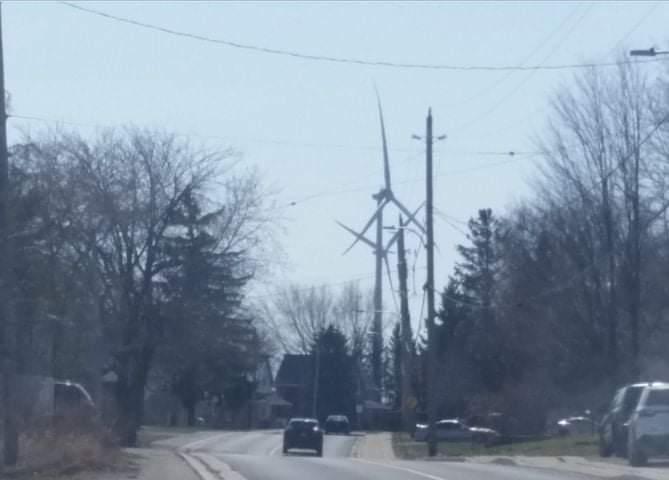
Huge grid-scale wind turbines are changing the landscape in North Stormont as the Nation Rise wind power project approaches commercial operation in June.

The photo above shows a view of the village of Crysler with two of the wind turbines visible. The Nation Rise turbines are 131 metres to the hub height, or 429 feet. The height to the blade tip is more than 600 feet.

There are 29 turbines in total in the industrial power project.

Wind Concerns Ontario reports that some residents have already experienced excessive noise and vibration from the turbines; they have been advised to call the Ministry of Environment, Conservation and Parks Cornwall Office at 1-800-860-2760. If the call is outside of business hours, residents should call the 24/7 Spills Action Centre at 1-866-MOE-TIPS.

In both cases, caller should be given an Incident Report number, and should also keep a record of their call.

You may also email nationrise@edpr.com to report problems; the company is required to pass along your complaint to the environment ministry.

ottawawindconcerns@gmail.com

← Older posts
Newer posts →

Recent Posts

  • Open letter to CAFES Ottawa
  • Ottawa Wind Concerns supports West Carleton residents
  • What does wind ‘farm’ construction really look like?
  • Unwilling Host communities surround Ottawa
  • How many birds do wind turbines kill?

Follow me on Twitter

My Tweets

Enter your email address to follow this blog and receive notifications of new posts by email.

Tags

Bob Chiarelli Green Energy Act IESO Ontario Ottawa Ottawa wind concerns wind energy wind farm wind power wind turbines

Contact us

PO Box 3 North Gower ON K0A 2T0

Blog at WordPress.com.

Privacy & Cookies: This site uses cookies. By continuing to use this website, you agree to their use.
To find out more, including how to control cookies, see here: Cookie Policy
  • Subscribe Subscribed
    • Ottawa Wind Concerns
    • Join 379 other subscribers
    • Already have a WordPress.com account? Log in now.
    • Ottawa Wind Concerns
    • Subscribe Subscribed
    • Sign up
    • Log in
    • Report this content
    • View site in Reader
    • Manage subscriptions
    • Collapse this bar
 

Loading Comments...