• About
  • Donate!
  • EVENTS
  • Ottawa’s “Energy Evolution”: wind turbines coming to rural communities
  • Thinking of signing a wind turbine lease?
  • Wind Concerns Ontario
  • Wind turbines: what you need to know

Ottawa Wind Concerns

~ A safe environment for everyone

Ottawa Wind Concerns

Tag Archives: wind turbines

Farmers Forum editorial on wind: I don’t want a turbine

15 Monday Sep 2014

Posted by Ottawa Wind Concerns in Ottawa, Renewable energy, Wind power

≈ Leave a comment

Tags

Brinston, electricity bills Ontario, Farmers Forum, Patrick Meagher, wind farm, wind farm efficiency, wind farm noise, wind farms Ontario, wind turbine, wind turbines, Wolfe Island

Apparently, everyone is tickety-boo with Wolfe Island being turned into a factory--or are they?

Apparently, everyone is tickety-boo with Wolfe Island being turned into a factory–or are they?

Wind turbine woes

September 2014, Farmers Forum

Farmers Forum surveyed a big chunk of Wolfe Island residents and found that 75 per cent approve of or are indifferent toward the 86 wind turbines they’ve been living with for five years.

There are only two wind turbine projects in Eastern Ontario–one in Wolfe Island and one near Brinston, south of Ottawa. But Wolfe Island, surrounded by the St. Lawrence River at one end and Lake Ontario at the other, is a captive crowd. We easily surveyed 200 of the 1,400 residents lining up for the Kingston ferry or working in the hamlet of Marysville.

With such a high proportion of residents surveyed–one in seven–we captured a fairly good picture of how people feel about those gigantic white gosal posts with their three imposing blades. Of course, having a visual of a turbine makes a huge difference. On many properties on the 29-kilometer long island, you can’t even see the turbines.* From other vantage points, you can see more than 10.

We found that money makes a difference. Those landowners (many of them farmers) hosting one or more turbines, are delighted with the $10,000 to $14,000 they earn each year per turbine just to look at them. The wind turbine company hands over another $100,000 to the island annually. Improvements to the local outdoor rink are one of the many benefits. It’s like getting paid twice for having the good luck of living at the right place on the right island at the right time.

Not surprisingly, wind power companies in other areas of the province are now offering “hush” money to Ontarians living near a proposed wind turbine project. As I’ve said before, if a company wants to pay me $14,000 a year to put a wind turbine on my property, I’d move the garage in order to accommodate them. Change their mind and offer the turbine to my neighbour and suddenly that turbine doesn’t look so good. It’s kind of an eyesore and doesn’t it affect bird migration? Could this be the health issues that we hear about or am I just sick at the thought that I just lost $280,000 of free money over 20 years? I think I know the answer. But when you offer to cut me in on the monetary benefits of my neighbour’s turbine, I’m suddenly all sunshine and happy thoughts.

This is not to say there aren’t honest-to-goodness health risks. Farmers Forum has no reason to disbelieve those survey respondents who complain of low-level noise when the wind changes direction.

We’re losing $24,000 an hour on wind

This brings me to my only real beef against wind power. As happy as I thought I would be to have a turbine, I don’t want  one.

They are the biggest money losers in the history of the province. Not for Wolfe Islanders or anyone else who gets a wind turbine contract. But for everyone else forced to pay an electricity bill. Electricity costs have already risen 12.5 per cent each year for the past five years. There are more than 1,000 operating wind turbines and another more than 4,000 to go up in the province. Ontario’s auditor general says we can expect another 40 per cent price hike over the next few years in our electricity bills. By 2018, every Ontario family will be paying an extra $636 per year to go green. And why? So the province can claim to be the first green province or state in North America? Big deal.

Wind turbines are incredibly inefficient. In a major report last year, the Fraser Institute noted that 80 per cent of the power generated by wind turbines occur when Ontario doesn’t need the power. So, while the province pays 13.5 cents per kilowatt hour, it often resells is for 2.5 cents south of the border. The report, Environmental and Economic Consequences of Ontario’s Green Energy Act, observed that data from the Independent Electricity System Operator show Ontario loses, on average, $24,000 per operating hour on wind power sales. Numerous companies, including Kelloggs and Heinz, have closed plants because Ontario companies pay more for power than any other jurisdiction in North America.

Not “green”

To make matters worse, a wind turbine can contain more than 200 tonnes of steel and Chinese factories need the mining of even more tonnes of coal and iron to make them. Writes David Hughes in his book Carbon Shift, “A windmill could spin until it falls apart and never generate as much energy as was invested in building it.”

So, you can’t even call wind turbines green energy. It’s appalling that farmers have been lied to about the benefits. We’re wasting billions on a phoney cause.

Patrick Meagher is editor of Farmers Forum and can be reached at editor@farmersforum.com

Re-posted from Wind Concerns Ontario

WCO editor’s note: Although Farmers Forum was clear on the limitations of their survey they missed several key points: one, by surveying only people at the ferry dock and in a coffee shop, they may have missed people who stay on the island all day, but more important, as the Island has turbines on one half and none on the other, it would have been absolutely critical to define where the survey respondents actually live. They didn’t. Another key factor in any survey of community residents living with turbines is the fact that many turbine contracts force landowners to sign a non-disclosure agreement—in other words, if they have anything negative to say about the turbines, they can’t talk.

North Gower resident report on K2 wind project

25 Monday Aug 2014

Posted by Ottawa Wind Concerns in Ottawa, Renewable energy, Wind power

≈ Leave a comment

Tags

Capital Power, environmental damage wind farm, Huron County, K2, Pattern Energy, Samsung, wind farm, wind plant, wind power, wind turbines

A resident of North Gower recently visited Huron County, where the K2 wind power project is under construction by a consortium of Samsung, Pattern Energy, and Capital Power. The 270-megawatt 140-turbine power project is located in the Township of Ashfrield-Colborne-Wawanosh.

Billed as “one of Ontario’s most promising renewable energy facilities,” the project was the subject of an appeal (dismissed) and is now being appealed by local residents who are asking for a stay of construction.

Here is what our citizen reporter said:

I just returned from Huron Co from vacation next to the K2 plant which is well into construction. All dire predictions of construction problems have occurred, the concession roads in Ashfield are taking such a pounding from heavy trucks that the $15 m paid to the township won’t begin to replace the damaged roads. While last year no one would talk of wind turbines, this year they will talk of little else; over 85% of residents now are against K2. Very frustrating as it seems people have to experience the degradation to the community before they will pay attention. If such pressure had been applied to the council earlier, perhaps something could have been done. But, maybe not as some of the sitting members have signed on as leasees with Capital-Samsung, in an unbelievable conflict of interest.
Further south at Grand Bend the council is at least appealing a wind plant, probably with no effect but they are trying.
All the more reason to alert residents here of what will occur if a go ahead is ever given to the local wind plant. It will not be pretty to put it mildly, and the wind company will act immediately to expedite the project. By then it will be too late.
Despite being warned about the potential for problems with water (the water table is 12 inches from the surface), Samsung-Pattern-Capital proceeded with the wind project, with the approval of the Ontario government. Almost immediately after construction began, land was flooded and as far as we know, water continues to be pumped and trucked away from the project.

Brinston wind farm noise prompts MoE investigation

11 Monday Aug 2014

Posted by Ottawa Wind Concerns in Renewable energy, Wind power

≈ 1 Comment

Tags

Brinston wind farm, EDP, EDP Renewables, infrasound, Leslie Disheau, Ontario Ministry of the Environment, sleep disturbance, South Branch wind farm, South Dundas, wind energy, wind farm, wind farm noise, wind power, wind turbines

Turbine neighbour prompts noise probe by ministry

By Nelson Zandbergen – AgriNews Staff Writer, August, 2014

Ontarios Ministry of Environment and Climate Change installed the basketball-sized microphone atop a temporary 30-foot listening post in her backyard, along with a smaller meteorological tower.BRINSTON Leslie Disheau has her ear to the ground in South Dundas, and for 10 days last month, a very powerful ear trained on the sky around her Brinston home as well.

The ministrys move was prompted by Disheau and partner Glen Baldwins complaints about nighttime noise emanating from two industrial wind turbines on either side of their place, one to their immediate northwest, the other to the southeast. Comprising part of the 10-turbine South Branch project that went into serviceearlier this year, both of the nearest units are less than one kilometre away from the home the couple shares with their two teenaged children.

But Disheau, candidate for deputy mayor in the municipal election and a fierce critic of the turbine industry, feared that developer EDP Renewables was intentionally slowing the two windmills to quiet them down while the ministry data-collection and audio-recording effort was underway with her participation.

The Houston-based firm almost immediately learned about the microphone on the day of the install, she said with some frustration.

Located just down the road from the projects main depot, it wasnt more than three hours after the arrival of two ministry trucks in her driveway that EDP called the same ministry to question the presence of those vehicles, according to Disheau.

She says the audio technician putting up the equipment learned of EDPs inquiry while talking to his office bycell phone, then told her about it.

Wind developer has not filed a compliance report yet

Disheau expressed unhappiness that a mandatory post-construction noise report had yet to be publicly filed by the company itself, after putting the project into service in March.

In the meantime, over a 10-day period in July, the ministry captured its own sound data with Disheaus help. During those times she considered the turbines to be noisiest, she pressed a button inside her home, triggering the recording process via the outdoor microphone, which was tethered to audio equipment in a locked box.

Comparing the sound to that of a rumbling plane or jet, she got up at night when she couldnt sleep to push the audio recording button located at the end of a long cord connected to the stuff outside. She also kept an accompanying log as part of the initiative.

The noise is most acute, she said, when the direction of the wind causes the blades to swivel toward her home in perpendicular fashion.

Effect of multiple turbines not considered by government

She scoffed at regulations that mandate 500-meter setbacks to neighbouring homes, pointing out the rule doesnt take into account the cumulative, “overlapping” impact of multiple turbines that surround. Nor does the regulation change with the actual size of a turbine, she adds, asserting that, at 3-megawatts apiece, “these are the largest turbines in Ontario.”

Ultimately, the ministry will use the data collected by Disheau to create a report, which could potentially form the basis of ministry orders against the two offending turbines. “To shut them down at night so that people can sleep,” she said with a hopeful tone, though she also acknowledged the ministry may not issue orders. And even if it does, she expects the developer to appeal and appeal.

Disheau also said there are measures that municipal governments can undertake to curtail the noise, including a nuisance noise bylaw of 32 decibels, which recently survived a court challenge in another Ontario municipality. She espouses such a policy in South Dundas and will push for it at the council table if elected.

Read the full story here.

Email us at ottawawindconcerns@gmail.com

Brinston wind farm noise complaints lead to monitoring

28 Monday Jul 2014

Posted by Ottawa Wind Concerns in Health, Ottawa, Renewable energy, Wind power

≈ 1 Comment

Tags

Brinston, EDP Renewables, infrasound, MOE, MoE Spills Line, Ontario Ministry of the Environment, Ottawa area wind farm, South Branch wind farm, South Dundas, wind farm, wind farm noise, wind power, wind turbines

And this is a SMALL one...

And this is a SMALL one…

The South Branch wind “farm” has been operating since mid-March, but it didn’t take long for the first noise complaints to be registered. This wind power generation facility is the first of the 3-megawatt machines to operate in Ontario; many more, mostly in southwestern Ontario, are to follow. The increased capacity is a concern to people who have done research on wind turbines, as they are more likely to produce infrasound or sound pressure, which disturbs some people.

Noise complaints lead to monitoring

by Sandy Casselman
Press staff

BRINSTON – It has been more than six months since the blades of the South Branch Wind Farm turbines began to spin, leaving more than one nearby resident with some sleepless nights.

“I call when it gets to the point I can’t tolerate it anymore and I go to the basement [to sleep],” Brinston resident Leslie Disheau, former president of the South Branch Wind Opposition Group, said. “It is an issue and I’m not the only person in town with the issue.”

Disheau, who is running for the Municipality of South Dundas’ deputy-mayor seat in this fall’s municipal election, has been staying close to home since the Ministry of the Environment (MOE) installed noise-monitoring equipment at her Brinston Road property last week.

“MOE contacted me and asked if they could put this noise monitoring equipment up,” Disheau said.

The two pieces of equipment measure wind speed and direction, barometric pressure, rainfall, and more, she said.

She has submitted three separate noise complaints so far. Every complaint must be filed with EDP Renewables’ project leader Ken Little and local MOE representative Terry Forrester to be officially registered.

During EDP’s first open community liaison meeting in March, a Brinston man spoke out about his own sleep disturbances, suggesting the turbines be shut off for a period during the early hours of the morning, beginning around midnight. At that time, Little confirmed that there had been one official complaint already registered. He also said an acoustic audit had been ordered, which he expected to get underway within two months of the meeting.

“EDP has not released their post-construction noise audit report,” Disheau said during an interview with the Winchester Press Fri., July 18.

In conversation with one of the MOE officials who installed the equipment, Disheau said she learned that the provincial authority also had not seen a report from EDP.

“They can take a long as they want,” she said, crediting the Green Energy Act with the responsibility for not specifying a deadline. “There is a 40-decibel limit [on the noise the turbines can make], and we have no idea if they’re in the threshold or not.”

To describe what the sound is like, she used Highway 401 versus airplane noise as an example, pointing out that the highway noise is more of a hum, and when she lived near it, the sounds did not bother her at all.
However, the turbines produce something more in line with the “drone of an airplane that goes into your head,” she said. “It’s a deeper tone, and that’s where you get the disturbance of sleep.”

Explaining the noise and its effects on her is not easy, she said, but it is similar to the sensation people get in their chest when listening to bass guitar.

Disheau said she explained her experiences to MOE’s acoustical engineer, adding that the sensations are at their worst when the blade tips of the turbine across the road (south of Brinston) and the one to the north behind her home (west of Brinston) are facing one another.

“The acoustical engineer said ‘yes, that it all makes sense,’ ” Disheau added. “This is not normal. You should not be in sleep disturbance in your own house.”

Meanwhile, Disheau is the only one in her home experiencing the effects of the rotating blades, as her husband, who shares the second storey bedroom on the home’s vinyl-sided addition, is tone deaf, and her children sleep on the first floor of the brick-sided main house.

The noise-monitoring equipment is controlled by a switch, which has been placed inside Disheau’s home. When she notices the noise, she flips the switch and the machinery calculates and documents the findings.

“Once everything is taken down, the ministry guy goes through [the recordings] and writes his report,” she said, which will list the decibel readings for various weather conditions (wind speed and direction).

When asked what she hopes to accomplish through this procedure, Disheau said the findings could require that EDP shut down operations during specific times of the day or during specific wind conditions should they prove the decibel levels exceed the regulated amount.

Read the full story here.

People with complaints about excessive noise from the turbines at Brinston must call both the developer, EDP Renewables (1-877-910-3377 ext 3) AND the Ministry of the Environment (1-800-860-2760). 


CanWEA execs venture down to Brinston wind ‘farm’

17 Thursday Jul 2014

Posted by Ottawa Wind Concerns in Health, Ottawa, Renewable energy, Wind power

≈ 1 Comment

Tags

Brinston, Canadian Wind Energy Association, CanWEA, Eastern Ontario, EDP Renewables, law suits wind farms, legal action wind farms, property value, Prowind, sleep disturbance, South Branch, South Branch Kid Wind Day, South Dundas, wind farm, wind farm noise, wind power, wind turbines


Not from around here: just visiting for the brainwashing

The executives at the wind power developers’ lobby group, the Canadian Wind Energy Association, took a trip down the road from their offices on Carling Avenue in Ottawa to see the wind power project in Brinston, just south and east of Ottawa.

Here’s a report on the visit:

CanWEA Staff Tours South Branch Wind Farm

On June 25, several EDPR employees led a tour of the South Branch wind farm for staff members of the Canadian Wind Energy Association (CanWEA) , including CanWEA’s president, Robert Hornung, who had this to say about the visit: The siting characteristics of South Branch and how well the wind farm blends with the natural landscape are truly impressive, said Mr. Hornung. We were equally impressed by the care and attention that EDPR has taken in building a high level of enduring community acceptance. 
The tour of the wind farm, located near Brinston, Ontario, included stops in the O&M building as well as the inside of the base of a tower and the substation building. After an informative tour, CanWEA expressed interest in working with EDPR to improve its information packages for farmers.  Several CanWEA representatives also said they planned to stop by the upcoming South Branch Kid Wind Day, which will be held on Thursday, July 24, and attended by 150 kids.

The claim that EDP has “enduring community acceptance” would be laughable, were it not for the truth about this community: once the wind project was publicly announced by the original developer, Germany-based Prowind, the community became divided between the few farm owners leasing their land for turbines, and others in the community who had no choice but to watch this happen to them. A community group was organized and held several information meetings…but of course, with the Green Energy Act, there are no solutions through elected representatives. South Dundas Council voted on a resolution to say there would be no support for further wind power development as Ontario doesn’t need any more power generation.

The so-called South Branch Kid Wind Day is NOT for local families (hard for them to miss the huge, 3-megawatt turbines) but it will be for kids being bused in from elsewhere. The community has not even been informed of this PR event.

Of greater concern, though, is the news that an “information package” is being developed for farmers: this is being worked on because Eastern Ontario has a green light from the province for wind power development…it is rumoured that 5,000 more acres in North Dundas have been optioned for future wind power development.

Our question: will EDP and CanWEA provide full disclosure on noise, health problems, sleep disturbance, property value loss, and the potential for lawsuits from neighbouring landowners?

Email us at ottawawindconcerns@gmail.com


At-risk Golden Eagles to die if Prince Edward Cty wind farm built

07 Monday Jul 2014

Posted by Ottawa Wind Concerns in Renewable energy, Wind power

≈ Leave a comment

Tags

CCSAGE, Golden Eagles, Important Bird Area, migratory birds, Ontario Ministry of NAtural Resources, Ontario Ministry of the Environment, prince Edward County, Prowind, wind farm, wind farm birds, wind power, wind turbines, WPD Canada

A Prince Edward County community group has received documents via Freedom of Information that show Golden Eagles, an at-risk species of bird, would almost certainly die in significant numbers, if a 49-turbine wind “farm” is built as planned in Prince Edward County. The County is about two hours south-west of Ottawa, near Kingston, and is in the North American eastern flyway for migratory birds.

The County Coalition for Safe Appropriate Green Energy (CCSAGE) says the documents it obtained show that even with the limited number of days the wind power developer wpd Canada surveyed for the birds (just three days), substantial numbers of the birds would fly through at the height of the turbine blades, and die.

CCSAGE is also deeply concerned that this information was not made available to the public by either the developer or the Ontario government and, in addition, their request for this specific information was answered only AFTER the comment period closed. This information calls for questions about the scientific veracity of the so-called “technical review” done by the government of developer documentation.

See the posting on the Wind Concerns Ontario website here. Wind Concerns Ontario has filed a complaint with the Office of the Ombudsman of Ontario regarding the technical review process. Ottawa Wind Concerns followed suit with a letter to the Ombudsman with details on the lack of openness and transparency regarding the Prowind proposal for North Gower and Richmond.

Email us at ottawawindconcerns@gmail.com

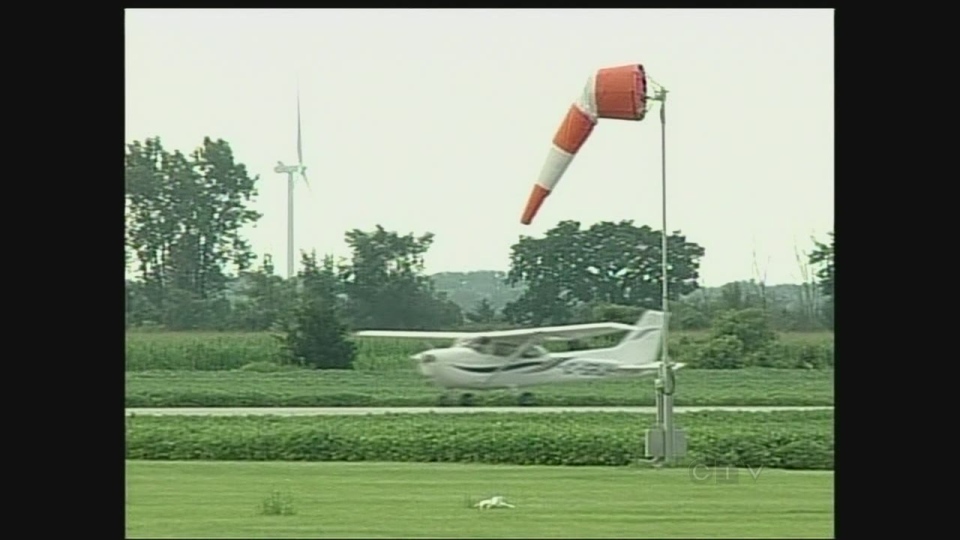
Transport Canada demands removal of airport turbines for safety

07 Monday Jul 2014

Posted by Ottawa Wind Concerns in Health, Renewable energy, Wind power

≈ 1 Comment

Tags

aviation safety, Chatham airport, Chatham-Kent, GDF Suez, Randy Hope, Transport Canada, wind energy, wind farm, wind farm safety, wind power, wind turbine, wind turbines

CTV Windsor
Published Sunday, July 6, 2014 6:14PM EDT 
Last Updated Monday, July 7, 2014 9:03AM EDT

Pro-wind power Mayor says “there is no safety issue”

Transport Canada has issued an order requiring the eight wind turbines near Cedar Springs be removed by the end of this year.

The organization originally issued a letter requesting “voluntary compliance” last year.

In a release sent out by the municipality, Chatham-Kent mayor Randy Hope, says,“there is no safety issue so we need to change the regulation rather than force the removal of the turbines.”

RELATED STORIES

  • Questions surround wind turbine removal near Chatham airport
  • Angry pilot speaks out at Chatham airport ceremony
  • Fuel siphoned from planes at Chatham airport

PHOTOS

CTV Windsor: Pilot voices Chatham airport concerns

The municipality had been waiting for a reply from Transport Canada on this proposal and was surprised this week to learn that Transport Canada had taken this new step of issuing letters demanding that the turbines be removed by Dec. 31.

The affected wind turbines are in a “no fly zone” south of the airport.

It is expected that GDF SUEZ, the owner of the affected turbines, will formally object to the order from Transport Canada and seek a hearing before the Minister of Transport through the process laid out in the Aeronautics Act.

Read more: http://windsor.ctvnews.ca/transport-canada-demanding-wind-turbines-be-removed-near-chatham-airport-1.1901446#ixzz36n9X6XXM

Read the full story and see photos here.

Wind power documentary airs Wednesday June 4

03 Tuesday Jun 2014

Posted by Ottawa Wind Concerns in Renewable energy, Wind power

≈ 3 Comments

Tags

Charter Challenge, Down Wind movie, Esther Wrightman, green energy, Green Energy Act, Jane Wilson, Julian Faulkner, Ross McKitrick, Shawn Drennan, Sun News, Tom Adams, Wind Concerns Ontario, wind energy, wind farms, wind power Ontario, wind power projects, wind turbines

Wednesday June 4 at 8 PM on Sun News, is the debut of the documentary film Down Wind.

The film features interviews with Ontario residents living near wind power projects, economics professor Ross McKitrick, human rights lawyer Julian Faulkner, energy analyst Tom Adams, Human Rights Charter appellant Shawn Drennan, activist Esther Wrightman, and Wind Concerns Ontario president Jane Wilson.

DownWindPoster

Wind turbines cause property values to drop: U.S. Realtors

03 Tuesday Jun 2014

Posted by Ottawa Wind Concerns in Renewable energy, Wind power

≈ 2 Comments

Tags

BP energy, Cape Vincent, property values, Tibbets Point, wind energy, wind farms, wind turbines, Wolfe Island, Wolfe Island wind farm, Wolfe Island wind turbines

Here from the Watertown Daily Times is an account of the effect on property values at Cape Vincent, which is across the St Lawrence from Wolfe Island, and where BP Energy was also planning a wind power project, now cancelled.

Realtors say Wolfe Island wind turbines caused waterfront home prices to plummet

By TED BOOKER
TIMES STAFF WRITER
PUBLISHED: SUNDAY, JUNE 1, 2014 AT 12:30 AM

CAPE VINCENT — Realtors say the value of waterfront homes in the town has slid steeply over the past five years due to the eyesore of Wolfe Island Wind Farm, creating a buyer’s market for those who don’t mind looking out at turbines.

Amanda J. Miller, broker/owner of Lake Ontario Realty, Chaumont, said brokers recently have sold waterfront homes on Tibbetts Point Road off the St. Lawrence River for up to $300,000 less than they were priced at five years ago. The 86-turbine wind farm on Wolfe Island, Ontario, was built from summer 2008 to June 2009.

In one case, “a couple of years ago we had a waterfront house that sold for $300,000 that was in the mid-$600,000 range before,” Ms. Miller said.

Though few waterfront homes on Tibbetts Point Road have been sold in the past five years, Ms. Miller said there recently has been an uptick in buying activity. She said that brokers sold three waterfront homes during the past year. Those homes, previously listed in the $700,000 to $800,000 range, sold for $515,000, $530,000 and $615,000. She said that buying activity increased after the news in February that BP Wind Energy abandoned its 285-megawatt Cape Vincent Wind Farm project.

“Property values on Tibbetts Point Road started declining about five years ago, but it’s pretty much bottomed out now and things are starting to sell again,” Ms. Miller said. “A lot of people who struggled to sell their homes had to drop their prices. But I think things are going to start to slowly repair themselves, because the Cape Vincent Wind Farm battle is over.”

Ms. Miller said a “cloud was lifted off the market” when the BP Wind Energy project was scrapped, boosting the confidence of buyers to invest in waterfront property. She said there will continue to be a pool of buyers who are interested in buying affordable waterfront property and are willing to put up with the view of Wolfe Island Wind Farm.

“There’s no more questioning about whether something might happen that will further affect values,” she said. “Now you’re only left with dealing with the wind farm on Wolfe Island, and people are starting to realize the real battle is over — whether they’re pro- or anti-wind. The burden has been lifted and the market will rebound.”

Cape Vincent Assessor Denise J. Trudell said the value of high-end waterfront properties on Tibbetts Point Road has gradually slid in recent years because of an undesirable view of Wolfe Island Wind Farm. As an example, she cited a home at 32519 Tibbetts Point Road that was sold for $700,000 in 2007; it sold in March for $510,000.

“Homeowners don’t think their property is worth as much because the view is not as desirable as what it used to be,” Ms. Trudell said. “I would say there has definitely been a decline in people looking for that type of high-end property. It has certainly had an effect on the property values along that area. But it all depends on how you want to look at it. I had a property owner two weeks ago tell me they find (the turbines) enchanting and like the view.”

Lesa M. Plantz, broker for Prudential 1000 Realty of Clayton, said that some buyers are attracted to homes on Tibbetts Point Road because prices have sharply fallen since turbines were erected on Wolfe Island. But until recently, there haven’t been many buyers interested in the waterfront property.

“When the windmills were first out there, absolutely nothing sold,” Mrs. Plantz said. “And with the continuing controversy going on with the windmill issue in the Cape, there was definitely a steady decline in sales. We had property sit for a couple of years that would have normally been sold in a couple of months.”

The better waterfront properties will never hold their values as long as wind turbines are on Wolfe Island

To illustrate that point, she said that a three-bedroom, 2,411-square-foot waterfront house on Tibbetts Point Road that was listed for sale for nearly $800,000 in 2010 gradually declined in price until it was sold in March for $515,000. The price of that home had fallen to $625,000 in 2012, and then to $569,000 in 2013 before dropping to its final sale price.

But Mrs. Plantz said she expects that buyers will become more confident in the market now that BP Wind Energy’s massive project is dead. She said an increasing number of waterfront properties in Cape Vincent has been listed for sale in the past year.

“Last year, we had a lot more waterfront homes listed, and this year there are definitely more homes on the market,” she said. “Sales are trending back up.”

While the view of turbines on Wolfe Island has been upsetting for some homeowners, buyers have jumped on the opportunity to purchase homes affected by the wind farm for lower prices, Mrs. Plantz said.

“It’s gone both ways,” she said. “It’s helped people looking for more affordable waterfront property who can overlook the situation with the windmills on Wolfe Island. But of course there are a lot of people that don’t like them.”

Trude B. Fitelson, a broker for Prudential 1000 Realty who has sold waterfront property for 24 years in the Thousand Islands region, said property values in Cape Vincent will never rebound because of the presence of Wolfe Island Wind Farm.

“The better waterfront properties will never hold their values as long as wind turbines are on Wolfe Island,” Ms. Fitelson said. “Your sophisticated buyer with a sense of design and architecture who wants something on the water is not going to want to look at those turbines. That’s not going to be their cup of tea. They’ll come up toward Clayton and Alexandria Bay because they won’t want to be there.”


More turbines planned for south of Ottawa

14 Wednesday May 2014

Posted by Ottawa Wind Concerns in Renewable energy, Wind power

≈ 1 Comment

Tags

Brinston, EDP, EDP Renewables, moratorium wind power, North Dundas, Progressive Conservatives Ontario, rising cost of electricity bills Ontario, South Branch, wind power Ontario, wind turbine, wind turbines

We’ve seen this before: wind power developments start off with a few turbines and then become dozens, or as in the case of Armow, 45 turbines became over 90.

In this month’s edition of the AgriBusiness News is a report on the wind power development at Brinston, which was started by Prowind, and is now owned by U.S.-based EDP Renewables.

Brinston turbines plug in for pay

Carolyn Thompson Goddard

The AgriNews May 2014, page 4

BRINSTON: It’s official–the South Branch wind farm in Brinston is on the grid.

Ken Little of EDP Renewables Canada Ltd. told The AgriNews that as of March 4, the Commercial Operating Date granted by the Ontario Power Authority, the project’s 10 wind turbines were producing a combined total of up to 30 megawatts. [sic. Editor’s note: we think the writer means producing power]

An on-site substation changes the power frim 34.5 to 44 kilovolts, which allows it to travel to a Morrisburg substation on Flegg Road, and onto the grid.

According to Little, at peak construction there were over 105 people on site, but presently on average there are 10 workers completing this phase. In April, a team will begin site acclamation [? Ed note: reclamation?] which should take about a month.

During a site tour March 14, Little provided information on the Siemens wind turbines deployed at the site. He explained there are a number of regulations governing the noise level (which can’t exceed 40 db) location of the tower (minimum of 550 meters from human habitation) and require a number of scientific studies that need to be completed prior to construction. A drive in the Brinston area allows one to see the standing towers producing electricity from their long rotating blades.

Little told The AgriBusiness News it had been a very windy week so there had been a lot of testing done at the site. While it didn’t appear too windy at ground level on Friday, March 14, the wind speed up above turned the blades at 10-12 revolutions per minute–just short of the 14 rpm maximum–the tips soaring more than 500 feet at their highest point.

Standing at the base of a tower, a slight whistling sound was heard but no other noise was detectable.

The towers are located on land leased for 20 years–the life of the EDP contract–from local landowners. EDP will receive 13.5 cents per kilowatt-hour produced.

If the contract is not renewed, the towers would be removed and the land returned to its original condition , with access roads left for the use of the owner if so desired.

The wind farm is located on land already under cultivation. Little explained .75 to 1.5 acres were used per turbine and that farmers could till up to the edge of the access road and boundary ring around the turbine itself.

Little confirmed there are negotiations set to begin with the Municipality of South Dundas and the Township of North Stormont for the construction of additional wind farms in those townships.

With talk of a provincial election in the air, the project’s Houston Texas-based developer appears undaunted by the stance of Ontario’s Progressive Conservatives. The official opposition party promises to review existing wind and solar operations and impose a moratorium on new ones if elected.

Editor’s notes:

First, these are power generation projects, not wind “farms.”

Other points:

-the quietest place to be is exactly below a wind turbine; the noise and infrasound can be experienced as far as 3 km

-the noise level in the regulations is 40 decibels or dB on AVERAGE: that means there are some very noisy days (and nights) allowed

-the significant problem with turbines is sound pressure; the province does not have any regulations pertaining to infrasound or sound pressure and will not even have a protocol for measurement until 2015

-at 13.6 cents a kilowatt, EDP is reaping the benefits of provincial subsidies, paid for by Ontario electricity customers–that is over $10 million a year, or $200 million over the life of the contract

-the amount of land used for the wind project is under-estimated

-the land can NEVER be returned to its original state: the concrete foundation remains

-the PCs are saying they will not fulfill wind power contracts which are not already constructed–no one said they will stop existing operating projects

Letters to the Editor of AgriBusiness News may be sent to rm@agrinewsinteractive.com


← Older posts
Newer posts →

Recent Posts

  • The stats tell the story: wind doesn’t work
  • Wind power locally: reliably unreliable
  • Has Ottawa lost its focus on city priorities?
  • Pro-wind groups in Ottawa collaborate to “educate”
  • Thinking of signing for a wind turbine lease? Better get informed to protect yourself

Follow me on Twitter

My Tweets

Enter your email address to follow this blog and receive notifications of new posts by email.

Tags

Bob Chiarelli Green Energy Act IESO Ontario Ottawa Ottawa wind concerns wind energy wind farm wind power wind turbines

Contact us

PO Box 3 North Gower ON K0A 2T0

Blog at WordPress.com.

Privacy & Cookies: This site uses cookies. By continuing to use this website, you agree to their use.
To find out more, including how to control cookies, see here: Cookie Policy
  • Subscribe Subscribed
    • Ottawa Wind Concerns
    • Join 377 other subscribers
    • Already have a WordPress.com account? Log in now.
    • Ottawa Wind Concerns
    • Subscribe Subscribed
    • Sign up
    • Log in
    • Report this content
    • View site in Reader
    • Manage subscriptions
    • Collapse this bar
Loading Comments...