• About
  • Donate!
  • EVENTS
  • Ottawa’s “Energy Evolution”: wind turbines coming to rural communities
  • Thinking of signing a wind turbine lease?
  • Wind Concerns Ontario
  • Wind turbines: what you need to know

Ottawa Wind Concerns

~ A safe environment for everyone

Ottawa Wind Concerns

Tag Archives: wind turbines

Realtors dispute economist study on wind farm neighbour property values

31 Wednesday Dec 2014

Posted by Ottawa Wind Concerns in Renewable energy, Wind power

≈ 1 Comment

Tags

Canadian Journal of Agricultural Economics, Canadian Real Estate Wealth, Melancthon, mortgage financing, property value, property value loss, property values, real estate appraisers, real estate value, Realtor, Richard Vyn, University of Guelph, wind farm property value, wind farms, wind turbine, wind turbines

Wind farm “monsters bad for Ontario: Realtors shoot back at property value study

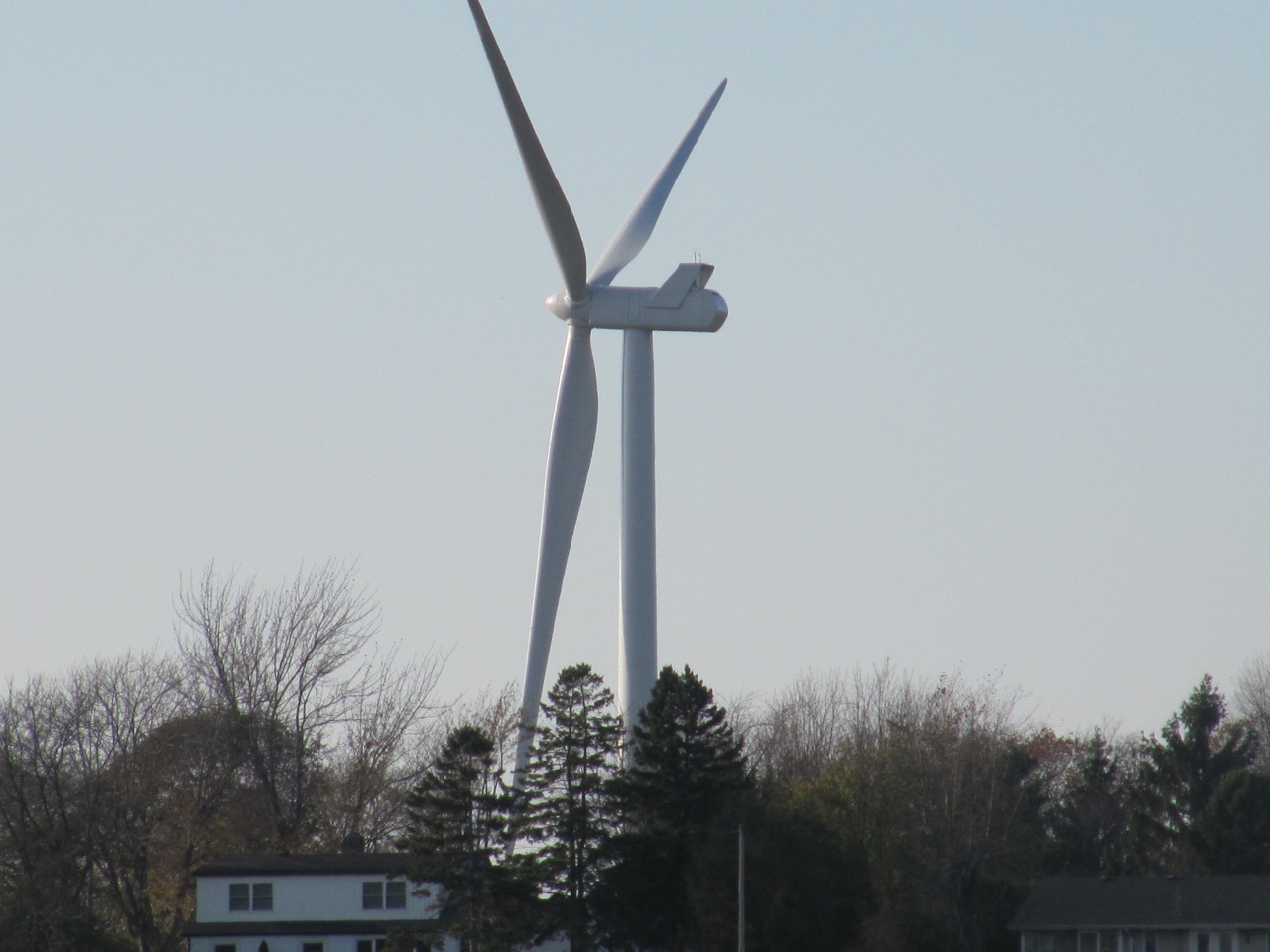
Looks like a great place to live!!

Jennifer Paterson, Canadian Real Estate Wealth, December 18, 2014

A recent study by the University of Guelph, which found wind turbines do not have an impact on nearby property values, might have earned a big sigh of relief from investors – but the study’s results have been strongly criticized by members of the real estate industry.

“I have had several deals fall apart in this area because, in the appraisal report, it has been mentioned that there are windmills visible or adjacent to the property and, once a lender gets wind of that (forgive the pun), they will not fund a mortgage,” said Angela Jenkins, a mortgage agent at Dominion Lending Centres, who lives and works in the Melancthon region, where the study was conducted.

“If a person cannot get financing due to windmills, then how can this be a positive thing?”

The study, which was published this month in the Canadian Journal of Agricultural Economics, analyzed more than 7,000 home and farm sales in the area, and found that at least 1,000 of these were sold more than once, some several times.*

John Leonard Goodwin, who has been a real estate broker for more than 10 years in the Grand Bend, Ont. market, asserted that wind turbines absolutely do affect property values. “Turbines complicate your property enjoyment, period,” he said. “That alone spells depreciated value(s).

“Turbines should be in remote, unpopulated locations. To all the folks who have turbines on their property: Enjoy your $18,000 per turbine per year, because you will be giving most of the lease payments back (in much lower property value) when you sell.

“These monsters are very bad for Ontario,” he continued. “We all pay to subsidize the electricity they produce and they will also cause a significant loss of real estate value.”

Lynn Stein, a sales representative at Hartford and Stein Real Estate, lives and sells real estate in Prince Edward County, where a large-scale wind turbine project is slated to begin.

“The turbines that are proposed here are quite large,” she said. “The majority of the population here very clearly doesn’t want them.

“Put simply, if you were to buy your future home, given the choice, would you buy where you would have noise, shadow flicker, an industrial view, potential health issues caused by the turbines, and the possibility of a very difficult resale, or would you spend your money elsewhere?”

Read the full story and comments here.

*Wind Concerns Ontario Editor’s note– The writer is incorrect: Vyn had a data set of 5,414 residences but very few, 124, were within 5 km of a turbine. Several were as far as 50 km from a turbine. This is a tactic designed to “dilute” any actual effect. Author Richard Vyn himself said that the limitations of this study (sponsored by MPAC, perhaps to buttress their own disastrous study on this issue earlier this year) were significant and should not be overlooked. Toward the end of his paper he admits, “…while the results indicate a general lack of significantly negative effects across properties examined in this study, this does not preclude any negative effects occurring on individual properties.”

The Realtors and financing professionals contacted for this article also did not note that Vyn failed to include expired listings, i.e., properties that were listed for sale, but never sold.

What the Health Canada noise study means for North Gower

29 Saturday Nov 2014

Posted by Ottawa Wind Concerns in Health, Ottawa, Wind power

≈ Leave a comment

Tags

Canadian Wind Energy Association, CanWEA, Health, Health Canada, Health Canada wind turbine noise and health study, Marlborough wind power project, North Gower, North Gower wind farm, Ottawa, Prowind, wind farm, wind farms and health, wind turbine, wind turbines

Health Canada study results show North Gower wind farm would have made more than 100 people sick

Many people were disappointed in the results contained in the summary of the Health Canada Wind Turbine Noise and Health study, which was released in a hurry on November 6th.

While the mainstream media picked up on the message as being “there is no association between wind turbine noise and health effects” what Health Canada actually said in its news release was this:

No evidence was found to support a link between exposure to wind turbine noise and any of the self-reported or measured health endpoints examined. However, the study did demonstrate a relationship between increasing levels of wind turbine noise and annoyance towards several features (including noise, vibration, shadow flicker, and the aircraft warning lights on top of the turbines) associated with wind turbines.

In fact, the study found that an average of 16.5% of people within 2 km of wind turbines, or a wind turbine (whether multiples were considered is not clear), had severe distress or “annoyance”. The closer people lived, the worse that result was: 25% of people at 550 meters or less (some people waived the setback as part of their contract with the wind power developers) had adverse health effects related to the distress or annoyance, annoyance being a medical term.

The adverse health effects from the annoyance listed by Health Canada were:migraine, tinnitus (chronic ringing in the ears), dizziness, sleep disturbance or disorder, and cardiovascular effects such as elevated blood pressure.

So, what would that mean for North Gower, if the wind power generation project proposed by Prowind in 2008 gone ahead (remember, it got as close as one could to a Feed In Tariff contract, before the government paused the subsidy program in the spring of 2013–it is NOT true that it would never have been approved, it was virtually there).

Thanks to volunteers who have mapped the area, using a schematic of the turbine locations which was leaked to us, we know this:

Number of homes within 800 meters of a turbine: 43

Number of homes within 1.6 km of a turbine: 234

TOTAL number of homes that would be most affected: 277

At an average of 2.5 people/home, that would be 692 people, and at an average of 16.5% affected by distress/annoyance, that would be 114 people.

This is considered to be a conservative figure as Health Canada did not do any follow up on the significant number of houses it discovered vacant or demolished in the study. These were “mature” turbine projects and as we know from the experience of people living in areas like Chatham-Kent, Clear Creek, Ripley and Kincardine, the people most affected leave within six months to a year.

114 people.

At least some of them children.

And yet the Ontario government continues to approve these power projects, despite evidence of harm to health, and the fact that Ontario does not need the power. And the wind power lobby group, the Canadian Wind Energy Association (CanWEA) persists in the mythology that wind power is clean and good for the environment.

Health Canada is taking no action, despite these results, and has no intention of studying wind turbine noise further*. The people of North Gower have a right to expect more from the federal government, and from Health Canada, which is supposed to used sound science principles to protect citizens.

Our Member of Parliament is Pierre Poilievre at pierre.poilievre@parl.gc.ca if you have any comments on what the Health Canada study means to you and our community.

Ottawa Wind Concerns

PO Box 3, North Gower ON  K0A 2T0

ottawawindconcerns@gmail.com

*As per a personal meeting with the study team representatives, Ottawa, November 7.

Health Canada needs to take action on wind farms: noise study “too little, too late”

29 Saturday Nov 2014

Posted by Ottawa Wind Concerns in Health, Ottawa, Wind power

≈ 1 Comment

Tags

adverse health effects, annoyance, CanWEA, Carmen Krogh, Dr Robert McMurtry, Health Canada, Health Canada wind turbine noise and health study, Healthy Environments and Consumer Safety, infrasound, IWTs, low frequency noise, National Resources Canada, Rona Ambrose, turbine noise, wind farm, wind farm noise, wind power, wind power lobby, wind turbine, wind turbines

November 28, 2014 Canadian Medical Association Journal blog

Carmen Krogh, BScPharm (retired), is a peer reviewed IWT health researcher and formerDirector of Publications and Editor-in-Chief of the CPS.

R Y McMurtry is Professor Emeritus (Surgery) of Western University (formerly University of Western Ontario). Dr. McMurtry was also anADM at Health Canada 2000-02

Industrial wind turbines (IWTs) are being erected at rapid pace around the world. Coinciding with the introduction of IWTs, some individuals living in proximity to IWTs report adverse health effects including annoyance, sleep disturbance, stress-related health impacts and reduced quality of life. [i],[ii],[iii],[iv],[v],[vi],[vii],[viii],[ix],[x],[xi],[xii] In some cases Canadian families reporting adverse health effects have abandoned their homes, been billeted away from their homes or hired legal counsel to successfully reach a financial agreement with the wind energy developer.[xiii]

To help address public concern over these health effects Health Canada (HC) announced the Health Canada Wind Turbine Noise and Health Study (HC Study) 2 years ago and brought forth preliminary results November 6, 2014.

Here we briefly comment on the HC Study results and provide some historical context.

Acknowledgement of IWT adverse health effects is not new. The term “annoyance” frequently appears when discussing IWT health effects.

In a 2009 letter the Honourable Rona Ambrose, disclosed:

“Health Canada provides advice on the health effect of noise and low-frequency electric and magnetic fields from proposed wind turbine projects…To date, their examination of the scientific literature on wind turbine noise is that the only health effect conclusively demonstrated from exposure to wind turbine noise is an increase of self-reported general annoyance and complaints (i.e., headaches, nausea, tinnitus, vertigo).” [xiv]

In 2009, the Canadian Wind Energy Association (CanWEA) sponsored a literature review which acknowledges the reported symptoms such as headaches, nausea, tinnitus, vertigo and state they “… are not new and have been published previously in the context of “annoyance”…” and are the “… well-known stress effects of exposure to noise …”[xv]

In 2011, a health survey of people exposed to IWTs in Ontario reported altered quality of life, sleep disturbance, excessive tiredness, headaches, stress and distress. [xvi]

In the same year, CanWEA posted a media release which advised those impacted by wind turbine annoyance stating “The association has always acknowledged that a small percentage of people can be annoyed by wind turbines in their vicinity. … When annoyance has a significant impact on an individual’s quality of life, it is important that they consult their doctor.”[xvii]

It turns out it’s not a small percentage of people annoyed by wind turbines. An Ontario Government report concluded a non-trivial percentage of persons are expected to be highly annoyed.

The December 2011 report prepared by a member of CanWEA for the Ontario Ministry of Environment states in the conclusions:

“The audible sound from wind turbines, at the levels experienced at typical receptor distances in Ontario, is nonetheless expected to result in a non-trivial percentage of persons being highly annoyed. As with sounds from many sources, research has shown that annoyance associated with sound from wind turbines can be expected to contribute to stress related health impacts in some persons.”[xviii]

The World Health Organization (WHO) acknowledges noise induced annoyance to be a health effect [xix] and the results of WHO research “…confirmed, on an epidemiological level, an increased health risk from chronic noise annoyance…”[xx]

HC also acknowledges noise induced annoyance to be an adverse health effect. [xxi],[xxii] The Principal Investigator of the recent HC Study also states “noise-induced annoyance is an adverse health effect”. [xxiii]

Canadian Government sponsored research has found statistically significant relationships from IWT noise exposure.

A 2014 review article in the Canadian Journal of Rural Medicine reports:

“In 2013, research funded by the Ontario Ministry of the Environment indicated a statistically significant relation between residents’ distance from the turbine and the symptoms of disturbed sleep, vertigo and tinnitus, and recommended that future research focus on the effects of wind turbine noise on sleep disturbance and symptoms of inner ear problems.” [xxiv]

Recently on November 6, 2014, HC posted on its website preliminary results of its HC Study[xxv]. Wind turbine noise “…. annoyance was found to be statistically related to several self-reporting health effects including, but not limited to, blood pressure, migraines, tinnitus, dizziness, scores on the PSQI, and perceived stress” as well as related to “measured hair cortisol, systolic and diastolic blood pressure.”

These troubling results come as no surprise. Since at least 2007 HC employees including the Principal Investigator of the HC Study recommended wind turbine noise criteria which they predict will result in adverse health effects. (i.e. result in an increase percentage highly annoyed).[xxvi],[xxvii],[xxviii]

Then turbines were built and HC spent 2.1 million dollars to find out it appears to have under predicted the impact of IWT noise. HC’s IWT noise criteria does not use a dose response based on IWT noise but rather road noise. But of course IWTs are not cars and peer-reviewed studies consistently document that IWTs produce sound that is perceived to be more annoying than transportation or industrial noise at comparable sound pressure levels. [xxix],[xxx]

IWT noise annoyance starts at dBA sound pressure levels in the low 30s and rises sharply at 35 dBA as compared to road noise which starts at 55 dBA. These findings are further supported by the HC Study’s preliminary results.[xxxi]

IWT noise characteristics that are identified as plausible causes for reported health effects include amplitude modulation, audible low- frequency noise (LFN), infrasound, tonal noise, impulse noise and night-time noise. [xxxii]

The logical solution would be to develop IWT noise criteria which will protect human health but that would present a barrier to wind energy development. Noise limits impacts IWT siting, cost of energy produced [xxxiii] and by extension corporate profits. The wind energy industry has actively lobbied governments to be granted IWT noise exposure limits which benefit their industry.

Canadians trying to understand this should be mindful the Government of Canada has invested and distributed significant amounts of public money to attract and support the wind energy industry. [xxxiv],[xxxv],[xxxvi],[xxxvii],[xxxviii],[xxxix],[xl],[xli] In addition to providing funding, the Government of Canada in collaboration with wind industry stakeholders has developed the Wind Technology Road Map (Wind TRM) [xlii] which Natural Resources Canada defined to be an “…industry-led, government supported initiative that has developed a long-term vision for the Canadian wind energy industry …”.[xliii]

Canada’s Wind TRM states “Members of the Steering Committee, government and our industry will be using this roadmap to direct the actions that are necessary for Canada to develop its vast wind resources.”[xliv] HC is a member of the Interdepartmental Wind Technology Road Map Committee [xlv] which was created to assist in the implementation of Canada’s Wind TRM. [xlvi] One of the “key action items” detailed in the Wind TRM calls for Government and Industry collaboration to develop and maintain government documents that address concerns raised about wind energy projects including that of noise, infrasound and other. [xlvii]

Some jurisdictions are trying to take action to protect their residents. For example, several municipalities in Ontario are trying to establish bylaws that protect from IWT noise. In Wisconsin, on October 14, 2014 the Brown County Board of Health unanimously approved a motion to declare the IWTs at a local project a Human Health Hazard. [xlviii]

It would appear HC’s research effort is too little too late. A non-trivial percentage of Canadians continue to experience adverse health effects. HC now has additional scientific evidence of the “conclusively demonstrated” effects from exposure to IWT noise. It is time for HC to take action to help Canadians maintain and improve their health.

Read the full posting here.

Wind turbine noise and health: what the wind lobby doesn’t want you to know

26 Wednesday Nov 2014

Posted by Ottawa Wind Concerns in Health, Renewable energy, Wind power

≈ 1 Comment

Tags

CanWEA, Health Canada, Health Canada wind turbine noise and health study, Healthy Environments and Consumer Safety, infrasound, low frequency noise, North Gower, North Gower wind farm, wind farm, wind farm noise, wind turbine, wind turbine noise, wind turbine noise and adverse health effects, wind turbines

The wind industry is dangerous to human health, posing risks to everything from dizziness and nausea to chronic stress and heart conditions

Lawrence Solomon, FR Comment, The Financial Post, November 25, 2014

A Canadian court will soon decide if wind turbines violate Canada’s Charter of Rights and Freedoms by posing a risk to human health. Charter case decisions can be convoluted but the fundamental question of health at issue here is straightforward. Wind turbines, from all that is today known and by any rational measure, represent a risk to those living in their vicinity.

Although the wind industry and its government backers tend to dismiss concerns, the evidence of harm in communities that host wind turbines is overwhelming. Literally thousands of people around the world report similar adverse health effects, some so serious that owners abandon their homes. Studies of noise from turbines — though few in number, short in duration, tentative in their findings and conducted by interested parties — point to dangers. As if these weren’t enough, basic science sounds the alarm on wind turbines.

Wind turbines produce audible sound waves known to cause what medical science calls “annoyance,” a state of health that can lead to a constellation of illnesses called wind turbine syndrome (WTS). As Health Canada reported earlier this month, following a Statistics Canada survey it commissioned of people living in the vicinity of wind turbines, “[wind turbine noise] annoyance was found to be statistically related to several self-reported health effects including, but not limited to, blood pressure, migraines, tinnitus [ringing in the ears], dizziness” and sleep disorders. The annoyance was also found to be statistically associated with objective measurements of chronic stress and blood pressure. Health Canada’s bottom line: “the findings support a potential link between long-term high annoyance and health.”

The audible sound waves — these have a frequency above 20 Hz — may be the least of the worries faced by those living near wind turbines. The turbines also produce copious amounts of sound waves below 20 Hz, making them inaudible to the human ear and thus, say wind proponents, harmless. Yet sound at this low frequency, known as infrasound, should not be thought of as faint or weak. The U.S. military has studied the use of infrasound in non-lethal weapons. Many mammals — giraffes, elephants, whales — communicate with each other at infrasound frequencies, even when many kilometres apart. Powerful infrasound waves, in fact, explain how animals sense the coming of earthquakes well before humans do — and why animals fled to safety during the calamitous Sumatran and Japanese tsunamis of recent years.

Read the full article and comments here.

The wind power project that was proposed for the North Gower area was to be 8-10, 2.5 megawatt wind turbines. 1,000 homes would have been within 3 km of the turbines. No new project has yet been proposed under the new “procurement” process for large renewable power projects (which we don’t need)  in Ontario.

Wind farm Constitutional challenge now before the judges

21 Friday Nov 2014

Posted by Ottawa Wind Concerns in Renewable energy, Wind power

≈ 1 Comment

Tags

adverse health effects, Environmental Review Tribunal, Health Canada, Health Canada wind turbine noise and health study, Julian Falconer, wind energy, wind farm, wind farm appeals, wind farm legal action, wind farms, wind turbine noise, wind turbines

Wind farm legal decision expected before January

Turbines near Ridgetown: environmental review tribunals ignore evidence of adverse health effects

Big money on one side, families on the other

Jonathan Sher, London Free Press, November 20, 2014

A judicial fight over the future of wind turbines in Ontario wrapped up Thursday with the fate of the province’s green energy law in the hands of judges.

On one side is big money, wind energy giants like Samsung and a Liberal government intent on becoming a world leader in creating green energy.

On the other are four families in Huron and Bruce counties whose homes are close to dozens of proposed turbines.

But while it seems a David and Goliath affair, the underdogs have enlisted a legal pugilist who Thursday seemed to dance circles around the arguments of his adversaries, wrapping up a four-day hearing in London with an emotionally-loaded challenge to three Superior Court justices.

“The system has utterly broken down,” said Julian Falconer. “You have been tasked with keeping these people safe.”

Falconer was the most dynamic of lawyers representing four families in Southwestern Ontario battling the building of wind farms.

It’s not the first time lawyers have challenged the Green Energy Act in court. Three years ago, wind opponents lost in court fighting a decision by an environmental review tribunal to allow a wind farm. But the 2011 effort had a handicap this one does not — it was a judicial review, in which judges must give deference to the tribunal.

This time, Falconer wants the three-judge panel to:

  • Halt, by issuing what’s called a stay, wind farms that are expected to be tested in January.
  • Rule the environmental tribunal violated the constitutional rights of wind opponents when it refused to allow new evidence from a Health Canada study.
  • Allow wind opponents to stop wind farms by showing they might be seriously harmed rather than proving they had been harmed.

The judges expect to issue a decision on the stay soon, and while they didn’t specify a date, it’s likely they’ll act by January.

Environmental review tribunals shield their eyes to contrary evidence, Falconer said.

“They keep the blinders on. They’re not interested in new information. They’re interested in getting the turbines up,” he said.

But lawyers for the government and wind companies disagreed, one arguing the Health Canada study only showed a link between turbines and annoyance and the early results hadn’t yet been peer-reviewed.

“It’s a work in progress,” said Darryl Cruz, who represents St. Columban Energy.

The decision by the environmental tribunal was correct and wind companies should be allowed to complete their wind farms, he said.

That’s a position one Niagara wind opponent has been fighting for about four years, moving from her Welland home to keep away from planned turbines.

“It’s just wrong,” Catherine Mitchell said.

Wind opponents say turbines cause dizziness, headaches, heart palpitations and other illness.

The government says that’s wrong and that neighbours are protected because turbines are placed at least 550 metres from homes.

Ontario has more than 6,000 wind turbines built, planned or proposed, mostly in the southwest. Turbines account for about 4% of Ontario’s power.

Read the full article here.

How much does it cost to demolish a wind turbine?

14 Tuesday Oct 2014

Posted by Ottawa Wind Concerns in Ottawa, Renewable energy, Wind power

≈ 1 Comment

Tags

Brinston, Canadian Hydro Developers, decommissioning, decommissioning costs turbines, EDP Renewables, Farmers Forum, Prowind, recycle turbine parts, South Dundas, Tom Collins Farmers Forum, Trans Alta, wind farm leases, wind turbine, wind turbines, Windlectric, Wolfe Island wind farm

Re-posted from Wind Concerns Ontario; note the information on the Brinston wind power project.

How much to take down a wind turbine?

Bonanza in scrap, or millions to demolish?

Tom Collins, Farmers Forum, October 2014

Scaremongers say it will cost millions

Brinston–While some critics of wind turbines howl that the cost of the eventual teardown of a turbine is astronomical, the actual cost today would be $30,000 to $100,000, per turbine.

The bigger issue is, who is going to pay for it.

Municipalities are on the hook to ensure companies tear down or, in industry jargon, decommission a turbine, unless they’ve got a binding agreement with the wind power company. Some municipalities demand from wind turbine companies ongoing payments into protected (or escrow) accounts or bonds to set money aside annually to pay for decommissioning.

Some municipalities require a letter of intent from wind turbine companies to ensure they will be responsible for decommissioning. Some municipalities have no agreement at all, including Wolfe Island, said its mayor, Denis Doyle. TransAlta communications manager Stacey Hatcher said the decommissioning plans are between the company and the landowner and because of that, the info is confidential. [See editor’s note #1]

The 86 turbines on Wolfe Island, on the St. Lawrence River at Kingston, were built by Canadian Hydro Developers, later purchased by Trans Alta and there is no bond or escrow account in place. The company does, however, reimburse the island about $100,000 per year for hosting the project. Based on current decommissioning projects around the world, it can cost $30,000 to $10,000 [sic] to dispose of a turbine. If it were to cost $50,000 to remove each turbine on Wolfe Island, it would cost $4.3 million to remove them all. Of course, that price goes up over time. [See Editor’s note #2] Hatcher said the company plans to repower or recontract when they [sic] current contracts are up.

There are 10 three-megawatt wind turbines at Brinston, between Kemptville and Winchester, and the power company ProWind [see Editor’s note #3] pays $1,000 per megawatt per year over the next 20 years into an escrow account that will rack up $600,000 to pay for decommissioning. [Editor’s note #4]

Windlectric Inc. wants to build 36 turbines on Amherst Island where Statec Consulting said that decommissioning costs are up to Windlectric. Typically, decommissioning will not remove all of the concrete base, but that’s only the first few feet of concrete that went into the ground. [We’re done adding editor’s notes at this point.]

One of the most infamous decomissionings involved 37 decrepit turbines in Hawaii that stood unused for six years before they were taken down in 2012. Tawhiri Power estimated that the take-down cost $30,000 per turbine. [OK, one more; see Editor’s note #5]

The seven-turbine community-owned Black Oak Wind Farm in New York State will start construction in late 2014. The decommissioning plan would currently cost about $55,883 per turbine, although the project expects to generate at least $50,000 per turbine by selling it as scrap metal. The municipality agreement means the power company must pay $140,000 per turbine in escrow but also means the payment can be reviewed and changed if decommissioning estimates change.….

WCO Editor’s notes:

1. Many landowners were told that it was to their benefit to decommission the turbines themselves as there is so much scrap value in the turbines; this is untrue due to the quality of metal being used, and also the other costs of decommissioning such as crane rental, and disposal of the toxic components.

2. So, that would be the millions then…

3. ProWind, properly “Prowind,” does not own the Brinston project, and hasn’t for several years. It is now owned by EDP Renewables.

4. In the original negotiations with Prowind, the developer wanted the landowners and the municipality to be responsible for decommissioning costs. It was the local community group that brought these costs to the attention of the municipality, and played a significant role in the agreement now in place.

5. US dollars? Canadian dollars? Also, the size of the turbines and the machinery involved is a factor. The turbines erected in Hawaii over a decade again, and the turbines at Wolfe Island are now miniscule compared with the 500-foot-plus, 3 -MW behemoths being built and proposed.

Write to Farmers Forum at editor@farmersforum.com

New research: wind farm infrasound can cause hearing damage

01 Wednesday Oct 2014

Posted by Ottawa Wind Concerns in Renewable energy, Wind power

≈ 1 Comment

Tags

direct health effects wind farms, health effects wind farms, hearing loss, infrasound, Marcus Drexl, Royal Society, wind farm, wind farm environment, wind turbines

Living close to wind farms could cause hearing damage

New research published by the Royal Society warns of the possible danger posed by low frequency noise like that emitted by wind turbines

Camilla Turner, The Telegraph, October 1, 2014

Living close to wind farms may lead to severe hearing damage or even deafness, according to new research which warns of the possible danger posed by low frequency noise.

The physical composition of inner ear was “drastically” altered following exposure to low frequency noise, like that emitted by wind turbines, a study has found.

The research will delight critics of wind farms, who have long complained of their detrimental effects on the health of those who live nearby.

Published today by the Royal Society in their new journal Open Science, the research was carried out by a team of scientists from the University of Munich.

It relies on a study of 21 healthy men and women aged between 18 and 28 years. After being exposed to low frequency sound, scientists detected changes in the type of sound being emitted from the inner ear of 17 out of the 21 participants.

Related Articles

    • Bats lured to deaths at wind farms ‘because they think turbines are trees’

      29 Sep 2014

    • South Downs sea views to be ‘unacceptably’ spoilt by giant wind farm

      20 Jul 2014

    • Thousand more wind turbines than UK needs

      28 Sep 2014

    • £11m for the wind farm that was not working

      23 Aug 2014

    • Wind farm plans in tatters after subsidy rethink

      02 Mar 2014

    • Monster wind farm will ruin view from Brighton

      19 Jul 2014

    • Top 10 eco-driving tipsVolvo

The changes were detected in a part of the ear called the cochlear, a spiral shaped cavity which essential for hearing and balance.

“We explored a very curious phenomenon of the human ear: the faint sounds which a healthy human ear constantly emits,” said Dr Marcus Drexl, one of the authors of the report.

“These are like a very faint constant whistling that comes out of your ear as a by-product of the hearing process. We used these as an indication of how processes in the inner ear change.”

Dr Drexl and his team measured these naturally emitted sounds before and after exposure to 90 seconds of low frequency sound.

“Usually the sound emitted from the ear stays at the same frequency,” he said. “But the interesting thing was that after exposure, these sounds changed very drastically.

“They started to oscillate slowly over a couple of minutes. This can be interpreted as a change of the mechanisms in the inner ear, produced by the low frequency sounds.

“This could be a first indication that damage might be done to the inner ear.

“We don’t know what happens if you are exposed for longer periods of time, [for example] if you live next to a wind turbine and listen to these sounds for months of years.”

Wind turbines emit a spectrum of frequencies of noise, which include the low frequency that was used in the research, Dr Drexl explained.

He said the study “might help to explain some of the symptoms that people who live near wind turbines report, such as sleep disturbance, hearing problems and high blood pressure”.

Dr Drexl explained how the low frequency noise is not perceived as being “intense or disturbing” simply because most of the time humans cannot hear it.

“The lower the frequency the you less you can hear it, and if it is very low you can’t hear it at all.

“People think if you can’t hear it then it is not a problem. But it is entering your inner ear even though it is not entering your consciousness.”

Read the full article and comments here.

Read the full paper published by the Royal Society KugleretalInfrasound2014.

Farmers Forum editorial on wind: I don’t want a turbine

15 Monday Sep 2014

Posted by Ottawa Wind Concerns in Ottawa, Renewable energy, Wind power

≈ Leave a comment

Tags

Brinston, electricity bills Ontario, Farmers Forum, Patrick Meagher, wind farm, wind farm efficiency, wind farm noise, wind farms Ontario, wind turbine, wind turbines, Wolfe Island

Apparently, everyone is tickety-boo with Wolfe Island being turned into a factory--or are they?

Apparently, everyone is tickety-boo with Wolfe Island being turned into a factory–or are they?

Wind turbine woes

September 2014, Farmers Forum

Farmers Forum surveyed a big chunk of Wolfe Island residents and found that 75 per cent approve of or are indifferent toward the 86 wind turbines they’ve been living with for five years.

There are only two wind turbine projects in Eastern Ontario–one in Wolfe Island and one near Brinston, south of Ottawa. But Wolfe Island, surrounded by the St. Lawrence River at one end and Lake Ontario at the other, is a captive crowd. We easily surveyed 200 of the 1,400 residents lining up for the Kingston ferry or working in the hamlet of Marysville.

With such a high proportion of residents surveyed–one in seven–we captured a fairly good picture of how people feel about those gigantic white gosal posts with their three imposing blades. Of course, having a visual of a turbine makes a huge difference. On many properties on the 29-kilometer long island, you can’t even see the turbines.* From other vantage points, you can see more than 10.

We found that money makes a difference. Those landowners (many of them farmers) hosting one or more turbines, are delighted with the $10,000 to $14,000 they earn each year per turbine just to look at them. The wind turbine company hands over another $100,000 to the island annually. Improvements to the local outdoor rink are one of the many benefits. It’s like getting paid twice for having the good luck of living at the right place on the right island at the right time.

Not surprisingly, wind power companies in other areas of the province are now offering “hush” money to Ontarians living near a proposed wind turbine project. As I’ve said before, if a company wants to pay me $14,000 a year to put a wind turbine on my property, I’d move the garage in order to accommodate them. Change their mind and offer the turbine to my neighbour and suddenly that turbine doesn’t look so good. It’s kind of an eyesore and doesn’t it affect bird migration? Could this be the health issues that we hear about or am I just sick at the thought that I just lost $280,000 of free money over 20 years? I think I know the answer. But when you offer to cut me in on the monetary benefits of my neighbour’s turbine, I’m suddenly all sunshine and happy thoughts.

This is not to say there aren’t honest-to-goodness health risks. Farmers Forum has no reason to disbelieve those survey respondents who complain of low-level noise when the wind changes direction.

We’re losing $24,000 an hour on wind

This brings me to my only real beef against wind power. As happy as I thought I would be to have a turbine, I don’t want  one.

They are the biggest money losers in the history of the province. Not for Wolfe Islanders or anyone else who gets a wind turbine contract. But for everyone else forced to pay an electricity bill. Electricity costs have already risen 12.5 per cent each year for the past five years. There are more than 1,000 operating wind turbines and another more than 4,000 to go up in the province. Ontario’s auditor general says we can expect another 40 per cent price hike over the next few years in our electricity bills. By 2018, every Ontario family will be paying an extra $636 per year to go green. And why? So the province can claim to be the first green province or state in North America? Big deal.

Wind turbines are incredibly inefficient. In a major report last year, the Fraser Institute noted that 80 per cent of the power generated by wind turbines occur when Ontario doesn’t need the power. So, while the province pays 13.5 cents per kilowatt hour, it often resells is for 2.5 cents south of the border. The report, Environmental and Economic Consequences of Ontario’s Green Energy Act, observed that data from the Independent Electricity System Operator show Ontario loses, on average, $24,000 per operating hour on wind power sales. Numerous companies, including Kelloggs and Heinz, have closed plants because Ontario companies pay more for power than any other jurisdiction in North America.

Not “green”

To make matters worse, a wind turbine can contain more than 200 tonnes of steel and Chinese factories need the mining of even more tonnes of coal and iron to make them. Writes David Hughes in his book Carbon Shift, “A windmill could spin until it falls apart and never generate as much energy as was invested in building it.”

So, you can’t even call wind turbines green energy. It’s appalling that farmers have been lied to about the benefits. We’re wasting billions on a phoney cause.

Patrick Meagher is editor of Farmers Forum and can be reached at editor@farmersforum.com

Re-posted from Wind Concerns Ontario

WCO editor’s note: Although Farmers Forum was clear on the limitations of their survey they missed several key points: one, by surveying only people at the ferry dock and in a coffee shop, they may have missed people who stay on the island all day, but more important, as the Island has turbines on one half and none on the other, it would have been absolutely critical to define where the survey respondents actually live. They didn’t. Another key factor in any survey of community residents living with turbines is the fact that many turbine contracts force landowners to sign a non-disclosure agreement—in other words, if they have anything negative to say about the turbines, they can’t talk.

North Gower resident report on K2 wind project

25 Monday Aug 2014

Posted by Ottawa Wind Concerns in Ottawa, Renewable energy, Wind power

≈ Leave a comment

Tags

Capital Power, environmental damage wind farm, Huron County, K2, Pattern Energy, Samsung, wind farm, wind plant, wind power, wind turbines

A resident of North Gower recently visited Huron County, where the K2 wind power project is under construction by a consortium of Samsung, Pattern Energy, and Capital Power. The 270-megawatt 140-turbine power project is located in the Township of Ashfrield-Colborne-Wawanosh.

Billed as “one of Ontario’s most promising renewable energy facilities,” the project was the subject of an appeal (dismissed) and is now being appealed by local residents who are asking for a stay of construction.

Here is what our citizen reporter said:

I just returned from Huron Co from vacation next to the K2 plant which is well into construction. All dire predictions of construction problems have occurred, the concession roads in Ashfield are taking such a pounding from heavy trucks that the $15 m paid to the township won’t begin to replace the damaged roads. While last year no one would talk of wind turbines, this year they will talk of little else; over 85% of residents now are against K2. Very frustrating as it seems people have to experience the degradation to the community before they will pay attention. If such pressure had been applied to the council earlier, perhaps something could have been done. But, maybe not as some of the sitting members have signed on as leasees with Capital-Samsung, in an unbelievable conflict of interest.
Further south at Grand Bend the council is at least appealing a wind plant, probably with no effect but they are trying.
All the more reason to alert residents here of what will occur if a go ahead is ever given to the local wind plant. It will not be pretty to put it mildly, and the wind company will act immediately to expedite the project. By then it will be too late.
Despite being warned about the potential for problems with water (the water table is 12 inches from the surface), Samsung-Pattern-Capital proceeded with the wind project, with the approval of the Ontario government. Almost immediately after construction began, land was flooded and as far as we know, water continues to be pumped and trucked away from the project.

Brinston wind farm noise prompts MoE investigation

11 Monday Aug 2014

Posted by Ottawa Wind Concerns in Renewable energy, Wind power

≈ 1 Comment

Tags

Brinston wind farm, EDP, EDP Renewables, infrasound, Leslie Disheau, Ontario Ministry of the Environment, sleep disturbance, South Branch wind farm, South Dundas, wind energy, wind farm, wind farm noise, wind power, wind turbines

Turbine neighbour prompts noise probe by ministry

By Nelson Zandbergen – AgriNews Staff Writer, August, 2014

Ontarios Ministry of Environment and Climate Change installed the basketball-sized microphone atop a temporary 30-foot listening post in her backyard, along with a smaller meteorological tower.BRINSTON Leslie Disheau has her ear to the ground in South Dundas, and for 10 days last month, a very powerful ear trained on the sky around her Brinston home as well.

The ministrys move was prompted by Disheau and partner Glen Baldwins complaints about nighttime noise emanating from two industrial wind turbines on either side of their place, one to their immediate northwest, the other to the southeast. Comprising part of the 10-turbine South Branch project that went into serviceearlier this year, both of the nearest units are less than one kilometre away from the home the couple shares with their two teenaged children.

But Disheau, candidate for deputy mayor in the municipal election and a fierce critic of the turbine industry, feared that developer EDP Renewables was intentionally slowing the two windmills to quiet them down while the ministry data-collection and audio-recording effort was underway with her participation.

The Houston-based firm almost immediately learned about the microphone on the day of the install, she said with some frustration.

Located just down the road from the projects main depot, it wasnt more than three hours after the arrival of two ministry trucks in her driveway that EDP called the same ministry to question the presence of those vehicles, according to Disheau.

She says the audio technician putting up the equipment learned of EDPs inquiry while talking to his office bycell phone, then told her about it.

Wind developer has not filed a compliance report yet

Disheau expressed unhappiness that a mandatory post-construction noise report had yet to be publicly filed by the company itself, after putting the project into service in March.

In the meantime, over a 10-day period in July, the ministry captured its own sound data with Disheaus help. During those times she considered the turbines to be noisiest, she pressed a button inside her home, triggering the recording process via the outdoor microphone, which was tethered to audio equipment in a locked box.

Comparing the sound to that of a rumbling plane or jet, she got up at night when she couldnt sleep to push the audio recording button located at the end of a long cord connected to the stuff outside. She also kept an accompanying log as part of the initiative.

The noise is most acute, she said, when the direction of the wind causes the blades to swivel toward her home in perpendicular fashion.

Effect of multiple turbines not considered by government

She scoffed at regulations that mandate 500-meter setbacks to neighbouring homes, pointing out the rule doesnt take into account the cumulative, “overlapping” impact of multiple turbines that surround. Nor does the regulation change with the actual size of a turbine, she adds, asserting that, at 3-megawatts apiece, “these are the largest turbines in Ontario.”

Ultimately, the ministry will use the data collected by Disheau to create a report, which could potentially form the basis of ministry orders against the two offending turbines. “To shut them down at night so that people can sleep,” she said with a hopeful tone, though she also acknowledged the ministry may not issue orders. And even if it does, she expects the developer to appeal and appeal.

Disheau also said there are measures that municipal governments can undertake to curtail the noise, including a nuisance noise bylaw of 32 decibels, which recently survived a court challenge in another Ontario municipality. She espouses such a policy in South Dundas and will push for it at the council table if elected.

Read the full story here.

Email us at ottawawindconcerns@gmail.com

← Older posts
Newer posts →

Recent Posts

  • Pro-wind groups in Ottawa collaborate to “educate”
  • Thinking of signing for a wind turbine lease? Better get informed to protect yourself
  • High-Speed Rail opposition in Rural Eastern Ontario: a lesson for wind power developers
  • Land use conflict prompts citizen legal action over West Carleton battery storage site
  • Energy Minister Stephen Lecce speaks out on renewable power sources wind and solar; emphasizes cost, reliability

Follow me on Twitter

My Tweets

Enter your email address to follow this blog and receive notifications of new posts by email.

Tags

Bob Chiarelli Green Energy Act IESO Ontario Ottawa Ottawa wind concerns wind energy wind farm wind power wind turbines

Contact us

PO Box 3 North Gower ON K0A 2T0

Create a free website or blog at WordPress.com.

Privacy & Cookies: This site uses cookies. By continuing to use this website, you agree to their use.
To find out more, including how to control cookies, see here: Cookie Policy
  • Subscribe Subscribed
    • Ottawa Wind Concerns
    • Join 379 other subscribers
    • Already have a WordPress.com account? Log in now.
    • Ottawa Wind Concerns
    • Subscribe Subscribed
    • Sign up
    • Log in
    • Report this content
    • View site in Reader
    • Manage subscriptions
    • Collapse this bar

Loading Comments...