• About
  • Donate!
  • EVENTS
  • Ottawa’s “Energy Evolution”: wind turbines coming to rural communities
  • Thinking of signing a wind turbine lease?
  • Wind Concerns Ontario
  • Wind turbines: what you need to know

Ottawa Wind Concerns

~ A safe environment for everyone

Ottawa Wind Concerns

Tag Archives: Wind Concerns Ontario

Unwilling Host communities surround Ottawa

10 Tuesday Dec 2024

Posted by Ottawa Wind Concerns in Ottawa, Renewable energy, Rural issues, Wind power

≈ Leave a comment

Tags

energy, environment, Green Energy Act, IESO, noise, Ottawa, Ottawa wind concerns, Renewable energy, unwilling host, Wind Concerns Ontario, wind energy, wind farm, Wind power, wind turbine setbacks

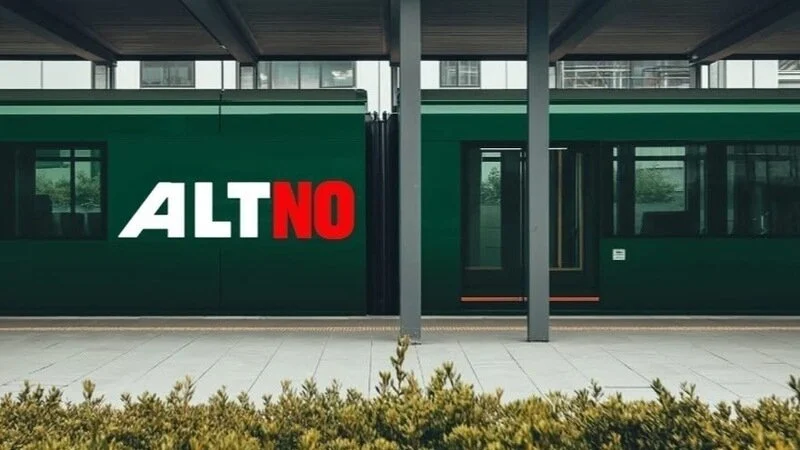
Experience with existing industrial wind power sites and community opposition to expensive, unreliable power generation leads rural municipalities to say NO

December 10, 2024

One of the many effects of the Green Energy and Green Economy Act passed in 2009 by the McGuinty government to give wind and solar power developers an advantage was the removal of local land use planning powers from municipalities.

Today, that authority has been restored by the repeal of the Act (which altered 20 other pieces of legislation), and now, a Municipal Support Resolution is required by the Independent Electricity System Operator or IESO before any power generation contract can be awarded. 

In 2013, in protest against the carpeting of rural Ontario with industrial wind turbines against community wishes, municipalities across the province began passing resolutions declaring themselves to be “Unwilling Hosts” to new industrial wind power sites. The first was Wainfleet, spearheaded by then Mayor April Jeffs, and others quickly followed.

Today, there are 157 Unwilling Host municipalities.

What’s interesting is the fact that most already have operating wind power sites, or they are neighbours to active projects, so they are well aware of the negative impacts.

In Eastern Ontario, several municipalities are now Unwilling Hosts following the 2016 approval of the “Nation Rise” industrial wind power project in North Stormont, and in Renfrew County after there was a spate of wind power proposals. To the south east, Prince Edward County is an Unwilling Host after fighting off at least three wind power projects, and where residents spent more than $1.5 million on appeals and court challenges.

Wind Concerns Ontario recently developed a map of Unwilling Host communities that is a graphic demonstration of the dissatisfaction of municipalities with wind power development, and the fact that after 16 years, the Ontario government has not updated noise or setback regulations. Environmental noise pollution has been a problem for a number of industrial wind power sites.

The IESO is planning a new Request For Proposals, probably coming in January (more details will be revealed in an IESO event this Thursday) but municipalities remain unhappy, as indicated in communications to the IESO during “engagement.” Part of the process is an Agricultural Impact Assessment that must be reviewed and approved by any municipality dealing with proposals for new wind power.

Municipalities say they don’t have the time or the resources to deal with these assessments. And, the timing is not appropriate: a proponent can file a cursory Agricultural Impact Assessment or AIA at the time of proposal and request for a Municipal Support Resolution but a full assessment does not really have to be done until 18 months after the company gets a contract.

That’s still not enough time, said a planner from Oxford County in the IESO November 21 event: there are just too many pieces of these assessments to be looked at. The process may not “align” with reality, she said.

We’ll do our best to keep you informed.

ottawawindconcerns@gmail.com


Ottawa Valley towns on list of 155 Ontario “unwilling hosts” to new wind power sites

14 Tuesday May 2024

Posted by Ottawa Wind Concerns in Uncategorized

≈ 1 Comment

Tags

CTV LOndon, environment, IESO, Multi MUnicipal Energy Working Group, noise, Ottawa, Ottawa wind concerns, Scott MIller, Wind Concerns Ontario, wind turbines

Nothing has changed, says Tom Allwood, Grey Highlands Councillor and Chair of Ontario’s Multi Municipal Energy Working Groups. Noise limits and setbacks are the same–unacceptable, say municipalities

May 14, 2024

CTV News London published a story last week on the 155 Ontario municipalities that have now passed formal resolutions designating themselves as “unwilling hosts” to new industrial wind power sites.

The list of Unwilling Hosts was compiled by Wind Concerns Ontario, a community group coalition concerned about the impacts of industrial wind turbines.

There are several Unwilling Hosts in the Ottawa area including Merrickville-Wolford, Champlain, The Nation in Prescott-Russell, Bonnechere Valley, East Hawkesbury, Greater Madawaska, and North Grenville (Kemptville).

CTV News published the news story featuring interviews with Tom Allwood, councillor for Grey Highlands and chair of the Multi Municipal Energy Working Group, and Jane Wilson, president of Wind Concerns Ontario and chair of Ottawa Wind Concerns.

See the news story link for a video report.

CTV News London

Scott MIller

Ontario is looking to add more renewable energy to its electricity supply, which will likely mean more wind turbines going up across the province.

However, that might be prove difficult with so many municipalities no longer interested in wind.

“I like to say it’s not 2009 anymore. We know a lot more about wind power than we did in 2009. It was supposed to bring lots of jobs. That turned out not to be true. It was going to be a reliable source of power. That turned out not to be true. It was supposed to be cheap power. Not true. Our electricity bills went up 250 per cent after the turbines went up,” said Jane Wilson, founder of Wind Concerns Ontario.

There are 155 Ontario municipalities that have said they are not willing to host wind turbine projects, now or in the future.

Among them, many municipalities in Huron, Bruce, and Grey Counties, where many of the province’s 2,600 turbines are currently spinning.

“The first iteration of wind turbines through the Green Energy Act just took away many siting decisions from municipalities, so that upset a lot of people,” said Grey Highland Coun. and Chair of the Multi Municipal Energy Working Group Tom Allwood.

Ontario’s Independent Electricity System Operator (IESO) has plans to add roughly 5,000 MW of wind, hydro, solar, and biomass energy by 2030. There’s currently 5,500 MW of wind turbines built in Ontario today.

“The federal government is certainly looking towards thousands of new wind turbines. Where are they going to go? The spots that have good wind have been taken,” said Allwood.

But not everyone is sour about the IESO’s renewable renewal. Wind energy is just what Ontario needs, said Jack Gibbons from Ontario’s Clean Air Alliance.

“If we integrate our wind and solar with Quebec’s storage option, then we can convert wind and solar into a firm 24/7 source of baseload electricity for Ontario,” he said.

However, Wilson believes wind energy, as it’s currently implemented, should not be of Ontario’s future energy mix.

“It’s intermittent. It comes in the fall and spring when we don’t really need it. It comes in the night, when we really don’t need it. There are some better choices and cleaner choices. Wind energy is not as clean and green as we were told it was,” said Wilson.

“They haven’t done anything with the setbacks for this round of procurement. They’ve gone out and arranged contracts for battery energy storage, and there’s real concerns about these systems as part of wind generation,” said Allwood.

IESO is seeking proposals for new renewable energy projects this fall.

#UnwillingHost

ottawawindconcerns@gmail.com

IESO announces intent to attract more wind power for Ontario

13 Wednesday Dec 2023

Posted by Ottawa Wind Concerns in Ottawa, Renewable energy, Wind power

≈ 1 Comment

Tags

clean energy, energy poverty, IESO, Ottawa wind concerns, Renewable energy, solar power, Todd Smith, Wind Concerns Ontario, wind energy, wind power, Wind power, wind turbines

New procurement announced, but difference from Green Energy Act is that municipalities now have final say in approvals of siting for projects, and can create bylaws for siting

Turbines and transformer station at Nation Rise wind power plant [submitted photo]

December 12, 2023

Reposted from Wind Concerns Ontario

Ontario’s Independent Electricity System Operator or IESO has announced that it plans another round of procurement for new power generation, which will include “non-emitting” generation such as wind, solar, hydro and bioenergy.

The announcement also states that IESO will look at “options options to re-acquire, upgrade, or expand existing facilities”.

The news release came on the eve of the deadline for the most recent procurement initiative which, the IESO says, was intended to increase capacity. The next round will attract  “new supply will help meet the province’s overall energy needs, according to IESO CEO Lesley Gallinger.

A report in the Toronto Star framed the announcement as the Ford government doing an “about-face” on earlier policies about wind and solar. The Star said that Minister of Energy Todd Smith stated in a speech earlier this week that the Ford government approach would be different.

“Smith was quick to contrast this new round of renewable energy from the previous build out that took place under Liberal governments,” the Star said.

Wind and Green Energy Act was ‘fiasco’

“When we talk about this much renewables, many minds are immediately going to turn to the absolute fiasco that was the Liberal’s Green Energy Act … when wind and solar projects were forced on unwilling host communities,” he said, according to the Star.

“We’re doing it differently by competitively procuring these resources. Based on system need, we can deliver these projects for much lower costs. In fact, the IESO’s report today confirmed that we could get wind and solar for far less than the Liberals (did).”

The Star said “Smith highlighted how the Progressive Conservative approach of competitive procurement has already resulted in recontracting existing generation at 30 per cent below what was being paid before. The IESO estimates the next round of wind contracts will go for less than half of what the province paid in the mid 2000s.”

Wind Concerns Ontario president Jane Wilson* expressed concern over the announcement.

“Everyone knows there has been nothing but problems with Ontario’s wind power fleet,” she explains. “Not only is wind an intermittent, unreliable source of power but it has also caused problems for many of the communities that were forced to ‘host’ these industrial power installations. They produce noise and vibration, and have had other environmental impacts such as disturbing local aquifers and affecting water supply. We know from tracking internal government documents created since 2006 that there are literally thousands of files of noise complaints. And, unfortunately, there are still, after all these years, wind power projects that do not have final audits completed verifying their compliance with regulations. That’s not acceptable.”

Any effects from wind turbines are regulated by the Ministry of Environment, Conservation and Parks. Regulations which include setbacks between wind turbines and homes as well as noise limits, have not been revised since they were created after the Green Energy Act in 2009.

Wind Concerns Ontario says experiences with wind turbines around the world indicate it is past time to review and revise the regulations.

Power is in municipalities’ hands

A critical difference between the current PC government and the previous Green Energy program, Wind Concerns says, is that support from the local municipality is required for renewable energy projects.  Municipalities also have been given back the power to pass zoning by-laws that regulate how turbines are sited in their communities.

These energy policies place Ontario’s municipal Councils at the centre of energy policy debates moving forward.

“At the end of the day, as citizens, taxpayers and ratepayers, we question the value of wind as a reliable source of power,” Wilson says. “Everyone wants to do the right thing for the climate and the environment—intermittent, invasive wind power that effectively industrializes communities, isn’t it.”

contact@windconcernsontario.ca

ottawawindconcerns@gmail.com

*Jane Wilson is also Chair of Ottawa Wind Concerns

What’s your reaction?

Prince Edward County rejects battery storage proposal

24 Tuesday Jan 2023

Posted by Ottawa Wind Concerns in Renewable energy

≈ 1 Comment

Tags

Battery storage, IESO, noise pollution, prince Edward County, Wind Concerns Ontario

RISK OF NOISE, FIRE, ENVIRONMENTAL CONTAMINATION FROM BATTERY STORAGE SYSTEM IS TOO GREAT, SAY RESIDENTS. FEW DETAILS AVAILABLE ON A LARGE ENERGY PROPOSAL: “A PIG IN A POKE”

January 24, 2023

Prince Edward County’s council voted to reject a proposal for a battery storage facility last week, responding to citizen concerns about safety and risk to the environment.

A Battery Energy Storage System or BESS was proposed by Compass Energy, a 250-megawatt facility that would require 15 acres of land.

Ontario’s Independent Electricity System Operator or IESO currently has a Request for Proposals for new power sources; the IESO is looking for 1,500 megawatts of power which can include new projects such as natural gas or wind, and battery storage. The proviso is that the power must be available immediately, and “can deliver a continuous amount of electricity to a connection point on a distribution system or transmission system for at least four consecutive hours,” according to the IESO website.

The Alliance to Protect Prince Edward County or APPEC* made a presentation to council with their concerns about the proposal.

“When we first became aware of the Picton BESS proposal a few months ago, we thought the scale of the project warranted evaluation,” says APPEC president and County resident Orville Walsh.

“We anticipated that [the proponents’] community meeting in early December would provide many of the project details. That turned out not to be the case. According to the project website, they will only be designing or planning the project after obtaining a contract from the IESO.”

Walsh told Prince Edward County Council that on investigation of available information about the project, APPEC concluded that there is no information on the type of equipment that will be used, battery manufacturer, or other electrical components; no information on the HVAC systems to be utilized; no information on fire detection systems, fire suppression systems and equipment; and no noise studies or estimates of environmental noise, which can be significant.

“We can only imagine the noise that could be generated on a warm summer night by 250 HVAC units,” Walsh told Council.

There are few specifics about this project, Walsh explained, “not a single drawing or illustration that is reflective of the scale of the project.  

“Giving support to a project lacking basic information is like buying a pig in a poke,” he said.

Residents of The County were also concerned about the loss of prime agricultural land to the power project, which contravened both the Ontario government’s statements and requirements of the local Official Plan to preserve valuable farmland.

Fire a significant risk

The danger of fire is an “unacceptable risk” from the lithium-ion batteries, say residents. Quoted in a report in the Picton Gazette, resident “Don Wilford spoke to council detailing the environmental devastation that would occur should a fire break out at a 250 megawatt BESS along with the immediate risk to the local population. ‘Lithium-ion batteries are susceptible to fires. At the scale proposed, the fire would cause vast damage to wetlands, the toxic gas plume requiring evacuation of Picton only 5 km away and potential loss of firefighters’ lives,’ Wilford stated.”

Others wondered why the Prince Edward County location was chosen as it is not near major population centres, or power generation facilities. (We can tell you: willing landowners, nothing else.)

Company competence in battery storage

Citizens also noted that the proponent had no experience with battery storage facility construction or operation. Resident Don Wilford presented background information about proponent Compass Energy: it is owned by Irving, which in turn is a subsidiary of Icon Infrastructure, a financial investment firm based in the U.K., he said.

“None of these companies have experience with battery storage,” said Wilford. “It appears Ontario is not only ignoring safer zinc battery tech but outsourcing a key component of its electricity infrastructure to financial companies that will outsource the tech to a systems integrator, which will, in turn, repackage lithium-ion units from major suppliers in China.”

It was also noted that the developer admitted there would be “zero” long term employment opportunities for people in Prince Edward County.

Valuable farmland would be lost

Sophiasburgh Councillor Bill Roberts tabled an amendment to deny the request from Compass Energy, listing all the concerns expressed by community members, adding that the Prince Edward Federation of Agriculture was also no in favour of the project.

“I’m opposed to the use of prime agricultural land for this purpose,” he said according to the story in the Picton Gazette.  “I support the Prince Edward Federation of Agriculture in their opposition to non-agricultural development on prime farmland. I hear convincing and alerting information from the audience,” said Roberts.

Roberts repeated the concerns about the risk of fire: “I find the potential fire and contamination risks compelling. Since 2017 there have been 50 such failures including five at large BESS installations. One in Australia required 150 firefighters and four days to extinguish,” decried Roberts. “I don’t get a sense the proponents have the experience to complete and operate such a giant BESS project. I was particularly struck by the IESO’s own connection site identification, wherein at least 166 sites were deemed preferable.”

Roberts amended motion was seconded by councillor John Hirsch and passed by council.

Battery storage proposals are popping up in various locations throughout the province, with varying degrees of success.

Other projects proposed include solar power facilities. One developer put forward a proposal to the council in Sault Ste Marie but declined to tell the elected representatives where the project might actually be located. At another meeting, the proponent claimed full support by local indigenous communities, which turned out not to be true: there had been some conversations including email exchanges, but there had been no formal expression of support.

In the U.S., energy commentator Robert Bryce says that community opposition to large wind and solar power projects is rising; people understand that wind and solar (and now, battery storage) do little to help the environment or alter climate change, but they do have significant environmental impacts, and cause electricity bills to rise. Bryce maintains a database of community rejections of large renewable energy projects.

Comment: frankly, we cannot understand why any company would want to take on the folks in Prince Edward County. They spent more than 10 years, and more than $1.5 million after-tax dollars to defend the County against four wind power projects, all of which would have endangered wildlife, wetlands, and the fragile topography of the area, as well as having a negative impact on tourism, for which the area is rightly famous.

contact@windconcernsontario.ca

*APPEC is a corporate community group member of Wind Concerns Ontario

REPOSTED FROM WIND CONCERNS ONTARIO with permission

Return of land-use planning for renewable energy means action needed now, Ottawa committee told

04 Thursday Apr 2019

Posted by Ottawa Wind Concerns in Ottawa, Renewable energy, Wind power

≈ 1 Comment

Tags

Ford governent, Green Energy Act, noise, Ottawa, Ottawa wind concerns, rural, Scott Moffatt Ottawa, Wind Concerns Ontario, wind energy, wind turbines

April 4, 2019

The medical report supporting Ontario’s wind turbine noise regulations is now 10 years old–the regulations need to be updated

Ottawa Wind Concerns executive members Jane Wilson and Michael Baggott spoke at the meeting of the Ottawa Agricultural and Rural Affairs Committee (ARAC) today, and alerted the Committee that action is needed following new amendments to regulations on wind turbines by the Ford government.

A wind power project was proposed in 2008 for the North Gower-Richmond area, with potential to spread to Osgoode. The project did not proceed when the Germany-based proponent failed to qualify for the last round of proposals under the Wynne government. It would have exposed hundreds of people to wind power generator noise — that fact was acknowledged at the time by the power developer.

“Today, we know a lot more about wind power,” said Ottawa Wind Concerns Chair Jane Wilson. “We know that many wind turbines in Ontario were sited improperly and we know that many mistakes were made — the former Energy Minister said that in 2017. And, we know there are thousands of records of noise complaints in Ontario, that have not been resolved, and are waiting on enforcement of regulations.”

Now, the new Ontario government is making changes but they require action from Ontario municipalities. Four new amendments to regulations are in response to Ontario municipalities demanding a return of local land-use planning powers, which were stripped from municipalities by the McGuinty government and the Green Energy Act.

“The amendments have not been proclaimed yet,” Wilson said, “but we need to be ready in the event a wind power proposal is made in future.”

One of the proposals is that power developers must balance any environmental impacts against the benefit of their proposed power project. “The problem is,” Wilson told the Committee, “Ontario’s rules on wind turbine noise and setbacks for safety are inadequate and out of date. The supporting document the previous government used is now ten years old, and does not reflect practices in other countries around the world.”

She added that the Ontario regulations on noise do not meet new guidelines published last fall by the World Health Organization.

“You have to remember that wind turbines produce a range of noise emissions— it’s not like barking dogs, or traffic.”

The amended regulations also require power developers to prove their project meets all zoning regulations locally. This is a problem, Wilson said, because under the Green Energy Act, municipalities had no say, so there was no reason for them to have any such zoning or bylaws as would apply to the huge wind power projects.

Ottawa Wind Concerns referred to a comment document prepared by Wind Concerns Ontario, which recommended municipalities ask the Ford government for a transition period in which they could begin the work on bylaws, and to develop new, adequate rules for setbacks between homes and turbines, and new noise limits for wind turbines.

Ottawa has already shown leadership Wilson said, in passing a bylaw asking for “substantive” input to wind turbine projects, and now is the time to take action to protect residents from the industrial-scale wind power projects.

Councillor Scott Moffatt thanked the presenters for the information, and also Wind Concerns Ontario for its work to protect rural communities.

Several North Gower residents attended the meeting.

OttawaWindConcerns@gmail.com

Presentation here: NOTES FOR ARAC presentation-Apr4-2019

Wind Concerns Ontario regulation summary document: Summary of Regulation Changes jan 3

Nation Rise wind power project likely to create noise, health problems: WCO president

07 Tuesday Aug 2018

Posted by Ottawa Wind Concerns in Health, Renewable energy, Wind power

≈ 1 Comment

Tags

adverse health effects, EDP Renewables, environmental noise, ERT, Health, Nation Rise, Ontario Ministry of Environment, Wind Concerns Ontario, wind farm, wind turbine noise

(C) ONTARIO FARMER

July 31, 2018

Report by Tom van Dusen

Finch, Ontario — Sitting demurely and speaking quietly, on July 24 the volunteer president of Wind Concerns Ontario blasted the provincial government approach to monitoring industrial wind turbines, accusing it of ignoring complaints about noise, health and other issues, or deferring them with no subsequent action.

Jane Wilson made  her comments while presenting as a witness during an Environmental Review Tribunal hearing into the Nation Rise wind power project planned for Stormont County. The hearing is scheduled to continue through August 2.

Currently engaged in the approval process, the project is sponsored by EDP Renewables Canada and calls for installation of some 33 turbines in North Stormont farm country delivering a total of 100 megawatts of power that, opponents observe, the province doesn’t need.

Headed by local resident Margaret Benke, opponents were hopeful the new Doug Ford government would cancel Nation Rise just as it did the White Pines wind project in Prince Edward County. But that didn’t happen and opponents’ legal fees and other expenses are up to $20,000. Benke noted that, with Ford in place, Nation Rise isn’t likely to proceed and yet opposing residents are still on the hook for costs.

Government not enforcing the law

A registered nurse, Wilson said Wind Concerns represents a coalition of more than 30 community groups across Ontario.

She emphasized that the Ministry of the Environment and Climate Change–renamed Environment, Conservation and Parks — has pledged to protect the environment and human health from any turbine side effects.

She cited former Environment Minister Glen Murray congratulating his officials for responding quickly to complaints and enforcing the law. However, Wilson’s review of incident reports obtained through Access to Information indicated the ministry doesn’t respond to all complaints and “does not, therefore, enforce the law.”

No answer to that

Total number of incident reports filed with the ministry between 2006 and 2016 was 4,574, Wilson told Maureen Cartier-Whitney, chair of the one-person panel. Records showed that in more than 50 per cent of formal complaints, there was no ministry response. Another 30 per cent were deferred. “In fact, only one percent received priority response.”

While he asked for some clarification, Paul McCulloch of the ministry’s Legal Services Branch, didn’t dispute Wilson’s basic facts. Representing EDP, lawyer . Grant Worden also offered no challenges to Wilson.

The repetitive nature of various complaints suggests, Wilson continue, that wind power developers are failing to live up to the terms of their approvals by allowing conditions triggering adverse effects including on health, to continue.

“Documented health effects include headache, sleep deprivation, annoyance, and ringing or pressure sensation in the head and ears. Most disturbing was the fact that these health effects were reported many times, and also among children.”

Wilson indicated that 39 per cent of 2006-2016 incident reports referred explicitly to sleep disturbance which is generally blamed for a myriad of diseases and disorders.

“Given the thousands of unresolved noise complaints in Ontario, and given Health Canada results of adverse health effects at distances of 550 metres to 1 km, it is reasonable to question whether the Nation Rise power project will not also engender community reports of excessive noise and adverse effects.”

contact@windconcernsontario.ca

To help support the appeal, which is bringing forward issues never presented to the ERT before, please send a cheque to Concerned Citizens of North Stormont, c/o Wind Concerns Ontario, PO Box 509, 250 Wellington main Street, Wellington ON  K0K 3L0


Nation Rise project: significant concerns over health, environmental damage


North Stormont community fight for environment begins Monday

22 Sunday Jul 2018

Posted by Ottawa Wind Concerns in Health, Ottawa, Renewable energy, Wind power

≈ 1 Comment

Tags

EDP Renewables, environment and energy, Environmental Review Tribunal, Eric K Gillespie, ERT, Ministry of Environment Conservation and Parks, renewable energy, William Palmer, Wind Concerns Ontario, wind farm, wind power

Citizens of North Stormont are preparing for their appeal of the 100-megawatt wind power project, which begins Monday in Finch before the Environmental Review Tribunal

Wind turbine near Brinston, south of Ottawa: citizen reports of noise from industrial wind turbines are unresolved in Ontario [Photo: Ray Pilon]

July 22, 2018

In a bizarre fight which sees ordinary citizens marshalling scarce after-tax dollars to fight the Ontario government’s environment ministry to try to protect the environment (and safety and health), the Concerned Citizens of North Stormont begins its appeal of the 100-megawatt “Nation Rise” wind power project tomorrow, July 23rd.

The appeal goes before the quasi-judicial Environmental Review Tribunal, a panel that is part of the Environment and Lands Tribunals (ELTO) of Ontario.

Almost every single wind power project in Ontario has been appealed, but there have been few victories in a system apparently set up to favour the power developers. Most successful appeals were won on blatant risks to wildlife and the environment, and one on aviation safety (the completely insane Fairview Wind project, planned between two airports near Collingwood).

Despite decisions that note the pain suffered by people forced to live inside wind power projects, the Tribunal has refused to consider any risk to health from the huge industrial-scale wind turbines, that do emit a range of noise.*

The power developer, Portugal-based EDP, is represented by John Terry of international law firm Torys LLP; Mr Terry has also represented the wind industry lobbyist and trade association, CanWEA, in the past. The new environment ministry, now the Ministry of the Environment, Conservation and Parks or MECP, will also be represented by a team of lawyers.

The citizens’ group will be represented by lawyers from the environmental law firm of Eric K. Gillespie.

Risks to environment, safety and health

The community concerns filed with the Notice of Appeal include the danger to the area water supply (most of the project is on a “highly vulnerable” aquifer), safety from turbine operations, and health impacts from the noise from the industrial-scale wind power generators/turbines.

Tomorrow’s appearance will consist of Opening Statements, and a series of presenters including mechanical engineer Vern Martin, who will discuss safety concerns posed by the wind turbines and blades.

Tuesday, the themes are noise and health, and public safety, with Wind Concerns Ontario president Jane Wilson presenting data on the thousands of noise complaints lodged with the Ontario government which have not been resolved. Engineer William Palmer will present information on turbine events in Ontario related to debris and ice throw from the turbine blades.

Thursday will see appellant presenters discussing the risk to the aquifer and local water wells, posed by the foundation construction and wind turbine vibration.

The proceedings will take place in the Finch Community Centre and Arena, beginning at 9 a.m., and are open to the public.

Fund-raising for the citizen effort to protect the community is ongoing, please see the Go Fund Me link, here.

contact@windconcernsontario.ca

  • From the report on wind turbine noise by the Council of Canadian Academies, 2015: “Wind turbines are a particularly complex and distinctive source of sound, which can span a wide range of frequencies including low-frequency tones. …The evidence shows a positive relationship between outdoor wind turbine noise levels and the proportion of people who report high levels of annoyance. (“Annoyance” is employed here as a medical term denoting stress or distress. Annoyance is listed by the World Health Organization as an adverse health effect.)

Rural Ontario heartbreak: wind power invasion was all for nothing

13 Wednesday Jun 2018

Posted by Ottawa Wind Concerns in Uncategorized

≈ 4 Comments

Tags

EDPR, hydro bills, La Nation, North Stormont, renewables, RES Canada, Steve Aplin, Wind Concerns Ontario, wind energy, wind farm, wind power, wind turbines

June 13, 2018

Many analysts and commentators are now looking over the ruins of the Ontario government from the election last week, and pointing to the McGuinty-Wynne government’s disastrous handling of the electricity sector, particularly the ideology-driven push for renewables, as a factor.

Two Auditors General said Ontario had never done a cost-benefit analysis for its aggressive support of industrial-scale wind power and that we were paying too much — far too much — for the power. Which was intermittent and unreliable to boot, so it could never do what they said it would.

Now, Ottawa-based energy insider Steve Aplin says, not only was large-scale wind expensive it was also a waste of time: wind power has never been shown to reduce CO2 or carbon emissions.

Never.

Wind did not replace the power produced by Ontario’s shuttered coal plants, gas and nuclear did.

Read Mr Aplin’s excellent analysis here, but remember, a 100-megawatt power project was just approved for North Stormont, just south of Ottawa, and an approval is pending for another project east, in The Nation.

Neither community wants the power projects, there are significant environmental concerns, and Ontario doesn’t need the intermittent power produced out-of-phase with demand.

For a list of other comments on the election and the role of Ontario’s renewable power program, please go to http://www.windconcernsontario.ca


Most Ontario wind farms are foreign-owned: Wind Concerns Ontario

16 Monday Apr 2018

Posted by Ottawa Wind Concerns in Renewable energy, Wind power

≈ Leave a comment

Tags

FIT Ontario, Green Energy Act, hydro bills Ontario, IESO, renewables, Wind Concerns Ontario, wind farm, wind farm Ontario

April 16, 2018

The rainbow didn’t end in Ontario after all …

Wind Concerns Ontario, the coalition of more than 30 community groups and hundreds of individuals and families, published a review of the ownership of large-scale Ontario wind power projects yesterday, and revealed that nearly 80 percent of the power projects are owned by offshore corporations.

The developers were attracted by the tax breaks, subsidies and other incentives offered by the Ontario government.

Two new wind power projects currently have contracts in the Ottawa area: “Eastern Fields” in The Nation, proposed by foreign-owned RES Canada, and “Nation Rise” in North Stormont by EDP Renewables of Spain. EDPR also operates the South Branch project in Brinston, south-east of Ottawa, which was originally developed by Germany-based Prowind.

Here is the article reposted from Wind Concerns Ontario’s website at www.windconcernsontario.ca

Follow the money … out of Ontario

A profile of who’s who in Ontario wind power development

Tax benefits and subsidies were important incentives


With the recent announcement that the Canada Pension Plan decided to purchase some of U.S. energy giant NextEra’s wind and solar portfolio (a $741M CAD deal that also involves assuming $800M in debt), many people are suddenly noticing ownership of Canada’s renewable power sector.

A popular view of the wind industry in Ontario is that it is composed predominantly of Canadian companies in an “infant industry” that needs government subsidies to survive. The reality only becomes clear when one looks behind the scenes at the actual participants in the industry.

Ontario’s industrial wind generators enjoy the benefits of many federal and provincial programs, all of which were intended to ease their access to financing and improve investors’ returns. The list of special incentives is a long one, but here are the five most important:


  • The implementation of special feed-in-tariff (FIT) rates far above the market rates received by conventional energy producers; these rates started at $135 per megawatt hour (MWh) and have only recently declined to $125 per MWh;
  • The guarantee of these rates for the twenty-year life of the contracts;
  • Granting wind and other renewable energy sources priority access, or “first-to-the-grid” rights, requiring the Independent Electricity System Operator to take their production whenever it was available, even when that meant curtailing the purchase of other (often cheaper) generation or dumping surplus energy at distressed prices on export markets;
  • Special tax benefits, including the federal government’s accelerated capital cost allowances and the Canadian Renewable and Conservation Expenses allowance and the Ontario government’s cap on the property taxes that industrial wind turbines pay to local municipalities;
  • Other subsidies, including the federal government ECOenergy for Renewable Power Program, $1.4 billion over five years in Budget 2017, and continuing large research and development assistance.


As a result, the Ontario wind industry, in general, has found the “pot of gold”, a level of income and wealth that far exceeds its general image. To illustrate this, let us examine some of the most prominent firms in the industry.

Here is a summary of the companies active in Ontario both as developers and operators, with financial statistics gleaned to the best of our knowledge and ability.


Acciona: With headquarters in Madrid, Spain, Acciona develops and builds power projects for itself and third-party companies in 20 countries worldwide. In Ontario Acciona operates the 76-MW Ripley wind power project. As part of its “wind power value chain” the company also manufactures some turbine components. Revenue in 2017 was €7.2B and net income was €220M or $350M CAD. Chairman is José Manuel Entrecanales; no compensation data is available.

Boralex: HQ France. Ontario Projects are Port Ryerse (10 MW) and the proposed/contracted Otter Creek (50 MW). Revenue from energy sales in 2017 to September 30 were $285M CAD. Total equity: $2.7B USD. Compensation for CEO Patrick Lemaire was $1.2M CAD in 2016.

Brookfield Renewable Energy Partners: Headquartered in Bermuda with an office in Toronto, Brookfield is “multi-technology, globally diversified, owner and operator of renewable power assets” which includes more than 70 wind power projects around the world. In Ontario the company operates the 189-MW Prince project, Comber (165 MW) and Gosfield (50.6 MW) Brookfield also owns 51% of US-based Terraform Power, which operates the Raleigh Wind Farm. North American revenue in 2017 was $1B USD. CEO is Sachin Shah; 2016 compensation was $3.8M USD.


EDF Renewables: This company is associated with EDF or Electricité du France, the Power utility in France. Headquarters for EDF Renewables is in San Diego, California; the company operates in Canada as EDF EN Canada (EDF Energie Nouvelles). EDF EN Canada currently has a contract for the 60-MW Romney Wind power project. CEO is Tristan Grimbert. No further financial data is available.

EDP Renewables : EDPR is a division of EDP or Energias du Portugal. The company’s headquarters are in Oviedo, Spain. EDPR claims to be the world’s fourth largest wind power developer. In 2017, the company states, it produced 27,600 GWh of power from wind. In Ontario, it operates the 30-MW South Branch project between Ottawa and Cornwall, and currently has a contract for the 100-MW Nation Rise project in North Stormont, south of Ottawa. Revenues in 2017 worldwide were €1.3 M or $2M CAD. CEO of EDPR is Joᾶo Manso Neta; there is no compensation data available for the CEO. In June 2017 it was announced that the CEO of parent company EDP was being investigated on corruption charges related to power contracts; the CEO of EDPR was also being investigated, but there has been no news since of any charges.

Engie: Based in France, with North American Headquarters in Houston, Texas, and an Ontario office in Markham. This company bought AIM Power Gen (operated by Mike Crawley who is known to many Ontarians, and is now VP at Northland) which had become GDF Suez; it now operates the wind power projects at Cultus-Clear Creek Frogmore (30-MW), Harrow (40 MW), Erieau (99 MW), East St. Clair (99MW), Plateau (27 MW), and Point Aux Roches (49 MW). Revenue for 2016 was €13M or $20M CAD. CEO is Isabelle Kocher, whose 2016 compensation was €2.8M or $4.4M CAD.

Horizon Wind: See EDPR. The Horizon “Legacy” company operates the 10-MW Ernestown Wind project near Kingston.

Invenergy: This U.S.-based company has its headquarters in Chicago, and offices in Toronto, Denver and Mexico City plus a European office in Warsaw. It currently manages or has developed 82 wind power projects. Net worth is approximately $1B USD. Current Ontario project: Strong Breezes Dutton Dunwich (57.5 MW). Invenergy also developed the 78-MW Raleigh Wind project, which it sold to TerraForm and Sun Edison. Invenergy had proposed a project in North Perth, but the contract with IESO was terminated when it became impossible for the company to meet the contracted amount of power generation, due in part to citizen action and community opposition.

Longyuan Canada Renewables/China Longyuan Power Group: With 10,000 wind turbines worldwide in its portfolio producing 17,000 MW of power, the China Longyuan Group is the world’s largest wind power developer. The company also produces power from coal, and has minor interests in thermal, biomass and solar. Wholly owned subsidiary Longyuan Canada Renewables is headquartered in Toronto with nine employees, and operates the 91.4-MW Dufferin Wind power project (Melancthon). President is Zhu Dong; no compensation data is available. The company recently applied for an amendment to its renewable energy approval, to install optimization software which will increase power output but not exceed its nameplate capacity of 99MW. Operating profits for China Longyuan in 2017 were CNY 8.3B ($1.7B CAD), up from 2016 due to higher prices for coal. The President/General Manager is Li Enyi whose 2016 compensation is reported by Bloomberg as CNY 1,074,00 ($219,000 CAD)

NextEra Energy: NextEra Energy Canada is a division of NextEra Energy Inc. The company’s headquarters are in Juno Beach, Florida FL with a Canadian office on Bay Street in Toronto. NextEra operates the following Ontario wind power projects under contract to the provincial government: Conestogo (22.9 MW), Jericho (149 MW), Adelaide (60 MW), Bluewater (60 MW), Summerhaven (124.4 MW), Goshen (102 MW), Cedar Point II (100 MW), Bornish (73.5MW), and East Durham (22 MW). Income of the parent company was $5.3B USD; president and CEO James Robo earned a base salary in 2016 of $1.3 M USD but topped it up with incentives, bonuses and stock options for a total compensation package of $16M USD. On April 2, 2018, it was announced that the Canada Pension Plan had agreed to purchase four NextEra wind facilities, plus two solar projects, in Ontario; the deal is subject to Canadian regulatory approval and if approved, may close in the second quarter of 2018.

RES Group, operating in Canada as RES Canada: Headquarters are in the UK with a Canadian office in Montreal. RES’ slogan is “Power for Good.” The company boasts a portfolio of more than 7,000 wind turbines and asset management of 2 GW of wind power generating facilities. RES Group was the subject of a BBC documentary called “Blown Apart” which featured an RES employee “Rachel” who infiltrated a village community with dreams of a green future for her community, only to be revealed eventually as a corporate operative trying to get people to sign wind turbine leases. In Ontario, RES was involved in construction of South Kent Wind, Brooke-Alvinston, Grand Valley 3, and Gunn’s Hill, and as a developer, has a contract for the 32-MW Eastern Fields in The Nation, near Ottawa. RES bills itself as a full-service provider, offering asset management and project design services. No data found on earnings, and no information on compensation for CEO Ivor Catta.

Pattern/Pattern Energy Group: The company’s slogan is “Transitioning the world to Renewable Energy.” Headquarters are in San Francisco; the company operates the Belle River (see Samsung), and North Kent projects in Ontario, is a partner in K2Wind, and is constructing the Henvey Inlet 300-megawatt project. 2017 revenues were $411.3 million USD. CEO/President is Michael Garland, whose 2016 compensation was $2.7 MM ($430.7K salary, $456K bonuses, and $1.8MM stock).

Prowind: Prowind is a very small player but managed to attract attention for its 18-MW Gunn’s Hill project near Woodstock, which it claims is a totally community endeavour. In fact, the lone community member in the investment leadership group went on to be president of Prowind Canada, and other “community” members were Toronto-based environmental organizations. The community launched an appeal of the REA, but was not successful. Prowind is a subsidiary of Prowind GmBH of Germany; president and CEO in North America is Frank Mascia and chair is Johannes Busmann. No financial data is available.

Samsung Renewable Energy: The company is a division of Samsung C&T Investment Trading Group. Samsung C&T is headquartered in Korea; there is an office in Canada located in Mississauga. Samsung developed the huge 270-MW K2 Wind project with Pattern and Capital Power, (its share was sold in 2016 to insurance giant ManuLife, the Alberta Teachers Retirement Fund and Toronto-based Axium). Samsung operates three wind power projects in Ontario: Belle River (100 MW) , Armow (180 MW), and South and North Kent (270 and 100 MW respectively). Samsung, also known as “the Korean consortium,” was given an extraordinary contract by the Ontario government in 2010 to buy $9.7B CAD worth of electricity. The contract amount was slashed by a third in 2013; the government claimed Samsung had missed some deadlines, but the fact is, that much power was not (is not) needed. Canadian vice-president is Steve Cho; Samsung C&T president and CEO is Chi H. Choi; no compensation data is available. Samsung C&T operating profits in 2017 were 881.3B won or $1.05B CAD.

Saturn Power: Saturn operates the 10-megawatt Gesner project. It is a private company so no financials are available; headquarters are in Baden, Germany.

Terraform Power: Headquartered in Bethesda, MD, Terraform is the “owner and operator of a 2,600 MW diversified portfolio of high-quality solar and wind assets, primarily in the U.S., underpinned by long-term contracts” which includes the 78-MW Raleigh Wind project, which it purchased from Invenergy. Revenue for 2017 according to the company pro forma was estimated to be $585 M USD. CEO is John Stinebaugh; no compensation data available.

Veresen Inc.: Veresen was the owner and operator of the 20-MW Grand Valley 1 wind power project; the company was recently acquired by Pembina in 2017 for $6.4B CAD.

WPD Canada: This is a wholly owned subsidiary of WPD Europe/WPD AG, a private company headquartered in Bremen, Germany. The Canadian office is in Mississauga. The company is active in 18 countries and says it has installed 1,700 wind turbines. In Ontario, WPD operates the Springwood (8.2 MW), Whittington (6 MW), Napier (4 MW) and Sumac Ridge (10.25 MW) projects, and has a contract (currently being disputed in the courts by a citizens’ group) for the 18-MW White Pines project in Prince Edward County. WPD Power’s CEO is Dr. Gernot Blanke; no compensation data is available


Canadian companies: the minority

Algonquin Power & Utilities Corp.: Algonquin is described as a Canadian utility involved in the generation, transmission and distribution of power. The headquarters are in Oakville, Ontario. At present in Ontario, the company’s wholly owned subsidiary Windlectric Inc. sold half its lone wind project to Newfoundland-based construction company Pennecon to build a 75-MW wind power project on Amherst Island. Algonquin Power is estimated to have $10B CAD in assets. With a five-year return of 73% the company has been the darling of Canadian investors but has tumbled with a more recent 1-year return of 2.06%. CEO of Algonquin is Ian Robertson, whose 2016 compensation was $3.5M according to Reuters; Pennecon’s president is David Mitchell for whom no compensation data is available.

BluEarth Renewables: With headquarters in Calgary, Alberta, BluEarth is described as a “private independent” company whose major shareholder is in fact the Ontario Teachers Pension Plan. It operates two wind power projects in Ontario: Bow Lake Wind (60-MW), and St Columban (33 MW). In February 2018, BluEarth announced a deal with Veresen in which it would acquire an interest in three Ontario wind power projects, with a view to own and operate, in the long term.   Net worth is estimated at $10B CAD. President and CEO is Grant Arnold; no compensation data is available.

Capital Power: Based in Edmonton, Capital is involved in a variety of power generating enterprises, including wind; Capital is a partner in K2 Wind, and operates the 40-MW Kingsbridge project in Ontario. Revenues in 2017 were $1B and net income was $144M. CEO is Brian Vaasjo whose 2016 compensation was $2.9M.

Enbridge: The company is best known as a producer of fossil fuels in Canada. Headquartered in Calgary, Alberta the company says it transports, generates and distributes energy, in that order. It operates 16 wind power projects in North America, including the Talbot (98.9 MW) and Underwood (181.5 MW) power facilities in Ontario. Adjusted earnings for 2017 were $3.2B CAD of which “green power” earnings were $101MM. CEO until recently was Al Monaco who is listed as one of Canada’s 100 highest paid executives with a base salary of $1.377MM and total compensation of $11.391MM.

Kruger Energy: Kruger is a family-owned company headquartered in Montreal that is involved in paper, paperboard recycling, and energy. Kruger Energy was founded in 2004 to develop power projects in Canada, and currently operates the 101.2-megawatt facility at Port Alma, and the 99.4-MW Kruger Chatham Wind Farm in Ontario. The company also put forward a proposal in 2015 for another Chatham-Kent facility. The company is privately held by the Kruger family. CEO is Jean Roy; no compensation data is available.

Northland: Northland is a rare bird in wind power development in Ontario, with headquarters in Toronto. The company operates two wind power projects at present: McLean’s Mountain on Manitoulin Island (60 MW), and the Grand Bend facility in Zurich (100 MW). Profits for 2017 were up 37% to $1.2B CAD, with net income up 45% to $276 MM. Northland is involved in two offshore wind projects in Europe and owns 100% of the Nordsee wind power project. Northland is also involved in solar projects in Ontario. CEO is John Brace whose 2016 compensations was $1.9MM CAD ($473K salary, $1MM stock, and $9,000 “other”). Also on Northland’s executive team is Mike Crawley, former CEO of AIM PowerGen and also famously chair of a McGuinty government panel that looked at a mix of energy resources for Ontario, and he was later president of the Ontario Liberal Party, and subsequently, the Liberal Party of Canada. Mr. Crawley’s 2016 compensation was $923K.

Suncor: The company describes itself as an “integrated energy company.” With headquarters in Calgary, Alberta, Suncor currently operates four wind power projects in Canada, one of which is the Adelaide power project. But the company used to own more: in 2015, however, Suncor announced it was divesting almost all its wind assets, particularly in Ontario, and so sold off Ripley and Cedar Point as well as its share in the Kent Breeze project. Funds from operations in 2017 were $3B CAD. CEO is Steven Williams who is also listed by Canadian Business as one of Canada’s 100 highest paid executives. His base salary in 2017 was $1.375M, and total compensation was $11.482M.

TransAlta: Based in Calgary, TransAlta owns and operates the wind power project on Wolfe Island (famous for being one of the wind power projects with the highest number of bird kills in North America) and phases 1 and 2 of the Melancthon project in Shelburne (199 MW). The company claims production of 2,300 megawatts of power, of which 54% is from wind, in 18 facilities around the world. Wolfe Island and Melancthon 2 receive payments not only from their power purchase agreements with Ontario but also federal ECOenergy payments. Revenues for 2017 were $2.3B with operating income of $138M. The President and CEO is Dawn Farrell whose compensation came under fire in 2017 at the shareholders’ meeting; they objected to the 60% rise in compensation. Ms Farrell was paid $7.4M, which included a base salary of $960,000 plus stock options and bonuses.

Ownership at a glance

Developer ownership Megawatts in operation/planned Ontario
Non-Canadian 4,023.35
Canadian 1,048

Almost 80 percent of Ontario’s wind power projects are owned by non-Canadian companies


Suppliers:

Senvion Canada: Senvion Canada is a division of Germany-based Senvion S.A., one of the world’s leading turbine manufacturers. The company began operating in Canada in 2009 and now has more than 660 turbines installed. Senvion Canada is headquartered in Montreal, Quebec, with offices in Toronto, Ontario and Vancouver, British Columbia. Senvion’s 2017 revenue was €1.8M ($2.8 CAD), sales or “order book” were €5B ($8B CAD). Senvion is owned by Centerbridge Partners, a New York-based private equity firm. CEO is Jurgen Geissinger; no compensation data is available.

GE Renewable Power is a division of GE or General Electric, which is aiming to profit from the renewables sector by manufacturing equipment including turbines. GE headquarters are is Boston, Massachusetts. In Canada, GE manufactures wind turbine blades at a plant in Gaspé. Profits have been down lately for the company, with a 1-year return on investment of -54%. In 2017, operating cash flow was $10B USD. CEO of GE Renewables is Jérôme Pécresse; no compensation data is available.

Vestas Wind Systems: Based in Aarhus, Denmark, publicly owned Vestas is perhaps the best known among wind turbine suppliers. According to one 2015 industry article, Vestas is the number one company in the world for turbine installations. Annual revenues for 2017 were €9.9B or $15.5B CAD, and operating profit was €1.6B or $2.5B CAD. CEO is Anders Runevad, who came on board in 2013 to help shift the company back to good fortune. Mr. Runevad maintains a low public profile and there is no compensation data available.

Siemens Canada is a division of worldwide engineering firm, Siemens AG, headquartered in Munich, Germany. Siemens Canada claims expertise in the fields of electrification, automation and digitalization and is involved in sustainable energy, “intelligent infrastructure,” healthcare and manufacturing. One of the world’s largest producers of energy-efficient, resource-saving technologies, Siemens is a foremost supplier of power generation and power transmission solutions. The company is also a leading provider of medical imaging equipment and laboratory diagnostics as well as clinical IT. With Headquarters in Canada in Oakville, Siemens Canada has approximately 5,000 employees, 44 offices and 15 production facilities from coast-to-coast. Siemens AG assets as of 2017 were €134B or $214.6B CAD; revenue was €83B ($9.61B CAD); operating cash flow was €6B ($132B CAD). Siemens Canada President and CEO is Faisil Kazi; no compensation data is available.


Aecon: This Canadian construction company is engaged in infrastructure and energy projects throughout Canada. The company is currently in negotiations to be sold to Chinese company CCCC International, but the sale is under review by the federal government on the grounds of national security interests. Aecon has headquarters for various regions but the Canada East office is in Toronto. Financial results were presented under Infrastructure and Energy—we’re not sure where the company’s work for wind power developers fits. Results for 2017 are: Infrastructure revenues $685M CAD and operating profit was $32.5 M CAD; Energy revenues were $395.7 M, and operating profits were $23.1M. Total assets for Aecon were $2.5B. President and CEO is John M. Beck whose 2016 compensation was $3.6M.

***

Thanks to energy economist Robert Lyman and energy commentator Parker Gallant for their input. Sources: company financial reports, Bloomberg, Reuters, Canadian Business

contact@windconcernsontario.ca


Honesty required for new Environment Minister

01 Tuesday Aug 2017

Posted by Ottawa Wind Concerns in Health, Renewable energy, Wind power

≈ 3 Comments

Tags

Chris Ballard, EDP Renewables, environmental damage wind farm, Jane Wilson, La Nation, MOECC, North Stormont, Ottawa wind farms, RES Canada, Wind Concerns Ontario, wind farm noise, wind farms, wind power, wind turbine noise, Wynne government

EDP wind turbine and home at South Branch project, Brinston, Ontario. Problems unresolved. [Photo by Ray Pilon, Ottawa]

With more wind power projects queued up for environmental approvals to produce intermittent electrical power Ontario doesn’t need, Ontario’s new Minister of the Environment and Climate Change needs a fresh approach.

The previous Minister left thousands of complaints about noise and vibration unresolved, and did not follow through on promises to help people affected by the huge wind turbine installations.

Right now, in the Ottawa area, two projects are planned: the “Eastern Fields” in The Nation and “Nation Rise” in North Stormont. Both are opposed by their communities, both projects will come with negative environmental and social impacts, and neither will produce power that’s needed.

Wind Concerns Ontario has sent a letter to the new Minister with a “To Do” list for his immediate attention.

Here it is:

To the Honourable Chris Ballard

Minister of the Environment and Climate Change

Queen’s Park, Toronto

Welcome to your new position as Minister of the Environment and Climate Change.

Unfortunately, Minister Glen Murray has left you an extensive list of action items requiring your immediate follow-up. We highlight the key issues for you in the following list, related to Ontario’s energy policy and wind power projects.

White Pines – Withdraw the Renewable Energy Approval for this project as developer wpd cannot meet the terms of their contract. There are significant environmental concerns with this project that remain, even after a successful appeal by citizens before the Environmental Review Tribunal.

Amherst Island – Rescind Renewable Energy Approval for this project which is planned for the tiny island heritage community. Significant environmental risks are present including the serious impact on migrating birds that congregate in this area; Ontario does not need the power from this project.

Saugeen Shores – The single wind turbine at the Unifor educational facility has been fraught with problems and engendered hundreds of complaints about excessive noise. This turbine would not be allowed under present regulations. You can immediately address the failure to meet a June 30 deadline for submission of a compliance audit report.

K2 Wind – This is another wind power project, a large one, with many problems in its relatively short history. You can deliver on Minister Glen Murray’s mid-May commitment to Black family, and others, to provide a solution to wind turbines that MOECC testing indicated were not compliant with Ontario regulations to protect the environment and health.

Address Concerns Raised at Request of Minister Murray – Many people across Ontario took Minister Murray at his word when he said that there were no complaints reaching his office and that he would ensure his officials responded quickly to address the issues. They wrote to him and are still waiting for action on their issues.

Complaint Tracking Process – Complaint records released to WCO in response to an FOI request indicate that the MOECC does not respond to most complaints about wind turbine noise. These complaints should be a source of learning for the Ministry rather than being ignored as currently appears to be the case. A full revision of the process is needed to ensure that complaints are actually resolved with procedures that allow the Minister’s office to track resolution. MOECC records indicate little or no resolution of more than 3,100 formal Pollution Reports made by Ontario citizens between 2006 and 2014.

REA Approval Process – Increase setbacks from residences to reflect learning from MOECC complaint records that include staff reports that confirm that current regulations are not sufficient to protect health of residents living in wind projects. Last week, the Supreme Court of Canada set out standards for consultations with communities which are substantially more rigorous than the standards used for Ontario Renewable Energy Projects.

MOECC Noise Modeling Procedures – implement new noise modeling procedures based on MOECC internal testing that demonstrates wind turbines routinely exceed predicted levels.

Otter Creek – Retract decision to deem this application “complete” for the Renewable Energy Approval process. The proponent is unable to provide noise emission data for the turbine equipment proposed. The noise report submitted with the application for a REA is not grounded in fact but rather is estimates based estimates. Also, a full MOECC investigation of the impact on well water is required.

LRP I Contracts – suspend REA process for remaining LRP I projects until full review of requirements based on internal complaint records is completed.

Noise Compliance Audit Protocol – Expand the wind speeds covered under the protocol to include wind speeds below 4 metres/second which are the source of a substantial portion of complaints about excessive noise. Even MOECC testing shows these wind speeds are the source of noise levels exceeding 40 dB(A), which completely undercuts the credibility of this audit process.

REA Enforcement – REA terms make the project operator responsible for addressing the concerns raised in each complaint to ensure that it does not recur. The MOECC needs to follow up on all operating with projects to ensure compliance with these terms and take action where it is not occurring.

Shadow Flicker – The flickering shadows produced when a turbine is positioned between the rising or setting sun is a major irritant for residents. It is not considered in the REA approvals and is easy to address by turning off the turbine for the times when it is casting moving shadows on a house.  In some projects, these changes have been implemented by the wind company but in other MOECC staff is telling residents no action is required, even though the REA requires the wind company to address complaints like these.

Infrasound – Expand MOECC testing to include the full range of noise emissions from wind turbines as independent testing shows the presence of elevated levels of infrasound in homes where residents have had to leave to protect their health.

Health Studies – The Ministry has been telling residents that its policy is based on the “best science” available since the first turbine projects were built. MOECC records clearly show that this is not correct, but the Ministry continues to be willfully blind to input from both residents and its own staff, quoting dated and selective literature reviews in a field where the science is rapidly evolving.  The need for noise studies and other investigation has been highlighted in numerous reports but never undertaken.  It is time for some serious field studies of the problems being caused by wind turbine projects in rural communities across Ontario. This was an information gap identified in 2010 by Ontario’s Chief Medical Officer of Health.


Last, it is important that as you prepare for this major portfolio, you understand that industrial-scale wind power generation does NOT benefit the environment.

Wind power generation on this scale is a high-impact development for little benefit, if any. Two Auditors General for Ontario recommended that Ontario undertake a cost-benefit and/or impact analysis — that has never been done.

We ask you to approach this issue with honesty and honour, and respect the wishes of the citizens of rural Ontario.

Sincerely,

Jane Wilson

President

Wind Concerns Ontario

Wind Concerns Ontario is a coalition of community groups, individuals and families concerned about the impact of industrial-scale wind power development on Ontario’s economy, the natural environment, and human health.

*Ottawa Wind Concerns is a community group member of Wind Concerns Ontario

ottawawindconcerns@gmail.com

← Older posts

Recent Posts

  • Open letter to CAFES Ottawa
  • Ottawa Wind Concerns supports West Carleton residents
  • What does wind ‘farm’ construction really look like?
  • Unwilling Host communities surround Ottawa
  • How many birds do wind turbines kill?

Follow me on Twitter

My Tweets

Enter your email address to follow this blog and receive notifications of new posts by email.

Tags

Bob Chiarelli Green Energy Act IESO Ontario Ottawa Ottawa wind concerns wind energy wind farm wind power wind turbines

Contact us

PO Box 3 North Gower ON K0A 2T0

Blog at WordPress.com.

Privacy & Cookies: This site uses cookies. By continuing to use this website, you agree to their use.
To find out more, including how to control cookies, see here: Cookie Policy
  • Subscribe Subscribed
    • Ottawa Wind Concerns
    • Join 379 other subscribers
    • Already have a WordPress.com account? Log in now.
    • Ottawa Wind Concerns
    • Subscribe Subscribed
    • Sign up
    • Log in
    • Report this content
    • View site in Reader
    • Manage subscriptions
    • Collapse this bar
 

Loading Comments...