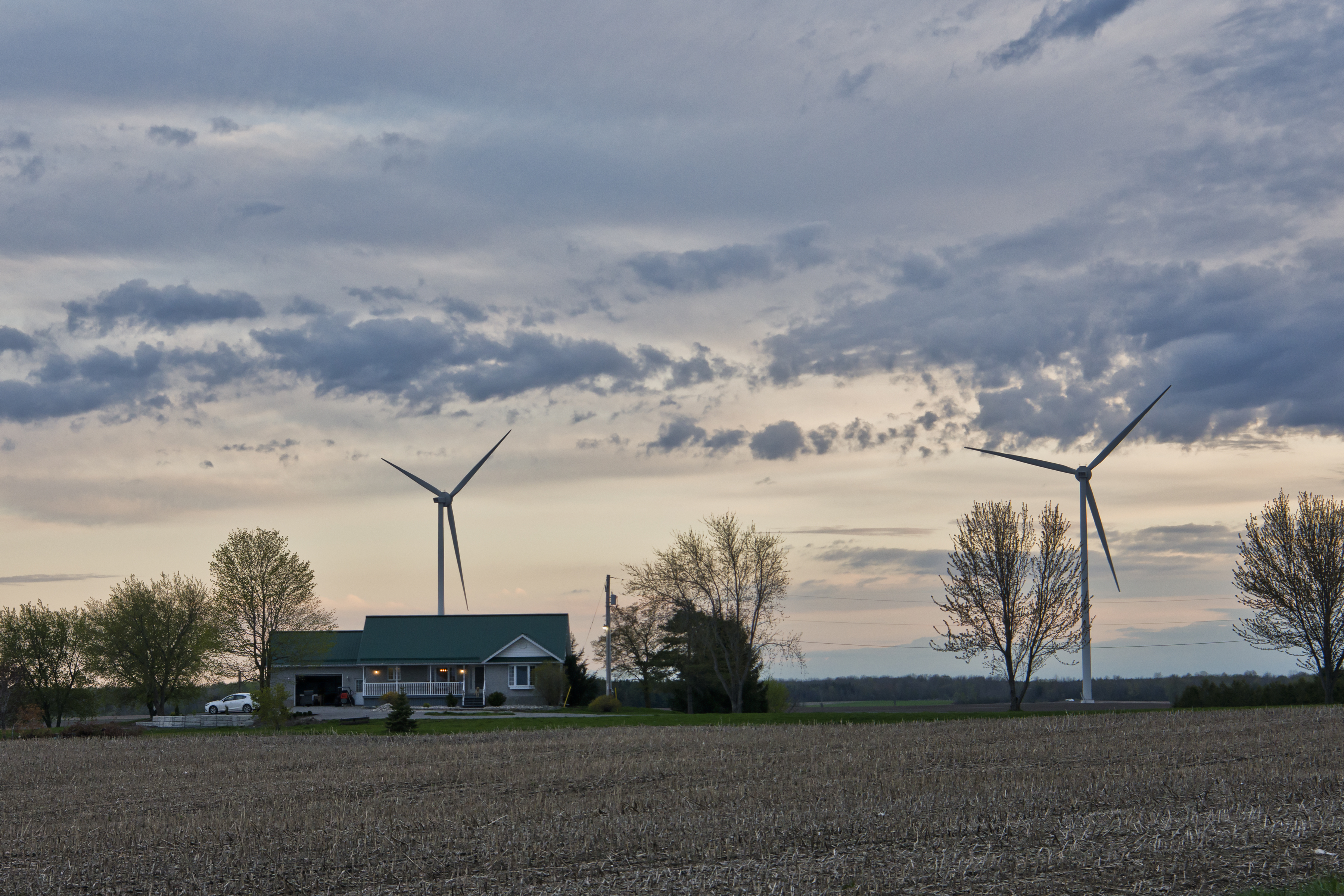
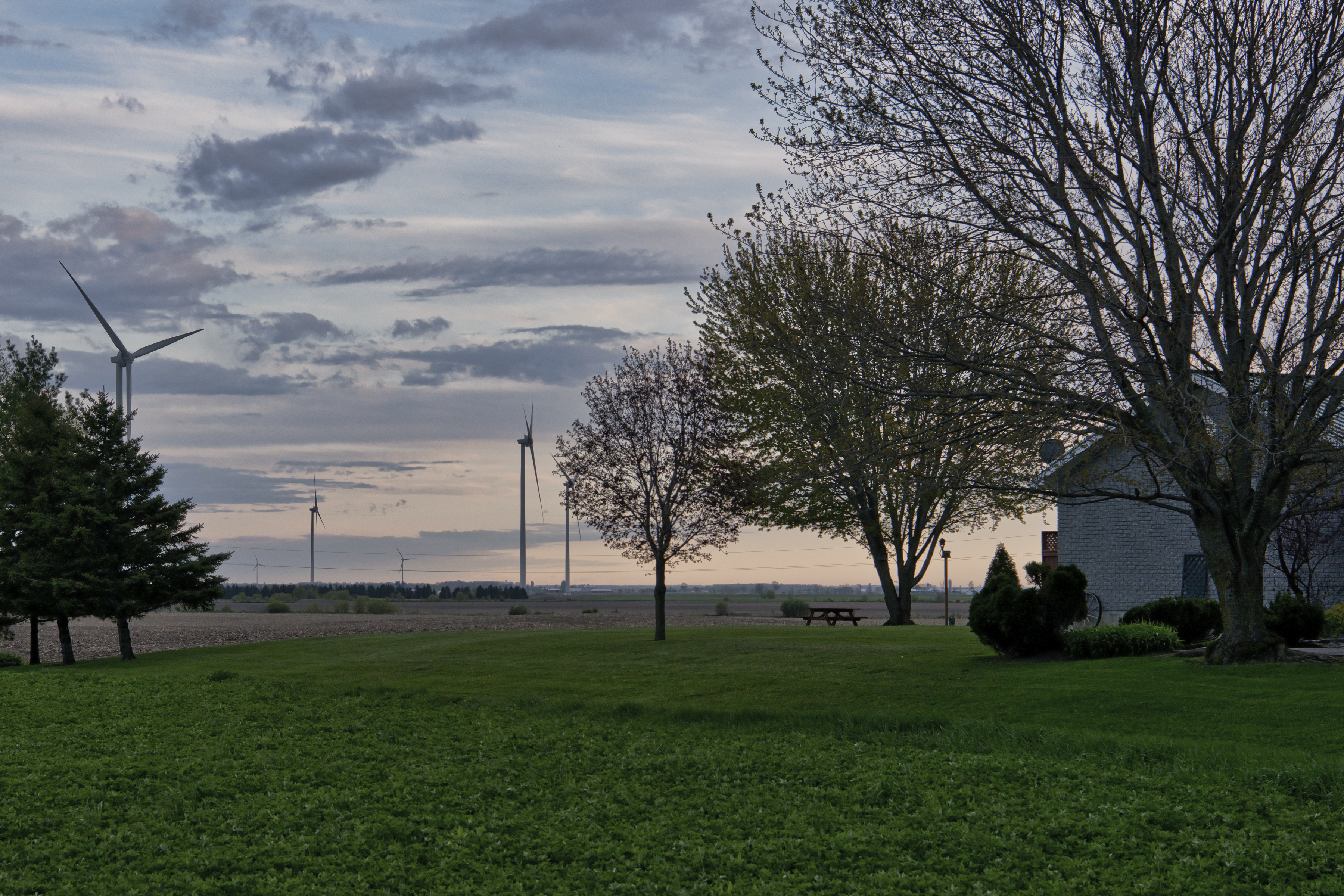
An editorial in the Eastern Ontario edition of Farmers Forum says “Toronto” should never have imposed the 100-megawatt Nation Rise wind power facility on the communities of North Stormont.
In his editorial titled “How wind turbines scarred a landscape and a community,” editor Patrick Meagher notes that the township conducted a survey of residents and found most didn’t want the wind turbine development, and then unanimously voted to declare North Stormont an “Unwilling Host”.
“But things didn’t go that way,” Meagher writes.
Weeks before the provincial election in 2018, the Liberal government “greenlighted the project. This was in spite of a longstanding agreement not to approve major projects when another government could take over. Wynne got a two-for-one deal, sticking it to the next government and the locals at Crysler, Berwick and Finch.” (The riding went Conservative.)
The wind power project caused strong feelings, Meagher says. “The project was so acrimonious that in this small community friendships broke up, family members stopped talking to each other, and more than 10 property owners sold their houses and moved away.”
Now the community is “stuck” with 29 huge turbines that are “large, inefficient, taxpayer-subsidized generators of intermittent power…not even a good business decision.”
“This ugly event is testimony to why governments should listen to the people they work for…Toronto should never have decided what should happen in this small farming community 400 kilometres away.”
The editorial also quoted former mayor Dennis Fife who said the community now has to try to move on.
One of eight Nation Rise turbines built, now idle: 800m from nearest house. At least three bat colonies at risk in the power project [photo: CCNS]
May 13, 2020
It has been almost a month now since (virtual) hearings concluded in the matter of the cancellation of the Renewable Energy Approval (REA) for the contentious “Nation Rise” wind power project, south of Ottawa.
The 100-megawatt power project was developed by EDPR, a power developer and utility based in Portugal, Spain and Texas. It was granted approval in the last days of the Wynne government in Ontario (arguably during the period when governments do not take major decisions) and was given a Notice To Proceed by the Independent Electricity System Operator (IESO) in early days of the new government, despite campaign promises to end large wind power contracts.
Current Ontario environment minister Jeff Yurek issued a decision last December saying that he had reviewed the situation and decided that it would be in the “public interest” to revoke the REA, due to significant risks to wildlife and the environment, even though the power project was already under construction.
The power developer argued against the cancellation, and took legal action asserting that the minister did not have the authority to act.
The outcome of this case, which is now before a panel of three judges for deliberation, affects all Ontario. Nothing less than the minister’s authority to act in the public interest is at stake. Although the minister’s authority is clearly described in the Environmental Protection Act, the power developer and the wind power lobbyist the Canadian Wind Energy Association, claimed the decision was political and that the current government hates “green energy.”
The project was to have 29 turbines encompassing the communities of Finch, Crysler and Berwick. Citizens’ group Concerned Citizens of North Stormont appealed the approval originally on the basis of the risk to human heath from noise and vibration, danger to the environment due to turbine vibrations in a highly vulnerable aquifer, and dangers to wildlife such as migratory birds and bats. The appeal was dismissed but the group then filed a direct appeal to the minister, as allowed under law, based on “public interest”—it was this appeal to which the minister responded.
Legal costs for this action to protect the community and wildlife have been substantial. The community group has had to suspend fundraising efforts due to COVID-19.
Anyone wishing to donate can go to the website here or send a cheque to CCNS c/o 14950 County Rd 9 BERWICK ON K0C 1G0
Turbines on Wolfe Island: hidden costs to wind power affect electricity customers
March 2, 2020
Ontario’s fleet of wind turbines cost electricity ratepayers more than $24 million last weekend, says retired bank executive now energy commentator Parker Gallant.
That was mostly due to the fact that wind — as usual–produces power out of phase with demand, but there is a lot more to the costliness of industrial-scale or grid-scale wind turbines, as he details in a recent article here.
Some added costs of wind power or Industrial Wind Turbines (IWTs):
Increased electricity costs due to the need for duplicate power sources such as gas plants.
Increased surplus power which must be curtailed or sold for pennies on the dollar.
Increased costs due to IWT inability to generate power when actually needed.
Increased surplus power from IWT often means other clean sources must either spill (hydro) or steam off (nuclear) power which adds costs to our electricity bills.
IWT kill birds and bats, many of whom are “species at risk” meaning insects, damaging to crops, are not eaten and farmers must spray their crops with insecticides adding costs to produce.
IWT may affect tourism areas driving away tourists and thereby affect income to those regions.
IWT cause various health problems requiring our health system to respond to individuals affected, thereby adding to health care costs.
IWT cause property values to fall affecting the realty tax base where they operate and the value of the property should the occupants try to sell after the installation of those IWT has occurred.
IWT lifespan is relatively short (20 years at most) compared to traditional sources of electricity generation and when unable to perform, create costs of remediation and disposal of recyclable and non-recyclable materials they consumed when built and erected.
The property value loss from the North Gower project that was proposed in 2008, got a contract to generate electricity from the IESO in 2010, but ultimately failed in a reorganization of the The Feed-In Tariff program, would have been in the millions.
At the time, Ottawa Wind Concerns estimated the property value loss for homes within 3 km of the multiple turbines would have been $134 million.
The current Ontario government has pledged to reduce electricity bills by 12%, but the many expensive wind power contracts signed by the previous government will go on for more than a decade.
Wind Concerns Ontario recently released its latest review of wind turbine noise complaints received by the Ontario government; the new review document is based on complaints filed with the then Ministry of Environment and Climate Change for the 2017 calendar year.
The total number of complaint files 2006-2017 is now more than 5,000 Wind Concerns says, though it also has evidence that the reports provided to them via Freedom of Information request is a fraction of the real number.
Highlights for data in the report, which may found here are:
almost 700 reports were filed in 2017–but there are likely many more
there was “NO” ministry response noted in 54% of the Incident Reports
ministry action was confirmed in just 1.3% of the reports
42% contain government staff notes about adverse health impacts
16% of the complaints have details of physical symptoms that suggest exposure to harmful low-frequency noise or infrasound
The wind power project that was proposed for the North Gower-Richmond area in Ottawa would have exposed dozens of families to wind turbine noise emissions. In a special information presentation to the community, Queens University Professor Emeritus John Harrison said that the proposed turbine layout in the North Gower project would have created additional noise problems due to wake turbulence.
The Ontario government halted procurement of large-scale renewable power projects; however a recent survey of leadership candidates for the Ontario Liberal Party showed that every single one supported more wind power, especially front-runner, Steven Del Duca.
Turbine components waiting for delivery to Nation Rise wind power project. Another $450 million to go on your hydro bill. [Photo: Leanne Baldwin]*
October 24, 2019
Ontario Premier Doug Ford gave his first interview after the federal election today, with host Bill Carroll on Ottawa talk radio CFRA.
The topic was how Ford could work with Prime Minister Justin Trudeau after an acrimonious election campaign in which Ford was repeatedly used as an example of Conservative government dedicated to budget cuts, but the conversation included the cost of electricity in Ontario, and why hydro bills are set to go up next week, when the Ford government had promised to get them down.
“[The electricity file] has been very frustrating,” Ford told Bill Carroll. He put some of the blame on the McGuinty-Wynne governments which cut lucrative deals for wind and solar with “cronies” Ford said, and Ontarians are now stuck paying above-market rates for electricity.
“We’re trying to get a handle on it,” he said.
Meanwhile, despite a citizen appeal that cost the people of North Stormont, south of Ottawa, about $100,000 in legal fees as they brought forward numerous, serious concerns about the impact of grid-scale wind turbines on people and the environment, the 100-megawatt Nation Rise wind power project is under construction.
It will cost Ontario electricity customers more than $450 million over its 20-year contract.
And, in Chatham-Kent, another wind power project is being built: Romney Wind is being built by EDF of France. That will add over $250 million to electricity bills.
“If you set out to destroy the electricity file in Ontario, you could not have done a better job than they[McGuinty and Wynne] did,” Ford said.
ottawawindconcerns@gmail.com
*Note the pickup truck in the lower left corner of the photo—an idea of the scale of the wind turbines
Despite a full appeal of the Nation Rise wind power project by community group Concerned Citizens of North Stormont, which raised serious issues of concern about human health and the environment, and despite a final appeal and request for a Stay of construction, the 100-megawatt wind power project is under construction in the Finch, Berwick, and Crysler areas.
Construction updates are to be provided by the developer EDPR on its website here
There have already been citizen complaints about dust and noise during construction, as well as a couple of mishaps with trucks and trailers delivering turbine components, and citizens have reported concerns about road safety.
EDPR at its construction update meeting in Finch last week said anyone concerned about safety, or who notices a worksite where there are no flagmen, should contact the company at: Email: nationrise@edpr.com Phone: (613) 240-0348
The Ottawa Citizen recently ran an article by Kelly Egan which outlined community concerns. Ontario does not need more intermittent or variable wind power, which is produced out of phase with demand (source Auditor General Ontario). The Nation Rise project will cost Ontario electricity customers $450 million over its 20-year contract.
The medical report supporting Ontario’s wind turbine noise regulations is now 10 years old–the regulations need to be updated
Ottawa Wind Concerns executive members Jane Wilson and Michael Baggott spoke at the meeting of the Ottawa Agricultural and Rural Affairs Committee (ARAC) today, and alerted the Committee that action is needed following new amendments to regulations on wind turbines by the Ford government.
A wind power project was proposed in 2008 for the North Gower-Richmond area, with potential to spread to Osgoode. The project did not proceed when the Germany-based proponent failed to qualify for the last round of proposals under the Wynne government. It would have exposed hundreds of people to wind power generator noise — that fact was acknowledged at the time by the power developer.
“Today, we know a lot more about wind power,” said Ottawa Wind Concerns Chair Jane Wilson. “We know that many wind turbines in Ontario were sited improperly and we know that many mistakes were made — the former Energy Minister said that in 2017. And, we know there are thousands of records of noise complaints in Ontario, that have not been resolved, and are waiting on enforcement of regulations.”
Now, the new Ontario government is making changes but they require action from Ontario municipalities. Four new amendments to regulations are in response to Ontario municipalities demanding a return of local land-use planning powers, which were stripped from municipalities by the McGuinty government and the Green Energy Act.
“The amendments have not been proclaimed yet,” Wilson said, “but we need to be ready in the event a wind power proposal is made in future.”
One of the proposals is that power developers must balance any environmental impacts against the benefit of their proposed power project. “The problem is,” Wilson told the Committee, “Ontario’s rules on wind turbine noise and setbacks for safety are inadequate and out of date. The supporting document the previous government used is now ten years old, and does not reflect practices in other countries around the world.”
She added that the Ontario regulations on noise do not meet new guidelines published last fall by the World Health Organization.
“You have to remember that wind turbines produce a range of noise emissions— it’s not like barking dogs, or traffic.”
The amended regulations also require power developers to prove their project meets all zoning regulations locally. This is a problem, Wilson said, because under the Green Energy Act, municipalities had no say, so there was no reason for them to have any such zoning or bylaws as would apply to the huge wind power projects.
Ottawa Wind Concerns referred to a comment document prepared by Wind Concerns Ontario, which recommended municipalities ask the Ford government for a transition period in which they could begin the work on bylaws, and to develop new, adequate rules for setbacks between homes and turbines, and new noise limits for wind turbines.
Ottawa has already shown leadership Wilson said, in passing a bylaw asking for “substantive” input to wind turbine projects, and now is the time to take action to protect residents from the industrial-scale wind power projects.
Councillor Scott Moffatt thanked the presenters for the information, and also Wind Concerns Ontario for its work to protect rural communities.
Several North Gower residents attended the meeting.
Wind power lobby cajoles Ontario to ignore all the problems and take another chance on invasive, problem-ridden wind turbines.
Lobbyist for multi-billion-dollar wind power developers want Ontario to forget the past and choose industrial wind … again. [Shutterstock image]
April 2, 2019
Canada’s lobbyist and trade association for the wind power development industry, the Canadian Wind Energy Association (CanWEA), has just launched its campaign to make the Ontario government reconsider its position on wind power.
On Sunday, March 31st, CanWEA published a blog post entitled “Why wind energy is Ontario’s best option for new electricity supply.”
Ontario director Brandy Gianetta then lists five points.
Not a single one of them is true.
But here’s what is true:
Wind doesn’t work.
Everyone wants the best for the environment, and we all want “clean” electricity, but here’s what we know about the giant wind experiment in Ontario over its 13-year history:
Industrial-scale wind turbines have a high impact on the environment for no benefit
Wind power never replaced any form of power generation: coal was replaced by nuclear and natural gas
Wind power is intermittent, and produced out-of-phase with demand in Ontario; the Coalition for Clean & Reliable Energy notes that almost 70% of wind power is wasted in Ontario … but we have to pay for it anyway.
Wind is not “low-cost”; claims of 3.7 cents per kWh prices from Alberta ignore government subsidies. Wind power contracts are a significant factor in Ontario’s high electricity bills, and the trend to “energy poverty.”
Wind power has had multiple negative impacts in Ontario, including thousands of complaints of excessive noise reported to government. These have not been resolved, and many power projects may be out of compliance with their approvals; enforcement of the regulations is needed.
The promised jobs bonanza never happened.
In fact, a cost-benefit/impact analysis was never done for Ontario’s wind power program, according to two Auditors General.
Ontario doesn’t need more power now says the Independent Electricity System Operator (IESO), but if we did, why choose an intermittent, unreliable source of power that has so many negative side effects?
How the wind power industry made a fool out of Ontario
Noise complaints unanswered, wells contaminated, a huge job ahead to unwind the damage
Home in Huron County surrounded by turbines: no laughing matter [Photo Gary Moon]
April 1, 2019
It’s now almost a decade since Ontario passed the Green Energy and Green Economy Act, which opened the door to industrial-scale wind power developments throughout the province, and heralded ten years of environmental impact … for nothing.
In fact, the province had already approved a gigantic wind power project in Melancthon, and racked up hundreds of noise complaints before the Green Energy Act was passed — the government went ahead anyway.
Today, we have high electricity bills which are harming ordinary families and discouraging business investment; the government has records of thousands of complaints about wind turbine noise and vibration (mostly unresolved); there are 40 or more families in Chatham-Kent who trace the failure of their water wells to construction and operation of wind turbines on a fragile aquifer there; and, we are seeing the environmental impacts that were brought forward in citizen appeals of Renewable Energy Approvals now becoming reality.
Ontario citizens spent close to $10 million in after-tax dollars to protect their communities from the onslaught of large-scale wind power, according to a survey Wind Concerns Ontario did of our coalition members.
The Ontario wind power disaster should not have been a surprise.
Auditor General Jim McCarty chastised the McGuinty government for never having done a cost-benefit or impact study on the wind power program; subsequently, current Auditor General Bonnie Lysyk estimated that Ontario electricity customers overpaid for renewable energy by $9.2 billion.
Guaranteed to fail
The program to encourage large-scale wind power (the province had a choice back in 2004 onwards to go for small-scale power generation–that’s not what they chose, guided by wind lobbyists) was based on ideology and was criticized by such informed analysts as Michael Trebilcock, who said “This combination of irresponsibility and venality has produced a lethal brew of policies.”
Economics professor Ross McKitrick predicted, “If the goal [of the Green Energy Act] was to promote industry and create jobs, it is guaranteed to fail.”
And Tom Adams, who said, “Urban Ontario, including city-bound journalists, are largely unaware of the corrosive effects some wind developments are having on communities, neighbourhoods, even families. This is expropriation without compensation.”
The jobs never materialized, electricity bills went up, a new phrase “energy poverty” was coined, businesses closed or left, and families were forced to leave their homes because of unbearable noise.
Noise complaints are so prevalent in Huron County that the health unit launched a follow-up study (results will be published later this year). Preliminary data showed that 60% of the people participating in the follow-up were experiencing problems because of wind turbine noise.
Wind Concerns Ontario presented the government’s own noise complaint data as evidence at the appeal of the Nation Rise power project last summer; the approval was upheld regardless of citizen concerns about noise, and damage to a provincially designated “highly vulnerable aquifer.”
Meanwhile, reports of noise are investigated on behalf of the wind power operators by the same companies who prepared the original noise impact assessments for them; one such acoustics firm even boasts that it created the government’s noise assessment protocol.
The fox is not only in the hen house, he built it to ensure easy access.
As Ontario’s new government struggles with all this (Energy Minister Greg Rickford told the Legislature last week that this is a “very difficult” file), there is little to laugh about in Ontario today as the spring winds blow, and families face more sleepless nights.