Significant scenic area of Ontario could be affected
Residents of North Frontenac and Addington Highlands (also known as Land O’ Lakes area) have organized to fight the threatened 150-turbine wind power development by NextEra.
NextEra is the renewable energy arm of the U.S. power company, Florida Light and Power. As Parker Gallant has revealed in a post on this site, FPL is doing so well scooping up subsidy money here in Ontario, they have actually provided rate reductions to their customers in the United States.
See the website for the Bon Echo Area Residents Against Turbineshere. The website is under construction and promises more detail later, but features a petition for signing now.
Citizens recently held a community meeting in Denbigh that included presentations by Parker Gallant and Carmen Krogh.
The group also has a Twitter account bearatorg and Facebook page.
Land owners need to be socially responsible when deciding to sign leases for wind turbines, Wind Concerns Ontario tells Ontario Federation of Agriculture president
The following is a letter sent by Wind Concerns Ontario president Jane Wilson to OFA president Don McCabe, in response to remarks made by Mr. McCabe at a wind farm information meeting in Finch, Ontario. Several of Mr. McCabe’s comments to the audience, such as that there is no surplus of power in Ontario, were not correct, WCO said in the letter.
As well, while Mr. McCabe’s advice to landowners to “get a lawyer” is sound, Wilson said, the attitude that landowners need to concentrate only on getting everything they want in a lease is isolationist and archaic, and is helping to divide Ontario’s rural and small-town communities.
“Not one word was said about responsibility to community, and neighbours. This [attitude] does not represent the view of the contemporary and socially responsible farm operators that we work with; they are professionals who believe they are part of their communities and who are aware of—or at least consider—the effects of their actions on others,” Wilson said.
The letter was sent to Mr. McCabe, and the Board of Directors for the Ontario Federation of Agriculture.
Dear Mr. McCabe:
It was interesting to meet you last week in Finch, Ontario at the Lions’ Club event, where we both spoke, along with Mr. Levy of CanWEA.
I was relieved to hear your strong advice to those attending and contemplating signing a lease with a wind power developer, to “get a lawyer, get a lawyer, get a lawyer.” This is excellent advice: as you know, these contracts typically contain dozens of pages of various clauses outlining requirements and limitations…many people do not understand what they are being asked to sign.
I was disappointed, however, in other aspects of your presentation. First, there were a couple of statements made that are not correct and may even be misleading.
Power surplus in Ontario: in my presentation I had suggested that more wind power projects were not necessary, especially not for a form of power generation that is intermittent, produced out-of-phase with demand and is expensive, causing Ontario electricity rates to rise. You countered by saying that Ontario has no surplus of power. This is not correct: the Ontario Energy Minister himself admits that Ontario has surplus power and also says that the province will have a surplus for years to come. See his quotes and the forecast for power rates in a Globe and Mail article here.
“Net metering”: you told the audience that they should arrange in their lease to share in the wind power produced by any turbines on their land. This is not correct—it is unlikely one could get power from the wind turbine on a farm, and moreover, it would be in violation of the contract the wind power developer has with the Ontario government to obtain the Feed In Tariff to do that.
Turbine noise: you suggested to the audience that if the noise from turbines were to bother them, they could make sure that there is a clause in the lease so that the power developer would have to address that. This is extremely unlikely; at present, there are thousands of noise complaints in Ontario that go unresolved by either the developer or the Ministry of the Environment.
Community input to power projects: In response to several questions from the floor, you did advise people to go to the government website on the new Large Renewable Power Request for Proposal process, but you also suggested to at least one audience member that there is nothing communities can do, if a power proposal comes forward. That is not correct: people can work with their municipal governments, members of their community, and also choose not to sign the agreement required of adjacent property owners.
Contracts: I believe you also suggested to a farm owner who had signed a contract/option and was now having second thoughts that there was nothing he could do. This also is not correct, and would have been another opportunity for you to advise him to “get a lawyer, get a lawyer, get a lawyer.”
That brings me to the second area of disappointment in your presentation: the overarching theme of your remarks was that if people are going to sign a lease for a wind turbine project they should make certain that they get concessions from the power developer that benefit them. There was not a single mention in your remarks of the need for responsible consideration of other members of one’s community, including fellow farm operators, and neighbours.
This was a very narrow view that demonstrates no balance and instead indicates an archaic, “I can do whatever I want on my land” view. This does not represent the view of the contemporary and socially responsible farm operators that we work with; they are professionals who believe they are part of their communities and who are aware of—or at least consider—the effects of their actions on others.
Our concern with this isolationist view of farm ownership is that it will further divide Ontario’s rural and small-town communities.
OFA needs to clarify its position on this matter, and further, consider advising your membership that when it comes to deciding whether to participate in a wind power project, the responsible course of action is to balance their financial opportunities with the economic, health and social needs of others around them.
We would be pleased to meet with the OFA Board to discuss our concerns.
As the residents of Stormont Dundas and Glengarry come to terms with the proposal for a large wind power project in their communities, they are interested in receiving more information, and learning about the experience of other Ontario communities.
Several important documentary films have been made in recent years.
WIND RUSH-CBC
Wind Rush was aired in 2013 by the CBC and may be viewed online here. In the new documentary film WIND RUSH, produced for CBC Doc Zone by Toronto’s 90th Parallel Productions, the battleground for the pro and anti wind forces is southern Ontario. The government there pledged to wean the province off coal fired generation plants and replace them with green wind energy.
But as soon as the turbines went up in places like Wolf Island, Amaranth and Bruce County, people realized they could hear them. Sometimes it was like a whisper, but other times it sounded more like a jet taking off.
And then it got worse.
New turbines started coming in at two and three times the size of the old ones. And they were even louder. It led to chronic sleeplessness for many people living close by—and that can lead to diabetes, depression and heart disease. Others were affected in their inner ears by low-level sounds that set off their equilibrium. Doctors started seeing patient after patient complaining of the same sets of symptoms. And then people started to realize that no one had done any significant human health studies before giving the green light to the turbine farms.
The Hammonds, wind farmers
WIND RUSH takes viewers to southwestern Alberta, where wind has been an energy staple for more than twenty years. There is plenty of room for humans and windmills to coexist—a stark contrast to Ontario, where the same prairie technology was installed in a dramatically different landscape. The film then moves to Denmark, a country long considered the poster-child for the wind energy movement. But as WIND RUSH reveals, the relationship between the Danes and turbines has soured.
WIND RUSH talks to people on either side of the turbine divide, and then turns to scientists to try and determine what has gone wrong. In the next several years the turbines will double in size again—bigger, louder and more powerful. But without sufficient research have the people who live among the wind farms been forgotten?
“Big Wind” explores the conflict over the controversial development of industrial wind turbines in Ontario. It is a divisive issue that at times pits neighbour against neighbour, residents against corporations, and the people against their government.
DOWN WIND-Sun Media
See a preview of this video and purchase/download here.*
The green energy scam: how corporations are making millions while Ontario communities are being changed forever.
*Ottawa Wind Concerns owns a copy of this DVD and would be pleased to offer it in a public showing. Contact us at ottawawindconcerns@gmail.com
More than 100 bird species will be at risk from wind turbines
When multi-national wind power developer EDP Renewables revealed the project map at its Open House in Crysler last week, many attending were surprised to note that the project area covers and includes the Reveler Conservation Area.
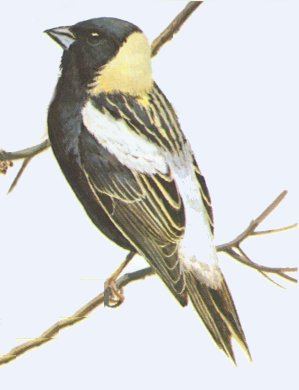
The conservation area shelters more than 100 species of birds and offers a place for them to rest on their migrations twice a year. The spot is popular with bird enthusiasts and others who enjoy Nature.
Wind turbines are known for killing birds and bats, both of which are necessary parts of the eco-system. The wind “farm” at Wolfe Island is responsible for “shockingly high” numbers of bird deaths, said a report in the Globe and Mail.
The wetlands and woodlands of the South Nation watershed attract many species of wildlife.
EDP plans to erect 30-50 wind turbines in Stormont Dundas and Glengarry.
Wind developers typically claim that cats kill more birds than wind turbines, but the fact is that wind turbines are responsible for the death of many raptor species such as hawks and eagles, who are unlikely to be preyed upon by cats.
LOS ANGELES (CN) – Wind energy companies bulldozed a black family’s house because they were the sole holdouts who refused to sell out to a huge wind farm, the family claims in court.
Darlene Dotson and her sons David and Daniel sued EDP Renewables North America, Horizon Wind Energy Co., Rising Tree Wind Farm, CVE Contracting Group, and Renewable Land LLC, on May 7 in Superior Court.
The family wastes no time in getting down to specifics. “Plaintiffs in this action are the victims of a multinational energy developer who refused to accept ‘No’ for an answer,” the 32-page complaint begins.
“The heart of the issue is that the Dotsons own property in Mojave that is sought after by EDP Renewables for windmills, and they refuse to sell,” the family’s attorney Morgan Stewart told Courthouse News.
Mojave, pop. 4,300, is 50 miles east of Bakersfield, below the Tehachapi Mountains, on the edge of the immense Mojave Desert.
“The home on the property was a family home they used for family vacations and gatherings. EDP pressured them to sell, but they still refused,” Stewart said.
“The house was damaged several times when they were away. And then one time when they went back to the house they found that it had been demolished, scraped to the foundations, along with all of their belongings. The companies did it.
“We see it as intentional because EDP needed the property for the wind farm, but the Dotsons wouldn’t sell,” Stewart said.
EDP Renewables is building the Rising Tree Wind Farm about 3 miles west of Mojave in Kern County.
Project leaders estimate the wind farm will generate 199 megawatts of electricity when it goes online sometime this year – enough to power around 60,000 homes and take 33,000 cars off the road.
The Dotsons say the defendants first approached them about the wind farm in 2009, claiming they needed to buy the surrounding parcels of land, including the Dotsons’ land, for the wind farm.
The Tehachapi Mountains, which top out at 7,992 feet, generate nearly constant winds, as the cool air on top and the Pacific Ocean to the west suck the superheated desert air through the mountain passes.
“Like the infamous Daniel Plainview from Paul Thomas Anderson’s Film, ‘There Will Be Blood,’ defendants held themselves out as friends to the local community and a source of prosperity for its residents. Among other things, defendants promised Mrs. Dotson and her neighbors that the wind farm would stimulate the local economy and generate energy revenue for cooperating landowners. All that Mrs. Dotson and her neighbors had to do was to sign over the rights to their homes,” the complaint states.
But Darlene Dotson says she resisted the sales pitch, telling the companies she was not interested in selling because her family “cherished” their home and its underlying history more than the companies’ offers of money.
“The house had been in their family for 20 years, and was one of the original homesteads built by African Americans in the early 20th century,” attorney Stewart said.
The Dotsons used the home for family gatherings, vacations, barbeques and birthday parties. Daniel and David Dotson grew up playing in the house and then took their own children to play there. It was “hallowed ground” to the family, according to the complaint.
In addition to memories, the house contained the Dotsons’ family mementos, including photographs of deceased family members, family heirlooms and antiques.
Though all of their neighbors agreed to sell or lease their land, the Dotsons held out and “respectfully declined” the companies’ numerous offers, according to the complaint.
When the companies realized the family was adamant about keeping their home, they became aggressive and hostile, the Dotsons say. Mrs. Dotson claims the companies’ agents insulted her and spoke to her disrespectfully, and told her that “the home was worthless and that the Dotsons should take the money because it was the best they would ever get for the land.”
They harassed her sons and tried to bully them into persuading her to sell the house by threatening to “surround the home on all sides with the wind farm, restricting the Dotson’s access to the home and causing the home’s property value to plummet,” the complaint states.
Stewart said the companies wanted the property so badly they approached the Dotsons’ neighbors and asked them how to persuade the Dotsons to sell.
Then the defendants vandalized the house, breaking windows and patio furniture, the Dotsons claim. “In essence, the Dotsons were being terrorized in their home,” the complaint states.
In February this year the defendants started demolishing the surrounding homes to develop the land for the wind farm.
When David Dotson went up to the family home in late March to do some maintenance, he discovered that the home was “literally wiped off the face of the Earth,” that all the furnishings and family belongings “were simply eviscerated,” the complaint states.
Stewart said the family is not sure exactly when the house was demolished, but suspects it was around the time the companies started knocking down the other homes.
The Dotsons say several people from the companies called and left messages admitting that they had demolished the Dotson’s home and insisting that it was a mistake.
But the Dotsons claim it was a deliberate ploy to make them sell their land.
“The pressure to sell from EDP, the strong-arm tactics leading up to the demolition, and coming along afterward and trying to buy again, all indicate that this was not an accident,” Stewart said. “This was an intentional act by a company that thought it could strong-arm these people.”
Though there is no direct evidence of racism, Stewart thinks the Dotsons’ race had something to do with it.
“They are the only African American family in the area, the only ones pressured very hard by the companies, and the only ones who had their house demolished when they refused to sell,” he said.
Stewart said it takes a deliberate effort to destroy a house because the gas and water must be turned off, among other things.
“It’s especially sad because they described how they built parts of the house with their own hands. It’s ugly,” he said.
Representatives with the companies did not reply to requests for comment.
The Dotsons seek punitive damages for trespass to land, violation of the Bane Civil Rights Act, intentional infliction of emotional distress, conversion, nuisance, unfair business practices and negligence.
Attorney Stewart is with Manly, Stewart & Finaldi, of Irvine.
[NOTE: EDP Renewables is the power developer proposing a 150-megawatt, 50-turbine wind power project in Stormont-Dundas-Glengarry, and currently operates the South Branch wind “farm” in Brinston, Ontario]
Drs Ian Arra and Hazel Lynn, together with several associates, have now published a peer-reviewed article based on their literature review of studies on wind turbine noise and health impacts.
Their conclusion: we have demonstrated the presence of reasonable evidence (Level Four and Five) that an association exists between wind turbines and distress in humans. The existence of a dose-response relationship (between distance from wind turbines and distress) and the consistency of association across studies found in the scientific literature argues for the credibility of this association.
The wind power development lobby insists there is not relationship between wind turbine noise, inaudible noise/low-frequency noise/infrasound, and often implies that people who claim such effects are actually ill-informed or not receiving money. A spokesperson for the Ontario Federation of Agriculture told an audience at this year’s Rural Ontario Municipalities Association meeting that anyone claiming to experience health impacts from turbine noise had questionable mental health stability and that the listener should “just cough on them.” His remarks were withdrawn by the OFA with an apology shortly thereafter.
Two information events were held in North Stormont last week; a panel discussion on wind power issues, hosted by the Lions’ Club in Finch on May 6, and in Crysler on May 7, the first Open House on the North Stormont wind “farm” hosted by power developer EDP Renewables.
We have already reported on the Lions’ Club event and doubtless the media will be along shortly, too; we have reports from people who attended the EDP event.
Apparently, the power developer had brochures available on health and property value impacts. Here is the “other side” on these issues.
Health
The wind power lobby is focusing on the Health Canada study which, they say, claims no “causal link” between wind turbine noise and health effects. The truth? The Health Canada study was not designed to find a causal link, so, surprise! What it DID find, however was that significant numbers of people are distressed by the turbine noise and infrasound (low frequency or inaudible sound). In Health Canada’s PowerPoint presentation of its results, the following points were made:
as wind turbine noise levels increased, so did respondents’ annoyance (distress)…this was a statistically significant finding
in comparison to aircraft, rail or road traffic noise, annoyance/distress due to wind turbine noise was found to begin at lower levels, e.g., ~35dBA
the prevalence of wind turbine noise annoyance/distress was higher in Ontario than in PEI (the other area studied) and,
wind turbine noise annoyance/distress in the Ontario sample persisted up to distances between 1 and 2 km–in PEI this was restricted to
In fact, the Health Canada study found,16.5% of people within 1 km of a turbine experienced annoyance/distress, and at 550 metres, that went up to 25%
More recently, the Council of Canadian Academies released their report, a literature review on wind turbine noise, with the following important findings:
the evidence is sufficient to support a causal association between exposure to wind turbine noise and annoyance
standard methods of measuring sound may not capture low-frequency sound characteristic of wind turbine noise (in other words, the way Ontario is measuring turbine noise–and not measuring infrasound at all–is not adequate to protect health)
there is limited evidence to establish a causal relationship between exposure to wind turbine noise and sleep disturbance (which is known to cause health effects), and
knowledge gaps prevent a full assessment of health effects of wind turbine noise–proper population studies, especially studies of sensitive populations such as children, have not yet been done.
Did EDP Renewables present these facts at their Open House?
Property values
We’ll keep this short: we’re betting EDP brandished the recent study done by Richard Vyn of the University of Guelph, which is supposed to prove that property values around wind turbines don’t change. Aside from the fact that this is nonsense, and Vyn’s study was poorly structured—that’s not what he says!!! In fact, Vyn cautions the reader that there were significant limitations in how he went about his study and this [his conclusion] does not preclude any negative effects from occurring on individual properties. Read more analysis of the Vyn report at Wind Farm Realities.
The wind power developer is taking care to be seen to address the issues of health and property values, but they are being very selective in their choice of reference material (and in the coming federal election, you might ask candidates WHY the federal government used taxpayer money to create a misleading, attractive colour brochure to help the wind industry)
Email us at ottawawindconcerns@gmail.com
NOTE: This post certainly got us a lot of attention from the wind power industry. A wind industry communications officer from the UK accused us of causing harm to people by putting this information out there (he claimed people with real illnesses would not seek treatment because they will think instead it’s just wind turbine noise–absolutely unjustified and frankly, stupid); he was seconded by pro-wind physician George Crisp from Australia, and they were joined on Twitter by Chris Young, board member with the Ontario Sustainable Energy Association and employee of NorSun Energy in Ottawa. Mr Young pronounced us as “irrelevant.”
Wind developers can use farm leases as security for financing the power project
Ontario Farmer, May 5, 2015
by Garth Manning and Jane Wilson
It came as a surprise to many in Ontario when it was revealed that the multi-national power developers behind the K2 wind power generation project near Goderich had secured $1 B in financing, and that this arrangement is now registered on title for the 100 farm properties involved as lessors.
The arrangement is between K2 Wind Ontario Inc. and Mizuho Bank Ltd. Canada Branch. It secures a revolving credit facility of up to $1 billion at 25% on a number of items, including the contracts between landowners and K2 for land and road agreements with municipalities.
Another, smaller example has also come to light: a wind power project south of Ottawa in Eastern Ontario, where the five landowners leasing land for a 30-megawatt, 10-turbine project now have charges on their properties for $70 million.
Immediately, questions arise as to what would happen if the power developers were to default on their loans: would the lender then own the farm properties? How would that affect road use agreements with municipalities?
The fact is, this is a common practice. Property owners can refer to the leases imposed by the developers to review this potential situation, and many others that may affect operation and ownership of their land while leasing land for the power projects.
In an Invenergy standard contract, for example, is this clause: “In connection with the Lessee’s financing of the Project, the Lessee….is hereby given the right by the Lessor…to mortgage its interests in the Lease…and to assign this Lease, or any part of parts thereof, and any subleases as collateral security…”
The proper term for this is a “Charge of Lease” but may also be referred to as a “Demand Debenture.” What it means is, the present value of the wind power contract (i.e., the Feed In Tariff or FIT contract with the Ontario government) is greater than the present value of the lease amount. The difference between those two amounts is security for the loan to the power developer. It is a charge against all contracts favourable to the wind power developer, which may also include road use agreements.
It is like a line of credit for the developer and typically, advances against the amount are tied to certain milestones such as stages of construction.
The critical factor, however, is what it means for the lessors, in other words the farm owners who have leased their land for wind turbines, access roads, substations, transmission lines, etc. The importance lies not so much that the farmer lessors might on default lose their land (the farm land itself is not mortgaged, just the turbine contract on that land) but the damage it does to that property owner if he/she wants to sell, or to renew an existing mortgage, or place a new one, or in any way borrow money for which the lender would want security on his/her land.
Let’s assume a farm owner wants financing for farm operations or improvements. That might now pose difficulty: lenders do not like to be second in line, as they would be where a charge of lease is in place.
If the farm owner wishes to sell, similar difficulties arise: the lawyer for a purchaser in the case of an agreement to purchase will do a title search and discover the Charge of Lease on title, then immediately advise his or her client that the client is entitled to get out of the deal unless the registration of the Charge is removed from title. A purchaser is not expected to assume any risk of this nature.
In the case of renewing an existing mortgage or placing a new one, the lawyer for the bank or other lending institution would take the same position — no renewal or new mortgage unless the customer sees that the Charge disappears from title.
This is one of several important characteristics of signing a lease to have wind turbines, and needs to be thoroughly considered. Other legal issues to be carefully considered may include potential liability for the substantial cost of “decommissioning” turbines at the end of the lease, difficulty obtaining insurance on property with wind turbines, loss of autonomy over building on the property and carrying out regular farming practices, and, last, the potential for nuisance suits from neighbours affected by noise or property value loss.
Property owners should consult with a lawyer before signing any agreement.
Garth Manning is a retired lawyer and former president of the Ontario Bar Association, who lives in Prince Edward County. Jane Wilson is president of Wind Concerns Ontario; she lives in North Gower.
“Why us?” was one of the questions raised, as more than 125 people gathered in the North Stormont Community Arena Hall in Finch on a fine spring evening in the middle of busy planting time, to hear a panel discuss various aspects of wind power in Ontario.
Speakers for the Lions’ Club event were: Tom Levy, Director of Technical and Utility Affairs, for the Canadian Wind Energy Association/CanWEA, the industry lobby group; Jane Wilson, president, Wind Concerns Ontario; and Don McCabe, president of the Ontario Federation of Agriculture.
Tom Levy went over the numbers for wind power in Canada and showed wind power development is growing as a source of power; Ontario currently has over 4,000 megawatts of installed wind power. Wind is cheaper than other forms of power generation, he said, fast to build, emissions-free, and–because power contracts are for 20 years–provides price stability whereas prices for other forms of “fuel” such as natural gas, can fluctuate, he said.
Wilson called for balance in the approach to wind power development in Ontario communities: “If a community wants a wind power project, that’s fine,” she said, “but you have to be assured that no one single person is going to be harmed by it.” Wilson said the recent Health Canada study showed health impacts (“annoyance” is a medical term meaning distress, she said) and called the Ontario setbacks of 550 metres into question.
Quoting a document from CanWEA, Wilson said, “You have a right to ask questions, you have a right to have concerns, and –based on what you learn–you have the right to oppose.” Wilson also mentioned the charge of lease possibility in wind power contracts which meant developers can obtain financing based on the leases on farm properties for turbines.
OFA president Don McCabe pounded the lectern with his fist on the contract issue, saying, Get a lawyer, get a lawyer, get a lawyer. It is up to each property owner to obtain proper legal advice before signing contracts, he said. His view was that farm owners contemplating leases need to get an agreement that will get the most benefit for them.
Mr McCabe made no mention of farm communities, or the effect of farmers’ decisions to lease on their neighbours.
The issue of Ontario’s power supply and electricity bills came up through the evening as Wilson asserted Ontario does not need more power, and has already sold off surplus power cheap in the first quarter of 2015, for a $450-million loss for ratepayers.
McCabe joked that he didn’t think there was excess surplus power at night, and that there was no real surplus of power, only mismanagement “in Toronto.”
The question, “Why us?” was answered by Levy and Wilson. Levy said it was a number of factors that motivated developers to choose an area for power development, including access to the power grid, willing landowners, available wind resource. “Mr Levy hit the nail on the head,” said Wilson; “willing landowners. The real question is, why are power developments not located closer to cities like Toronto where the power is being used?”
The power developer proposing a project for Stormont Dundas and Glengarry, EDP Renewables, will be holding an open house tonight in Crysler at the Community Centre, between 4 and 8 PM.
The power developer who bought the 30-MW South Branch project in South Dundas from German developer Prowind, EDP Renewables, is now proposing to expand into Stormont, Dundas and Glengarry, and apply for a Feed In Tariff contract. Spokesman Ken Little told South Dundas council the company was planning 30-50 turbines.
Ontario is currently offering contracts for 300 MW of new wind power in 2015, despite a situation of surplus power in Ontario, and the fact that Ontario lost more than $425 million in the first quarter of 2015, exporting surplus power cheap.
A public meeting will be held in Finch this coming Wednesday at the community centre/arena at 7 PM. The goal is to have a panel present various viewpoints on wind power.
Guest speakers will be Tom Levy of CanWEA, Jane Wilson of Ottawa Wind Concerns /Wind Concerns Ontario, and Don McCabe of the Ontario Federation of Agriculture.
EDP’s Brinston project is about 40 minutes south of Ottawa.



 LOS ANGELES (CN) – Wind energy companies bulldozed a black family’s house because they were the sole holdouts who refused to sell out to a huge wind farm, the family claims in court.
 Ottawa Wind Concerns