• About
  • Donate!
  • EVENTS
  • Ottawa’s “Energy Evolution”: wind turbines coming to rural communities
  • Thinking of signing a wind turbine lease?
  • Wind Concerns Ontario
  • Wind turbines: what you need to know

Ottawa Wind Concerns

~ A safe environment for everyone

Ottawa Wind Concerns

Tag Archives: Ottawa

Ottawa area community groups petition Queen’s Park today

30 Monday Apr 2018

Posted by Ottawa Wind Concerns in Health, Renewable energy, Wind power

≈ 1 Comment

Tags

Dutton-Dunwich, environmental noise, North Stormont, Ottawa, renewables, The Nation, Wallaceburg, wind farm noise, wind power

Concerned Citizens of North Stormont leader Margaret Benke, Same rules for everybody.

April 30, 2018

The Ontario government realized there were inadequacies in their protocols for wind turbine noise and the assessment procedures needed in the approval process for new wind power projects, so they changed them.

And then gave the five newest wind power projects the option not to use the new rules.

As a result, the powerful power generators in projects that received contracts in 2016 but which are not yet built — in fact four don’t have Renewable Energy Approval yet — will be out of compliance with the new regulations the minute they start operating.

Four Ontario community groups think that’s not right.

They’re heading to Queen’s Park today as three MPPs present thousands of signatures on a Petition, asking the government to follow its own rules.

Representatives of Ottawa-area Concerned Citizens of North Stormont and Save The Nation will join their colleagues from Dutton Dunwich Opponents of Wind Turbines (DDOWT) and Wallaceburg Area Wind Concerns as the Petition is presented in the Legislature.

The Petition is related to the creation of “Transition Provisions” by the Ministry of the Environment and Climate Change (MOECC) in the Renewable Energy Approval process, which allows wind power developers to ignore new noise modelling guidelines, even for the newest unapproved power projects.

“The MOECC recognized that the previous requirements for turbine noise modelling were inadequate and they revised them,” says Bonnie Rowe, spokesperson for Dutton Dunwich Opponents of Wind Turbines (DDOWT), whose citizen group has applied for a Judicial Review of the Transition. “The noise modelling requirements are important to protect health and safety for people living near the turbines but now, the government has allowed the developers for the new projects to use the old ones — we think that’s wrong.

“If the government sets rules, especially for health, then everyone should have to follow them, no exceptions.”

Wind turbine noise has been linked to sleep disturbance, which in turn leads to other, serious health problems. According to Wind Concerns Ontario, documents received from the Ministry of the Environment and Climate Change #MOECC show that thousands of reports of excessive noise remain unresolved, and not responded to in Ontario.

MPPs presenting the petitions Monday are: Jeff Yurek, from Elgin-Middlesex-London where the Strong Breeze Wind Power Project is proposed for Dutton Dunwich; Monte McNaughton, from Lambton-Kent-Middlesex where the Otter Creek Wind Farm is proposed for the Wallaceburg area; and Jim McDonell, MPP for Stormont-Dundas-South Glengarry, who will be delivering petitions on behalf of the North Stormont area where the Nation Rise Wind Farm is proposed, and also the Municipality of The Nation, where the Eastern Fields Wind Power Project is proposed.

Concerned Citizens of North Stormont: Margaret Benke  macbenke@aol.com

Ottawa Wind Concerns: ottawawindconcerns@gmail.com

Ottawa councilor: Ontario wind power process unfair, frustrating, not democratic

20 Monday Jun 2016

Posted by Ottawa Wind Concerns in Ottawa, Renewable energy, Wind power

≈ 1 Comment

Tags

IESO, Ottawa, Scott Moffatt, wind farm contracts, wind farms, wind power, Wynne government

75 municipalities demand municipal support be a mandatory requirement of new wind power bids

CBC News June 20, 2016

Hilary Johnstone CBC

Mayor Ron Higgins in North Frontenac: we know better about where development should go [Photo CBC]

Mayor Ron Higgins in North Frontenac: we know better about where development should go [Photo CBC]

Seventy-five municipalities across Ontario are calling on the provincial government to give them more say on future wind farm projects.

Some eastern Ontario communities have declared themselves “unwilling hosts” to wind farms, only to recently have the province award contracts against their wishes.

The City of Ottawa, North Frontenac and at least 73 other municipalities want Ontario’s Independent Electrical System Operator (IESO) to “make formal municipal support a mandatory requirement in Ontario’s next round of procurement for renewable energy projects,” according to the resolution.

  • Rural councillors call for greater voice in wind farm deal
  • Wind turbines approved for eastern Ontario despite objections

The provincial energy agency claims to let communities express their concerns, but that has little impact on the outcome, according to North Frontenac Mayor Ron Higgins.

“We basically don’t have any democratic right when it comes to deciding where these wind turbines go … within our municipality,” he said.


75 municipalities across Ontario have endorsed a resolution that calls for increased local consultation before the next round of renewable energy projects. (Robert F. Bukaty/Associated Press)

Higgins said if given the opportunity North Frontenac would turn down all wind turbine projects, but he said some area municipalities would support them.

“We may want them, we may not want them, but if we do want them we’d like to be able to tell you where to put them,” said Higgins.

“Not right in front of a cottage door, or high on a mountain where all our cottages can see it.”

Current process ‘unfair,’ Ottawa councillor says

The current procurement process for renewable energy projects is “unfair” and “incredibly frustrating,” according to Rideau-Goulbourn ward Coun. Scott Moffatt.

Moffatt said he has no choice but to tell upset constituents “‘sorry, it’s the province, sorry, it’s the province.’ It just sounds like we’re passing the buck, but literally we have no control over these things.”

Both Higgins and Moffatt said they’re hopeful Ontario’s new energy minister, Glenn Thibeault, will be open to new discussions.

Higgins said he requested meetings with previous minister, Bob Chiarelli, three times, but that all requests were denied.

Read the full story here.

You’re not listening to us: IESO publishes comments on renewable power bid process

31 Tuesday May 2016

Posted by Ottawa Wind Concerns in Renewable energy, Wind power

≈ 5 Comments

Tags

community engagement wind farms, IESO, LRP, Ontario government, Ottawa, Ottawa wind concerns, wind farm, wind farm leases, wind power contracts

“Overwhelmingly fraudulent”; “we were ready with a team of lawyers”; “property values are decreased because of forced wind turbine projects” … and more.

Ontario community groups, municipal representatives and individual citizens responded to the Independent Electricity System Operator (IESO) request for feedback on its renewable power bid process.

The IESO published a summary of comments received in its online survey, yesterday.

Ottawa Wind Concerns was among the community groups responding to this survey.

Key issues were the fact that the process was difficult to understand, unfair to individuals and communities, and that so-called “community engagement” was a false promise, given that community support (or lack of it) was just one of the rated criteria in the bid process, not a mandatory requirement.

Municipal governments are forced to determine whether they support a power project with very little information, representatives said. The rated criteria activities to indicate community support were ineffective, said most of the municipal government representative responding: 70 percent said the activities prescribed were “somewhat” or “very” ineffective.

The mandatory meeting was set up in a format that was to leave everyone with the least amount of say as possible. There were large displays set up showing the project. There was no intention for any real interaction with the participants. We had to basically demand a question and answer period. Questions and answers in a public format is the way these mandatory meetings should be set up to ensure that the correct info is actually being presented.
The mandatory community engagement requirements and optional rated criteria community support activities were neither clear nor successful in raising awareness within the Project Community. How can a requirement to consult members of a community (and having owners sign a support form) on an existing line that had already been fully and duly permitted and that represents no new or additional impact for them be considered mandatory and successful in raising awareness or support for the project? The Rated Criteria points associated with obtaining a support resolution from the municipal council gives too much negotiation leverage to the Municipalities. Rated Criteria points should also be allocated following a prorated basis instead of a all or nothing basis, especially the ones associated with abutting landowners support.

Some respondents questioned the municipal support process, saying that councils ignored community wishes and/or had pecuniary interests in the proposed power projects.

I was part of the General Public who attended meetings and proposal meetings. Our elected officials were not responsive to the general public opinion which was 80% plus against the proposal so we had to fight our representatives. The process was very poor and at least 1 of our political persons refused to withdraw from voting and would directly benefit from the projects if approved. I felt like I lived in a 3rd world country.

Other respondents decried the loss of good Ontario farmland for power projects, and the social impact on communities when some landowners took out leases or accepted payments for support of abutting power projects.

Another concern was the communities and neighbours to power projects had no idea the bid was coming until it was put together.

Very simple. Let communities decide whether they want these projects or not. Let neighbors know from the very outset that their communities are being considered. Holding a propaganda session once the project is ready to be submitted is not community involvement.

The IESO document is available here.

ottawawindconcerns@gmail.com

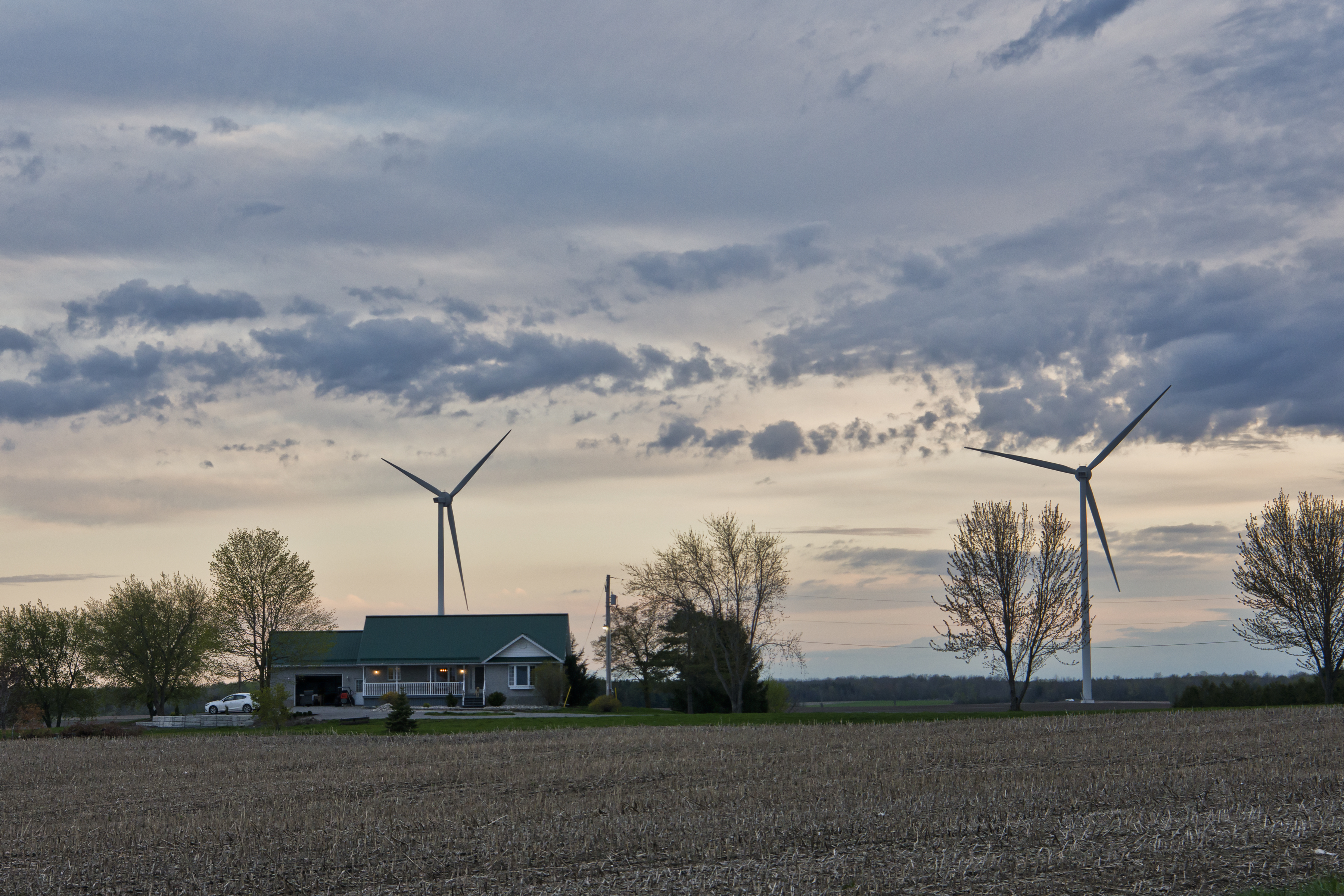
House and wind turbine at Brinston, just south of Ottawa. Propaganda meetings are not 'community engagement' says an Ontario citizen

House and wind turbine at Brinston, just south of Ottawa. Propaganda meetings are not ‘community engagement’ says an Ontario citizen


Queen’s Park to pass new legislation to ram through new hydro corridors: Ottawa Citizen

21 Thursday May 2015

Posted by Ottawa Wind Concerns in Ottawa, Wind power

≈ 3 Comments

Tags

Bob Chiarelli, hydro lines Ontario, Hydro One, Hydro Ottawa, IESO, Ontario Energy Board, Ottawa, Quebec power, transmission lines Ontario

Pathways and green space along the Hydro corridor in the Bridlewood area of Kanata.

Hydro corridor in Bridlewood area of Ottawa: millions of dollars’ worth of new power lines needed

Ottawa Citizen May 21

The provincial government is preparing a new law to make it easier to build and expand hydro corridors, with the Ottawa area a prime target.

Energy Minister Bob Chiarelli told a summit of energy companies in Toronto in early May that he’s working on legislation that’s mostly about adjusting the way Ontario’s main regulator for the industry, the Ontario Energy Board, works once the province sells off a majority share in Hydro One, its main transmission utility.

But part of the new law, according to the text of his speech, will “give cabinet enhanced powers to designate key transmission corridors to expedite their construction.”

Chiarelli’s spokesperson Jennifer Beaudry explained by email that the idea is to let the politicians decide what’s “in the public good” and remove a stage where the energy board makes its own determination about whether a transmission project is really needed. The regulator would still go over costs and decide who should pay what share of them, she said.

A key transmission corridor could be one that brings electricity to a remote First Nations reserve, one needed to power northern mines, or one that’s needed for “enhanced intertie capacity with neighbouring jurisdictions to support clean energy import,” the text of Chiarelli’s speech says.

And that means Ottawa, which is a major transfer point for electricity Ontario buys from Quebec’s hydro dams but where our existing wires are nearly maxed out.

“At present the firm import capability that could be relied on for all hours on the Quebec — Ontario interties is quite restricted due to transmission issues in the Ottawa area,” says a report prepared last fall by the Independent Electricity System Operator, the provincial agency that monitors and forecasts the flow of electricity around Ontario.

Lines that run through Ottawa carry power into Ontario both from northern Quebec and from the big Beauharnois dam near Montreal. Electricity doesn’t travel all that well, so a lot of the energy we use here comes from Quebec, especially in the summer.

A shortage of transmission capacity will be a big deal in the North, where the eventual development of Ring of Fire mines and related industries will take a lot of electricity. It could even affect Toronto, which has a lot of heavy-duty power lines around its outskirts but only a webwork of little ones serving its condo-packed downtown. But it’s here that the clock is really ticking.

Within five years, the agency says, there’ll be no capacity to move electricity from Quebec through Ottawa to the rest of the province unless we build hundreds of millions of dollars’ worth of new power lines; all the juice we can suck in, we’ll be using locally. At a minimum, keeping the system functioning means replacing existing lines that run past backyards in Kanata and Orléans with heavier-duty ones, a $325-million project that would only keep the power supply in Ottawa stable, not give us any to spare.

The most ambitious scenario the IESO considered would cost more like $2 billion. It’s a list of things we’d have to do if Ontario wants to make a major deal to buy Quebec electricity in quantity. We’d have to do major work on just about all of Ottawa’s high-voltage lines, but especially on the ones that run through Orléans because they mainly carry electricity from an “intertie” with Quebec at a hydro dam in Masson-Angers to Ontario’s main power grid. It would also mean building a new eight-kilometre line through Kanata, connecting transfer stations at South March and Terry Fox.

As Ontario knows well by now, new electricity projects are rarely popular. Usually, they benefit other people more than those who live nearby — a wind farm is good for the company that runs it and for whoever leases or sells the land, and (arguably) for the province as a whole, but not for the neighbours who have to look at it.

Same thing with a hydro corridor. We need high-voltage wires but nobody has yet found a way to make them pretty. Plus the science is pretty compelling that they don’t pose a health risk, but there’s no convincing some people. There’s really no way that high-tension wires carrying Quebec power past your house in Ottawa’s suburbs toward Toronto are a selling point. Which is why the cabinet will want the authority to shove them down people’s throats.

dreevely@ottawacitizen.com
twitter.com/davidreevely


Ottawa Wind Concerns at Agricultural and Rural Affairs today

02 Thursday Apr 2015

Posted by Ottawa Wind Concerns in Uncategorized

≈ 3 Comments

Tags

EDP Renewables, North Gower, North Gower wind farm, Ottawa, Ottawa wind concerns, wind farm, wind power, wind power project, wind turbines


Ottawa Wind Concerns will present an overview of the new Ontario contracting process for wind power at the Agricultural and Rural Affairs committee today.

The group has prepared a presentation that outlines the process for developers, based on the 100-page document from the Independent Electricity System Operator or IESO, and has added recommendations for the City of Ottawa, should a proposal for a wind power project come forward.

“Our rural communities are completely opposed being industrialized for wind power projects, to produce power Ontario doesn’t need,” says chair Jane Wilson. “Almost 1,300 residents of the North Gower area signed a petition in 2013 to say they do not support a wind power project in their community, due to the economic and social costs.”

Ontario is contracting for 300 more megawatts of wind power in 2015, which will cost Ontario $200 million annually.

U.S.-based EDP Renewables has stated it is planning to propose 30-50 turbines just 30 minutes south of Ottawa, in North Dundas.

Ottawa Wind Concerns is a community group and corporate member of Wind Concerns Ontario.


Energy Minister Chiarelli on CFRA today

27 Friday Mar 2015

Posted by Ottawa Wind Concerns in Renewable energy, Wind power

≈ 3 Comments

Tags

Bob Chiarelli, CFRA, electricity bill increases, energy poverty, hydro bills Ontario, Large Renewable Procurement Ontario, Not a Willing host, Ontario consumers, Ontario electricity bills, Ottawa, Ottawa wind concerns, Steve Madely CFRA, wind farm, wind power

After “boasting” that projected electricity bill increases will result in $120 more on electricity customers bills a year yesterday in Toronto, Ontario Energy Minister Bob Chiarelli is a guest on CFRA’s The Home Page at 1 p.m.

Morning show host Steve Madely disputed Chiarelli’s math on his CFRA show this morning, saying by his calculation, the increase in electricity bills will be at least $140…and that Ontario consumers can ill afford it.

Chiarelli acknowledged that the increases are due to Ontario’s “investment” in “green” energy.

That doesn’t make economic sense, says Ottawa Wind Concerns Chair Jane Wilson. “Wind power which is today less than 4% of Ontario’s power capacity, actually represents 20% of the utility cost,” she says. “And because Ontario has a surplus of power, we are exporting a significant part of that at a loss to the United States, while we are paying wind power developers billions. Yet consumers are being asked to pay more–this is just nuts.”

Ontario opened its new contracting process for large renewable power projects on March 10; it is not clear whether a large wind power generation project will be proposed for the rural Ottawa area. The City passed a resolution in 2013 saying it did not support a wind “farm” in North Gower, and demanded a return of local land use planning powers that were removed by Ontario’s Green Energy Act.

Call in to the radio station at 613-521-8255, and listen at 580AM in Eastern Ontario, or live online at cfra.com

ottawawindconcerns@gmail.com

What the Health Canada noise study means for North Gower

29 Saturday Nov 2014

Posted by Ottawa Wind Concerns in Health, Ottawa, Wind power

≈ Leave a comment

Tags

Canadian Wind Energy Association, CanWEA, Health, Health Canada, Health Canada wind turbine noise and health study, Marlborough wind power project, North Gower, North Gower wind farm, Ottawa, Prowind, wind farm, wind farms and health, wind turbine, wind turbines

Health Canada study results show North Gower wind farm would have made more than 100 people sick

Many people were disappointed in the results contained in the summary of the Health Canada Wind Turbine Noise and Health study, which was released in a hurry on November 6th.

While the mainstream media picked up on the message as being “there is no association between wind turbine noise and health effects” what Health Canada actually said in its news release was this:

No evidence was found to support a link between exposure to wind turbine noise and any of the self-reported or measured health endpoints examined. However, the study did demonstrate a relationship between increasing levels of wind turbine noise and annoyance towards several features (including noise, vibration, shadow flicker, and the aircraft warning lights on top of the turbines) associated with wind turbines.

In fact, the study found that an average of 16.5% of people within 2 km of wind turbines, or a wind turbine (whether multiples were considered is not clear), had severe distress or “annoyance”. The closer people lived, the worse that result was: 25% of people at 550 meters or less (some people waived the setback as part of their contract with the wind power developers) had adverse health effects related to the distress or annoyance, annoyance being a medical term.

The adverse health effects from the annoyance listed by Health Canada were:migraine, tinnitus (chronic ringing in the ears), dizziness, sleep disturbance or disorder, and cardiovascular effects such as elevated blood pressure.

So, what would that mean for North Gower, if the wind power generation project proposed by Prowind in 2008 gone ahead (remember, it got as close as one could to a Feed In Tariff contract, before the government paused the subsidy program in the spring of 2013–it is NOT true that it would never have been approved, it was virtually there).

Thanks to volunteers who have mapped the area, using a schematic of the turbine locations which was leaked to us, we know this:

Number of homes within 800 meters of a turbine: 43

Number of homes within 1.6 km of a turbine: 234

TOTAL number of homes that would be most affected: 277

At an average of 2.5 people/home, that would be 692 people, and at an average of 16.5% affected by distress/annoyance, that would be 114 people.

This is considered to be a conservative figure as Health Canada did not do any follow up on the significant number of houses it discovered vacant or demolished in the study. These were “mature” turbine projects and as we know from the experience of people living in areas like Chatham-Kent, Clear Creek, Ripley and Kincardine, the people most affected leave within six months to a year.

114 people.

At least some of them children.

And yet the Ontario government continues to approve these power projects, despite evidence of harm to health, and the fact that Ontario does not need the power. And the wind power lobby group, the Canadian Wind Energy Association (CanWEA) persists in the mythology that wind power is clean and good for the environment.

Health Canada is taking no action, despite these results, and has no intention of studying wind turbine noise further*. The people of North Gower have a right to expect more from the federal government, and from Health Canada, which is supposed to used sound science principles to protect citizens.

Our Member of Parliament is Pierre Poilievre at pierre.poilievre@parl.gc.ca if you have any comments on what the Health Canada study means to you and our community.

Ottawa Wind Concerns

PO Box 3, North Gower ON  K0A 2T0

ottawawindconcerns@gmail.com

*As per a personal meeting with the study team representatives, Ottawa, November 7.

Ottawa councillor invites rural wards to leave

18 Saturday Oct 2014

Posted by Ottawa Wind Concerns in Health, Ottawa, Renewable energy, Wind power

≈ Leave a comment

Tags

Dan Scharf, Diane Holmes, Doug Thompson, Glenn Brooks, health effects wind turbiines, Ottawa, Ottawa City Council, rural communities, rural wards Ottawa, Scott Moffatt, Ward 21 Rideau-Goulbourn, wind farm

In an interview with the CBC for a news story on Ottawa’s rural ward 20/Osgoode, sitting councillor Diane Holmes said that she has “no sympathy” for the rural councillors, and that perhaps they should just leave.

In fact, Homes said, if there was a vote to let the rural wards go, she would be “first” to vote.

The story may be seen at cbc.ca/m/news/Canada/Ottawa

The report covered comments by Ottawa’s rural residents to the effect that they felt excluded from City plans and projects, and were not sure they are getting value for their tax dollars. Retiring Osgoode councillor Doug Thompson said that there has been a rural-urban divide, but that the situation was improving.

Commenting on Twitter, Ward 21 incumbent councillor Scott Moffatt said Holmes’ remarks were “ignorant.” Candidate for Ward 21 Dan Scharf offered Diane Holmes a tour of Rideau-Goulbourn.

In 2009, Holmes voted against a motion by then-councillor for Rideau-Goulbourn Glenn Brooks, who had proposed a motion to Council asking for a moratorium on a proposed wind power project in North Gower, pending health studies on the effects of the noise and infrasound produced by wind turbines.

Coalition forming to create new nuisance noise bylaw

30 Thursday Jan 2014

Posted by Ottawa Wind Concerns in Health, Ottawa, Wind power

≈ 1 Comment

Tags

environmental noise wind farms, Kincardine, noise bylaw, noise wind farms and health effects, Ottawa, wind turbine noise

Several Ontario municipalities have been discussing the possibility of creating a bylaw for the benefit of all communities with wind power generation projects, so their residents may be protected against the environmental noise and low frequency vibration produced by the turbines.

The Ontario Ministry of the Environment is supposed to be monitoring the noise from wind power projects, but as was disclosed to the Environmental Review Tribunal hearing the appeal of the Samsung-Pattern Armow project, the Ministry’s position is that the wind power developers’ computer modelling for the turbines must be correct, so if they receive complaints for a project that therefore incapable of producing noise over the regulated limits, they don’t even investigate.

Worse, noise complaints go to the “Spills Line” which was really set up for ordinary environmental spills into air and water and on land, and the complaints are kept at the district level—they NEVER go to head office in Toronto for analysis and action.

So, while the municipalities are fighting to regain local land use planning control, they are also seeking ways to protect. Kincardine Council voted this week to begin the coalition of municipalities.

Question: do you think Ottawa should join? Email us at ottawawindconcerns@gmail.com

Kincardine backs plan to form coalition, create noise nuisance bylaw

Municipality seeking legal advice on how to move forward
Section:

29/01/2014, 04:42

By Barb McKay

Kincardine will support forming a coalition with other municipalities to develop a noise nuisance bylaw and plans to contribute $30,000 over two years to help make it happen.

It was the third time in as many weeks that council debated the idea of joining forces with other municipalities to come up with a bylaw that regulate industrial noise, including that from wind turbines, in rural areas. Last Wednesday council finally reached a concensus and approved two motions to support the plan, first presented by Warren Howard on behalf of Huron-Kinloss Against Lakeshore Turbines (HALT) on Jan. 8. That group indicated it will cost an estimated $300,000 to develop the bylaw and defend it in court.

The first motion, introduced by councillor Ken Craig, called on municipal staff to get legal advice on joining the coalition and developing the noise nuisance bylaw.

“If it’s a great idea you wonder why it hasn’t been done one hundred times before, and maybe it has,” said Craig.

He said before council agrees to join the coalition he would like to understand if there are any liabilities associated with doing so.

Councillor Jacqeline Faubert said coalitions have been formed many times in Ontario to deal with different issues. She pointed to Kincardine’s plans to form a municipal services corporation with Huron-Kinloss Township and Arran-Elderslie Township for the natural gas project as a prime example.

Deputy mayor Anne Eadie questioned if council would be putting the cart before the horse by seeking legal advice before it was determined if a coalition would even before formed.

“I agree that we need to consult a lawyer, but without an agreement from other municipalities we don’t have anything to take to a lawyer,” she said.

Councillor Randy Roppel said he supported the municipality seeking legal advice, but that it might be more make sense to do so as a coalition, rather than having 20 municipalities individually talk to a lawyer.

“I think we will need our own legal advice either way,” Kraemer said, and council agreed.

The second motion, introduced by Faubert, directs council to strongly support forming a coalition to draft a generic noise nuisance bylaw and to pledge $15,000 annually for two years to fund the coalition, which will include legal costs to test the bylaw out in court. The funds are conditional on other municipalities committing funds to the endeavor; the creation of a memorandum of understanding signed by other coalition members; and a plan to move the process forward.

“The courts have ruled in Ontario that noise and nuisance are legitimate municipal matters,” Faubert said. “I’ve been empowered by the ratepayers and this is a chance to do something. I feel very optimistic about this.”

Councillor Ron Coristine asked for a friendly amendment to the motion to add a communication protocol for participating municipalities to the memorandum of understanding, and council agreed.

Councillor Maureen Couture said by Kincardine putting its money where its mouth is, it may encourage other municipalities to join the coalition. But, she added, she would be more comfortable pledging funds for one year to avoid committing the next council to providing the money. Roppel said the next council could choose not to allocate the funds if it didn’t want to.

Councillor Candy Hewitt said the process to create the bylaw and have it go through the court system will in all likelihood take more than a year and it would be appropriate to commit funds for two years.

“It’s something at the ground level that shows that we really are trying to do something with the little power that we have to effect change,” she said.

Mayor Larry Kraemer said he was concerned that pledging $15,000 per year would scare off smaller municipalities who would like to participate but may assume they would have to contribute the same amount. He said he believes it will take at least 100 municipalities to have an impact.

Council voted in favour of both motions. Municipal staff is expected to bring a report back to council with legal advice regarding joining the coalition by Feb. 19.


Ottawa decision of interest to all Ontario

24 Sunday Nov 2013

Posted by Ottawa Wind Concerns in Ottawa, Renewable energy, Wind power

≈ 1 Comment

Tags

cost-benefit analysis wind power, Green Energy Act, Mayor Jim Watson, North Gower, Not a Willing host, Ottawa, Scott Moffatt, siting wind power projects, wind power Ontario

Here from the Manotick Messenger, is an excerpt from Ward 21 Councillor Scott Moffatt‘s account of the North Gower-Richmond Not A Willing Host petition effort and inclusion in a City of Ottawa motion–which passed unanimously at council.

Other municipalities have been demanding a return of local land use planning powers–in fact, since before the Green Energy Act–but Ottawa, as the second largest city in the province, is the most populous municipality to do so.

The Not A Willing Host communities now number 75: to see the list and map, go to www.ontario-unwilling-hosts.org

2013 is turning out to be a year where issues under provincial jurisdiction are coming up time and time again.These issues give the City of Ottawa a minimal role in the final approval, whether it is the approval of a landfill expansion on Carp Road, or the proposal of expanding gaming within City limits. One of these issues, renewable energy projects, is not new to our area and stems from the…Green Energy Act, which gives municipalities no role in the approval of solar projects or wind power projects.

Nowhere in Ottawa is this issue more prevalent than in North Gower. In 2008, a wind developer came forward with an application for ten industrial wind turbines to be installed between North Gower and Richmond. It is important to note that this project has never been approved and there has not been an opportunity for them to apply since 2010*, but with a new application process being developed and the continuing interest of this wind developer, the potential does still remain.

[*Editor’s note: this is not quite accurate. At the time the province suspended applications for its Feed In Tariff subsidy program, Prowind’s North Gower project, Marlborough Wind Farm, was already on the list of applicants and was awaiting an economic connection test. Just two weeks ago, Prowind sent an email to Ottawa Wind Concerns to say it will be reviewing the requirements in the new application process, and would likely re-apply.]

The challenge for municipalities for these applications is that they do not have the ability to weigh in on the topic, conduct a meaningful consultation process or make any substantive recommendations on applications. This has led to over 70 municipalities across Ontario declaring them as Not A Willing Host to a wind power project. Residents of North Gower and the surrounding area recently came together and submitted a petition to the City of Ottawa that included 1,228 names declaring North Gower as Not A Willing Host.

… This led to the unanimous approval of a motion I put forward at Council last week that asks the Province of Ontario to make the necessary legislation and/or regulatory changes to provide municipalities with a substantive and meaningful role in siting wind power projects. City Council, in a 24-0 vote, sent a strong message to the Province that we should have a real voice in approving these projects.

This is a motion not just for North Gower or Ottawa, but for every municipality in Ontario.

Energy Minister Chiarelli, in testifying before the committee looking at the gas plant cancellations, said last week that it will be “virtually impossible” for a wind power proponent to receive approval without “significant” involvement or support from a municipality. Until we see the new process, we don’t know exactly what that means, but can it be the province really has been “listening” to the municipalities? MPP Lisa Thompson told the Minister in the same hearing session, “You better start listening to the 75 municipalities–you know what I mean.”

Email us at ottawawindconcerns@gmail.com

← Older posts
Newer posts →

Recent Posts

  • Open letter to CAFES Ottawa
  • Ottawa Wind Concerns supports West Carleton residents
  • What does wind ‘farm’ construction really look like?
  • Unwilling Host communities surround Ottawa
  • How many birds do wind turbines kill?

Follow me on Twitter

My Tweets

Enter your email address to follow this blog and receive notifications of new posts by email.

Tags

Bob Chiarelli Green Energy Act IESO Ontario Ottawa Ottawa wind concerns wind energy wind farm wind power wind turbines

Contact us

PO Box 3 North Gower ON K0A 2T0

Create a free website or blog at WordPress.com.

Privacy & Cookies: This site uses cookies. By continuing to use this website, you agree to their use.
To find out more, including how to control cookies, see here: Cookie Policy
  • Subscribe Subscribed
    • Ottawa Wind Concerns
    • Join 379 other subscribers
    • Already have a WordPress.com account? Log in now.
    • Ottawa Wind Concerns
    • Subscribe Subscribed
    • Sign up
    • Log in
    • Report this content
    • View site in Reader
    • Manage subscriptions
    • Collapse this bar
 

Loading Comments...