• About
  • Donate!
  • EVENTS
  • Ottawa’s “Energy Evolution”: wind turbines coming to rural communities
  • Thinking of signing a wind turbine lease?
  • Wind Concerns Ontario
  • Wind turbines: what you need to know

Ottawa Wind Concerns

~ A safe environment for everyone

Ottawa Wind Concerns

Tag Archives: noise pollution

Open letter to CAFES Ottawa

03 Monday Mar 2025

Posted by Ottawa Wind Concerns in Ottawa, Renewable energy, Rural issues

≈ 3 Comments

Tags

agriculture, CAFES, farmland, food, food security, noise pollution, Ottawa, Ottawa wind concerns, rural, wildlife, wind power, wind turbines

We ask the question, How can an “environmental” organization claiming to protect the environment and support “sustainability” be promoting invasive industrial wind power?

March 3, 2025  

CAFES Ottawa  

Re: March newsletter and comments on renewable energy  

We have just seen your most recent Bulletin to your followers and have several serious concerns about the content as regards “renewable energy” in Ottawa.  

You say that City Council paused the siting of renewable energy projects, “effectively banning renewable energy projects.”  

This is not accurate. The intent of that motion passed in 2023 was to protect the people of Ottawa in the event that proposals for industrial-scale wind power and solar power projects were made, in the absence of up-to-date, appropriate zoning protection.  

This is the exact wording:   

BE IT FURTHER RESOLVED that all future requests for MSRs continue to rise through the appropriate Committee of Council to allow for public engagement and consultation, including for LT2 RFP and all future IESO procurements, until such time as new direction is provided by Council  

The motion was not a permanent “ban” as you so dramatically put it, but rather, a step taken to ensure that the City has appropriate regulations in place to protect citizens.  

Instead of supporting a rigorous, detailed process to ensure appropriate siting, you say that CAFES wants to “minimize delay” and allow for approvals of industrial-scale or grid-scale power generation projects. This is very curious and would seem to conflict with your organizations’ other goals, namely protection of the environment and “sustainability.” 

How is it that during the presentations to the Agricultural and Rural Affairs Committee on the Ferry Road property, CAFES spoke about saving the “frogs and turtles” but is also advocating for pushing through approvals of gigantic wind turbines which we know introduce harmful noise pollution to the environment, and pose a grave risk to wildlife including birds and bats?  

You also say that communities across North America already have wind power sites that are “regulated and safe technologies.” This is far from the truth. Ontario now has 157 municipalities who have gone so far as to pass motions at Council designating themselves to be “Unwilling Hosts” to new wind power sites. In the main, these are communities that already have wind turbines, or are adjacent to jurisdictions that do, and they are acutely aware of the problems.   

And in the United States, there is a running total of communities that have rejected new wind power sites outright, mainly due to environmental impacts. At present, the tally is 427 municipalities in the U.S. 

Ontario’s environment ministry has more than 7,000 files of wind turbine noise complaints, including hundreds for the nearby Nation Rise wind power site, which had more than 140 complaints even before the project started commercial operation.  

The problems with wind turbines are not limited to noise pollution. The municipality of Chatham-Kent has officially requested the Ontario government to take action on contaminated well water which an independent science panel found to be connected to the construction and operation of industrial-scale wind turbines in North Kent.  

The American Bird Conservancy has stated that wind turbines are a serious threat to North American bird populations and advises officials to take great care in siting new power generation projects. Ottawa is on a major migratory bird pathway, and several species of bats (Important to the ecosystem and agriculture) are already endangered.  

A recent cost-benefit analysis done by an economist showed that for Ontario at least, with its low wind resource, if you want effective action against climate change, and to provide a reliable source of power generation, wind power is not the answer. Add to that, wind power is an incredibly low power density source, meaning it uses up a great deal of land for little return.  

I ask again, How can CAFES be supporting a rush to approvals for this industrial land use which offers little real benefit except profits for a few power developers and investors, with your other goals of environmental protection and sustainability?  

Security of our food supply is becoming a more important issue every day in Canada. Wind power is a low-density form of power generation which uses up a lot of land — how can you justify that along with your goal of promoting “sustainability”?  

I invite you to reassess this situation and realize we have interests in common. Why not support making Ottawa a leader in environmental protection by choosing more effective, efficient forms of clean power generation, and ensuring people, wildlife and the environment overall have the best protection?  

Jane Wilson 

Chair, Ottawa Wind Concerns 

ottawawindconcerns@gmail.com
Local investor consortium plans bids for power contracts

05 Monday Aug 2024

Posted by Ottawa Wind Concerns in Ottawa, Renewable energy, Rural issues, Uncategorized, Wind power

≈ 4 Comments

Tags

IESO, noise pollution, OREC, Ottawa, Ottawa wind concerns, rural, unwilling host, wind energy, wind turbines

Just “another form of farming” investor group claims, says it will bid in next IESO round

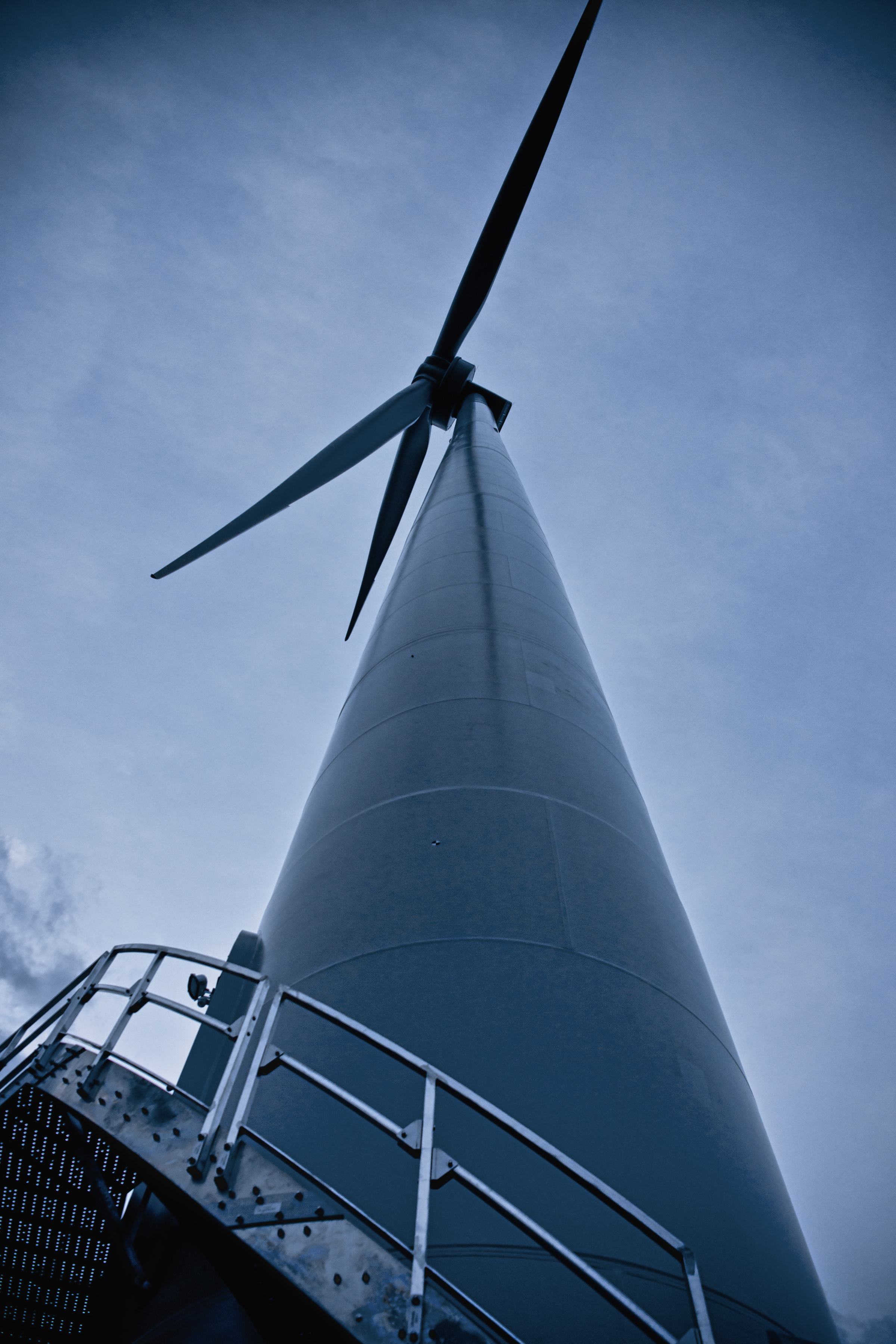
Industrial wind turbine just south of Ottawa: industrial land use

Following a web event held by the Independent Electricity System Operator or IESO a few weeks ago, Ottawa-based investor consortium Ottawa Renewable Energy Cooperative filed a comment in which it stated the group plans to bid for renewable energy projects, when the IESO releases its next Request For Proposals.

OREC already has invested in 24 renewable energy projects in Ontario, mostly solar, but also two small wind turbines, in the Kincardine and Bluewater areas of western Ontario (Huron County).

OREC’s comments to the IESO include the claim that it intends to bid for contracts. It acknowledges community opposition to some types of renewable energy development but claims it can avoid that by building smaller projects that will not attract opposition. The group correctly states that opposition to the Battery Energy Storage Systems or BESS was aided by the inability of developers to provide answers to citizen concerns.

OREC’s comments follow. Emphasis in italics is ours.

Concern 1: We previously noted a qualification bias in LT2 material in favour of indigenous engagement, including indigenous participation as co-proponents. We wish again to request that community-based investment entities such as OREC will be granted equivalency to indigenous participation in terms of rated criteria points as well as set-asides, particularly if such set-asides will be structured to incentivise partnership with indigenous communities. Our question is, “why not community groups too?”

Concern 2: Rural Ottawa is still reverberating from the process of approving large BESS contracts in LT1. Much negative feeling has grown since November 2023 when a plethora of Open House events were held in Ottawa’s rural areas and developers were not ready with adequate answers about appropriate project scale and risks to communities. OREC is monitoring continuing conversations among opponents and their municipal representatives, and we anticipate greater opposition to LT2 projects. OREC believes a development model involving multiple small projects on distribution lines, funded by community investors, will attract significant interest within municipalities. This approach will attract municipal councils to the benefits of local economic activity, and the virtuous loop of generating energy locally, thereby relying less on large energy sources from outside community boundaries. OREC believes that scaling generation and BESS units such as OREC is proposing, meaning smaller, more widely distributed locally owned projects will attract positive attitudes, especially within rural areas, to what is effectively another form of farming. OREC recommends to the IESO that future energy procurements accommodate smaller scale projects, particularly clusters of small projects that have commonality of ownership and regional proximity. Clustered projects on different but proximate distribution feeder lines could be considered as single projects. OREC further recommends that the IESO include rating criteria that reward developers who partner with community-based organizations, similar to indigenous engagement criteria.

Our comments:

Community support: OREC is requesting that community groups supposedly representing local residents should get the same consideration as Indigenous peoples. First, although OREC claims to be “local” its membership is unknown, and in fact the consortium actively reached out to residents in Huron County to invest, as well as Ottawa area residents. So, what is “local”? But more important, OREC misses the point of the IESO’s initiatives regarding Indigenous communities. The goal is to assist these communities with a “clean, reliable and affordable” energy, such as, for example, reducing communities’ reliance of diesel generators for power supply.

Community opposition: After acknowledging the problems of the BESS proposals in the fall of 2023 (a rushed process with little information available), OREC says it anticipates more community opposition. Instead of acknowledging citizen concerns about loss of farmland, industrialization of rural communities, and the significant environmental impact that industrial wind turbines can have, OREC says it has the answer — “multiple small projects.”

OREC has demonstrated grid illiteracy in the past and this is more of the same. Former energy minister Todd Smith commented in February of this year that the addition of renewables (wind and solar) under the McGuinty-Wynne governments created “a lot of instability” on the power grid. The answer, Minister Smith said, was to build a supply of “clean, reliable, baseload power” and the best way to do that was to use Canada’s proven nuclear technology to build large power sites.

Creating multiple small sources of intermittent power generation will not provide reliable power for Ottawa, and it may add to grid instability. That’s not good for anyone.

Citing a “virtuous loop” of local power generation, OREC seems to imply that cute little windmills operating in the area will be like locally grown food. It is not.

Local benefits: OREC claims there are “local benefits” to renewable energy projects. What are they? There are no jobs after the construction phase (and few of those unless you drive trucks), and few if any jobs afterward. Wind turbine maintenance and monitoring is done from remote centres, with a few highly trained technicians on the ground. As the president of Canadians for Nuclear Energy Dr Chris Keefer commented, There are no employee parking lots for wind farms. There are plenty of problems with wind turbines, which is why in Ontario there are currently 157 municipalities that have passed resolutions declaring themselves to be Unwilling Hosts to industrial wind power sites. Most of the Unwilling Hosts either have wind turbines already or are nearby jurisdictions that dothey know the problems, such as noise pollution, risk to wildlife, and irreversible damage to aquifers.

Farming: While possibly drawing analogies to local food production OREC purposely ignores a very big question about wind and solar power development—they use up a lot of land. Good land. Wind and solar are both “low density” forms of power generation because they require so much land for very little power generation. Ottawa’s Official Plan states that renewables cannot be sited on prime farmland, but in truth, all classes of farmland have value. This goes against the public’s wish to encourage local food production. OREC counters with the preposterous claim that operating industrial wind and solar power sites is ”another form of farming.” No, it isn’t. It’s industrialization.*

While OREC promotes itself as a “green” organization, interested in “sustainability,” the fact is, it is an investor group, interested in making money. They have shown little concern, even disdain for citizen concerns (see note below) about the environment and community well-being.

While OREC presents dreamy ideas about “local” power generation as if it were sweet corn, we are ready with the facts: wind power is ineffective, intermittent, unreliable, and expensive —it doesn’t make sense for Ottawa.

OTTAWA WIND CONCERNS

ottawawindconcerns@gmail.com

*OREC founder and Board member Dick Bakker spoke at an Ottawa IESO web event several years ago and when citizen concerns about the environment were raised, he angrily snapped that people who objected to industrialization of their communities were just “NIMBYs.” Industrialization. Acknowledged.

Renewable energy amendment passed by Ottawa City Council

12 Wednesday Jul 2023

Posted by Ottawa Wind Concerns in Health, Ottawa, Renewable energy, Wind power

≈ 1 Comment

Tags

Health, noise, noise pollution, Ottawa, Ottawa wind concerns, rural, safety, wind turbines

user
Renewable energy projects are an industrial land use, and people must be protected from noise and other impacts, says Ottawa Wind Concerns [Photo: D. Larsen for Wind Concerns Ontario]
July 12, 2023

Ottawa City Council today passed an amendment to the Official Plan, that will not allow for new renewable energy projects to get municipal approval until after the City has new zoning bylaws appropriate to that land use.

Municipal approval is now mandatory for successful proposals to the Independent Electricity System Operator (IESO). The IESO is launching another Request for Proposals in a few months, and will begin another RFP in 2025, as Ontario plans to double its power supply with “clean” emissions–free sources of generation.

“This is a step forward,” says Ottawa Wind Concerns Chair Jane Wilson. “We were concerned that proposals might come forward in the 2023 RFPs and there would be no protection for rural residents from noise emissions and other impacts of wind and solar power projects, which are an industrial land use. The City of Ottawa has clearly shown that they are aware of the need to protect health and safety as they move forward with new zoning bylaws.”

Municipal approval is mandatory and with the repeal of the Green Energy Act in 2018, planning powers removed by the McGuinty government were returned to municipalities—that means they can determine setback distances, noise limits, and other regulations to control development. A key concern for Ottawa is the protection of valuable agricultural land.

As regards the risk of noise pollution and other impacts such as danger from fires, turbine collapse and ice throw, City staff have said they want to “do the right thing.”

Following approval of the proposed amendment at last week’s meeting of the Agricultural and Rural Affairs Committee, a spokesperson for a local group spoke out against it, saying there was no reason to slow down renewable energy proposals. Angela Keller-Herzog of Community Associations for Environmental Sustainability was quoted by the CBC as saying we need battery energy storage systems for example during power outages so “our kids” can do their homework.

According the hydro authorities, the major cause of power outages is damage to transmission lines, which prevents power from any source reaching homes.

“It is interesting when ‘environmental’ groups appear not to actually care about protecting the environment,” says Ottawa Wind Concerns’ Wilson, who is a Registered Nurse.

“Our concern is to ensure that health and safety are protected so that families can live in peace and safety in Ottawa’s rural communities.”

The amendment states in part:

This report is an interim step towards regulating renewable energy generation facilities in accordance with policies in the Official Plan which direct renewable energy generation facilities that require provincial approval to certain rural designations. Once the amendments proposed in this report come into effect, renewable energy generation facilities will not be permitted in any zone until such time as a subsequent report is approved with appropriate provisions to regulate such facilities.

Ottawa Wind Concerns’ input was noted in the report, with the statement that we will be kept informed of any developments.

Also on the Agenda at Ottawa City Council was the submission of the petitions sponsored by Ottawa Wind Concerns, asking for a minimum 2-km setback between any wind turbines proposed, and homes, as well as other land uses where people might be affected.

City staff noted that there are no proposals known for power development (but a battery storage project is in development  https://evolugen.com/facilities/rabbit-battery/   in Cumberland) but with a series of Requests for Proposal coming from the IESO, anything is possible.

Ontario’s Energy Minister Todd Smith recently made several announcements, namely new nuclear at Bruce and Darlington, and a new plan called Powering Ontario’s Growth. (Read the news release and see links here: https://news.ontario.ca/en/release/1003253/province-launches-plan-to-power-ontarios-growth)

ottawawindconcerns@gmail.com

Ottawa Wind Concerns is an incorporated, not-for-profit group, with a membership list of several hundred residents of rural Ottawa communities and other stakeholders. We are a community group member of the Wind Concerns Ontario coalition.Our goal: a safe environment…for everyone

Prince Edward County rejects battery storage proposal

24 Tuesday Jan 2023

Posted by Ottawa Wind Concerns in Renewable energy

≈ 1 Comment

Tags

Battery storage, IESO, noise pollution, prince Edward County, Wind Concerns Ontario

RISK OF NOISE, FIRE, ENVIRONMENTAL CONTAMINATION FROM BATTERY STORAGE SYSTEM IS TOO GREAT, SAY RESIDENTS. FEW DETAILS AVAILABLE ON A LARGE ENERGY PROPOSAL: “A PIG IN A POKE”

January 24, 2023

Prince Edward County’s council voted to reject a proposal for a battery storage facility last week, responding to citizen concerns about safety and risk to the environment.

A Battery Energy Storage System or BESS was proposed by Compass Energy, a 250-megawatt facility that would require 15 acres of land.

Ontario’s Independent Electricity System Operator or IESO currently has a Request for Proposals for new power sources; the IESO is looking for 1,500 megawatts of power which can include new projects such as natural gas or wind, and battery storage. The proviso is that the power must be available immediately, and “can deliver a continuous amount of electricity to a connection point on a distribution system or transmission system for at least four consecutive hours,” according to the IESO website.

The Alliance to Protect Prince Edward County or APPEC* made a presentation to council with their concerns about the proposal.

“When we first became aware of the Picton BESS proposal a few months ago, we thought the scale of the project warranted evaluation,” says APPEC president and County resident Orville Walsh.

“We anticipated that [the proponents’] community meeting in early December would provide many of the project details. That turned out not to be the case. According to the project website, they will only be designing or planning the project after obtaining a contract from the IESO.”

Walsh told Prince Edward County Council that on investigation of available information about the project, APPEC concluded that there is no information on the type of equipment that will be used, battery manufacturer, or other electrical components; no information on the HVAC systems to be utilized; no information on fire detection systems, fire suppression systems and equipment; and no noise studies or estimates of environmental noise, which can be significant.

“We can only imagine the noise that could be generated on a warm summer night by 250 HVAC units,” Walsh told Council.

There are few specifics about this project, Walsh explained, “not a single drawing or illustration that is reflective of the scale of the project.  

“Giving support to a project lacking basic information is like buying a pig in a poke,” he said.

Residents of The County were also concerned about the loss of prime agricultural land to the power project, which contravened both the Ontario government’s statements and requirements of the local Official Plan to preserve valuable farmland.

Fire a significant risk

The danger of fire is an “unacceptable risk” from the lithium-ion batteries, say residents. Quoted in a report in the Picton Gazette, resident “Don Wilford spoke to council detailing the environmental devastation that would occur should a fire break out at a 250 megawatt BESS along with the immediate risk to the local population. ‘Lithium-ion batteries are susceptible to fires. At the scale proposed, the fire would cause vast damage to wetlands, the toxic gas plume requiring evacuation of Picton only 5 km away and potential loss of firefighters’ lives,’ Wilford stated.”

Others wondered why the Prince Edward County location was chosen as it is not near major population centres, or power generation facilities. (We can tell you: willing landowners, nothing else.)

Company competence in battery storage

Citizens also noted that the proponent had no experience with battery storage facility construction or operation. Resident Don Wilford presented background information about proponent Compass Energy: it is owned by Irving, which in turn is a subsidiary of Icon Infrastructure, a financial investment firm based in the U.K., he said.

“None of these companies have experience with battery storage,” said Wilford. “It appears Ontario is not only ignoring safer zinc battery tech but outsourcing a key component of its electricity infrastructure to financial companies that will outsource the tech to a systems integrator, which will, in turn, repackage lithium-ion units from major suppliers in China.”

It was also noted that the developer admitted there would be “zero” long term employment opportunities for people in Prince Edward County.

Valuable farmland would be lost

Sophiasburgh Councillor Bill Roberts tabled an amendment to deny the request from Compass Energy, listing all the concerns expressed by community members, adding that the Prince Edward Federation of Agriculture was also no in favour of the project.

“I’m opposed to the use of prime agricultural land for this purpose,” he said according to the story in the Picton Gazette.  “I support the Prince Edward Federation of Agriculture in their opposition to non-agricultural development on prime farmland. I hear convincing and alerting information from the audience,” said Roberts.

Roberts repeated the concerns about the risk of fire: “I find the potential fire and contamination risks compelling. Since 2017 there have been 50 such failures including five at large BESS installations. One in Australia required 150 firefighters and four days to extinguish,” decried Roberts. “I don’t get a sense the proponents have the experience to complete and operate such a giant BESS project. I was particularly struck by the IESO’s own connection site identification, wherein at least 166 sites were deemed preferable.”

Roberts amended motion was seconded by councillor John Hirsch and passed by council.

Battery storage proposals are popping up in various locations throughout the province, with varying degrees of success.

Other projects proposed include solar power facilities. One developer put forward a proposal to the council in Sault Ste Marie but declined to tell the elected representatives where the project might actually be located. At another meeting, the proponent claimed full support by local indigenous communities, which turned out not to be true: there had been some conversations including email exchanges, but there had been no formal expression of support.

In the U.S., energy commentator Robert Bryce says that community opposition to large wind and solar power projects is rising; people understand that wind and solar (and now, battery storage) do little to help the environment or alter climate change, but they do have significant environmental impacts, and cause electricity bills to rise. Bryce maintains a database of community rejections of large renewable energy projects.

Comment: frankly, we cannot understand why any company would want to take on the folks in Prince Edward County. They spent more than 10 years, and more than $1.5 million after-tax dollars to defend the County against four wind power projects, all of which would have endangered wildlife, wetlands, and the fragile topography of the area, as well as having a negative impact on tourism, for which the area is rightly famous.

contact@windconcernsontario.ca

*APPEC is a corporate community group member of Wind Concerns Ontario

REPOSTED FROM WIND CONCERNS ONTARIO with permission

Put distance between wind turbines and homes, Ottawa Wind Concerns tells City

07 Thursday Apr 2022

Posted by Ottawa Wind Concerns in Uncategorized

≈ 2 Comments

Tags

bylaws, environment, noise, noise pollution, Ottawa, Scott Moffatt, wind farm, wind turbines

Current regulations inadequate to protect health, safety, Ottawa standing committee told today

Turbines and home inside Nation Rise power project

MEDIA RELEASE
PUT DISTANCE BETWEEN WIND TURBINES AND HOMES, COMMUNITY GROUP
TELLS CITY OF OTTAWA
April 7, 2022, Ottawa—

The only way to prevent or mitigate problems with industrial-scale or grid-scale
wind turbines is to put distance between the huge, noise-emitting machines, community group Ottawa
Wind Concerns told Ottawa’s Agricultural and Rural Affairs Committee (ARAC) today.


It is well known that the large, 60-storey wind turbines produce noise which can affect sleep and health;
the machines can also pose a safety risk if located too close to roads, and a risk to wildlife such as birds
and bats.


Ottawa Wind Concerns board member Mike Baggott of North Gower, asked that City Planning staff
adopt a 2-kilometre setback between the power generating equipment and homes.


The recommendation is based on a recent statement by community group coalition Wind Concerns
Ontario.


There are more than 2,000 wind turbines in Ontario presently, and the provincial government has more
that 6,000 formal Incident Reports, documenting complaints about noise, many associated with health
impacts.


Ottawa is currently engaged in developing new zoning bylaws following completion of the city’s new
Official Plan. Ward 21 Councillor Scott Moffatt, a member of ARAC, said that there would be opportunity
for rural residents to engage in the development of new bylaws to protect citizens, should wind power
projects be proposed for Ottawa in the future.


CONTACT: Jane Wilson, Chair, OTTAWA WIND CONCERNS

ottawawindconcerns@gmail.com

NOT a NO: Ottawa city staff respond on wind turbines

14 Wednesday Jul 2021

Posted by Ottawa Wind Concerns in Uncategorized

≈ 2 Comments

Tags

noise pollution, Ottawa, Ottawa wind concerns, renewable energy, wind power, wind turbines

City not procuring wind power directly, but open to developers [Photo Dorothea Larsen, turbines in North Stormont]

July 14, 2021

noise pollution, Ottawa, Ottawa wind concerns, renewable energy, wind power, wind turbines

Ottawa City staff have responded to queries about whether the City is planning wind turbines in the rural areas. Here is the response from a manager in the Climate Change and Resiliency Section.

Key point: the City of Ottawa is not directly procuring wind turbines BUT they are looking at where the turbines could go when developers come forward with proposals. That is a YES.

Response:

The City of Ottawa is not planning and does not have any intention of developing or installing large scale wind or solar renewable energy generation projects.

My team is responsible for developing and coordinating strategic policies, programs and plans to reduce greenhouse gas emissions and build resiliency to climate change in Ottawa.   As part of this work, my team leads the Climate Change Master Plan and is supporting the development of the new Official Plan.  Below is background information about both relate to wind projects.


Climate Change Master Plan


The City’s Climate Change Master Plan provides Ottawa’s overarching framework to reduce greenhouse gas (GHG) emissions and respond to the current and future effects of climate change.  As part of the plan, City Council aims to reduce GHG emission 100% by 2050. Energy Evolution is the action plan for how Ottawa will meet those targets.  It modelled 39 actions and their relative GHG emissions reductions to achieve the targets and identifies 20 priority projects* to accelerate action and investment over the next five years (2020 – 2025).  Both the Climate Change Master Plan and Energy Evolution identify embedding climate considerations in the new Official Plan as a priority project.


On January 1, 2019, the Green Energy Act was repealed which restored municipal authority over the siting of new renewable energy generation projects through amendments to the Planning Act. Residential and agricultural concerns about the siting of projects are now expected to be addressed through local municipal approvals. The current Official Plan and Zoning By-law are silent on renewable energy generation (REG).


Official Plan


The Draft Official Plan was released in November 2020 included REG as a Generally Permitted Use, but it did not specify where REG was permitted.  Through public consultation, staff received feedback that renewable energy generation policies in the Official Plan should align with Energy Evolution.


Since the Draft Official Plan was released in November 2020, staff has worked to add policies to direct where large-scale renewable energy generation projects can be located in the rural area.  The following describes the revisions:


The proposed policies direct where large-scale renewable energy generation projects as well as bio-energy projects are to be located in the rural area. It should be noted that such projects would also require a Renewable Energy Approval from the province.

The proposed policies are consistent with the Provincial Policy Statement for renewable energy generation in prime agricultural areas.

The proposed policies provide direction to establish zoning by-law provisions for renewable energy generation facilities to address nuisance impacts such as noise and shadowing. Public and stakeholder consultation will be undertaken on any new proposed zoning provisions following Council adoption of the Official Plan.


The revisions to the new Official Plan will be posted on the Official Plan webpage later this month.  When it is released, additional detail will be provided about how to make public delegations at the statutory public meeting expected later this summer.


Upon approval of the new Official Plan, large scale projects that are initiated by energy developers would still require approval by the Province (i.e. under the Renewable Energy Approval or Environmental Activity Site Registry process). However, there is currently no provincial policy or procurement mechanism that allows renewable electricity to be sold to the grid (i.e., there is no immediate opportunity for large scale wind or solar development in Ottawa). Staff are currently undertaking a preliminary assessment of renewable energy generation potential within the rural areas identified in the new Official Plan to better understand how the potential compares to the Energy Evolution model requirements.  This study is expected to be complete this summer.

………………..

So City staff are trying to deflect interest in and concern about high-impact wind power generation in our rural communities with a lot of words about the Official Plan.

The people of Ottawa generally and especially rural residents need to be able to discuss these proposals NOW. We also need the protective zoning bylaws NOW—if the City waits until proposals are made, they will be unable to enact anything, or the power developers can take legal action.

*One of the 20 projects is 20 megawatts of wind by 2025

WHAT YOU CAN DO:

Go to the City’s website and read the Official Plan draft Section 4.11 HERE.

Comment on it at newOP@ottawa.ca and copy your City councillor

If you can donate to our sign campaign, please send a cheque to Ottawa Wind Concerns with a note “Signs” to

Wind Concerns Ontario

PO Box 91047

RPO SIGNATURE CTR

KANATA ON K2T 0A3

Thank you!!!!!

(We are using WCO’s mailbox as we don’t have one)

Contact: ottawawindconcerns@gmail.com

Recent Posts

  • Open letter to CAFES Ottawa
  • Ottawa Wind Concerns supports West Carleton residents
  • What does wind ‘farm’ construction really look like?
  • Unwilling Host communities surround Ottawa
  • How many birds do wind turbines kill?

Follow me on Twitter

My Tweets

Enter your email address to follow this blog and receive notifications of new posts by email.

Tags

Bob Chiarelli Green Energy Act IESO Ontario Ottawa Ottawa wind concerns wind energy wind farm wind power wind turbines

Contact us

PO Box 3 North Gower ON K0A 2T0

Create a free website or blog at WordPress.com.

Privacy & Cookies: This site uses cookies. By continuing to use this website, you agree to their use.
To find out more, including how to control cookies, see here: Cookie Policy
  • Subscribe Subscribed
    • Ottawa Wind Concerns
    • Join 379 other subscribers
    • Already have a WordPress.com account? Log in now.
    • Ottawa Wind Concerns
    • Subscribe Subscribed
    • Sign up
    • Log in
    • Report this content
    • View site in Reader
    • Manage subscriptions
    • Collapse this bar
 

Loading Comments...