
• About
  • Donate!
  • EVENTS
  • Ottawa’s “Energy Evolution”: wind turbines coming to rural communities
  • Thinking of signing a wind turbine lease?
  • Wind Concerns Ontario
  • Wind turbines: what you need to know

Ottawa Wind Concerns

~ A safe environment for everyone

Ottawa Wind Concerns

Tag Archives: Brinston

South Dundas wind power plant target

26 Tuesday May 2015

Posted by Ottawa Wind Concerns in Renewable energy, Wind power

≈ 5 Comments

Tags

Brinston, Cornwall Standard-Freeholder, Evonne Delegarde, Invenergy, North Dundas wind farm, North Stormont wind farm, Not a Willing host, South Dundas, South Dundas wind farm, Standard-Freeholder, Stormont-Dundas-Glengarry, wind farm Eastern Ontario, wind power, wind turbines

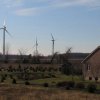
Not the photo the Standard-Freeholder used, of a turbine alone in a field. THIS is reality: a house and turbine near KIncardine, Ont.

Not the photo the Standard-Freeholder used, of a turbine alone in a field. THIS is reality: a house and turbine near KIncardine, Ont.

U.S.-based Invenergy is trying to persuade South Dundas to reverse its unwilling host resolution and put its stamp of approval on a proposal for more wind turbines for the area.

Cornwall Standard-Freeholder, May 25

South Dundas remains a magnet for wind power developers, despite an earlier proclamation the municipality is “not a willing host” for the controversial turbines.

Just on the heels of a presentation made by the township’s only resident turbine developer, EDP Renewables, a second firm wants in on the action. South Dundas council heard last Tuesday from James Murphy and Ryan Ralph, who were representing Invenergy, reputed to be the continent’s sixth-largest green energy entity.

Invenergy is proposing its Nine Mile Project, which would be considerably more ambitious the current South Branch project that is now operating in the Brinston area. It would also spill into North Dundas.

If developed, Nine Mile would produce between 50-90 megawatts/hr. South Branch delivers 30 megawatts, but EDP is hoping to expand its operations in the township.

Invenergy needs council’s blessing in order to arm itself with a best-case argument to get provincial approval as it competes with some 40 other companies. One of the requirements that South Dundas wants projects to satisfy is to show there is a demand for more electricity.

Invenergy has indicated by 2019, more energy will need to be produced in Ontario, reversing a current trend of selling power at loss to other jurisdictions.

Mayor Evonne Delegarde said the new council welcomes new presentations in order to analyze their individual worth.

One of the social spinoffs for hosting a turbine project is the community donations the township receives annually – $1,000 for every megawatt produced, so Nine Mile would provide $50,000 to $90,000 per year for 20 years.

As for her opinion, the mayor said the community investment would not be a factor in view of whether to accept the proposal. Several property owners have already signed up to receive $500,000 in lease payments if the project goes ahead.

twitter.com/GregPeerenboom

NOTE: Ottawa Wind Concerns has learned that a community group opposed to the wind power project may be forming in North Stormont–we will keep you informed.

ottawawindconcerns@gmail.com

20-25 MORE wind turbines for Brinston area south of Ottawa

20 Wednesday May 2015

Posted by Ottawa Wind Concerns in Ottawa, Renewable energy, Wind power

≈ 2 Comments

Tags

Brinston, EDP Renewables, Invenergy, Irish Headline Road, North Dundas, Not a Willing host, South Dundas, Stormont Dundas Glengarry wind farm, wind farm map South Dundas, wind milles South Dundas, wind turbine locations South Dundas

Cornwall Newswatch May 20, 2015

Invenergy wants 20-25 windmills west of Brinston

Posted on May 20, 2015 by Editor in News, North Dundas, South Dundas // 1 Comment

James Murphy, left, and Ryan Ralph, senior manager of business development for Invenergy, make their presentation to South Dundas council May 19, 2015 for a proposed wind farm west of Brinston. The 20-25 windmill site would be west of the existing EDP Renewables’ South Branch Wind Farm. (Cornwall Newswatch/Bill Kingston)

SOUTH DUNDAS – Another company is looking to cash in on wind energy in the Municipality of South Dundas.

Representatives from Chicago-based Invenergy made a presentation to South Dundas council Tuesday night – a presentation very similar to EDP Renewables’ last month.

Spokesman James Murphy told council they’ve already secured land leases with 30 landowners for a total of 11,000 acres in South Dundas.

The company says it has paid out $500,000 to date for the leases.

“We get asked a lot, well, how big is the project? Is it big, is it small? In general, we think it’s going to be around 50-90 megawatts, using a similar unit on the South Branch (Wind Farm) project….somewhere between 20-25 positions (windmills) on that 11,000 acres,” Murphy told council.

The wind farm would be west of Brinston and south of Irish Headline Road.

Answering a question from Deputy Mayor Jim Locke on where the exact locations of the windmills would be, Murphy said that wouldn’t come until late 2016 if they were successful in their bid this year.

Murphy says they also have a smaller land footprint in North Dundas but, when they asked to make a deputation to the council there, they were refused. North Dundas is also a non-willing host. Instead, a public meeting is being held at a nearby community center.

Murphy also stressed there would be public meetings on the proposed project this summer, which has to be submitted to the government by September.

Much like EDP Renewables, Invenergy would have a community reinvestment fund.

Invenergy and EDP Renewables are both trying to woo support from council is order to score better on a points system for the request for proposal (RFP) process, despite the fact South Dundas committed to being a non-willing host in October 2013.

South Dundas listened but made no commitments Tuesday night.

The Independent Electricity System Operator (IESO) is expected to outline the capacity for wind power on the hydro grid in two days (May 22) and, at that point, both companies will have a better idea how big their wind farms will be.


EDP Renewables bulldozes holdout landowner home

11 Monday May 2015

Posted by Ottawa Wind Concerns in Renewable energy, Wind power

≈ 1 Comment

Tags

Brinston, EDP, EDP Renewables, EDP Renewables North America, lawsuits wind farms, North Dundas Ontario, North Stormont, North Stormont Ontario, signing leases for wind farms, South Branch wind farm, Stormont-Dundas-Glengarry, Wind energy companies, wind farm, wind farm neighbours, wind farm property, wind turbines


Courthouse News Service, May 11, 2015

House Bulldozed for Wind Farm, Family Says
By REBEKAH KEARN

ShareThis

     LOS ANGELES (CN) – Wind energy companies bulldozed a black family’s house because they were the sole holdouts who refused to sell out to a huge wind farm, the family claims in court.
Darlene Dotson and her sons David and Daniel sued EDP Renewables North America, Horizon Wind Energy Co., Rising Tree Wind Farm, CVE Contracting Group, and Renewable Land LLC, on May 7 in Superior Court.
The family wastes no time in getting down to specifics. “Plaintiffs in this action are the victims of a multinational energy developer who refused to accept ‘No’ for an answer,” the 32-page complaint begins.
“The heart of the issue is that the Dotsons own property in Mojave that is sought after by EDP Renewables for windmills, and they refuse to sell,” the family’s attorney Morgan Stewart told Courthouse News.
Mojave, pop. 4,300, is 50 miles east of Bakersfield, below the Tehachapi Mountains, on the edge of the immense Mojave Desert.
“The home on the property was a family home they used for family vacations and gatherings. EDP pressured them to sell, but they still refused,” Stewart said.
“The house was damaged several times when they were away. And then one time when they went back to the house they found that it had been demolished, scraped to the foundations, along with all of their belongings. The companies did it.
“We see it as intentional because EDP needed the property for the wind farm, but the Dotsons wouldn’t sell,” Stewart said.
EDP Renewables is building the Rising Tree Wind Farm about 3 miles west of Mojave in Kern County.
Project leaders estimate the wind farm will generate 199 megawatts of electricity when it goes online sometime this year – enough to power around 60,000 homes and take 33,000 cars off the road.
The Dotsons say the defendants first approached them about the wind farm in 2009, claiming they needed to buy the surrounding parcels of land, including the Dotsons’ land, for the wind farm.
The Tehachapi Mountains, which top out at 7,992 feet, generate nearly constant winds, as the cool air on top and the Pacific Ocean to the west suck the superheated desert air through the mountain passes.
“Like the infamous Daniel Plainview from Paul Thomas Anderson’s Film, ‘There Will Be Blood,’ defendants held themselves out as friends to the local community and a source of prosperity for its residents. Among other things, defendants promised Mrs. Dotson and her neighbors that the wind farm would stimulate the local economy and generate energy revenue for cooperating landowners. All that Mrs. Dotson and her neighbors had to do was to sign over the rights to their homes,” the complaint states.
But Darlene Dotson says she resisted the sales pitch, telling the companies she was not interested in selling because her family “cherished” their home and its underlying history more than the companies’ offers of money.
“The house had been in their family for 20 years, and was one of the original homesteads built by African Americans in the early 20th century,” attorney Stewart said.
The Dotsons used the home for family gatherings, vacations, barbeques and birthday parties. Daniel and David Dotson grew up playing in the house and then took their own children to play there. It was “hallowed ground” to the family, according to the complaint.
In addition to memories, the house contained the Dotsons’ family mementos, including photographs of deceased family members, family heirlooms and antiques.
Though all of their neighbors agreed to sell or lease their land, the Dotsons held out and “respectfully declined” the companies’ numerous offers, according to the complaint.
When the companies realized the family was adamant about keeping their home, they became aggressive and hostile, the Dotsons say. Mrs. Dotson claims the companies’ agents insulted her and spoke to her disrespectfully, and told her that “the home was worthless and that the Dotsons should take the money because it was the best they would ever get for the land.”
They harassed her sons and tried to bully them into persuading her to sell the house by threatening to “surround the home on all sides with the wind farm, restricting the Dotson’s access to the home and causing the home’s property value to plummet,” the complaint states.
Stewart said the companies wanted the property so badly they approached the Dotsons’ neighbors and asked them how to persuade the Dotsons to sell.
Then the defendants vandalized the house, breaking windows and patio furniture, the Dotsons claim. “In essence, the Dotsons were being terrorized in their home,” the complaint states.
In February this year the defendants started demolishing the surrounding homes to develop the land for the wind farm.
When David Dotson went up to the family home in late March to do some maintenance, he discovered that the home was “literally wiped off the face of the Earth,” that all the furnishings and family belongings “were simply eviscerated,” the complaint states.
Stewart said the family is not sure exactly when the house was demolished, but suspects it was around the time the companies started knocking down the other homes.
The Dotsons say several people from the companies called and left messages admitting that they had demolished the Dotson’s home and insisting that it was a mistake.
But the Dotsons claim it was a deliberate ploy to make them sell their land.
“The pressure to sell from EDP, the strong-arm tactics leading up to the demolition, and coming along afterward and trying to buy again, all indicate that this was not an accident,” Stewart said. “This was an intentional act by a company that thought it could strong-arm these people.”
Though there is no direct evidence of racism, Stewart thinks the Dotsons’ race had something to do with it.
“They are the only African American family in the area, the only ones pressured very hard by the companies, and the only ones who had their house demolished when they refused to sell,” he said.
Stewart said it takes a deliberate effort to destroy a house because the gas and water must be turned off, among other things.
“It’s especially sad because they described how they built parts of the house with their own hands. It’s ugly,” he said.
Representatives with the companies did not reply to requests for comment.
The Dotsons seek punitive damages for trespass to land, violation of the Bane Civil Rights Act, intentional infliction of emotional distress, conversion, nuisance, unfair business practices and negligence.
Attorney Stewart is with Manly, Stewart & Finaldi, of Irvine.

[NOTE: EDP Renewables is the power developer proposing a 150-megawatt, 50-turbine wind power project in Stormont-Dundas-Glengarry, and currently operates the South Branch wind “farm” in Brinston, Ontario]

Wind farm health and property value impacts: what the developer isn’t telling you

11 Monday May 2015

Posted by Ottawa Wind Concerns in Wind power

≈ 2 Comments

Tags

Brinston, Crysler, Eastern Ontario wind farm, EDP Renewables, Finch, Finch Lions' Club, George Crisp, Health Canada, Health Canada study, health impacts wind farms, health impacts wind turbines, North Stormont, wind farm, wind farm Stormnont Dundas Glengarry, wind turbine, Wind turbine health effects, wind turbine noise, windmill noise

Two information events were held in North Stormont last week; a panel discussion on wind power issues, hosted by the Lions’ Club in Finch on May 6, and in Crysler on May 7, the first Open House on the North Stormont wind “farm” hosted by power developer EDP Renewables.

We have already reported on the Lions’ Club event and doubtless the media will be along shortly, too; we have reports from people who attended the EDP event.

Apparently, the power developer had brochures available on health and property value impacts. Here is the “other side” on these issues.

Health

The wind power lobby is focusing on the Health Canada study which, they say, claims no “causal link” between wind turbine noise and health effects. The truth? The Health Canada study was not designed to find a causal link, so, surprise! What it DID find, however was that significant numbers of people are distressed by the turbine noise and infrasound (low frequency or inaudible sound). In Health Canada’s  PowerPoint presentation of its results, the following points were made:

  • as wind turbine noise levels increased, so did respondents’ annoyance (distress)…this was a statistically significant finding
  • in comparison to aircraft, rail or road traffic noise, annoyance/distress due to wind turbine noise was found to begin at lower levels, e.g., ~35dBA
  • the prevalence of wind turbine noise annoyance/distress was higher in Ontario than in PEI (the other area studied) and,
  • wind turbine noise annoyance/distress in the Ontario sample persisted up to distances between 1 and 2 km–in PEI this was restricted to

In fact, the Health Canada study found,16.5% of people within 1 km of a turbine experienced annoyance/distress, and at 550 metres, that went up to 25%

More recently, the Council of Canadian Academies released their report, a literature review on wind turbine noise, with the following important findings:

  • the evidence is sufficient to support a causal association between exposure to wind turbine noise and annoyance
  • standard methods of measuring sound may not capture low-frequency sound characteristic of wind turbine noise (in other words, the way Ontario is measuring turbine noise–and not measuring infrasound at all–is not adequate to protect health)
  • there is limited evidence to establish a causal relationship between exposure to wind turbine noise and sleep disturbance (which is known to cause health effects), and
  • knowledge gaps prevent a full assessment of health effects of wind turbine noise–proper population studies, especially studies of sensitive populations such as children, have not yet been done.

Did EDP Renewables present these facts at their Open House?

Property values

We’ll keep this short: we’re betting EDP brandished the recent study done by Richard Vyn of the University of Guelph, which is supposed to prove that property values around wind turbines don’t change. Aside from the fact that this is nonsense, and Vyn’s study was poorly structured—that’s not what he says!!! In fact, Vyn cautions the reader that there were significant limitations in how he went about his study and this [his conclusion] does not preclude any negative effects from occurring on individual properties. Read more analysis of the Vyn report at Wind Farm Realities.

The wind power developer is taking care to be seen to address the issues of health and property values, but they are being very selective in their choice of reference material (and in the coming federal election, you might ask candidates WHY the federal government used taxpayer money to create a misleading, attractive colour brochure to help the wind industry)

Email us at ottawawindconcerns@gmail.com

NOTE: This post certainly got us a lot of attention from the wind power industry. A wind industry communications officer from the UK accused us of causing harm to people by putting this information out there (he claimed people with real illnesses would not seek treatment because they will think instead it’s just wind turbine noise–absolutely unjustified and frankly, stupid); he was seconded by pro-wind physician George Crisp from Australia, and they were joined on Twitter by Chris Young, board member with the Ontario Sustainable Energy Association and employee of NorSun Energy in Ottawa. Mr Young pronounced us as “irrelevant.”

Farm owners’ property used as security for wind farm financing: what property owners need to know

07 Thursday May 2015

Posted by Ottawa Wind Concerns in Renewable energy, Wind power

≈ 4 Comments

Tags

Brinston, Garth Manning, K2, leasing land for wind turbines, Ontario, property values wind farm neighbours, South Branch wind farm, wind farm, wind farm financing, wind farm lawsuits, wind farm leases, wind power, wind turbines


Farm owners’ property as security for wind farm financing: what owners need to know

Wind developers can use farm leases as security for financing the power project

Ontario Farmer, May 5, 2015

by Garth Manning and Jane Wilson

It came as a surprise to many in Ontario when it was revealed that the multi-national power developers behind the K2 wind power generation project near Goderich had secured $1 B in financing, and that this arrangement is now registered on title for the 100 farm properties involved as lessors.

The arrangement is between K2 Wind Ontario Inc. and Mizuho Bank Ltd. Canada Branch. It secures a revolving credit facility of up to $1 billion at 25% on a number of items, including the contracts between landowners and K2 for land and road agreements with municipalities.

Another, smaller example has also come to light: a wind power project south of Ottawa in Eastern Ontario, where the five landowners leasing land for a 30-megawatt, 10-turbine project now have charges on their properties for $70 million.

Immediately, questions arise as to what would happen if the power developers were to default on their loans: would the lender then own the farm properties? How would that affect road use agreements with municipalities?

The fact is, this is a common practice. Property owners can refer to the leases imposed by the developers to review this potential situation, and many others that may affect operation and ownership of their land while leasing land for the power projects.

In an Invenergy standard contract, for example, is this clause: “In connection with the Lessee’s financing of the Project, the Lessee….is hereby given the right by the Lessor…to mortgage its interests in the Lease…and to assign this Lease, or any part of parts thereof, and any subleases as collateral security…”

The proper term for this is a “Charge of Lease” but may also be referred to as a “Demand Debenture.” What it means is, the present value of the wind power contract (i.e., the Feed In Tariff or FIT contract with the Ontario government) is greater than the present value of the lease amount. The difference between those two amounts is security for the loan to the power developer. It is a charge against all contracts favourable to the wind power developer, which may also include road use agreements.

It is like a line of credit for the developer and typically, advances against the amount are tied to certain milestones such as stages of construction.

The critical factor, however, is what it means for the lessors, in other words the farm owners who have leased their land for wind turbines, access roads, substations, transmission lines, etc. The importance lies not so much that the farmer lessors might on default lose their land (the farm land itself is not mortgaged, just the turbine contract on that land) but the damage it does to that property owner if he/she wants to sell, or to renew an existing mortgage, or place a new one, or in any way borrow money for which the lender would want security on his/her land.

Let’s assume a farm owner wants financing for farm operations or improvements. That might now pose difficulty: lenders do not like to be second in line, as they would be where a charge of lease is in place.

If the farm owner wishes to sell, similar difficulties arise: the lawyer for a purchaser in the case of an agreement to purchase will do a title search and discover the Charge of Lease on title, then immediately advise his or her client that the client is entitled to get out of the deal unless the registration of the Charge is removed from title. A purchaser is not expected to assume any risk of this nature.

In the case of renewing an existing mortgage or placing a new one, the lawyer for the bank or other lending institution would take the same position — no renewal or new mortgage unless the customer sees that the Charge disappears from title.

This is one of several important characteristics of signing a lease to have wind turbines, and needs to be thoroughly considered. Other legal issues to be carefully considered may include potential liability for the substantial cost of “decommissioning” turbines at the end of the lease, difficulty obtaining insurance on property with wind turbines, loss of autonomy over building on the property and carrying out regular farming practices, and, last, the potential for nuisance suits from neighbours affected by noise or property value loss.

Property owners should consult with a lawyer before signing any agreement.

Garth Manning is a retired lawyer and former president of the Ontario Bar Association, who lives in Prince Edward County. Jane Wilson is president of Wind Concerns Ontario; she lives in North Gower.

Wind farm questions at info night in SDG

07 Thursday May 2015

Posted by Ottawa Wind Concerns in Health, Renewable energy, Uncategorized, Wind power

≈ 3 Comments

Tags

Brinston, Crysler Ontario, Don McCabe, Jane Wilson, North Dundas, OFA, Ontario Federation of Agriculture, power supply Ontario, South Dundas, Stormont Dundas and Glengarry, Wind Concerns Ontario, wind farm, wind farm leases, wind farm noise, wind power development

“Why us?” was one of the questions raised, as more than 125 people gathered in the North Stormont Community Arena Hall in Finch on a fine spring evening in the middle of busy planting time, to hear a panel discuss various aspects of wind power in Ontario.

Speakers for the Lions’ Club event were:  Tom Levy, Director of Technical and Utility Affairs, for the Canadian Wind Energy Association/CanWEA, the industry lobby group;  Jane Wilson, president, Wind Concerns Ontario; and Don McCabe, president of the Ontario Federation of Agriculture.

Tom Levy went over the numbers for wind power in Canada and showed wind power development is growing as a source of power; Ontario currently has over 4,000 megawatts of installed wind power. Wind is cheaper than other forms of power generation, he said, fast to build, emissions-free, and–because power contracts are for 20 years–provides price stability whereas prices for other forms of “fuel” such as natural gas, can fluctuate, he said.

Wilson called for balance in the approach to wind power development in Ontario communities: “If a community wants a wind power project, that’s fine,” she said, “but you have to be assured that no one single person is going to be harmed by it.” Wilson said the recent Health Canada study showed health impacts (“annoyance” is a medical term meaning distress, she said) and called the Ontario setbacks of 550 metres into question.

Quoting a document from CanWEA, Wilson said, “You have a right to ask questions, you have a right to have concerns, and –based on what you learn–you have the right to oppose.” Wilson also mentioned the charge of lease possibility in wind power contracts which meant developers can obtain financing based on the leases on farm properties for turbines.

OFA president Don McCabe pounded the lectern with his fist on the contract issue, saying, Get a lawyer, get a lawyer, get a lawyer. It is up to each property owner to obtain proper legal advice before signing contracts, he said. His view was that farm owners contemplating leases need to get an agreement that will get the most benefit for them.

Mr McCabe made no mention of farm communities, or the effect of farmers’ decisions to lease on their neighbours.

The issue of Ontario’s power supply and electricity bills came up through the evening as Wilson asserted Ontario does not need more power, and has already sold off surplus power cheap in the first quarter of 2015, for a $450-million loss for ratepayers.

McCabe joked that he didn’t think there was excess surplus power at night, and that there was no real surplus of power, only mismanagement “in Toronto.”

The question, “Why us?” was answered by Levy and Wilson. Levy said it was a number of factors that motivated developers to choose an area for power development, including access to the power grid, willing landowners, available wind resource. “Mr Levy hit the nail on the head,” said Wilson; “willing landowners. The real question is, why are power developments not located closer to cities like Toronto where the power is being used?”

The power developer proposing a project for Stormont Dundas and Glengarry, EDP Renewables, will be holding an open house tonight in Crysler at the Community Centre, between 4 and 8 PM.

Public meeting in Finch on Wednesday

03 Sunday May 2015

Posted by Ottawa Wind Concerns in Ottawa, Renewable energy, Wind power

≈ 2 Comments

Tags

Brinston, EDP Renewables, Finch Twp, Prowind, South Branch, South Dundas, Stormont Dundas and Glengarry, wind farm

The power developer who bought the 30-MW South Branch project in South Dundas from German developer Prowind, EDP Renewables, is now proposing to expand into Stormont, Dundas and Glengarry, and apply for a Feed In Tariff contract. Spokesman Ken Little told South Dundas council the company was planning 30-50 turbines.

Ontario is currently offering contracts for 300 MW of new wind power in 2015, despite a situation of surplus power in Ontario, and the fact that Ontario lost more than $425 million in the first quarter of 2015, exporting surplus power cheap.

A public meeting will be held in Finch this coming Wednesday at the community centre/arena at 7 PM. The goal is to have a panel present various viewpoints on wind power.

Guest speakers will be Tom Levy of CanWEA, Jane Wilson of Ottawa Wind Concerns /Wind Concerns Ontario, and Don McCabe of the Ontario Federation of Agriculture.

EDP’s Brinston project is about 40 minutes south of Ottawa.

ottawawindconcerns@gmail.com

$70-million charge on Brinston farm titles for wind farm

28 Tuesday Apr 2015

Posted by Ottawa Wind Concerns in Ottawa, Renewable energy, Wind power

≈ 10 Comments

Tags

Brinston, Charge of Lease, demand debenture, leasing land for wind turbines, Prowind, South Dundas, Stormont Dundas and Glengarry, wind farm, wind farm financing, wind farm leaseholders, wind farm leases, wind power, wind turbines


Construction of one of the 3-MW turbines at Brinston--30-50 more proposed by EDP Renewables

Construction of one of the 3-MW turbines at Brinston, now operating–30-50 more proposed by EDP Renewables

Ottawa Wind Concerns has learned that a “Charge of Lease” has been placed on the South Branch wind “farm” in the amount of $70 million. The charge is on the leasehold interest in five properties, where property owners have leased land for wind turbines, access roads, substations, and other parts of the wind power generation project.

Earlier this month, details came to light on the 140-turbine K-2 project near Goderich, Ontario, where a charge of lease has been filed on the title for 100 farm properties, in the amount of $1 billion.

The Charge of Lease is basically a financing agreement between a lender (who may represent investors in the wind power project) and the wind power developer, that can function as a line of credit. The basis for the Charge, as we understand it, is that the present value of the contract for the turbines, i.e., the Feed In Tariff contract for power with the Province of Ontario is greater than the present value of the lease agreements with the landowners; the difference between those two values is the security for the loan.

The South Branch contract with the Ontario government runs for 20 years and is worth millions to the developer, who bought the project from Germany-based Prowind.

The importance of the existence of these agreements is the effect they have for the landowner leasing land for the wind turbines. In the opinion of a lawyer advising us (who prefers the term “Demand Debenture” for this arrangement:

It’s not so much that the farmer lessors might on default lose their land (the land itself is not mortgaged, just the turbine contract on that land) but the damage it does to that farmer if he/she wants to sell or to renew an existing mortgage, or place a new one or in any way borrow money for which the lender would want security on his/her land.

Assume a binding Agreement of Purchase and Sale. The lawyer for the purchaser does a title search and discovers the Demand Debenture. The lawyer would immediately tell his/her client that the client is entitled to get out of the deal unless the registration of the Demand Debenture is removed from title, and would also insist to the farmer’s lawyer that this be done otherwise the deal cannot close. A purchaser is not expected to assume any risk of this nature nor to be in the position of “buying a law suit”.

in the case of renewing an existing mortgage or placing a new one, the lawyer for the Bank or other lending institution would take the same position – no renewal or new mortgage unless the customer sees to it that the Demand Debenture disappears from title. Period. End of story.

This is another example of the very serious questions that need to be asked by anyone considering leasing their land for a wind power generation project. There are many serious and long-lasting effects to signing these agreements that need to be properly understood.

In 2013, the Not A Willing Host group of municipalities met in Ottawa at the Association of Municipalities of Ontario convention. At that meeting, one Ontario mayor said, What people need to understand is that basically, they sold their property for the amount of the lease agreement.

** Please see also, the article from the May 5th edition of Ontario Farmer on the charge of lease issue, here.

Massive wind farm proposed south of Ottawa

24 Friday Apr 2015

Posted by Ottawa Wind Concerns in Ottawa, Renewable energy, Wind power

≈ 2 Comments

Tags

Brinston, Eastern Ontario wind farm, EDP Renewables, Not a Willing host, Otatwa, South Dundas, surplus power Ontario, wind farm


Cornwall NewsWatch, April 21, 2015

Next South Dundas wind farm could be four-fold of South Branch: EDP

Posted on April 23, 2015 by Editor in News, South Dundas // 0 Comments

EDP Renewables Project Manager Ken Little, left, and Deputy Project Director Thomas LoTurco make a presentation to South Dundas council April 21, 2015. The company responsible for the South Branch Wind Farm is planning on building another farm east and north of Brinston, Ont. (Cornwall Newswatch/Bill Kingston)

MORRISBURG – The next wind farm in South Dundas could be up to four times the size of the South Branch Wind Farm, township officials heard Tuesday night.

EDP Renewables made a presentation to council to update the municipality on its next steps to build another wind farm in the county and ask for its support for the project through a “community support resolution.”

While no decisions were made Tuesday night, it’s unlikely that South Dundas will put pen to paper to back the wind farm as it signed a resolution in the fall of 2013 to tell the Ontario government is was a non-willing participant in wind energy.

EDP already has a 10 turbine, 30 megawatt operation – the South Branch Wind Farm – near Brinston.

Spokesman Ken Little says they will have a better idea how big the project will be when the Independent Electricity System Operator (IESO) publishes the grid connection availability, expected on May 22, 2015.

But, based on EDP calculations, they are assuming the capacity will be 50-100 megawatts, which could be serviced by 40 windmills.

Unlike the South Branch Wind Farm, this next farm is part of a competitive bid process and not under the Ontario government’s feed-in-tariff (FIT) program.

It would be east of the South Branch Wind Farm and would stretch in a northeasterly direction toward Winchester Springs.

Little says it’s likely the area would also be eligible for a community investment fund, similar to the one in Brinston, of $1,000 per megawatt per year for 20 years.

He also alluded to jobs, saying the operations are supported right now out of their New York office. “If we were to have another project in the area we would be talking about our own fully-dedicated operational staff full-time for those projects as well.”

“We’re going to start our public open houses in late May,” Little told council Tuesday night. “These will be general in format just to discuss the project and folks to ask questions.” Dates haven’t been set but they will mostly like be held at Matilda Hall or the Dixons Corners Municipal Center.

Little says there’s going to be a bigger demand for wind power in the years ahead. “With the Ontario energy surplus, it’s always a hot topic for discussion, it’s something where were closely getting to a window where that surplus will no longer be a surplus,” he said. The Pickering nuclear plant will be shut down in 2020 and 10 Bruce and Darlington nuclear plants, will be cycled off for rebuilds between 2017-2028, he explained.

For the green energy skeptics and the curious, EDP officials say the existing operation in Brinston is open for tours from the public at any time.

EDITOR’S NOTE: EDP is referring to the issue of surplus power in Ontario because that is the fact that the South Dundas unwilling host motion hinges on. The truth is, wind power–produced out-of-phase with demand, intermittent and unreliable–cannot replace the nuclear plants during their period of refurbishment. That would more likely be achieved by the natural gas plant at Lennox, and hydro.

An information evening will be held May 6th in Finch at the Lions Arena, at 7 PM.

How much does it cost to demolish a wind turbine?

14 Tuesday Oct 2014

Posted by Ottawa Wind Concerns in Ottawa, Renewable energy, Wind power

≈ 1 Comment

Tags

Brinston, Canadian Hydro Developers, decommissioning, decommissioning costs turbines, EDP Renewables, Farmers Forum, Prowind, recycle turbine parts, South Dundas, Tom Collins Farmers Forum, Trans Alta, wind farm leases, wind turbine, wind turbines, Windlectric, Wolfe Island wind farm

Re-posted from Wind Concerns Ontario; note the information on the Brinston wind power project.

How much to take down a wind turbine?

Bonanza in scrap, or millions to demolish?

Tom Collins, Farmers Forum, October 2014

Scaremongers say it will cost millions

Brinston–While some critics of wind turbines howl that the cost of the eventual teardown of a turbine is astronomical, the actual cost today would be $30,000 to $100,000, per turbine.

The bigger issue is, who is going to pay for it.

Municipalities are on the hook to ensure companies tear down or, in industry jargon, decommission a turbine, unless they’ve got a binding agreement with the wind power company. Some municipalities demand from wind turbine companies ongoing payments into protected (or escrow) accounts or bonds to set money aside annually to pay for decommissioning.

Some municipalities require a letter of intent from wind turbine companies to ensure they will be responsible for decommissioning. Some municipalities have no agreement at all, including Wolfe Island, said its mayor, Denis Doyle. TransAlta communications manager Stacey Hatcher said the decommissioning plans are between the company and the landowner and because of that, the info is confidential. [See editor’s note #1]

The 86 turbines on Wolfe Island, on the St. Lawrence River at Kingston, were built by Canadian Hydro Developers, later purchased by Trans Alta and there is no bond or escrow account in place. The company does, however, reimburse the island about $100,000 per year for hosting the project. Based on current decommissioning projects around the world, it can cost $30,000 to $10,000 [sic] to dispose of a turbine. If it were to cost $50,000 to remove each turbine on Wolfe Island, it would cost $4.3 million to remove them all. Of course, that price goes up over time. [See Editor’s note #2] Hatcher said the company plans to repower or recontract when they [sic] current contracts are up.

There are 10 three-megawatt wind turbines at Brinston, between Kemptville and Winchester, and the power company ProWind [see Editor’s note #3] pays $1,000 per megawatt per year over the next 20 years into an escrow account that will rack up $600,000 to pay for decommissioning. [Editor’s note #4]

Windlectric Inc. wants to build 36 turbines on Amherst Island where Statec Consulting said that decommissioning costs are up to Windlectric. Typically, decommissioning will not remove all of the concrete base, but that’s only the first few feet of concrete that went into the ground. [We’re done adding editor’s notes at this point.]

One of the most infamous decomissionings involved 37 decrepit turbines in Hawaii that stood unused for six years before they were taken down in 2012. Tawhiri Power estimated that the take-down cost $30,000 per turbine. [OK, one more; see Editor’s note #5]

The seven-turbine community-owned Black Oak Wind Farm in New York State will start construction in late 2014. The decommissioning plan would currently cost about $55,883 per turbine, although the project expects to generate at least $50,000 per turbine by selling it as scrap metal. The municipality agreement means the power company must pay $140,000 per turbine in escrow but also means the payment can be reviewed and changed if decommissioning estimates change.….

WCO Editor’s notes:

1. Many landowners were told that it was to their benefit to decommission the turbines themselves as there is so much scrap value in the turbines; this is untrue due to the quality of metal being used, and also the other costs of decommissioning such as crane rental, and disposal of the toxic components.

2. So, that would be the millions then…

3. ProWind, properly “Prowind,” does not own the Brinston project, and hasn’t for several years. It is now owned by EDP Renewables.

4. In the original negotiations with Prowind, the developer wanted the landowners and the municipality to be responsible for decommissioning costs. It was the local community group that brought these costs to the attention of the municipality, and played a significant role in the agreement now in place.

5. US dollars? Canadian dollars? Also, the size of the turbines and the machinery involved is a factor. The turbines erected in Hawaii over a decade again, and the turbines at Wolfe Island are now miniscule compared with the 500-foot-plus, 3 -MW behemoths being built and proposed.

Write to Farmers Forum at editor@farmersforum.com

← Older posts
Newer posts →

Recent Posts

  • Open letter to CAFES Ottawa
  • Ottawa Wind Concerns supports West Carleton residents
  • What does wind ‘farm’ construction really look like?
  • Unwilling Host communities surround Ottawa
  • How many birds do wind turbines kill?

Follow me on Twitter

My Tweets

Enter your email address to follow this blog and receive notifications of new posts by email.

Tags

Bob Chiarelli Green Energy Act IESO Ontario Ottawa Ottawa wind concerns wind energy wind farm wind power wind turbines

Contact us

PO Box 3 North Gower ON K0A 2T0

Blog at WordPress.com.

Privacy & Cookies: This site uses cookies. By continuing to use this website, you agree to their use.
To find out more, including how to control cookies, see here: Cookie Policy
  • Subscribe Subscribed
    • Ottawa Wind Concerns
    • Join 379 other subscribers
    • Already have a WordPress.com account? Log in now.
    • Ottawa Wind Concerns
    • Subscribe Subscribed
    • Sign up
    • Log in
    • Report this content
    • View site in Reader
    • Manage subscriptions
    • Collapse this bar
 

Loading Comments...