• About
  • Donate!
  • EVENTS
  • Ottawa’s “Energy Evolution”: wind turbines coming to rural communities
  • Thinking of signing a wind turbine lease?
  • Wind Concerns Ontario
  • Wind turbines: what you need to know

Ottawa Wind Concerns

~ A safe environment for everyone

Ottawa Wind Concerns

Tag Archives: wind farm

Onshore, offshore: tell us any wind farm makes sense

12 Friday Sep 2014

Posted by Ottawa Wind Concerns in Ottawa, Renewable energy, Wind power

≈ 1 Comment

Tags

Canadian Association of Physicians for the Environment, CAPE, noise impact wind farms, offshore wind, offshore wind power, onshore wind power development, Ontario, wind farm, wind farm noise, wind farms Ontario, wind power development, wind power generation

For some reason, there is a sudden buzz about offshore wind power in Ontario. Last week, the province put out two Requests for Proposal pertaining to offshore wind power generation. One of them was for a “noise impact” study, which is flawed from the very request because it asks for a proponent to do a literature review only, on audible noise only, and not to do any actual noise measurements, despite the fact that the Wolfe Island wind “farm” could provide very interesting data. As well, none of the studies already done on offshore wind “farms” are likely to deal with freshwater, and the attendant problems such as ice.

This week, the Canadian Physicians for the Environment or CAPE, put out an op-ed to Ontario newspapers, saying they want Canada to not lose opportunities for jobs in clean energy technology, and that “far” offshore wind power development should be explored.

Wind Concerns Ontario was quick to point out two things: first, the push for “far” offshore wind power development is an admission that there are serious problems with onshore wind power development, and second, there still have been no studies done on a cost-benefit analysis, an options analysis, or a true, comprehensive impact analysis for wind power development.

Here is the story from today’s London Free Press on the “far” offshore idea.

Email us at ottawawindconcerns@gmail.com

Chatham-Kent airport turbines still not removed: company fighting Transport Canada order

03 Wednesday Sep 2014

Posted by Ottawa Wind Concerns in Wind power

≈ Leave a comment

Tags

aviation safety, GDF Suez, Mike Crawley, Transport Canada, wind farm

Turbines near Chatham-Kent Municipal Airport (Photo by Trevor Thompson)

Blackburn News, September 2, 2014

Photo: Trevor Thompson

An appeal to an order to have wind turbines removed at the Chatham-Kent Municipal Airport continues to move through the federal process.

Renewable Energy company GDF Suez is arguing that the turbines don’t pose any danger to incoming or outgoing aircraft. But Transport Canada disagrees, and has ordered them removed by the end of the year.

According to a Transport Canada email sent to BlackburnNews.com, a board is being formed to review the company’s appeal and hear the government’s reasoning for the removal order.

The government says the board will be made up of one or more impartial representatives. There’s no word on when the board will be formed or when the hearing will take place.

Read the full story and comments here.

Editor’s note: GDF Suez is headed by Mike Crawley, former president of the Ontario Liberal Party, and the Liberal Party of Canada. Anyone who saw the documentary Down Wind is aware of Mr Crawley’s success in reaping millions of dollars worth of wind power contracts from the ONtario government.

North Gower resident report on K2 wind project

25 Monday Aug 2014

Posted by Ottawa Wind Concerns in Ottawa, Renewable energy, Wind power

≈ Leave a comment

Tags

Capital Power, environmental damage wind farm, Huron County, K2, Pattern Energy, Samsung, wind farm, wind plant, wind power, wind turbines

A resident of North Gower recently visited Huron County, where the K2 wind power project is under construction by a consortium of Samsung, Pattern Energy, and Capital Power. The 270-megawatt 140-turbine power project is located in the Township of Ashfrield-Colborne-Wawanosh.

Billed as “one of Ontario’s most promising renewable energy facilities,” the project was the subject of an appeal (dismissed) and is now being appealed by local residents who are asking for a stay of construction.

Here is what our citizen reporter said:

I just returned from Huron Co from vacation next to the K2 plant which is well into construction. All dire predictions of construction problems have occurred, the concession roads in Ashfield are taking such a pounding from heavy trucks that the $15 m paid to the township won’t begin to replace the damaged roads. While last year no one would talk of wind turbines, this year they will talk of little else; over 85% of residents now are against K2. Very frustrating as it seems people have to experience the degradation to the community before they will pay attention. If such pressure had been applied to the council earlier, perhaps something could have been done. But, maybe not as some of the sitting members have signed on as leasees with Capital-Samsung, in an unbelievable conflict of interest.
Further south at Grand Bend the council is at least appealing a wind plant, probably with no effect but they are trying.
All the more reason to alert residents here of what will occur if a go ahead is ever given to the local wind plant. It will not be pretty to put it mildly, and the wind company will act immediately to expedite the project. By then it will be too late.
Despite being warned about the potential for problems with water (the water table is 12 inches from the surface), Samsung-Pattern-Capital proceeded with the wind project, with the approval of the Ontario government. Almost immediately after construction began, land was flooded and as far as we know, water continues to be pumped and trucked away from the project.

Wind farm still a concern in Ottawa

20 Wednesday Aug 2014

Posted by Ottawa Wind Concerns in Ottawa, Renewable energy, Wind power

≈ 1 Comment

Tags

Dan Scharf, EDP Renewables, municipal election Ontario, Ontario Power Authority, OPA, Ottawa wind concerns, Scott Moffatt, South Branch, South Branch wind farm, wind energy, wind farm, wind farm North Gower, wind farm Richmond

People attending a community meeting in North Gower last evening expressed continuing concern about the wind power project that was proposed in 2008 for North Gower-Richmond. The project application has been suspended pending a new application under the Request for Proposal process, which will open in a few weeks.

According to documents obtained by Ottawa Wind Concerns via the Freedom of Information process (thanks to donations from the community) the wind power developer Prowind, was informed of the application suspension in June, 2013, but advised to keep in touch with their contact at the Ontario Power Authority (OPA) about the new opportunity to apply. Prowind maintains a listing for the project on its website.

At that time, Prowind’s documents were “deemed complete” by the OPA, and the company was waiting for a connection to the grid, before the approval process could continue.

Prowind advised The Ottawa Citizen in August 2013, that the company would review the terms of the new process, and re-apply, if appropriate.

In October of 2013, a legal petition bearing more than 1,200 signatures from area residents was presented to the City of Ottawa; council passed a motion that recognized the petition and further, asked the province for a return of local land-use planning powers.

Statements to the effect that the project is now dead are not correct; the OPA has not yet defined its “community engagement” requirement under the new process.

Meanwhile, the OPA has designated Eastern Ontario as a “green light” area for wind power development.

It is expected that the wind power project will be an issue in the upcoming municipal election; incumbent councillor Scott Moffatt wrote a report on the project in last week’s Manotick Messenger, and candidate Dan Scharf has stated he is opposed to it.

The South Branch project, also developed by Prowind and sold to US-based EDP Renewables, has been operating south of Ottawa since March; the turbines are the first 3-megawatt power generators in Ontario.

Email us at ottawawindconcerns@gmail.com 

Single turbine to hamper development near Kincardine

13 Wednesday Aug 2014

Posted by Ottawa Wind Concerns in Renewable energy, Wind power

≈ 1 Comment

Tags

Bayshore Broadcasting Kincardine, future development, John Divinski, Kincardine, Kincardine Council, property values, Quixote wind turbine, Tiverton, wind farm, wind turbine

Council looking for legal strategy

Concerns Over Single Turbine

Wednesday, August 13, 2014 6:05 AM by John Divinski, Bayshore Broadcasting
Kincardine says Quixote turbine could hamper future development.

There is audio for this story.
MP3 - click to open click to open MP3 version
or click the play button to listen now.
(Kincardine )-It’s only one turbine but its recent approval by the province has many Kincardine councillors seeing red.

The Quixote One stand-alone turbine is to be constructed on Bruce County Road 23, near Tiverton and Kincardine CAO Murray Clarke says it could have ramifications on future growth in the area.

Because the turbine did not meet the set-back rules of the municipality of 2,000 metres, it flatly opposed the project and wrote a letter to the ministry stating so.

Clarke says they received no acknowledgement about their letter of concern until a directive was received in late July stating the turbine project had been approved.

He says the location of the turbine could potentially conflict with future growth in the Tiverton and Inverhuron areas, even if it abides by the provincial set-back requirement of 550 metres.

Clarke says they’ve invested millions of dollars in infrastructure in the area on the premise that there would be future development but the turbine approval could throw a wrench into their investment.

The Quixote One project is a single 2.5 megawatt industrial wind turbine project.

Council has instructed staff to get a legal opinion to see if any option is open to the community.

Brinston wind farm noise prompts MoE investigation

11 Monday Aug 2014

Posted by Ottawa Wind Concerns in Renewable energy, Wind power

≈ 1 Comment

Tags

Brinston wind farm, EDP, EDP Renewables, infrasound, Leslie Disheau, Ontario Ministry of the Environment, sleep disturbance, South Branch wind farm, South Dundas, wind energy, wind farm, wind farm noise, wind power, wind turbines

Turbine neighbour prompts noise probe by ministry

By Nelson Zandbergen – AgriNews Staff Writer, August, 2014

Ontarios Ministry of Environment and Climate Change installed the basketball-sized microphone atop a temporary 30-foot listening post in her backyard, along with a smaller meteorological tower.BRINSTON Leslie Disheau has her ear to the ground in South Dundas, and for 10 days last month, a very powerful ear trained on the sky around her Brinston home as well.

The ministrys move was prompted by Disheau and partner Glen Baldwins complaints about nighttime noise emanating from two industrial wind turbines on either side of their place, one to their immediate northwest, the other to the southeast. Comprising part of the 10-turbine South Branch project that went into serviceearlier this year, both of the nearest units are less than one kilometre away from the home the couple shares with their two teenaged children.

But Disheau, candidate for deputy mayor in the municipal election and a fierce critic of the turbine industry, feared that developer EDP Renewables was intentionally slowing the two windmills to quiet them down while the ministry data-collection and audio-recording effort was underway with her participation.

The Houston-based firm almost immediately learned about the microphone on the day of the install, she said with some frustration.

Located just down the road from the projects main depot, it wasnt more than three hours after the arrival of two ministry trucks in her driveway that EDP called the same ministry to question the presence of those vehicles, according to Disheau.

She says the audio technician putting up the equipment learned of EDPs inquiry while talking to his office bycell phone, then told her about it.

Wind developer has not filed a compliance report yet

Disheau expressed unhappiness that a mandatory post-construction noise report had yet to be publicly filed by the company itself, after putting the project into service in March.

In the meantime, over a 10-day period in July, the ministry captured its own sound data with Disheaus help. During those times she considered the turbines to be noisiest, she pressed a button inside her home, triggering the recording process via the outdoor microphone, which was tethered to audio equipment in a locked box.

Comparing the sound to that of a rumbling plane or jet, she got up at night when she couldnt sleep to push the audio recording button located at the end of a long cord connected to the stuff outside. She also kept an accompanying log as part of the initiative.

The noise is most acute, she said, when the direction of the wind causes the blades to swivel toward her home in perpendicular fashion.

Effect of multiple turbines not considered by government

She scoffed at regulations that mandate 500-meter setbacks to neighbouring homes, pointing out the rule doesnt take into account the cumulative, “overlapping” impact of multiple turbines that surround. Nor does the regulation change with the actual size of a turbine, she adds, asserting that, at 3-megawatts apiece, “these are the largest turbines in Ontario.”

Ultimately, the ministry will use the data collected by Disheau to create a report, which could potentially form the basis of ministry orders against the two offending turbines. “To shut them down at night so that people can sleep,” she said with a hopeful tone, though she also acknowledged the ministry may not issue orders. And even if it does, she expects the developer to appeal and appeal.

Disheau also said there are measures that municipal governments can undertake to curtail the noise, including a nuisance noise bylaw of 32 decibels, which recently survived a court challenge in another Ontario municipality. She espouses such a policy in South Dundas and will push for it at the council table if elected.

Read the full story here.

Email us at ottawawindconcerns@gmail.com

Count birds and at-risk species in Prince Edward Cty this Saturday

07 Thursday Aug 2014

Posted by Ottawa Wind Concerns in Renewable energy, Wind power

≈ 1 Comment

Tags

at-risk species, endangered species, environment, Not a Willing host, Ostrander Point, prince Edward County, Prince Edward County Field Naturalists, wind farm

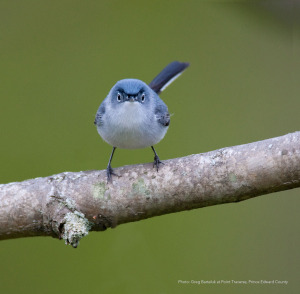
Count me IN!!!

Count me IN!!!

As you know, despite the objections and legal actions brought forward by the citizens of Prince Edward County—and its municipal government, which declared the County “Not A Willing Host”—the province is proceeding with applications from two wind power developers for wind power generation projects, including one in a widely recognized Important Bird Area.

This Saturday, naturalists and ordinary people will be gathering to listen to speakers, and observe wildlife in the County.

Prince Edward County is just two to two and a half hours from Ottawa.

For more information go to the website for the Prince Edward County Field Naturalists at http://www.saveostranderpoint.org

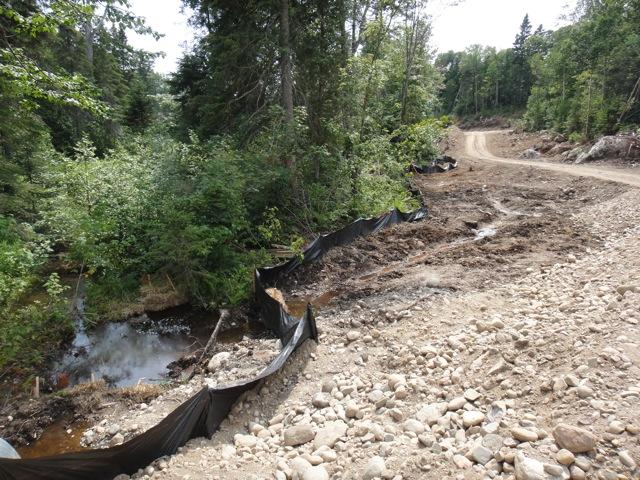
Ontario to allow pollution of streams, rivers from wind farm: at-risk fish species in danger

31 Thursday Jul 2014

Posted by Ottawa Wind Concerns in Renewable energy, Wind power

≈ 1 Comment

Tags

at-risk species Ontario, fish habitat, Fisheries and Oceans Canada, NextEra, Ontario, Ontario fisheries, Ontario Ministry of Natural Resources and Forestry, Ontario Ministry of the Environment, Redside Dace, Streams Ontario, water pollution, wind farm, wind farm environment

Ontario says OK for East Durham wind farm to kill at-risk fish

Embedded image permalink

Photo courtesy LSARC: devastation of landscape and erosion into streams from Northern Ontario wind farm construction

What’s a Redside Dace? Well, if you don’t know, don’t worry–it won’t matter for too much longer.

One of the principal points made by the Appellant in the recent appeal of the East Durham wind power project  by NextEra, was the damage that would be done by construction and the alteration of natural waterways. The prime witness testimony was:

[1]           He [Wren] also reviewed the 2004-2005 survey by Streams Ontario for the MNR.  In Dr. Wren’s opinion, the MOE “did not demonstrate due diligence in considering or evaluating sensitive fish and fish habitat in the project study area, with particular reference to the fish species Redside Dace”.

[2]           In Dr. Wren’s view, the sampling of the Saugeen River for Redside Dace was inadequate largely because too few samples were taken over too large an area.  It is his opinion that the MNR should have required the Approval Holder to conduct field investigations for Redside Dace in the Project Study Area to confirm their status.  He relied upon an email from the MNR to the Approval Holder’s ecologist which stated:

The absence of a species at risk occurrence does not mean that they are not present and as a result due diligence is still required … .  It should be noted that from a species at risk perspective this is an understudied area and as a result the MNR will be looking to ensure appropriate due diligence as it relates to field work was conducted to consider these species in further NHA reports for this site.

[3]           Dr. Wren’s opinion is that: “the Upper Saugeen Subwatershed contains an abundance of coldwater fisheries habitat that is unique in Southern Ontario.  Furthermore, the subwatershed is known to contain redside dace, an endangered species, which have a very specialized habitat.”

[4]           Dr. Wren also gave evidence about directional drilling and “fracking”, and soil erosion and sediment, and their likely effects on fish habitat and fish.  “Fracking” in this context is the accidental release of fluids toxic to fish that can occur during drilling to place transmission lines underground at water-crossings.  It is Dr. Wren’s view that a “frack out” could cause serious and irreversible harm to an endangered species such as the Redside Dace.

(Info on the Reside Dace here)

So, once again, the “overall benefit” of wind power supercedes damage to the environment, and to species of wildlife the Ontario government has already committed itself to protect? Ministry of the Environment lawyer Sylvia Davis, speaking in Toronto at the Ostrander Point appeal: “So a few animals get killed…”

The Minister of the Environment and Climate Change is Glen Murray, whose ministry is supposed to “ensure healthy communities, ecological protection…”

Reposted from Wind Concerns Ontario

Wind farms in Northern Ontario: massive change

30 Wednesday Jul 2014

Posted by Ottawa Wind Concerns in Renewable energy, Wind power

≈ 1 Comment

Tags

appeals wind farm, Bow Lake, endangered species, George Brown, Goulais Bay, Lake Superior Action Research Conservation, LSARC, Northern Hoot, Northern Ontario, Ontario bats, Ontario Court of Appeal, Ontario Ministry of NAtural Resources, Steffanie Petroni, wind farm, wind farm environment, wind power northern Ontario

Northern Hoot

Northern Hoot is a new website run by journalist Steffanie Petroni on all things Northern Ontario. Devoted to “long-form” journalism, Petroni recently published an article on wind power development, of interest now because two very large projects–Bow Lake and Goulais Bay–will be proceeding. Appeals by First Nations groups and residents failed.

Of special interest in this posting are photos by Gary McGuffin, who is renowned for his depiction of Northern Ontario scenery.

Radar

Excerpt:

In Ontario there have been 20 appeals in opposition to industrial wind turbine farms brought before the Ministry of the Environment (MOE) and 19 have been dismissed. An appeal by Prince Edward County Field Naturalists to kill the development of an industrial wind turbine farm on Ostrander Point was won before an ERT in July 2013. However, the decision has since been reversed by the Ontario Divisional Court and appellants are seeking an appeal before the Ontario Court of Appeal.

George [Brown, of the Lake Superior Action Research Conservation] commented, “The 240 Bow Lake appeal came close to winning. Based on the Ostrander Judicial Review decision the Tribunal found that in order to prove irreversible harm it was necessary for the appellant to know the size of the populations being harmed. Having found that the 240 appeal failed to prove irreversible harm the Tribunal declined to make a finding on the issue of serious harm, though it agreed with virtually all the arguments on bats submitted by the 240 appeal.

As a result the Tribunal imposed immediate and more stringent mitigation measures on the project – a tacit admission that species-at-risk bats would otherwise be killed, which would be a serious harm.

The Tribunal’s decision is peculiar in that it allows these more stringent mitigation measures to be rescinded should they prove effective. Had the MNR required, or done, a baseline study, or had the 240 appeal had the time and money to do one, to determine the size of existing bat species populations in the project area, we would perhaps have had the final piece of the puzzle required to win.”

For more information, go to http://www.lsarc.ca


Wind power: a “wolf in green clothing”

28 Monday Jul 2014

Posted by Ottawa Wind Concerns in Uncategorized

≈ 1 Comment

Tags

cost-benefit renewables, Feed In Tariff subsidy, FIT, green energy, PTC, renewable energy, renewable power, subsidies wind power, The Hill, Warren Buffett, wind energy, wind farm, wind farms environment, wind power

It’s clean, it’s “green,” and it wants your land and your money too

Here from The Hill, a US blog for policy-makers, a posting on wind power and the US form of subsidy, the Production Tax Credit.

July 25, 2014, 10:00 am

Wind power production tax credit: Wall St. wolf in green clothing

By Curtis Ellis, The Hill, July 25, 2014

The tax incentive for wind power expired last year, and the battle over its extension is now underway. Opponents say the wind power production tax credit, PTC, is a wasteful boondoggle while supporters say it’s crucial for renewable energy and jobs. The Sierra Club calls it “one of the best bets we’ve made on clean, domestic energy.”

But it’s a misplaced bet.  The PTC actually blocks the green energy technologies that hold the most promise.  Rather than helping an infant industry, the PTC is a handout to Wall Street.

Congress created the PTC in 1992, a tax credit of roughly 2 cents per kilowatt-hour of wind electricity, to nurture the infant wind energy industry. Government incentives to promote crucial industries are time-honored. That’s not the problem with the PTC.What’s important is that only big investors who want to offset tax liabilities on other investments need apply. The PTC can only be taken against “passive income” – income from other investments. Private equity firms put together investors who need a tax write-off courtesy of the PTC. Warren Buffett admits he uses the PTC to lower his Berkshire taxes: “we get a tax credit if we build a lot of wind farms. That’s the only reason to build them.”

The PTC doesn’t help the average Joe who wants to put a small wind turbine on his ranch to generate electricity and reduce the taxes he pays on his farm income.

But while the PTC boosts Wall Street investment schemes in large-scale wind farms, the fact is small-scale, individually owned generation facilities hold the most promise for renewable energy.

Noted environmentalist Bill McKibben writes, “One of the great side effects of moving to renewable power is that we will replace vulnerable, brittle centralized systems that are too big to fail with spread out democratic energy sources.” Unfortunately, the PTC only encourages more “brittle centralized systems.”

California’s Local Clean Energy Alliance (which includes the San Francisco Bay Area chapter of the Sierra Club) concurs. It’s report, Community Power, states “local, decentralized generation of electricity offers many benefits to California’s communities relative to large central-station solar or wind power plants in remote areas.”

The Institute for Local Self Reliance, a green energy cheerleader, says renewables work best “at small scales across the country,” what’s known as distributed generation, “a network of independently-owned and widely dispersed renewable energy generators” rather than “a 20th century grid dominated by large, centralized utilities.”

In fact the Institute explicitly says the PTC is a significant barrier to greater investment in renewable energy. Removing this barrier “makes smaller projects more accessible to the local community, and draws local investors back into the process,” says John Farrell of the Institute for Local Self-Reliance.

Utilities are also taking local-scale renewable energy seriously.  A report by the Edison Electric Institute, Disruptive Challenges expects small-scale solar and wind “to challenge and transform the electric utility industry” with “adverse impacts on revenues, as well as on investor returns.”

David Crane, CEO of NRG Energy, a wholesale power company that operates coal-fired plants, told Blooomberg Businessweek  “the grid will become increasingly irrelevant as customers move toward decentralized homegrown green energy.”

So, if local-scale wind and solar generated close to the end user makes the most sense, why do we have a PTC pushing large-scale wind farms? It’s a Wall Street play.

Environmentalists supporting the PTC mean well, but they fail to see the wolf of Wall Street hiding beneath the green clothes. Ironically, the national green organizations are fighting for the kind of massive generating stations and power lines their local chapters often fight against.

The PTC is an anachronism and an obstacle to developing the decentralized, independently owned power generation system appropriate for wind, solar and other renewables.

Anyone who believes in renewable energy should be happy to see the PTC expire. It’s time to replace this tax write-off for the financial services cabal with something that benefits everyone.

Ellis is executive director of the American Jobs Alliance.

Read more: http://thehill.com/blogs/congress-blog/energy-environment/213183-wind-power-production-tax-credit-wall-st-wolf-in-green#ixzz38c15D4Uf

← Older posts
Newer posts →

Recent Posts

  • Land use conflict prompts citizen legal action over West Carleton battery storage site
  • Energy Minister Stephen Lecce speaks out on renewable power sources wind and solar; emphasizes cost, reliability
  • Open letter to CAFES Ottawa
  • Ottawa Wind Concerns supports West Carleton residents
  • What does wind ‘farm’ construction really look like?

Follow me on Twitter

My Tweets

Enter your email address to follow this blog and receive notifications of new posts by email.

Tags

Bob Chiarelli Green Energy Act IESO Ontario Ottawa Ottawa wind concerns wind energy wind farm wind power wind turbines

Contact us

PO Box 3 North Gower ON K0A 2T0

Create a free website or blog at WordPress.com.

Privacy & Cookies: This site uses cookies. By continuing to use this website, you agree to their use.
To find out more, including how to control cookies, see here: Cookie Policy
  • Subscribe Subscribed
    • Ottawa Wind Concerns
    • Join 379 other subscribers
    • Already have a WordPress.com account? Log in now.
    • Ottawa Wind Concerns
    • Subscribe Subscribed
    • Sign up
    • Log in
    • Report this content
    • View site in Reader
    • Manage subscriptions
    • Collapse this bar
 

Loading Comments...