• About
  • Donate!
  • EVENTS
  • Ottawa’s “Energy Evolution”: wind turbines coming to rural communities
  • Thinking of signing a wind turbine lease?
  • Wind Concerns Ontario
  • Wind turbines: what you need to know

Ottawa Wind Concerns

~ A safe environment for everyone

Ottawa Wind Concerns

Category Archives: Renewable energy

Ottawa Council votes unanimously to hold approvals of new power generation installations until protective bylaws in place

23 Thursday Feb 2023

Posted by Ottawa Wind Concerns in Ottawa, Renewable energy, Uncategorized, Wind power

≈ Leave a comment

Tags

david brown, environment, Hydro Ottawa, IESO, mark sutcliffe, noise, Ottawa, renewable energy

New zoning bylaws to be fast-tracked for 2023 in light of Ontario government’s current new power procurement plan

See the presentation of the power generation bylaw motion by Councillor David Brown beginning at minute 53

February 23, 2023

OTTAWA

Ottawa City Council voted unanimously yesterday to approve a motion put forward by Ward 21 Rideau-Jock councillor David Brown, and seconded by West Carleton-March councillor Clarke Kelly, to hold off granting municipal approval for any new power project proposals that may come forward as a result of provincial government procurement plans. The motion directs staff to tell proponents that municipal support will not be granted until review by a Standing Committee; the Motion further stipulates that developing zoning bylaws for new power generation installation should be done in the Planning department’s 2023 “Workbook” ahead of 2024-2025 for the new suite of bylaws as a whole.

The deadline for the Independent Electricity System Operator’s first phase of new procurement, for 1,500 megawatts of power, was last Thursday, February 16. The IESO plans another RFP to be launched this spring or summer, for an additional 2,500 megawatts of new power.

The motion passed yesterday stipulates that staff be directed to inform proponents of any new power generation projects: “staff will not bring such requests to Council unless such requests are considered through the relevant Standing Committee, it being understood that the Standing Committee will act in accordance with the timelines provided in the LT1 RFP, furthermore, that Hydro Ottawa and its affiliates, shall be entitled to obtain any Municipal Support Resolution required per the LT1 RFP (or other similar processes), via bilateral discussions with its sole shareholder, the City of Ottawa,”

and

“staff will bring forward an amendment to the City of Ottawa’s Zoning By-law that implements the intent of the policies in the Official Plan with respect to renewable energy generation facilities and storage by Q4 2023 that is in advance of the municipal Comprehensive Zoning By-law update“.

Ottawa saw only one submission in response to the most recent IESO Request for Proposals, a small Battery Energy Storage System proposed for Upper Dwyer Hill Road. Another, larger battery project is in development for the Cumberland area; the proponent is Brookfield’s Evolugen division. Both projects are supposed to have had public meetings to present project details; the Upper Dwyer Hill Road project meeting notice was only on the company’s website, and no members of the public attended the January 12th meeting.

Ottawa Wind Concerns made several presentations to city committees including the Agricultural and Rural Affairs Committee to warn that the IESO RFP was on the way, and that Ottawa needed to be ready with protective bylaws for large power generation projects such as wind turbines. Ontario’s regulations for noise levels and setbacks for noise and safety have not been changed since 2009, and are generally viewed as inadequate today.

The community group’s advice was rebuffed, however, with one rural councillor claiming in September that no such procurement was on the way. At that time, the IESO RFP process was in the final stages of “engagement.” The first RFP launched December 7, 2022.

Do wind turbines make noise? YES

Rural Ottawa has already experienced a proposal for a large wind power project when a proposal came forward under the Ontario government’s Feed-In Tariff program in 2009. It was for as many as eight 600-foot industrial wind turbines to be located in the North Gower area, to be built by Pro-Wind, a small company based in Germany. Residents rejected the proposal at the time, saying the power generating machines would be too close to homes and the village school. Residents signed a petition and presented it to City Hall; almost every property-owning resident of the North Gower area signed the document.

Interestingly, one of the proponent’s staff was interviewed by then radio host and journalist Mark Sutcliffe who asked, Do the wind turbines make noise?

“Of course they do,” said the project salesperson. “They’re power generators.”

Citizens of rural Ottawa are concerned that new power projects, no matter what the technology, will be located in rural areas. Noise pollution, vibration, loss of valuable farmland, risk to aquifers, and danger to wildlife are all important concerns.

We are trying to respond to community concerns, said Councillor David Brown, “That is really what this is all about.”

Ottawawindconcerns@gmail.com

The motion, revised prior to Council, is here:

Re / Objet : Clarifying the process of approving new energy projects and infrastructure under the Requests for Proposals from Independent Electricity System Operator

Moved by / Motion de: Councillor D. Brown

Seconded by / Appuyée par: Councillor C. Kelly


WHEREAS the Independent Electricity System Operator has released an Expedited Procurement Process to procure 1.5 gigawatts of electrical capacity by mid-decade and has been engaging with municipalities with respect to Requests for Proposals for a significant number of new projects for energy generation, storage, and infrastructure; and


WHEREAS the Expedited Procurement Process (the E-LT1 RFP) closing February 16, 2023 includes three (3) of thirteen (13) Rated Criteria Points for municipal council support resolutions; and


WHEREAS after February 16, 2023 the Independent Electricity System Operator is planning two more procurement phases totalling 2.8 gigawatts of capacity to be available mid decade; and


WHEREAS the Independent Electricity System Operator requires a Municipal Support Resolution from the municipal council no later than sixty (60) days after the eighteen (18) month anniversary of the Contract Date; and


WHEREAS some Independent Electricity System Operator resources participate in the Ontario electricity market without contracts; and


WHEREAS it is not clear that the inability for a project to receive a “Municipal Support Resolution” will necessarily lead to the revocation of a proponent’s contract; and


WHEREAS Ottawa must decrease its reliance on greenhouse gas-emitting sources of energy, including by increasing local renewable energy generation and battery storage, to achieve its greenhouse gas emission reduction targets; and


WHEREAS the City has received a request for a Municipal Support Resolution for a 5-megawatt/20-megawatt hour battery energy storage system using lithium-ion battery technology at 650 Upper Dwyer Hill Road, Ottawa that is expected to occupy approximately 0.3 acres (0.12 ha) of land, including all required setbacks and spacing; and


WHEREAS municipalities, namely through land use policies in the Official Plan and provisions in the Zoning By-law, set their own priorities with respect to where energy generation, storage, and infrastructure may be permitted; and


WHEREAS increased energy generation, storage, and infrastructure can have significant impacts on local residents that are worth due consideration by Council under a framework in the Zoning By-law that reflects the City’s Official Plan; and

WHEREAS staff will bring forward an amendment to the City of Ottawa’s Zoning By-law that implements the intent of the policies in the Official Plan with respect to renewable energy generation facilities and storage by Q4 2023 that is in advance of the municipal Comprehensive Zoning By-law update;


THEREFORE BE IT RESOLVED that the Mayor, on behalf of Council, write a letter to the President and Chief Executive Officer of the Independent Electricity System Operator to formally request confirmation that projects approved through the LT1 RFP and future procurements shall not proceed without a Municipal Support Resolution from municipal council in the form of an approved motion; and


BE IT FURTHER RESOLVED that staff be directed, in consultation with Hydro Ottawa, to come forward with recommendations in advance of the new Zoning By-law to help inform City Council plans for energy generation, storage and infrastructure as a deliverable project in the 2023 Planning, Real Estate and Economic Development Department Workplan; and  


BE IT FURTHER RESOLVED that the appropriate Standing Committees evaluate current and future requests for Municipal Support Resolutions, informed by the recommendations referenced above until amendments have been made to Zoning By-law 2008-250 in Q4 2023; provided, however, that projects proposed by Hydro Ottawa and its affiliates shall be entitled to obtain such Municipal Support Resolution through bilateral discussions with its sole shareholder, the City of Ottawa; and  


BE IT FURTHER RESOLVED that until such time as amendments have been made to Zoning By-law 2008-250 in Q4 2023, staff be directed to advise any proponents seeking a Municipal Support Resolution through the LT1 RFP that staff will not bring such requests to Council unless such requests are considered through the relevant Standing Committee, it being understood that the Standing Committee will act in accordance with the timelines provided in the LT1 RFP, furthermore, that Hydro Ottawa and its affiliates, shall be entitled to obtain any Municipal Support Resolution required per the LT1 RFP (or other similar processes), via bilateral discussions with its sole shareholder, the City of Ottawa.


BE IT FURTHER RESOLVED that a copy of this motion be sent to the Premier of Ontario, the Ontario Minister of Energy, and the Association of Municipalities of Ontario.

Rural councillors propose motion to protect health, safety

09 Thursday Feb 2023

Posted by Ottawa Wind Concerns in Health, Ottawa, Renewable energy, Wind power

≈ 3 Comments

Tags

Energy Evolution, Ottawa, wind turbines

Ottawa has no new zoning bylaws to protect rural residents from environmental impacts from new power projects

View of a street in Crysler, south of Ottawa, with wind turbine 2 km away. There have been so many noise complaints that the local board of health is conducting a review. [Photo: D. Larsen for Wind Concerns Ontario]

Two Ottawa city councillors have put forward a motion regarding new power generation facilities, demanding that municipal support be mandatory, and that any power projects be in the best interests of the people who must live near them.

Because Ottawa will not have new zoning bylaws until 2025, what the two rural ward councillors are saying is, rural area residents need up-to-date protection in terms of setback distances and noise limits from power projects, which are an industrial use of the land.

Ontario’s regulations for wind turbines, for example, were created in 2009 and remain unchanged, despite advances in knowledge about such negative environmental impacts as noise pollution, strobe effect, risk to wildlife, and danger from fire, ice throw or catastrophic equipment failures.

Community interests foremost, councillor says

Councillor David Brown submitted a notice of motion on February 1st, seconded by Ward 5 Councillor Clarke Kelly.

Here is what Councillor Brown wrote in the current edition of the Manotick Messenger about the motion.

“At issue is the Independent Electricity System Operator or IESO and its ongoing efforts to procure energy projects across the province. Though energy projects generally receive support from municipal councils before proceeding, the authority is unclear; IESO could attempt to work with a project proponent without the approval of Council.

This means that an LNG power plant, a wind turbine, a solar farm, or any other project could arise without the support of the community.

Additionally, Ottawa is in the process of updating its by-laws. Once completed, these updated by-laws will hep future development better conform to the objectives of the city’s Official Plan. This includes energy infrastructure in general and wind turbines in particular. It is essential that new by-laws be finalized and approved before wind turbines are brought to Council’s attention for consideration and approval.

These are the issues that my motion seeks to address. The goals of this motion are to ensure that Council is able to act as the final authority on energy generation in our City and that new generating infrastructure respects our City’s soon-to-be-updated by-laws.

As new energy generation capacity is likely to be placed in the rural areas of Ottawa, it is vital that new facilities be well considered and respect residents’ needs and our communities’ interests.

No project should be advanced without being in the clear interest of those who live close to it.

By advancing this motion I am hoping to better protect our communities against potentially harmful overreach.

David Brown

Ward21@ottawa.ca“

As of last December, the IESO process appeared not to allow municipalities final say in power project approvals, and energy minister Todd Smith recently wrote the IESO a letter asking them to be specific. Early in the current RFP process, municipal support could be “evidenced” by a letter from a planner, or by the issuing of building permits. Issuing building permits is an administrative process, and not an indication of Council support.

Ottawa lags in regulations for safety, health

Ottawa Wind Concerns has called for greater transparency on new power projects, and made several presentations in the past to the previous Agricultural and Rural Affairs Committee. Last year, the then councillor for Ward 21 said there was no need for Ottawa to act because there was no RFP process for new power projects, and sent emails in September to members of both the agricultural/rural and environmental protection committees. The truth was, at that point, the IESO documents were already in the engagement and revision phase, and well known to other jurisdictions.

The RFP commenced December 7, 2022.

Ottawa Wind Concerns has recommended a setback of 2 km from wind turbines to residential areas, based on the recommendation from Wind Concerns Ontario.

The City of Ottawa has expressed interest in promoting wind turbines. Ottawa’s $57B Energy Evolution plan calls for 3,200 megawatts of wind power, or more than 700 industrial scale wind turbines in the rural areas of the city.

During the 2022 municipal election campaign, all candidates in Ward 21 pledged to work for a review of that plan.

New motion to be presented soon

The motion set for February 8th has been deferred to next Council meeting because of technicalities with the local power utility, but will be presented again February 22nd.


ottawawindconcerns@gmail.com

Prince Edward County rejects battery storage proposal

24 Tuesday Jan 2023

Posted by Ottawa Wind Concerns in Renewable energy

≈ 1 Comment

Tags

Battery storage, IESO, noise pollution, prince Edward County, Wind Concerns Ontario

RISK OF NOISE, FIRE, ENVIRONMENTAL CONTAMINATION FROM BATTERY STORAGE SYSTEM IS TOO GREAT, SAY RESIDENTS. FEW DETAILS AVAILABLE ON A LARGE ENERGY PROPOSAL: “A PIG IN A POKE”

January 24, 2023

Prince Edward County’s council voted to reject a proposal for a battery storage facility last week, responding to citizen concerns about safety and risk to the environment.

A Battery Energy Storage System or BESS was proposed by Compass Energy, a 250-megawatt facility that would require 15 acres of land.

Ontario’s Independent Electricity System Operator or IESO currently has a Request for Proposals for new power sources; the IESO is looking for 1,500 megawatts of power which can include new projects such as natural gas or wind, and battery storage. The proviso is that the power must be available immediately, and “can deliver a continuous amount of electricity to a connection point on a distribution system or transmission system for at least four consecutive hours,” according to the IESO website.

The Alliance to Protect Prince Edward County or APPEC* made a presentation to council with their concerns about the proposal.

“When we first became aware of the Picton BESS proposal a few months ago, we thought the scale of the project warranted evaluation,” says APPEC president and County resident Orville Walsh.

“We anticipated that [the proponents’] community meeting in early December would provide many of the project details. That turned out not to be the case. According to the project website, they will only be designing or planning the project after obtaining a contract from the IESO.”

Walsh told Prince Edward County Council that on investigation of available information about the project, APPEC concluded that there is no information on the type of equipment that will be used, battery manufacturer, or other electrical components; no information on the HVAC systems to be utilized; no information on fire detection systems, fire suppression systems and equipment; and no noise studies or estimates of environmental noise, which can be significant.

“We can only imagine the noise that could be generated on a warm summer night by 250 HVAC units,” Walsh told Council.

There are few specifics about this project, Walsh explained, “not a single drawing or illustration that is reflective of the scale of the project.  

“Giving support to a project lacking basic information is like buying a pig in a poke,” he said.

Residents of The County were also concerned about the loss of prime agricultural land to the power project, which contravened both the Ontario government’s statements and requirements of the local Official Plan to preserve valuable farmland.

Fire a significant risk

The danger of fire is an “unacceptable risk” from the lithium-ion batteries, say residents. Quoted in a report in the Picton Gazette, resident “Don Wilford spoke to council detailing the environmental devastation that would occur should a fire break out at a 250 megawatt BESS along with the immediate risk to the local population. ‘Lithium-ion batteries are susceptible to fires. At the scale proposed, the fire would cause vast damage to wetlands, the toxic gas plume requiring evacuation of Picton only 5 km away and potential loss of firefighters’ lives,’ Wilford stated.”

Others wondered why the Prince Edward County location was chosen as it is not near major population centres, or power generation facilities. (We can tell you: willing landowners, nothing else.)

Company competence in battery storage

Citizens also noted that the proponent had no experience with battery storage facility construction or operation. Resident Don Wilford presented background information about proponent Compass Energy: it is owned by Irving, which in turn is a subsidiary of Icon Infrastructure, a financial investment firm based in the U.K., he said.

“None of these companies have experience with battery storage,” said Wilford. “It appears Ontario is not only ignoring safer zinc battery tech but outsourcing a key component of its electricity infrastructure to financial companies that will outsource the tech to a systems integrator, which will, in turn, repackage lithium-ion units from major suppliers in China.”

It was also noted that the developer admitted there would be “zero” long term employment opportunities for people in Prince Edward County.

Valuable farmland would be lost

Sophiasburgh Councillor Bill Roberts tabled an amendment to deny the request from Compass Energy, listing all the concerns expressed by community members, adding that the Prince Edward Federation of Agriculture was also no in favour of the project.

“I’m opposed to the use of prime agricultural land for this purpose,” he said according to the story in the Picton Gazette.  “I support the Prince Edward Federation of Agriculture in their opposition to non-agricultural development on prime farmland. I hear convincing and alerting information from the audience,” said Roberts.

Roberts repeated the concerns about the risk of fire: “I find the potential fire and contamination risks compelling. Since 2017 there have been 50 such failures including five at large BESS installations. One in Australia required 150 firefighters and four days to extinguish,” decried Roberts. “I don’t get a sense the proponents have the experience to complete and operate such a giant BESS project. I was particularly struck by the IESO’s own connection site identification, wherein at least 166 sites were deemed preferable.”

Roberts amended motion was seconded by councillor John Hirsch and passed by council.

Battery storage proposals are popping up in various locations throughout the province, with varying degrees of success.

Other projects proposed include solar power facilities. One developer put forward a proposal to the council in Sault Ste Marie but declined to tell the elected representatives where the project might actually be located. At another meeting, the proponent claimed full support by local indigenous communities, which turned out not to be true: there had been some conversations including email exchanges, but there had been no formal expression of support.

In the U.S., energy commentator Robert Bryce says that community opposition to large wind and solar power projects is rising; people understand that wind and solar (and now, battery storage) do little to help the environment or alter climate change, but they do have significant environmental impacts, and cause electricity bills to rise. Bryce maintains a database of community rejections of large renewable energy projects.

Comment: frankly, we cannot understand why any company would want to take on the folks in Prince Edward County. They spent more than 10 years, and more than $1.5 million after-tax dollars to defend the County against four wind power projects, all of which would have endangered wildlife, wetlands, and the fragile topography of the area, as well as having a negative impact on tourism, for which the area is rightly famous.

contact@windconcernsontario.ca

*APPEC is a corporate community group member of Wind Concerns Ontario

REPOSTED FROM WIND CONCERNS ONTARIO with permission

Ontario to launch request for new power projects next week

01 Thursday Dec 2022

Posted by Ottawa Wind Concerns in Ottawa, Renewable energy, Wind power

≈ 3 Comments

Tags

Ford government, IESO, LT-RFP Ontario, Ontario, Ottawa, Ottawa wind concerns, wind turbines

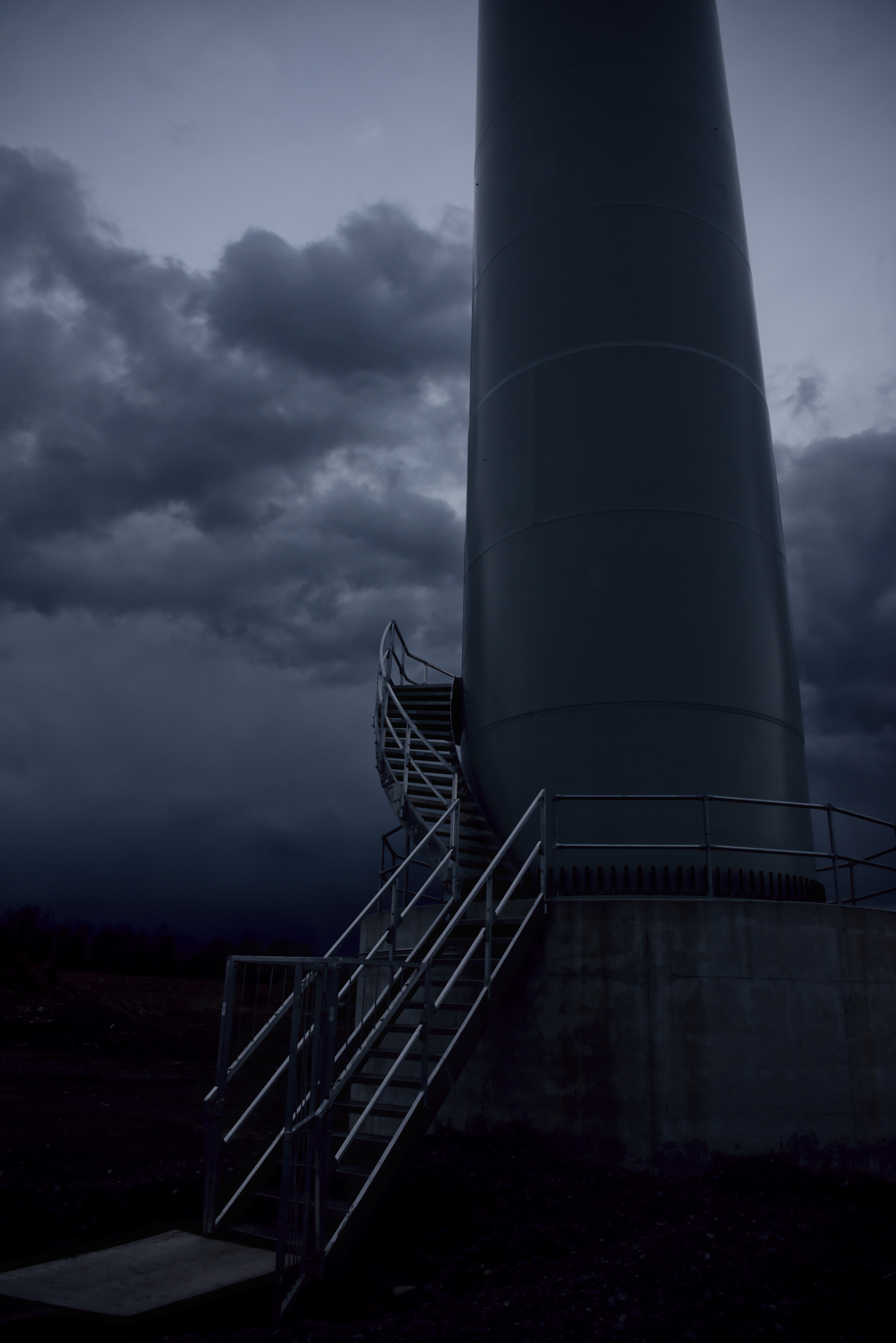
turbinemaststairsdark

Is Ottawa ready? NO.

December 1, 2022

Ontario’s Independent Electricity System Operator or IESO will launch its Long Term-Request for Proposals (LT-RFP) next Tuesday, December 6th.

The aim of the LT-RFP according to the IESO is to: “seek resources that can be in service between 2026 and 2028 to address global and regional needs.”

Energy Minister Todd Smith issued a directive on October 7th:

11. The Expedited Process, Upgrades Solicitation, and L T1 RFP shall be open to all resource types that meet the mandatory criteria established by the IESO, which may include renewable energy, energy storage, hybrid renewable energy with storage, biofuels and natural gas-fired generation.

The RFP has been in development for many months, despite the continued assertion by former Ward 21 Councillor Scott Moffatt who insisted that there is no procurement process in Ontario. When he wrote to members of Ottawa’s Planning and Agricultural and Rural Affairs committees that there was no plans for new power procurement (to head off a presentation by Ottawa Wind Concerns), the IESO was in the final phases of implementing the RFP.

Now, Ottawa could see proposals for new power projects.

The process will be very quick: announcement of successful bidders will come in March of 2023, according to IESO documents dated mid-November.

But we’re not ready.

Ottawa has no new zoning bylaws in place to deal with new power proposals and in fact, the zoning bylaw process following the new Official Plan is stalled due to concerns about new provincial legislation.

As well, we know from the experience with wind turbines since 2009 and the Green Energy Act, there are lots of problems with these industrial-scale projects. Noise, damage to aquifers, and risk to wildlife including endangered species are impacts seen all over Ontario. But regulations for noise and setbacks have not changed.

When the Green Energy Act was revoked by the Ford government in 2018, planning powers were returned to municipalities, who are now able to set their own regulations for noise limits and setback distances.

But Ottawa hasn’t done that.

The solution? Recommended to us by our planning consultant, and as already done by several other Ontario municipalities, Ottawa could pass a motion that is a simple statement of policy intent, to the effect that until new zoning bylaws are approved, the City of Ottawa will not review or approve any proposals for power generation, including wind power.

City staff have already expressed concern about the speed of the LT-RFP process and the fact that municipal approval doesn’t seem to be mandatory, though the Ford government promised that it would be. Other municipalities are worried about this IESO process which, they say, doesn’t give enough time for proper public consultation, or for a full assessment of new power development proposals such as analysis of the effectiveness of the technology being proposed, and what impacts the project could have on the environment.

We met today with new Ward 21 Councillor David Brown, who shares our concerns about the IESO RFP. He is already taking action on it.

We hope that the new Council will act quickly to ensure that the City is not sandbagged by new power generation proposals that are not appropriate to our area, and specifically that Ottawa’s rural communities will be protected from industrialization by unreliable and noisy grid-scale wind turbines. We hope that any new power generation would be for power that is reliable and affordable, and actually does something for the environment and climate change. That’s not expensive, invasive, out-of-phase with demand wind power.


Ottawa Wind Concerns

ottawawindconcerns@gmail.com


directive-from-the-minister-of-energy-20221007-resource-eligibility-1Download

Conversation on Energy Evolution, wind turbines widens in Ottawa election campaign

29 Monday Aug 2022

Posted by Ottawa Wind Concerns in Ottawa, Renewable energy, Wind power

≈ 1 Comment

Tags

candidates, election, Ottawa, wind turbines

Residents unaware of climate action plan proposals and $57B price tag

Questions were asked at a recent candidates’ debate focused on climate

August 29, 2022

Interest in Ottawa’s $57B Energy Evolution climate action plan is picking up.

And as we suspected, most Ottawa citizens don’t know a thing about it, despite Ottawa’s pledge of “engagement.”

The Energy Evolution plan was approved by Council in October of 2020, mere months into the pandemic, when people had a lot on their minds.

Now, during the campaign for election of a new Mayor and council seats, questions are coming up.

At a recent mayor candidate debate for example (not attended by front-runners Bob Chiarelli or Mark Sutcliffe) Catherine McKenney was asked about the Energy Evolution plan and specifically about the call for 710 industrial-scale wind turbines. “Taller than the Peace Tower,” the questioner said (Not true: they are more like a 60-storey office tower).

Energy Evolution is full of “bold ideas” McKenney responded, but added that they could not recall that wind power had precedence over anything else. Emissions-reduction and solar energy was the focus, McKenney said.

Here’s the problem: McKenny sits on the city’s environmental protection committee and would have heard climate manager Andrea Flowers say this in a meeting in May in answer to a question from Councillor Scott Moffatt:

“What we put forward as part of this motion as a broader picture is if there are sufficient resources we would look at a Distributed Energy Resource for city-owned facilities and land. We have explicitly said that would include renewable energy generation both wind and solar as we have specified in Energy Evolution.”

So, yes, wind, lots of wind, and McKenney should know it.

The question and McKenney’s answer may be viewed here.

A candidate for Council running in the Knoxdale-Merivale ward has taken aim at the Energy Evolution plan (did we mention the $57B?) and spoken out against it in his campaign.

Joseph Ben-Ami is telling taxpayers that they are going to be shocked at the price tag on the Energy Evolution plan, and at the things proposed in it such as banning natural gas appliances, and installing wind turbines. A video of his campaign statement is here.

Ward 21 candidate David Brown has also spoken out against the Energy Evolution plan, and the proposal for wind turbines. In an article published in The Manotick Messenger, Brown pointed out that wind power is consistently unreliable and asks why Ottawa is planning to build hundreds of under-performing, noise polluting wind turbines.

“They certainly won’t be built downtown,” Brown adds. They will be built in Ottawa’s rural communities, causing “irrevocable damage to farmland, wildlife and residents” while causing “energy poverty” for many people, especially those with low or fixed incomes.

Fellow Ward 21 candidate Leigh-Andrea Brunet has also spoken on the urban-rural divide in Ottawa and cautioned that Ottawa needs to be careful to develop policies that promote equality, not division.

There are many weeks to go in the campaign and lots of opportunities to ask questions of candidates.

All-candidates’ meetings are being scheduled: the North Gower Community Association is sponsoring one on September 19th for Ward 21, 7 PM at Alfred Taylor Centre; Manotick Village Community Association is also Ward 21, also plans an event, date TBA.

We are unaware of any meetings scheduled in West Carleton. Please let us know of any events scheduled.

ottawawindconcerns@gmail.com

Community group concerned about $57-billion Energy Evolution plan: Manotick Messenger

29 Friday Jul 2022

Posted by Ottawa Wind Concerns in Ottawa, Renewable energy, Wind power

≈ 1 Comment

Tags

Energy Evolution, municipal election Ontario, Ottawa, Ottawa wind concerns, renewables, wind energy, wind farm

Ottawa’s climate action plan calls for more than 700 wind turbines, even though wind power is intermittent and out of phase with demand. Do people know about the $57B plan? [Photo D. Larsen for Wind Concerns Ontario]

July 29, 2022

Ottawa Wind Concerns is quoted in a news story in the Manotick Messenger, published today.

Ottawa City Council approved the Energy Evolution climate change action plan in the early weeks of the pandemic in 2020 says Ottawa Wind Concerns Chair Jane Wilson, with an estimated cost to taxpayers of $57 billion.

But most people don’t know anything about it.

The plan stipulates that electricity will become the “primary fuel for all building types” in Ottawa, and that the plan calls for more than half a million heat pumps to be installed.

In order to achieve electrification of everything from home heating, to building HVAC systems to transportation, Energy Evolution says that the city of 1.1 million will rely on wind and solar power. The plan calls for 3,200 megawatts of new wind power in Ottawa, which translates to 710 industrial-scale wind turbines, of 4.5 megawatt capacity.

There are no cost-benefit studies to show this will work, Wilson says, and neither is there any evidence that the city’s dramatic measures will really have any impact on climate change.

“What’s needed as we move into October’s municipal election campaign are questions to all candidates about the city’s action plan and whether candidates are aware of and support the proposals,” Wilson said.

Read the news story here, on page 17.

ottawawindconcerns@gmail.com

Ottawa Energy Evolution a “fantasy”: former CFIB head

18 Monday Jul 2022

Posted by Ottawa Wind Concerns in Ottawa, Renewable energy, Wind power

≈ 1 Comment

Tags

Ottawa

Plan to be funded by increases in taxes and tolls which will affect business and all residents, says Catherine Swift

Ottawa’s climate action plan will lead to huge costs and tax increases. [Photo: Wind Concerns Ontario]

Ottawa’s climate change action plan will lead the city to huge costs for business and citizens says Catherine Swift, former CEO of the Canadian Federation of Independent Business and current president of the Coalition of Concerned Manufacturers and Business. Her opinions appear in The Niagara Independent.

An excerpt:

“…more and more experts are stating what some have always believed to be obvious – that the transition to net-zero by 2050 is not only terribly ambitious, but impossible with current technology.  Despite this overdue acknowledgement of the many difficulties and hardships imposed by governments’ attempting to achieve net-zero, some jurisdictions are still proceeding to make decisions on the future of their energy security based on beliefs that these extreme environmental goals are still attainable. 

A recent example was the City of Ottawa, which late last month decided to intervene in what should have been a fairly routine proceeding at the Ontario Energy Board (OEB). Enbridge had applied to the OEB to replace an old and deteriorating natural gas pipeline that had served Ottawa for 65 years with a new, reliable, updated version. The current older pipeline is actually at some risk of failing in the near future. This situation was pointed out in an article in The Epoch Times by Patricia Adams and Lawrence Solomon of Energy Probe entitled “Ottawa is Committing Suicide”. 

Enbridge was likely shocked to find that an application it considered a no-brainer ended up being rejected as Ottawa city planners and other environmental organizations intervening in the hearing prevailed such that the OEB rejected Enbridge’s application for the St. Laurent pipeline replacement. Enbridge estimates that it has about three years to deal with the aging pipeline before some type of catastrophic event occurs.  

Currently, Ottawa depends on natural gas for roughly half of its household and business energy needs.  Adding to the irony is that about 15 years ago, natural gas was touted by environmental advocates as a wonderfully “green” replacement for coal as it accounted for about half the emissions of the more polluting fuel. Now that coal has been phased out in Ontario, natural gas is next on the chopping block. 

Instead of refurbishing the pipeline, Ottawa continues to believe in a fantasy strategy it calls its Energy Evolution plan, which is geared toward moving away from fossil fuels to renewable energy sources and achieving the Holy Grail of net-zero carbon emissions by 2050. Cost is clearly no object to Ottawa government officials, as while the new gas pipeline would have cost $124 million, the city foresees its Energy Evolution plan weighing in at a whopping $52 billion for extensive solar and wind infrastructure.  Ottawa officials expect increases in a variety of taxes, road tolls, etc. will cover off this massive cost and not create any particular problems for Ottawa residents and businesses in the process.  

Unfortunately, Ottawa is not alone in these pipe dreams. Fully 32 Ontario municipalities have bought in to the notion that they will be able to phase out natural gas in the coming decades while doing no credible planning on exactly how reliable, relatively affordable gas can be replaced by unreliable and costly renewables. Elsewhere in Canada, other municipalities are following suit. Calgary has recently one-upped Ottawa with a net-zero by 2050 plan estimated to cost fully $87 billion, with city taxpayers, businesses and other levels of government expected to ante up.  

As the years go by and every single climate goal and emissions target is consistently missed by a mile, it is worth asking what it will take before governments realize the completely unrealistic nature of the net-zero objective and the pain it continues to inflict on Canadians by pretending these goals are achievable despite all evidence to the contrary.  

Ottawa is a very cold place in the winter, so perhaps some freezing in the dark, more energy poverty and the breakdown of an essential pipeline will be needed to finally call net-zero for what it is – impossible.”

Actually, the authors of Energy Evolution think that the costs will be covered by funding from all three levels of government—forgetting of course that there is only one taxpayer—and even go so far as to thinking they can make money by installing wind power projects. The plan claims a $4B investment in wind will pay off double, and reap $9B.

That didn’t happen when the Ontario government launched its wind power disaster (not mentioned or reviewed in Energy Evolution). What did happen was a doubling of electricity bills and the debut of a new term, “energy poverty.”

Heat or eat!

Candidates in the coming municipal election should be asked whether they are aware of the Energy Evolution plan, and whether they support it.

ottawawindconcerns@gmail.com

Health returns for North Stormont residents as wind turbines silenced

30 Monday May 2022

Posted by Ottawa Wind Concerns in Health, Ottawa, Renewable energy, Wind power

≈ 4 Comments

Tags

noise, Ottawa, wind turbines

House amid industrial wind turbines in the Nation Rise Wind Farm: noise emissions can affect neighbours [Photo: Dorothea Larsen for Wind Concerns Ontario]

The huge wind turbines in the Nation Rise wind farm have been off for 9 days—and residents couldn’t be happier

May 30, 2022

Ottawa–The 29 wind turbines that power the Nation Rise wind farm in North Stormont, 40 minutes south of Ottawa, have been quiet for nine days, since just before the “derecho” chain of thunderstorms that rampaged across Ontario .

The blades on the wind power generators, which are more than 600 feet tall, or equal to 60-storey office buildings in height, are turning gently, but not creating any electrical power.

The result? QUIET. And peace in more ways than that, as not just the audible sound of the turbines has gone, but also the inaudible emissions that humans perceive as pressure and vibration.

People who live inside the power project are experiencing a retreat of the physical symptoms that suggest poor health, including headache, ringing in the ears, a sensation of pressure in the chest, and elevated blood pressure and heart rate.

Best of all, say the people who have contacted us, they can sleep.

Long-term sleep disturbance is well documented as a factor in poor health and can have serious consequences including heart disease.

Wind turbines are not a non-emitting source of power. They are known to produce a range of sound emissions, some audible, some inaudible. Ontario’s noise regulations and setback distances for wind turbines — unchanged since 2009, despite more powerful wind turbines — only deal with audible noise.

I can sleep!

Residents contacting Wind Concerns Ontario have commented that since the wind turbines halted operation, not only have symptoms such as headaches and racing heartbeats retreated, they are finally able to sleep at night, and have more energy.

“I used to have to have a nap every afternoon,” said one resident, who said she usually feels exhausted all the time from being wakened frequently in the night. Since the turbines have been off “I have slept unbelievably well.”

Others under the care of cardiologists for what they describe as “racing” heart beats and, in some cases, evidence of heart attacks, also say they are feeling better this week, and feel that their heart health has improved.

One person living near Crysler who has not only turbines but also the transformer substation nearby reported: “all heart palpitations are gone, NO STINGING PAINS Heart is beating normal blood pressure is normal all in 4 days as the turbines stay off“.

Symptom disappearance an indication of harm

According to a paper written by physician Dr Robert McMurtry an medical researcher Carmen Krogh, published in 2014, there is a list of symptoms that are suggestive of harm being done by exposure to wind turbine noise emissions.

And, a key indicator that harm is being caused could be what happens when people leave their home environment. Krogh and McMurtry wrote: “Significant improvement away from the environs of wind turbines and a revealed preference for sleeping away from home serve to distinguish between AHE/IWT from other conditions.“

Ottawa ignoring adverse effects

It is worrying that the City of Ottawa, perhaps 40 minutes away from Nation Rise, has created a strategy for electrification and “Net Zero” in its Energy Evolution document. A model in the strategy calls for 3,200 megawatts of wind power or more than 700 industrial-scale wind turbines in the rural areas of that city.

And the Government of Ontario will soon release a Request for Proposals for 1,000 megawatts of new power generation, some of which might be from wind energy.

Meanwhile, the problems with existing wind turbines have not been addressed: the government (under premiers McGuinty, Wynne and Ford) has thousands of files* of reports of noise pollution and other effects from wind turbines, but enforcement is lax.

Wind Concerns Ontario did a review of operating wind power projects to determine the status of the required audits to verify compliance: only 43 percent have completed and accepted audits.

It is a violation of the Environmental Protection Act or EPA of Ontario to cause an adverse effect. “Adverse effect” is defined in the Act.

“adverse effect” means one or more of,

(a) impairment of the quality of the natural environment for any use that can be made of it,

(b) injury or damage to property or to plant or animal life,

(c) harm or material discomfort to any person,

(d) an adverse effect on the health of any person,

(e) impairment of the safety of any person,

(f) rendering any property or plant or animal life unfit for human use,

(g) loss of enjoyment of normal use of property, and

(h) interference with the normal conduct of business; (“conséquence préjudiciable”)

Co-owners of the Nation Rise power project are EDP Renewables and the Algonquins of Pikwakanagan who have a contract extending to 2041. Obviously, the wind turbines will start operating again, but it is unknown what the effects will be for people living near Nation Rise wind turbines as the turbines resume operation.

People are reminded to report any effects to the Ontario environment ministry by calling 1-866-MOE-TIPS or by using the online reporting tool here Report Pollution | Ontario.ca (gov.on.ca) Be sure to include descriptions of any health impacts or harm being experienced.

ottawawindconcerns@gmail.com

How wind turbines scarred a landscape and harmed a community

04 Thursday Mar 2021

Posted by Ottawa Wind Concerns in Ottawa, Renewable energy, Uncategorized, Wind power

≈ 1 Comment

Tags

Kathleen Wynne, North Stormont, Ontario, wind energy, wind farm, wind turbines

March 4, 2021 

An editorial in the Eastern Ontario edition of Farmers Forum says “Toronto” should never have imposed the 100-megawatt Nation Rise wind power facility on the communities of North Stormont. 

In his editorial titled “How wind turbines scarred a landscape and a community,” editor Patrick Meagher notes that the township conducted a survey of residents and found most didn’t want the wind turbine development, and then unanimously voted to declare North Stormont an “Unwilling Host”. 

“But things didn’t go that way,” Meagher writes.  

Weeks before the provincial election in 2018, the Liberal government “greenlighted the project. This was in spite of a longstanding agreement not to approve major projects when another government could take over. Wynne got a two-for-one deal, sticking it to the next government and the locals at Crysler, Berwick and Finch.” (The riding went Conservative.) 

The wind power project caused strong feelings, Meagher says. “The project was so acrimonious that in this small community friendships broke up, family members stopped talking to each other, and more than 10 property owners sold their houses and moved away.” 

Now the community is “stuck” with 29 huge turbines that are “large, inefficient, taxpayer-subsidized generators of intermittent power…not even a good business decision.”

“This ugly event is testimony to why governments should listen to the people they work for…Toronto should never have decided what should happen in this small farming community 400 kilometres away.” 

The editorial also quoted former mayor Dennis Fife who said the community now has to try to move on. 

ottawawindconcerns@gmail.com

North Stormont families await wind turbine court decision

13 Wednesday May 2020

Posted by Ottawa Wind Concerns in Renewable energy, Wind power

≈ 7 Comments

Tags

endangered species, environment, Ford government, North Stormont, wind energy, wind farm, wind power, wind turbines

One of eight Nation Rise turbines built, now idle: 800m from nearest house. At least three bat colonies at risk in the power project [photo: CCNS]

May 13, 2020

It has been almost a month now since (virtual) hearings concluded in the matter of the cancellation of the Renewable Energy Approval (REA) for the contentious “Nation Rise” wind power project, south of Ottawa.

The 100-megawatt power project was developed by EDPR, a power developer and utility based in Portugal, Spain and Texas. It was granted approval in the last days of the Wynne government in Ontario (arguably during the period when governments do not take major decisions) and was given a Notice To Proceed by the Independent Electricity System Operator (IESO) in early days of the new government, despite campaign promises to end large wind power contracts.

Current Ontario environment minister Jeff Yurek issued a decision last December saying that he had reviewed the situation and decided that it would be in the “public interest” to revoke the REA, due to significant risks to wildlife and the environment, even though the power project was already under construction.

The power developer argued against the cancellation, and took legal action asserting that the minister did not have the authority to act.

The outcome of this case, which is now before a panel of three judges for deliberation, affects all Ontario. Nothing less than the minister’s authority to act in the public interest is at stake. Although the minister’s authority is clearly described in the Environmental Protection Act, the power developer and the wind power lobbyist the Canadian Wind Energy Association, claimed the decision was political and that the current government hates “green energy.”

The project was to have 29 turbines encompassing the communities of Finch, Crysler and Berwick. Citizens’ group Concerned Citizens of North Stormont appealed the approval originally on the basis of the risk to human heath from noise and vibration, danger to the environment due to turbine vibrations in a highly vulnerable aquifer, and dangers to wildlife such as migratory birds and bats. The appeal was dismissed but the group then filed a direct appeal to the minister, as allowed under law, based on “public interest”—it was this appeal to which the minister responded.

Legal costs for this action to protect the community and wildlife have been substantial. The community group has had to suspend fundraising efforts due to COVID-19.

Anyone wishing to donate can go to the website here or send a cheque to CCNS c/o 14950 County Rd 9 BERWICK ON K0C 1G0

For more information on the harm caused to bat species by Canada’s wind turbines, read this 2016 paper prepared by Natural Resources scientists here: https://wildlife.onlinelibrary.wiley.com/doi/abs/10.1002/jwmg.21128

ottawawindconcerns@gmail.com

← Older posts
Newer posts →

Recent Posts

  • Land use conflict prompts citizen legal action over West Carleton battery storage site
  • Energy Minister Stephen Lecce speaks out on renewable power sources wind and solar; emphasizes cost, reliability
  • Open letter to CAFES Ottawa
  • Ottawa Wind Concerns supports West Carleton residents
  • What does wind ‘farm’ construction really look like?

Follow me on Twitter

My Tweets

Enter your email address to follow this blog and receive notifications of new posts by email.

Tags

Bob Chiarelli Green Energy Act IESO Ontario Ottawa Ottawa wind concerns wind energy wind farm wind power wind turbines

Contact us

PO Box 3 North Gower ON K0A 2T0

Blog at WordPress.com.

Privacy & Cookies: This site uses cookies. By continuing to use this website, you agree to their use.
To find out more, including how to control cookies, see here: Cookie Policy
  • Subscribe Subscribed
    • Ottawa Wind Concerns
    • Join 379 other subscribers
    • Already have a WordPress.com account? Log in now.
    • Ottawa Wind Concerns
    • Subscribe Subscribed
    • Sign up
    • Log in
    • Report this content
    • View site in Reader
    • Manage subscriptions
    • Collapse this bar
 

Loading Comments...