• About
  • Donate!
  • EVENTS
  • Ottawa’s “Energy Evolution”: wind turbines coming to rural communities
  • Thinking of signing a wind turbine lease?
  • Wind Concerns Ontario
  • Wind turbines: what you need to know

Ottawa Wind Concerns

~ A safe environment for everyone

Ottawa Wind Concerns

Tag Archives: wind power

Open letter to CAFES Ottawa

03 Monday Mar 2025

Posted by Ottawa Wind Concerns in Ottawa, Renewable energy, Rural issues

≈ 3 Comments

Tags

agriculture, CAFES, farmland, food, food security, noise pollution, Ottawa, Ottawa wind concerns, rural, wildlife, wind power, wind turbines

We ask the question, How can an “environmental” organization claiming to protect the environment and support “sustainability” be promoting invasive industrial wind power?

March 3, 2025  

CAFES Ottawa  

Re: March newsletter and comments on renewable energy  

We have just seen your most recent Bulletin to your followers and have several serious concerns about the content as regards “renewable energy” in Ottawa.  

You say that City Council paused the siting of renewable energy projects, “effectively banning renewable energy projects.”  

This is not accurate. The intent of that motion passed in 2023 was to protect the people of Ottawa in the event that proposals for industrial-scale wind power and solar power projects were made, in the absence of up-to-date, appropriate zoning protection.  

This is the exact wording:   

BE IT FURTHER RESOLVED that all future requests for MSRs continue to rise through the appropriate Committee of Council to allow for public engagement and consultation, including for LT2 RFP and all future IESO procurements, until such time as new direction is provided by Council  

The motion was not a permanent “ban” as you so dramatically put it, but rather, a step taken to ensure that the City has appropriate regulations in place to protect citizens.  

Instead of supporting a rigorous, detailed process to ensure appropriate siting, you say that CAFES wants to “minimize delay” and allow for approvals of industrial-scale or grid-scale power generation projects. This is very curious and would seem to conflict with your organizations’ other goals, namely protection of the environment and “sustainability.” 

How is it that during the presentations to the Agricultural and Rural Affairs Committee on the Ferry Road property, CAFES spoke about saving the “frogs and turtles” but is also advocating for pushing through approvals of gigantic wind turbines which we know introduce harmful noise pollution to the environment, and pose a grave risk to wildlife including birds and bats?  

You also say that communities across North America already have wind power sites that are “regulated and safe technologies.” This is far from the truth. Ontario now has 157 municipalities who have gone so far as to pass motions at Council designating themselves to be “Unwilling Hosts” to new wind power sites. In the main, these are communities that already have wind turbines, or are adjacent to jurisdictions that do, and they are acutely aware of the problems.   

And in the United States, there is a running total of communities that have rejected new wind power sites outright, mainly due to environmental impacts. At present, the tally is 427 municipalities in the U.S. 

Ontario’s environment ministry has more than 7,000 files of wind turbine noise complaints, including hundreds for the nearby Nation Rise wind power site, which had more than 140 complaints even before the project started commercial operation.  

The problems with wind turbines are not limited to noise pollution. The municipality of Chatham-Kent has officially requested the Ontario government to take action on contaminated well water which an independent science panel found to be connected to the construction and operation of industrial-scale wind turbines in North Kent.  

The American Bird Conservancy has stated that wind turbines are a serious threat to North American bird populations and advises officials to take great care in siting new power generation projects. Ottawa is on a major migratory bird pathway, and several species of bats (Important to the ecosystem and agriculture) are already endangered.  

A recent cost-benefit analysis done by an economist showed that for Ontario at least, with its low wind resource, if you want effective action against climate change, and to provide a reliable source of power generation, wind power is not the answer. Add to that, wind power is an incredibly low power density source, meaning it uses up a great deal of land for little return.  

I ask again, How can CAFES be supporting a rush to approvals for this industrial land use which offers little real benefit except profits for a few power developers and investors, with your other goals of environmental protection and sustainability?  

Security of our food supply is becoming a more important issue every day in Canada. Wind power is a low-density form of power generation which uses up a lot of land — how can you justify that along with your goal of promoting “sustainability”?  

I invite you to reassess this situation and realize we have interests in common. Why not support making Ottawa a leader in environmental protection by choosing more effective, efficient forms of clean power generation, and ensuring people, wildlife and the environment overall have the best protection?  

Jane Wilson 

Chair, Ottawa Wind Concerns 

ottawawindconcerns@gmail.com

IESO announces intent to attract more wind power for Ontario

13 Wednesday Dec 2023

Posted by Ottawa Wind Concerns in Ottawa, Renewable energy, Wind power

≈ 1 Comment

Tags

clean energy, energy poverty, IESO, Ottawa wind concerns, Renewable energy, solar power, Todd Smith, Wind Concerns Ontario, wind energy, wind power, Wind power, wind turbines

New procurement announced, but difference from Green Energy Act is that municipalities now have final say in approvals of siting for projects, and can create bylaws for siting

Turbines and transformer station at Nation Rise wind power plant [submitted photo]

December 12, 2023

Reposted from Wind Concerns Ontario

Ontario’s Independent Electricity System Operator or IESO has announced that it plans another round of procurement for new power generation, which will include “non-emitting” generation such as wind, solar, hydro and bioenergy.

The announcement also states that IESO will look at “options options to re-acquire, upgrade, or expand existing facilities”.

The news release came on the eve of the deadline for the most recent procurement initiative which, the IESO says, was intended to increase capacity. The next round will attract  “new supply will help meet the province’s overall energy needs, according to IESO CEO Lesley Gallinger.

A report in the Toronto Star framed the announcement as the Ford government doing an “about-face” on earlier policies about wind and solar. The Star said that Minister of Energy Todd Smith stated in a speech earlier this week that the Ford government approach would be different.

“Smith was quick to contrast this new round of renewable energy from the previous build out that took place under Liberal governments,” the Star said.

Wind and Green Energy Act was ‘fiasco’

“When we talk about this much renewables, many minds are immediately going to turn to the absolute fiasco that was the Liberal’s Green Energy Act … when wind and solar projects were forced on unwilling host communities,” he said, according to the Star.

“We’re doing it differently by competitively procuring these resources. Based on system need, we can deliver these projects for much lower costs. In fact, the IESO’s report today confirmed that we could get wind and solar for far less than the Liberals (did).”

The Star said “Smith highlighted how the Progressive Conservative approach of competitive procurement has already resulted in recontracting existing generation at 30 per cent below what was being paid before. The IESO estimates the next round of wind contracts will go for less than half of what the province paid in the mid 2000s.”

Wind Concerns Ontario president Jane Wilson* expressed concern over the announcement.

“Everyone knows there has been nothing but problems with Ontario’s wind power fleet,” she explains. “Not only is wind an intermittent, unreliable source of power but it has also caused problems for many of the communities that were forced to ‘host’ these industrial power installations. They produce noise and vibration, and have had other environmental impacts such as disturbing local aquifers and affecting water supply. We know from tracking internal government documents created since 2006 that there are literally thousands of files of noise complaints. And, unfortunately, there are still, after all these years, wind power projects that do not have final audits completed verifying their compliance with regulations. That’s not acceptable.”

Any effects from wind turbines are regulated by the Ministry of Environment, Conservation and Parks. Regulations which include setbacks between wind turbines and homes as well as noise limits, have not been revised since they were created after the Green Energy Act in 2009.

Wind Concerns Ontario says experiences with wind turbines around the world indicate it is past time to review and revise the regulations.

Power is in municipalities’ hands

A critical difference between the current PC government and the previous Green Energy program, Wind Concerns says, is that support from the local municipality is required for renewable energy projects.  Municipalities also have been given back the power to pass zoning by-laws that regulate how turbines are sited in their communities.

These energy policies place Ontario’s municipal Councils at the centre of energy policy debates moving forward.

“At the end of the day, as citizens, taxpayers and ratepayers, we question the value of wind as a reliable source of power,” Wilson says. “Everyone wants to do the right thing for the climate and the environment—intermittent, invasive wind power that effectively industrializes communities, isn’t it.”

contact@windconcernsontario.ca

ottawawindconcerns@gmail.com

*Jane Wilson is also Chair of Ottawa Wind Concerns

What’s your reaction?

What do we know about Battery Energy Storage? Not much

01 Wednesday Mar 2023

Posted by Ottawa Wind Concerns in Ottawa, Renewable energy, Uncategorized, Wind power

≈ 3 Comments

Tags

Battery storage, Evolugen, IESO, Ottawa, renewables, Wind ConcernsOntario, wind power, wind turbines

And we better learn, fast.

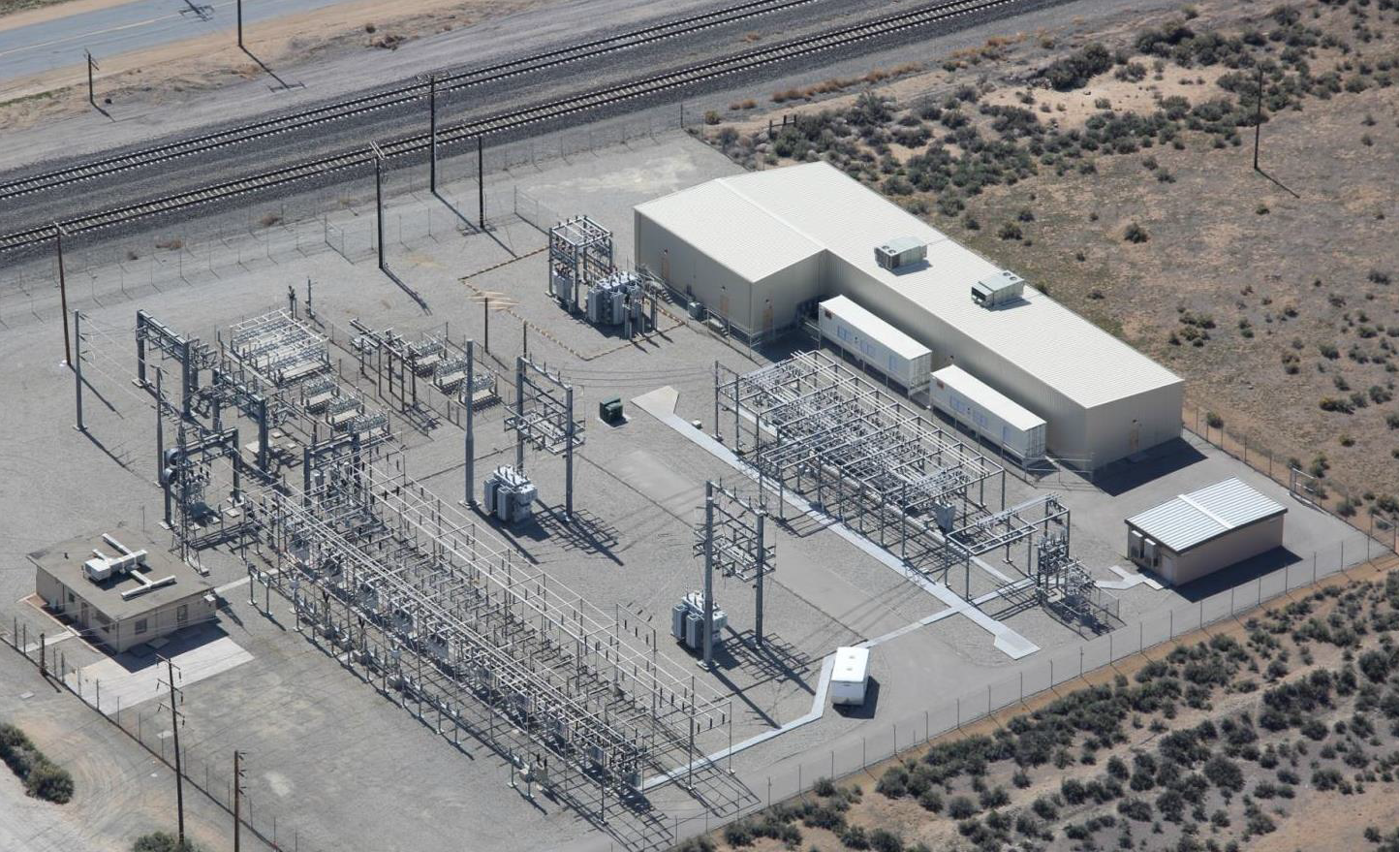
Overhead_View_of_Tehachapi_Energy_Storage_Project,_Tehachapi,_CA

Overhead view of 8-megawatt battery storage facility in Tehachapi, USA-Wikipedia image

March 1, 2023

Green energy’s newest fad is Battery Energy Storage Systems or BESS, which is being promoted as an add-on to existing renewable power generation facilities to counteract intermittency and unreliability.

Lobbyist the former Canadian Wind Energy Association, now the Canadian Renewable Energy Association or CanREA is actively pushing BESS, and has even gone so far as to add storage to its corporate banner as in, Wind- Solar- Storage.

CanREA is pushing for TEN TIMES the amount of wind and solar we already have in Canada (won’t that look pretty? And cost us all, too) which they say will work with storage.

However, even the influential lobbyist points to concerns. First, there is a need to develop technical requirements for connecting and operating battery storage facilities CanREA says in its document, Laying the Foundation:

“In many jurisdictions, the technical details may be included in the operating documents of the crown owned utility. However, there are other elements, such as the scope of safety and environmental reviews, that will need legislated descriptions or will need to be included in the regulatory documents of the relevant ministry or government department.” (Page 10)

And, CanREA says, regulating authorities may need to get ready for BESS and develop new competencies:

“In most jurisdictions, the mandate and/or rules of the regulating authority (for example the Alberta Utilities Commission) may need to be enhanced. Regulatory authorities will need sufficient expertise to fairly evaluate proposed energy-storage installations.”

Most people don’t know what they are

In response to inquiries from members and the public, and because BESS is being proposed as an add-on to existing wind power installations, Wind Concerns Ontario undertook a review of experiences with BESS around the world, and reports of citizen concerns, as well as the current regulatory environment.

As one Ontario mayor said, most people don’t even know what they are.

Wind Concerns Ontario prepared a report, with the following conclusions:

  • Standards needed for emergencies – As BESS technology is relatively new, standards are rapidly changing in response to emergency situations encountered. Even projects developed by companies with extensive battery experience have experienced serious emergency situations.
  • Not enough information – The requirements for submissions to the IESO and to municipalities when requesting support for the project include few, if any, details on the actual project. The process appears to assume that once a company is awarded an IESO contract based largely on price, it will then proceed to develop the real proposal which will be submitted into an undefined permitting process or processes. Based on information submitted, it is not clear how the IESO will be able to distinguish between proposals with higher prices because they meet high standards for development and those with lower prices because the proposal includes the minimal safety standards.
  • Renewable energy or not? – BESS systems are neither defined as a Renewable Energy project by Regulation 359/09, nor are they included in the list of excluded projects. The intention may be to omit further provincial review of these projects and to proceed directly to the municipal permitting process but this would be a recipe for substantial delay as the building officials in each host municipality (many of which are small rural municipalities) individually develop the expertise needed to assess and approve these projects.
  • Safety regulations? – While Ontario Hydro has defined setbacks from BESS installations to protect their infrastructure, there are no setbacks for BESS installations established in Regulation 359/09 to protect other buildings and activities. Similarly, there are no noise standards for these systems which could create a new enforcement challenge for Ministry of Environment, Conservation and Parks field staff.
  • Potential for support to be withdrawn – As the submissions to municipalities have included minimal information, there is potential for municipalities to rescind their support resolution once they learn the risks associated with these projects and the municipal resources that will be potentially required to deal with emergency situations.

Clearly, there are significant issues to be addressed.

Ottawa area BESS

Here in Ottawa, a BESS facility was proposed for the recent Independent Electricity System Operator (IESO) Request for Proposals for new power generation. Located on Upper Dwyer Hill Road in the West Carleton-March ward of the city, the project is unheard of for most people. The company proposing the project held a public meeting in December but no one showed up. The IESO allows proponents to simply post a notice on their project website. If you don’t even know about the project, how do you know to check for announcements?

Here are the minutes for the “public” meeting:

MINUTES OF PUBLIC COMMUNITY ENGAGEMENT City of Ottawa Public Meeting Location: Alexander Community Centre, 960 Silver St, Ottawa, ON K1Z 6H5 Time: 6-7 pm, January 12th, 2023

Long-Term Reliability Project Name: 548

Site Address: 650 Upper Dwyer Hill Road, Ottawa, ON K0A 1A0

Facility: Battery Energy Storage Systems (BESS)

Size: 4.99-megawatt/19.96-megawatt hour


Proponents Name: 1000234763 Ontario Inc.

Attendance: • 0 community members •

Proponent – 1000234763 Ontario Inc., representative: o John Kozak, COO • Proponent’s Contractor, SolarBank Corporation (previously, Abundant Solar Energy Inc.) o Tracy Zheng, CAO o Mila Simon, Project Coordinator 6ii

6:00 PM: meeting called to order. Proponent and SolarBank waited for 45 minutes for attendees. No community members showed.

6:45 PM: Meeting adjourned.

Another BESS proposal is in development in Cumberland, that would be ten times the capacity of the Upper Dwyer Hill Rd facility. In response an email inquiry, developer Evolugen (a division of huge power developer Brookfield) replied:

We are still in the process of assessing potential sites for a battery storage energy system in the Cumberland area to respond to two announced procurements (expedited and long-term RFP). The two public meetings were held to gauge at a high level the type of reaction that this type of project would receive in this area. We don’t record public meetings because they are drop-in format rather than a presentation with a Q and A. But we are always available for one-on-one meetings. The IESO released the final RFP document in early December, but had released a series of documents (including a draft RFP) in preceding months to provide project proponents with a general idea of what public outreach requirements were required.  

As we have more information – we will continue to update our project specific website: Rabbit Battery Energy Storage Project – Brookfield Renewable (evolugen.com)

Nick Best, Director, Public Affairs

Another inquiry, this time to the Cumberland Community Association, revealed the association knew nothing about the proposal. Or the public meetings that were held.

Time to ask questions

Doubtless, still more BESS proposals are coming with the IESO set to open up yet another RFP later this year, this time for almost twice as much new power generation.

We need to learn more to be able to ask questions about the impact of these installations on our communities, the environment, and our economy.

ottawawindconcerns@gmail.com


Is the $57B Energy Evolution plan dead?

30 Friday Sep 2022

Posted by Ottawa Wind Concerns in Uncategorized

≈ Leave a comment

Tags

Bob Chiarelli, catherine mckenney, enbridge, energyevolution, mark sutcliffe, Ottawa, wind power, wind turbines

freshly-dug-grave-for-a-funeral

Mayoral candidates pronounce the current climate action plan “unviable” and “wishful thinking” while proposing new ones

September 30, 2022

Ottawa’s municipal election campaign is shining much needed light on the city’s $57B climate action plan, named “Energy Evolution.”

It might even be dead.

We certainly hope so.

Work on the plan was started in the middle of the last decade including a series of “Pathway” studies released in 2017, and culminating in the Energy Evolution document passed by the city’s environmental protection committee and then Council in October of  2020. One Pathway study focused on wind power and acknowledged that Ottawa was a “low” wind resource area (translation: not enough wind to run turbines), the problem could be solved by offering developers more money to come here anyway. The result would be higher electricity bills, but not more reliable power.

While the city claims it conducted public engagement for the plan, it appears that a select group of “stakeholders” was contacted for their applause, and the plan was presented to Council within six months of official declaration of the COVID-19 pandemic.

A casual inquiry of Ottawa citizens will reveal that few people know about the plan and its very hefty price tag, which relies heavily on support from all three levels of government. (To compare, Toronto has a climate plan, too. TransformTO has a budget of $6 million a year.)

A report in today’s Ottawa Citizen says a mayoral debate focused on the environment held September 29th saw candidates presenting their own plans for climate action. Former mayor and now candidate for a repeat gig Bob Chiarelli said the current plan, (i.e., Energy Evolution) is “unviable” and based on “wishful thinking.”

He doesn’t say it is out and out crazy but he could have. The electricity portion of the document was written for the city by activist group Pollution Probe, and recommends that Ottawa turn up its nose at the provincial power grid, and create its own power supply. How? By using wind and solar power.

That is not only nuts it’s impossible. Both are unreliable, weather-dependent sources of power that even with the notion of battery storage, cannot possibly power a city of 1.1 million people.

The plan features a raft of other completely unworkable ideas. A half a million heat pumps is prescribed: interesting, but also impossible across the board. The units are large and do create noise; water source heat pumps need a lot of property to install the equipment.

On propane? No problem: switch to a wood pellet heating system. Because burning wood is better than burning propane, right?

There’s more, but we refer you to our earlier post on how the Energy Evolution plan will hit you, hard.

Candidate and former broadcaster Mark Sutcliffe had a few comments about a climate plan. He said he wouldn’t spend $250 million on bike lanes, which was a jab at fellow candidate Catherine McKenney. Sutcliffe talks about planting trees and other measures, but doesn’t say anything about power.

Catherine McKenney never mentions Energy Evolution but they (McKenney prefers the pronouns ‘they’ and ‘them’) were a councillor when Ottawa City Council passed the climate action plan, and is a member of the environmental protection committee to boot, which not only passed the plan before sending on to Council but was presumably the standing committee that had some oversight on the project. McKenney has made statements about renewable energy, but has also said they want to turn the Greenbelt into an urban national park.

That conflicts with Ottawa’s Official Plan which in Section 4.11 states that renewable energy facilities may be located in the Greenbelt as a principal use. The councillor may be thinking that means a few solar panels to power signs or lights, not 600-foot grid-scale wind turbines which would be an industrial use of the land.

Lots of views to choose from but it appears Energy Evolution might get a review under a new Mayor and Council, if not shelved altogether.

We’re betting few candidates are aware that Energy Evolution was used as “evidence” when the City opposed a customer pipeline replacement by Enbridge along St Laurent Blvd to serve Ottawa natural gas customers.

At an all-candidates meeting in North Gower, for Ward 21, all three of the candidates appearing that evening pledged to demand a review of Energy Evolution.

Haven’t read Energy Evolution yet? Here it is: energy-transition-report-1

ottawawindconcerns@gmail.com

City environment committee to hear motion tomorrow on wind turbines on public land

16 Monday May 2022

Posted by Ottawa Wind Concerns in Uncategorized

≈ 3 Comments

Tags

Manotick Messenger, Ottawa, Ottawa wind concerns, rural, Scott Moffatt, wind energy, wind power, wind turbines

Motion proposes city-developed renewable energy projects including wind on public land. That differs completely from the reassurances given to citizens by rural councillors who previously said there were no such plans

The City of Ottawa’s climate change illustration. Wind turbines coming soon on public land near you?

May 16, 2022

A motion to direct staff to create a network for a distributed energy framework on public-owned land will be heard by the Ottawa Environmental Protection Committee.

The motion was developed by Bay Ward Councillor Teresa Kavanagh and will be presented by Committee member and Capital Ward Councillor Shawn Menard.

The portion referring to wind power reads as follows:

MOTION: CITY RENEWABLE ENERGY

3. Approve that, contingent on sufficient resources, Council direct staff to report back to the Standing Committee on Environmental Protection, Water and Waste Management by Q4 2023 with: 

 a) An evaluation of existing solar PV systems and impact to facilities installed at City owned facilities 

b) A distributed energy resource framework for city-owned

facilities and land including: 

 i. Renewable energy generation (solar and wind) 

ii. Energy storage 

 ii. [sic] Demand response 

 iv. Potential policies to install distributed energy resources at City facilities or on City land 

c) Staff and funding implications to implement and support the distributed energy resource framework

Ottawa Wind Concerns chair Jane Wilson filed a comment to be heard by the Committee with the following statements:

With respect, the content of this motion seems to be in complete disagreement with statements made by councillors over the last year to the effect that the City is not proposing to acquire, propose or develop any wind power facilities.

Once again, there seems to be no discussion whatsoever of requiring any cost-benefit or impact analysis for grid-scale wind power. As an intermittent, weather-dependent source of power that requires substantial subsidies, grid-scale wind power would not offer a stable, reliable source of affordable power for the City and as such will not be helpful in support of electrification efforts or in the path to Net Zero.

If I may, I refer to Councillor Moffatt’s message in The Manotick Messenger published on November 5, 2021:

What I can say with certainty is that the City of Ottawa is not developing wind power, nor are we working toward such an effort or finding locations where wind power development could occur…. Finally, just to reiterate, there are no planned industrial wind turbines within the boundaries of the City of Ottawa at this time.

Ottawa’s rural residents would be asked to bear the most significant burden of any negative environmental impacts. If they took reassurance from comments such as those by Councillor Moffatt above that there would be at least consultation, they will be betrayed by this motion to be presented tomorrow.

We ask that this be considered in discussion of this motion.

The meeting will be held at 0930 May 17, 2022. The general public may view the meeting on the City’s YouTube channel.

The Agenda for the committee meeting may be found here: https://app05.ottawa.ca/sirepub/agendaminutes/english.aspx

Coldest day of the winter so far and wind power is NOWHERE

11 Tuesday Jan 2022

Posted by Ottawa Wind Concerns in Uncategorized

≈ 1 Comment

Tags

Ottawa, wind energy, wind power

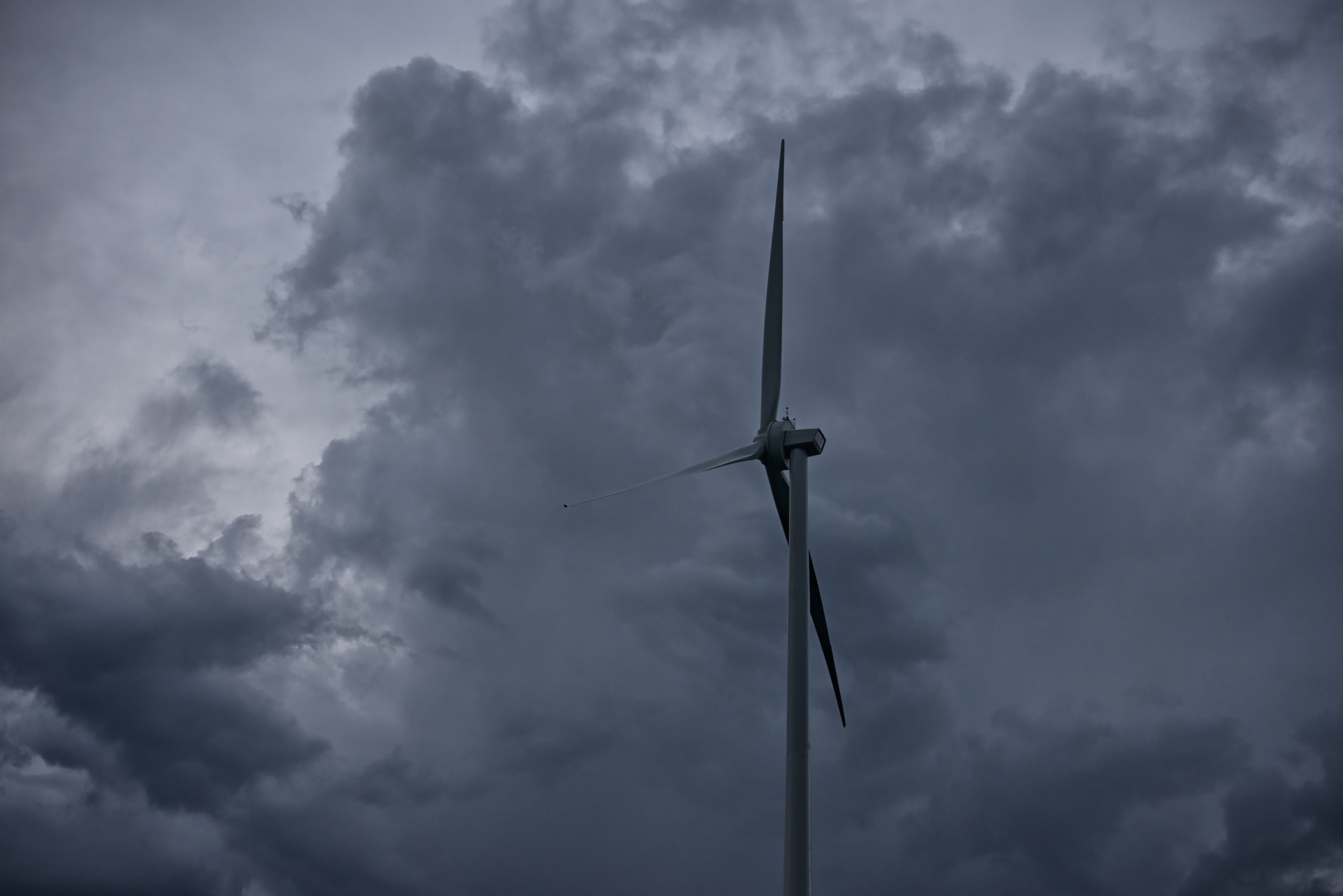
Not working. [Photo: D. Larsen for Wind Concerns Ontario]

January 11, 2022

Ottawa’s Energy Evolution Wishbook puts forward the idea that the City can subsist on renewables going forward, and calls for 3200 megawatts of new power generation—wind, solar, hydro, and battery storage–by 2050 to achieve “Net Zero.”

Today is a good lesson in why that proposal is wishful thinking and not based on reality.

It is the coldest day of the winter so far. Ontario demand for power as at 11 a.m. is 20,169 megawatts.

Wind throughout the entire province is supplying 983 megawatts.

Here in “low wind resource” Eastern Ontario, the 100-megawatt capacity Nation Rise power project at Crysler (Crysler-Finch-Berwick) is providing TWO megawatts of power.

TWO.

It stands to reason that any wind turbines operating just 40 minutes north inside the rural areas of Ottawa would not be faring any better.

In short, wind power is a no-show, exactly when you need it.

This is a simple fact of Ontario’s climate and the fact that we have very little wind during the summer and winter which, incidentally, is when we have extremes of temperature. (See Wind: Ontario’s High-Cost Millstone)

Ottawa’s Energy Evolution document needs a re-think and a rewrite, now, with a dose of reality added.

ottawawindconcerns@gmail.com

#ottawa #energyevolution #Winddoesntwork

Prepare for battle: Ottawa residents get opportunity to learn about city planning processes next week

25 Thursday Nov 2021

Posted by Ottawa Wind Concerns in Uncategorized

≈ Leave a comment

Tags

city planning, Ottawa, wind power, wind turbines, zoning

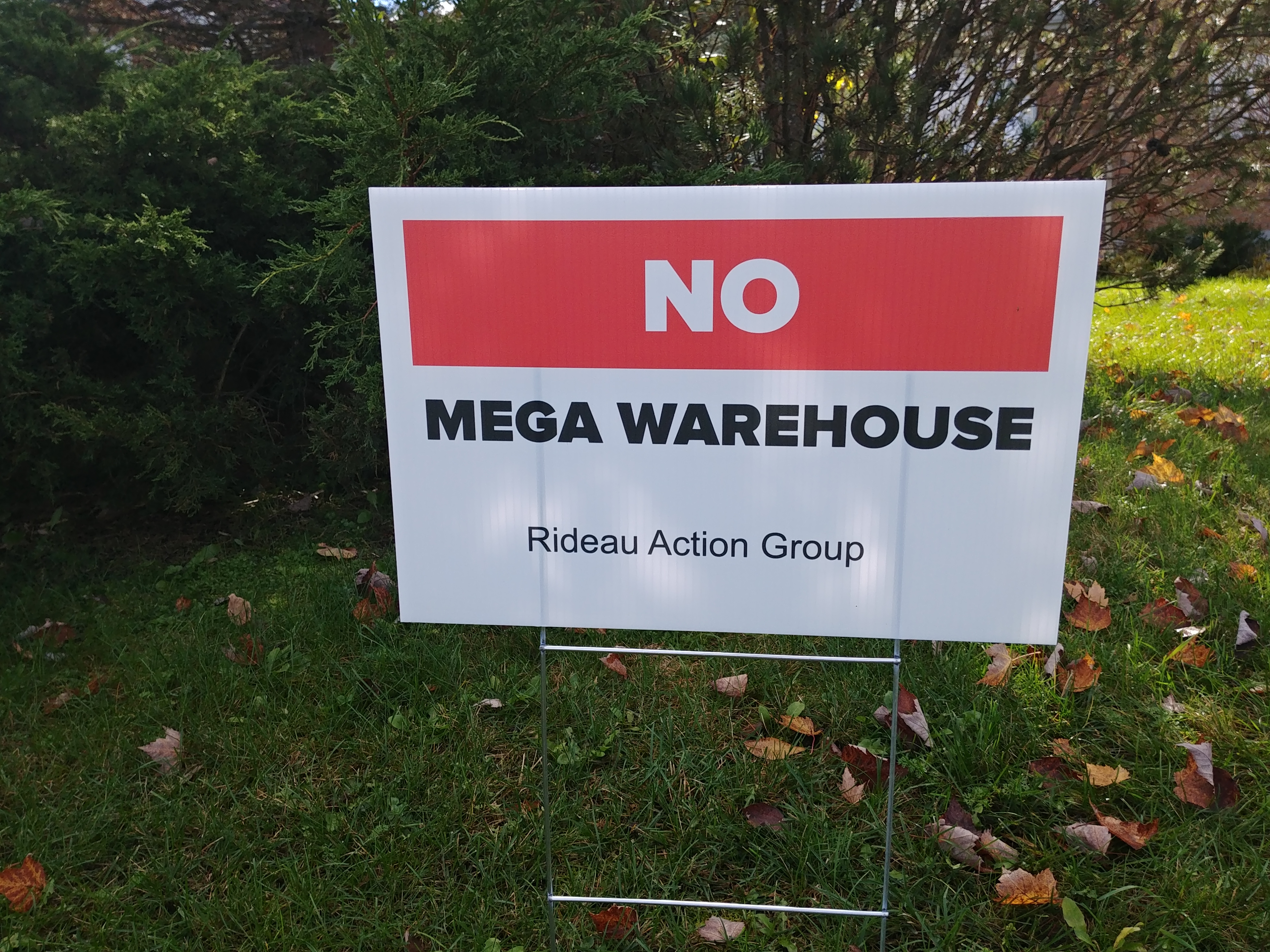
Mega-warehouses, truck centres, new subdivisions approved: it’s time Ottawa residents, especially rural citizens, knew more about the planning process in Ottawa. Here’s your chance…

A large distribution centre was the subject of a zoning amendment in Ottawa. Citizens appealed. What do we need to know about this process?

November 25, 2021

The news in Ottawa is full of reports about new developments that may, or may not, be what citizens want. A new truck distribution centre was approved just off the south end of Merivale, despite a jam-packed road system and nearby homes; a developer wanted to remove trees from a site near Hunt Club and Riverside to accommodate a new car dealership; the quiet village of North Gower might see a huge truck distribution centre and warehouse in an area people thought was “highway commercial” off the 416, and might only see a gas station and convenience store.

In all these cases, the proposed developments went through the planning process at City Hall. Citizens learned about the approvals afterward (in one case, the Merivale area truck centre, the City councillor was sandbagged, too) and were told, it’s done.

The new Official Plan was recently approved in Ottawa but most people had no idea what was in it, particularly not the echoes from the City’s “Energy Evolution” strategy, which called for massive amounts of wind power in one of its “models.” (And still has a target of 2025 for 20 megawatts of wind power.)

The City is now sponsoring a “primer” on planning to be held December 2nd and 6th via Zoom presentation.

It’s time we were better informed, more aware of what changes are being proposed at City Hall, and how to get involved in the process because surely, there is more to come.

See the details and registration information here.

Because, you can fight City Hall.

Join our mailing list: ottawawindconcerns@gmail.com


Boom in home generator sales a sign of the times

23 Thursday Sep 2021

Posted by Ottawa Wind Concerns in Uncategorized

≈ 1 Comment

Tags

electricity, generators, Ontario, Ottawa, Ottawa wind concerns, wind power, wind turbines

Reliable: what’s not to like?

September 24, 2021

One of the hottest stocks these days is a company called Generac, which makes whole-home power generators, fueled by natural gas.

After the power failures in Texas and the current crisis in the UK (the latter a desperate situation due to poor energy planning and reliance on wind power), people are worried about the reliability of the power grid.

It’s happening here too and will escalate if cities like Ottawa engage in planning based on intermittent “unreliables” like wind and solar.

Here’s a comment from one of our readers, a long-time experienced power worker:

Breaking news!!!!
I just got off the phone with another contractor from Rockland Ontario asking me to help them get caught up with residential generator installs. Most new construction includes a gas fired backup generator along with an 80 amp electric vehicle charging plug legislated by government code.
Yup, the same people that are discussing phasing out gas fired generation.
Oh, and by the way, for anyone interested, the 3 baseload gas plants that do operate daily are right across the river from Detroit and are privately owned by international consortiums supplying industrial operations that employ thousands.
Most of the other gas fired electrical generating stations are on standby as backup to the Ontario windfarms which drop out of production many times a day, except for the Milton station which provides peaking power usually twice a day for the local industries.
Get rid of that one, no big deal, BUT, you get rid of more Ontario industries and you get rid of more Ontario jobs.
Move in Industrial Wind Turbines and move out industry, hey, it has been proven, the data is everywhere, Ontario windmills don’t work plus they are built using gas fired and coal fired power generation, just not in Ontario.
Lucky for us China has gone in the opposite direction.
Ok, enough new old news for today, gotta go hook up another generator.

Stan the power man

ottawawindconcerns@gmail.com

Wind doesn’t make the cut: U.S. court decision

13 Monday Sep 2021

Posted by Ottawa Wind Concerns in Uncategorized

≈ 1 Comment

Tags

Ottawa, renewables, wind power, wind turbines

Wind power: not in the public interest, judge says [Photo D Larsen/WCO]

September 13, 2021

A decision rendered by the Minnesota Court of Appeals recently determined that a natural gas power plant would better serve the public interest than a simultaneously proposed wind and solar power project.

In her decision, Judge Louise Dovre Borkman relied on information from the state’s public utilities analyst coordinator, who said that “wind and solar capacity does not always translate into available energy because those resources are unpredictable and uncontrollable—the wind is not always blowing and the sun is not always shining.”

A critical factor in the decision was a statement in Minnesota Statute §216B.2422, subsection 4(3)  saying that due to the “intermittent nature of renewable energy facilities” there could be an impact on the cost of energy.

“In fact,” the Judge wrote, “as Minnesota Power illustrated in its EnergyForward , the output from those resources can ebb significantly even over the course of a single day.

“When that happens, or customer demand increases, Minnesota Power must increase output from more reliable resources, like coal or natural gas generators, or purchase power on the regional market.”

The Judge noted testimony from a consulting expert on energy who said that adding more wind instead of natural gas would leave the power company “doubly vulnerable to market pricing, both to sell surplus energy into the market when prices are low and to buy energy when prices are high.”

The final conclusion was that a “wind or solar alternative is not in the public interest” because the costs are higher.

The reasoning didn’t mention Ontario’s disastrous experience with wind power but it might have: two Auditors General said Ontario’s electricity customers had lost billions. And unlike Minnesota which appears to have approached this with care and consideration, there was never any cost-benefit analysis.

The City of Ottawa is about to make the same mistake, with its Energy Evolution plan, putting forward wind, solar and battery storage as the sole solutions to producing energy for the future.

[Reprinted with permission from Windconcernsontario.ca ]

Renewable energy proponent ignores grid realities

30 Monday Aug 2021

Posted by Ottawa Wind Concerns in Uncategorized

≈ 5 Comments

Tags

environment, noise, Ottawa, Ottawa wind concerns, wind power, wind turbines

Photo: D. Larsen for Wind Concerns Ontario. Home inside Nation Rise power project, south of Ottawa

August 30, 2021

The founder of the Ottawa Renewable Energy Cooperative (OREC) has written a letter to the Globe and Mail calling for an entire grid of renewable energy, such as wind and solar, to replace the current system. An excerpt from the letter by Dick Bakker follows.

The traditional, unidirectional electricity system from big central generation sites, with top-down control, hopefully will be replaced with a new grid of distributed renewable generation, decarbonised and locally controlled. New entrants will bring the advanced technology that the traditional utilities resist and introduce local capital to address community level opportunities.

The regulators, pension funds and unions that have benefited from the past century or more of centralised planning must adapt, as their traditional solutions are simply too expensive and unreliable. Distributed renewables, with battery storage, optimized for the distribution network, and integrated with demand response are simply cheaper and more resilient.

Massive changes are coming to our electricity system; hopefully Canada can leap ahead of where we are today, by localizing most of the benefits.

The problem is, wind power for one is not cheap* and it is certainly not “reliable” as our experiences during the recent heat wave indicate. Ontario went more than eight days with barely a whisper of wind, yet we experienced peak demand periods. And that’s typical of wind power in Ontario: it comes during low demand periods of spring and fall.

As to “local” benefits, Mr. Bakker told participants in an online regional update meeting held by the Independent Electricity System Operator (IESO) last January, that anyone objecting to large-scale wind turbines was a “NIMBY”. They have some valid objections he said but in the main, opposition is “a knee-jerk reaction to industrialization.”

Industrialization.

He doesn’t plan to take into account any environmental or financial concerns Ottawa’s rural residents might have. His knee-jerk NIMBY response was in fact an answer to our question about the need for cost-benefit and impact analysis. He doesn’t want that. He won’t care if the people living in Kars, Osgoode, Carp, Dunrobin, KInburn or North Gower have concerns about noise, harm to wildlife, and impacts on our aquifer.

But the prime problem with this letter is that Mr. Bakker’s views ignore the reality of the electricity grid. Baseload power is needed, and wind and solar cannot do that, not can they replace anything. Wind did not replace coal in Ontario; nuclear and natural gas did.

The one word Mr. Bakker will not say is “nuclear” despite the fact that clean, efficient, reliable nuclear is a real answer to the Net Zero goal. Ontario’s power workers recently said, you can’t get to Net Zero without it.

Facts are simply beside the point for those pushing large-scale renewables.

*While wind power developers’ trade association the Canadian Renewable Energy Association or CanREA claims wind power is now inexpensive, they do not present truly levelized costing. Moreover, Eastern ONtario is a low wind resource area. Ottawa’s Pathway Study of Wind Power in Ottawa (2017) acknowledges that there will have to be financial incentives to lure wind power developers to the area.

OttawaWindConcerns@gmail.com

← Older posts

Recent Posts

  • Open letter to CAFES Ottawa
  • Ottawa Wind Concerns supports West Carleton residents
  • What does wind ‘farm’ construction really look like?
  • Unwilling Host communities surround Ottawa
  • How many birds do wind turbines kill?

Follow me on Twitter

My Tweets

Enter your email address to follow this blog and receive notifications of new posts by email.

Tags

Bob Chiarelli Green Energy Act IESO Ontario Ottawa Ottawa wind concerns wind energy wind farm wind power wind turbines

Contact us

PO Box 3 North Gower ON K0A 2T0

Create a free website or blog at WordPress.com.

Privacy & Cookies: This site uses cookies. By continuing to use this website, you agree to their use.
To find out more, including how to control cookies, see here: Cookie Policy
  • Subscribe Subscribed
    • Ottawa Wind Concerns
    • Join 379 other subscribers
    • Already have a WordPress.com account? Log in now.
    • Ottawa Wind Concerns
    • Subscribe Subscribed
    • Sign up
    • Log in
    • Report this content
    • View site in Reader
    • Manage subscriptions
    • Collapse this bar
 

Loading Comments...