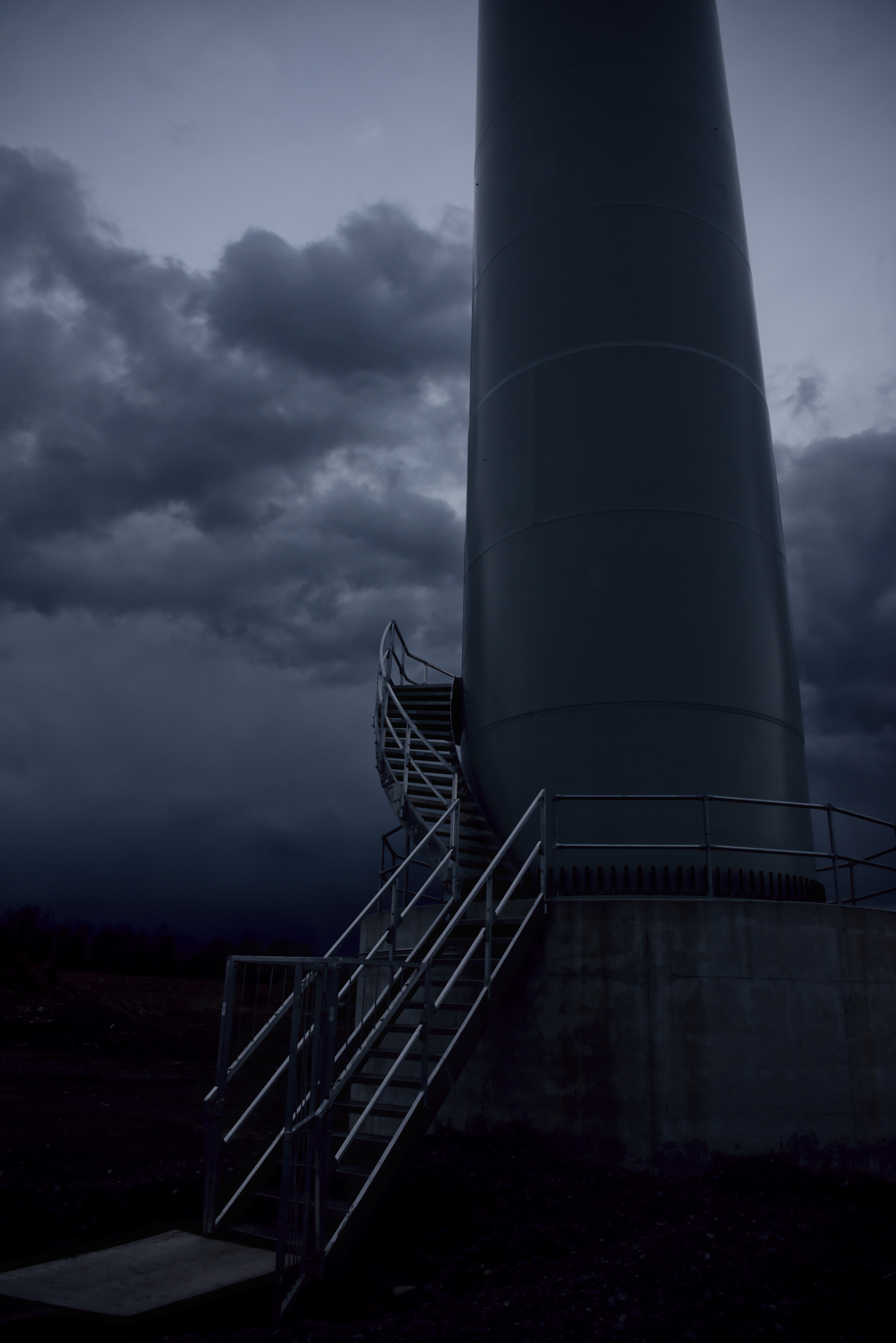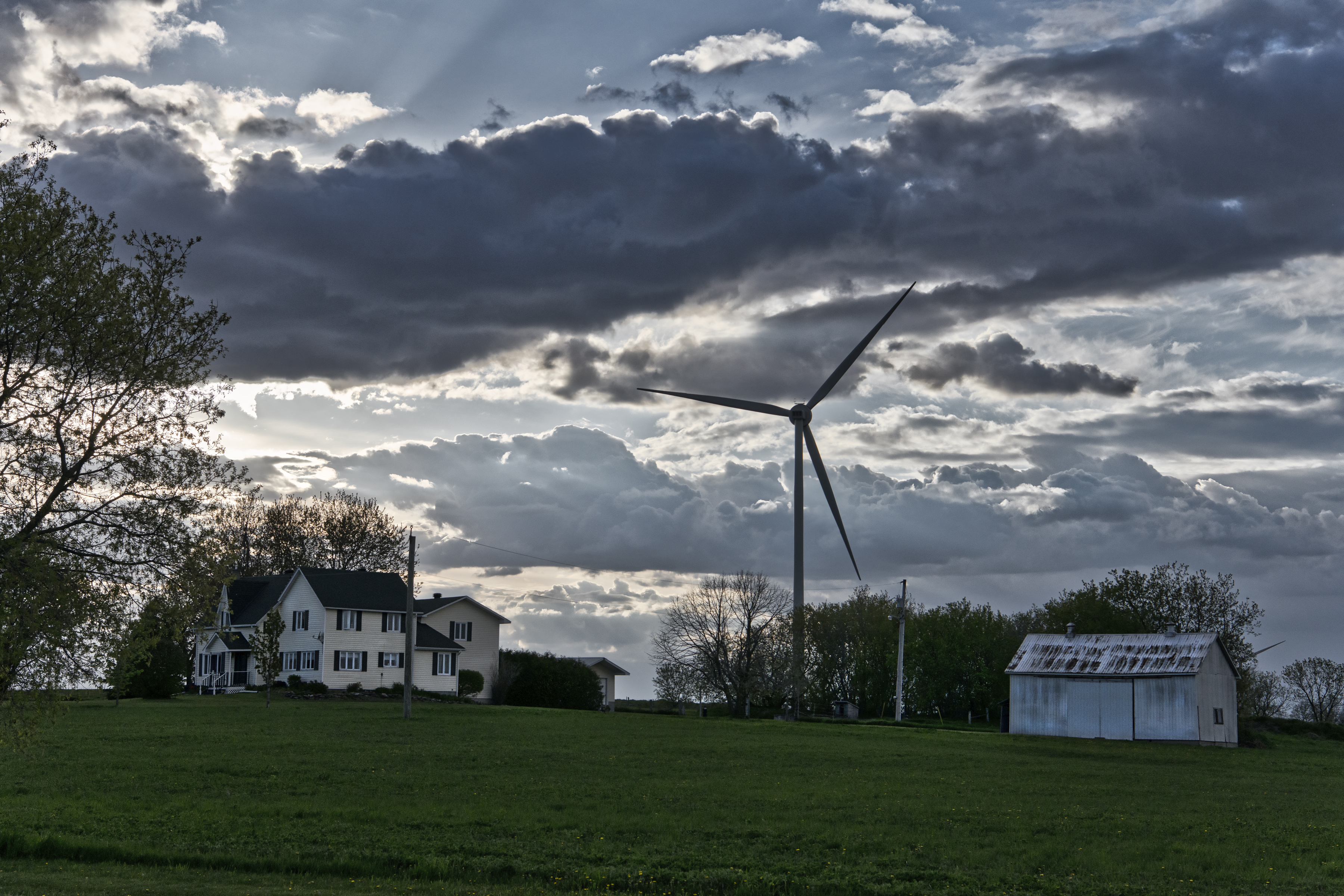
Experience with existing industrial wind power sites and community opposition to expensive, unreliable power generation leads rural municipalities to say NO
December 10, 2024
One of the many effects of the Green Energy and Green Economy Act passed in 2009 by the McGuinty government to give wind and solar power developers an advantage was the removal of local land use planning powers from municipalities.
Today, that authority has been restored by the repeal of the Act (which altered 20 other pieces of legislation), and now, a Municipal Support Resolution is required by the Independent Electricity System Operator or IESO before any power generation contract can be awarded.
In 2013, in protest against the carpeting of rural Ontario with industrial wind turbines against community wishes, municipalities across the province began passing resolutions declaring themselves to be “Unwilling Hosts” to new industrial wind power sites. The first was Wainfleet, spearheaded by then Mayor April Jeffs, and others quickly followed.
Today, there are 157 Unwilling Host municipalities.
What’s interesting is the fact that most already have operating wind power sites, or they are neighbours to active projects, so they are well aware of the negative impacts.
In Eastern Ontario, several municipalities are now Unwilling Hosts following the 2016 approval of the “Nation Rise” industrial wind power project in North Stormont, and in Renfrew County after there was a spate of wind power proposals. To the south east, Prince Edward County is an Unwilling Host after fighting off at least three wind power projects, and where residents spent more than $1.5 million on appeals and court challenges.
Wind Concerns Ontario recently developed a map of Unwilling Host communities that is a graphic demonstration of the dissatisfaction of municipalities with wind power development, and the fact that after 16 years, the Ontario government has not updated noise or setback regulations. Environmental noise pollution has been a problem for a number of industrial wind power sites.
The IESO is planning a new Request For Proposals, probably coming in January (more details will be revealed in an IESO event this Thursday) but municipalities remain unhappy, as indicated in communications to the IESO during “engagement.” Part of the process is an Agricultural Impact Assessment that must be reviewed and approved by any municipality dealing with proposals for new wind power.
Municipalities say they don’t have the time or the resources to deal with these assessments. And, the timing is not appropriate: a proponent can file a cursory Agricultural Impact Assessment or AIA at the time of proposal and request for a Municipal Support Resolution but a full assessment does not really have to be done until 18 months after the company gets a contract.
That’s still not enough time, said a planner from Oxford County in the IESO November 21 event: there are just too many pieces of these assessments to be looked at. The process may not “align” with reality, she said.
Nobody can say for sure … but it’s “far too many” says the American Bird Conservancy
Raptors such as Red Tailed Hawks and eagles, critical to the eco-system, are killed by wind turbines (not cats)
Ottawa-based Community Association for Environmental Sustainability or CAFES, which describes itself as a “network of local environmental and climate leaders”, has undertaken a campaign against “climate misinformation.”
In a newsletter to followers this week, it has a list of topics it says are sources of misinformation, including “Wind turbines kill big numbers of birds and bats.”
“We don’t have to choose between wind energy and wildlife,” CAFES says. “We can have both.”
To support their claim they offer a number of research reports including —our favourite—an article that says keeping cats indoors will prevent bird deaths. Cats do kill birds, of course, and there are many factors behind the millions of birds killed in North America each year.
But wind turbines are not blameless, and the bird kill numbers are not insignificant. We offer this 2021 statement from the American Bird Conservancy:
“Countless studies have shown that climate change will cause far-reaching and devastating impacts to wildlife and humans alike. Renewable energy development is a critically important component of the transition away from fossil fuels, making our air cleaner and reversing the effects of climate change. Unfortunately, we have also learned that wind energy development has a substantial negative impact on birds.
“But just how many birds are killed by wind turbines?…
“Rather than going down the proverbial rabbit hole to decide which study might be the most accurate, let’s take the average of the results from these studies. This gives us an estimate of approximately 366,000 birds killed by wind turbines in the U.S. in 2012.
“It’s important to consider that wind energy capacity has grown considerably since then. The study by Loss and others reported that there were 44,577 turbines in operation in 2012, while the U.S. Wind Turbine Database indicates that there are 65,548 today — an increase of 47 percent. Adjusting for this industry growth, we can project that approximately 538,000 wind turbine-caused bird deaths occur in the U.S. each year.
“However, projecting mortality based on energy produced is more frequently used because it accounts for the size of turbines in addition to their numbers. The American Wind Energy Association reports that there were 60,067 megawatts (MW) of wind energy capacity in the U.S. in 2012, versus 111,808 as of this writing in 2021 — an 86-percent increase. Taking this change into account, it can be projected that approximately 681,000 birds are currently killed by wind turbines in the U.S. each year.
“These estimates likely underestimate the true extent of the problem due to the fact thatmany bird fatalities escape human detection.
“Consider that small songbirds are the most abundant birds in the U.S., and are the most frequently killed by turbines. A study published in March 2020 found that dogs located 1.6 and 2.7 times as many small bird fatalities as human monitors did at two wind sites in California. This was true even after attempting to correct for searcher detection error, which is a standard practice for such studies.
“The Erickson* study reported that 62.5 percent of the birds in their data set were small birds. Taking 62.5 percent of the 681,000 annual mortality estimate calculated above and adjusting this with the 1.6- and 2.7-fold multipliers from the dog search study (and adding the other 37.5 percent of birds back in), this would translate into a total of 936,000 and 1.4 million birds based on the numbers from the two sites. Averaging the two, this would suggest that 1.17 million birds are killed by wind turbines in the United Stateseach year.
Indirect effects
“In addition to the bird fatalities discussed above, wind power projects also cause important indirect effects that must be considered.
“For example, many wind facilities are located far from the existing power grid and require the construction of new powerlines, which are yet another source of bird mortality.
“In a 2014 study, researchers estimated that 25.5 million birds are killed each year due to collisions with powerlines, and another 5.6 million are killed by electrocutions. Therefore, powerlines built exclusively to connect new wind facilities to the existing energy grid result in additional bird mortalities that should be factored into the total toll in birds associated with wind energy development.
“Wind facilities also require relatively large areas of land. Facility development can fragment or otherwise alter habitat in ways that make it unsuitable for species that have historically been present. For example, a study at wind facilities in the Dakotas found displacement effects for seven of nine grassland bird species after one year. While these effects have been documented in various studies, they have yet to be broadly quantified.
“When the facts above are considered, it becomes clear that existing estimates of the toll of wind energy development on birds are narrowly considered and do not account for the industry’s full impact.
“It should be noted that the estimates above are imperfect, as they are based on studies derived from an incomplete data set.
“While most wind facilities are required to conduct bird surveys to inform project planning and post-construction bird mortality studies, they are unfortunately not always obligated to share their data, and many companies maintain a proprietary hold on this information. If these data were made publicly available, bird mortality could be better understood and conservation prescriptions could be tailored accordingly.
“On a similarly important note, the species being negatively affected by wind turbines must be considered. Some species are more susceptible than others to collisions with wind turbines, and some have slower rates of reproduction and thus their populations may be more dramatically affected by losses. Some of our rarest and most iconic species, including California Condors and Marbled Murrelets, fit this bill and are at risk of collisions with wind turbines. Others like Whooping Cranes are losing habitat as a result of wind energy development.
“As noted above, our projections leave little doubt that the annual toll in birds lost to U.S. wind turbines is at least more than half a million, and a similarly conservative estimate would put that number at nearly 700,000 birds. There is a case to be made that the number could exceed 1 million. And for multiple reasons stated above, these are all likely to be under-estimates.
Far too many
“Regardless of the specifics, this is far too many when one considers the many other threats to birds on the landscape, and the massive declines we have already seen in our bird populations.
“What’s the solution to this conundrum? How do we continue to add wind turbines to fight climate change when this development is harming birds? Our answer: Bird-Smart Wind Energy. Smart wind energy development starts with good data collection and appropriate siting to avoid high-risk areas for birds. Available measures can then be incorporated to further minimize risks, and impacts should always be offset by solid on-the-ground mitigation measures.”
So, siting is important, says the American Bird Conservancy.
But that’s not what CAFES says—they want wind turbines, period. And if you are concerned about bird deaths from industrial wind power sites in the Ottawa area you are guilty of spreading “misinformation.”
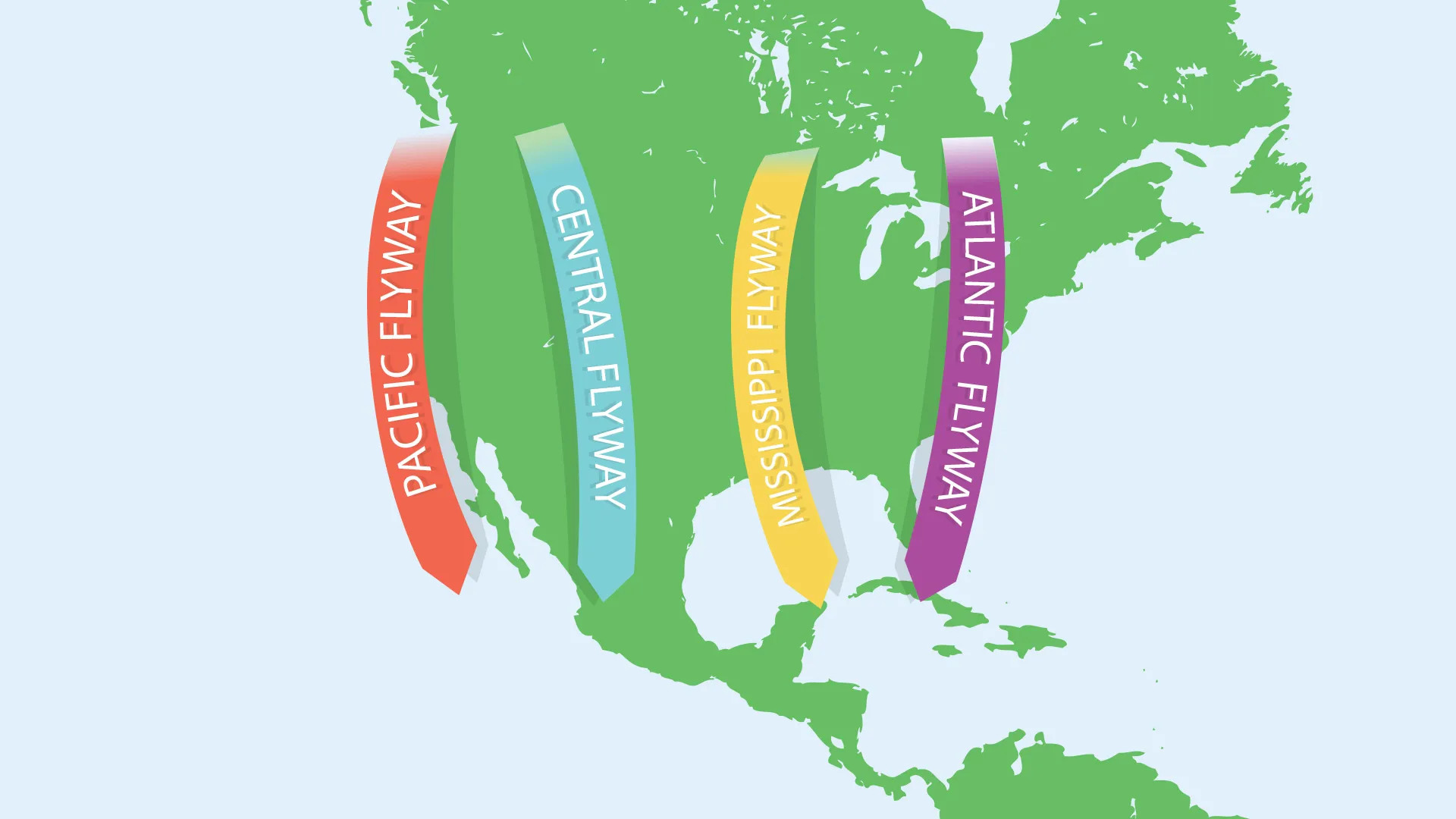
It’s worth noting here that the Ottawa area is on the Atlantic Flyway, a pathway for migrating birds.
Our question is, of course there are multiple causes for bird deaths, but why do you want to kill more?
In our view “environmental and climate leadership” would be looking for the best solutions, and doing a full risk-benefit analysis.
Huge wind turbines in a migratory bird pathway is not the answer for protecting the environment, or dealing with climate change.
*A Comprehensive Analysis of Small-Passerine Fatalities from Collision with Turbines at Wind Energy Facilities, by Wallace P. Erickson , Melissa M. Wolfe, Kimberly J. Bay, Douglas H. Johnson, Joelle L. Gehring, in PLOS ONE, 2014 https://doi.org/10.1371/journal.pone.0107491
Just “another form of farming” investor group claims, says it will bid in next IESO round
Industrial wind turbine just south of Ottawa: industrial land use
Following a web event held by the Independent Electricity System Operator or IESO a few weeks ago, Ottawa-based investor consortium Ottawa Renewable Energy Cooperative filed a comment in which it stated the group plans to bid for renewable energy projects, when the IESO releases its next Request For Proposals.
OREC already has invested in 24 renewable energy projects in Ontario, mostly solar, but also two small wind turbines, in the Kincardine and Bluewater areas of western Ontario (Huron County).
OREC’s comments to the IESO include the claim that it intends to bid for contracts. It acknowledges community opposition to some types of renewable energy development but claims it can avoid that by building smaller projects that will not attract opposition. The group correctly states that opposition to the Battery Energy Storage Systems or BESS was aided by the inability of developers to provide answers to citizen concerns.
OREC’s comments follow. Emphasis in italics is ours.
Concern 1: We previously noted a qualification bias in LT2 material in favour of indigenous engagement, including indigenous participation as co-proponents. We wish again to request that community-based investment entities such as OREC will be granted equivalency to indigenous participation in terms of rated criteria points as well as set-asides, particularly if such set-asides will be structured to incentivise partnership with indigenous communities. Our question is, “why not community groups too?”
Concern 2: Rural Ottawa is still reverberating from the process of approving large BESS contracts in LT1. Much negative feeling has grown since November 2023 when a plethora of Open House events were held in Ottawa’s rural areas and developers were not ready with adequate answers about appropriate project scale and risks to communities. OREC is monitoring continuing conversations among opponents and their municipal representatives, and we anticipate greater opposition to LT2 projects. OREC believes a development model involving multiple small projects on distribution lines, funded by community investors, will attract significant interest within municipalities. This approach will attract municipal councils to the benefits of local economic activity, and the virtuous loop of generating energy locally, thereby relying less on large energy sources from outside community boundaries. OREC believes that scaling generation and BESS units such as OREC is proposing, meaning smaller, more widely distributed locally owned projects will attract positive attitudes, especially within rural areas, to what is effectively another form of farming. OREC recommends to the IESO that future energy procurements accommodate smaller scale projects, particularly clusters of small projects that have commonality of ownership and regional proximity. Clustered projects on different but proximate distribution feeder lines could be considered as single projects. OREC further recommends that the IESO include rating criteria that reward developers who partner with community-based organizations, similar to indigenous engagement criteria.
Our comments:
Community support: OREC is requesting that community groups supposedly representing local residents should get the same consideration as Indigenous peoples. First, although OREC claims to be “local” its membership is unknown, and in fact the consortium actively reached out to residents in Huron County to invest, as well as Ottawa area residents. So, what is “local”? But more important, OREC misses the point of the IESO’s initiatives regarding Indigenous communities. The goal is to assist these communities with a “clean, reliable and affordable” energy, such as, for example, reducing communities’ reliance of diesel generators for power supply.
Community opposition: After acknowledging the problems of the BESS proposals in the fall of 2023 (a rushed process with little information available), OREC says it anticipates more community opposition. Instead of acknowledging citizen concerns about loss of farmland, industrialization of rural communities, and the significant environmental impact that industrial wind turbines can have, OREC says it has the answer — “multiple small projects.”
OREC has demonstrated grid illiteracy in the past and this is more of the same. Former energy minister Todd Smith commented in February of this year that the addition of renewables (wind and solar) under the McGuinty-Wynne governments created “a lot of instability” on the power grid. The answer, Minister Smith said, was to build a supply of “clean, reliable, baseload power” and the best way to do that was to use Canada’s proven nuclear technology to build large power sites.
Creating multiple small sources of intermittent power generation will not provide reliable power for Ottawa, and it may add to grid instability. That’s not good for anyone.
Citing a “virtuous loop” of local power generation, OREC seems to imply that cute little windmills operating in the area will be like locally grown food. It is not.
Local benefits: OREC claims there are “local benefits” to renewable energy projects. What are they? There are no jobs after the construction phase (and few of those unless you drive trucks), and few if any jobs afterward. Wind turbine maintenance and monitoring is done from remote centres, with a few highly trained technicians on the ground. As the president of Canadians for Nuclear Energy Dr Chris Keefer commented, There are no employee parking lots for wind farms. There are plenty of problems with wind turbines, which is why in Ontario there are currently 157 municipalities that have passed resolutions declaring themselves to be Unwilling Hosts to industrial wind power sites. Most of the Unwilling Hosts either have wind turbines already or are nearby jurisdictions that dothey know the problems, such as noise pollution, risk to wildlife, and irreversible damage to aquifers.
Farming: While possibly drawing analogies to local food production OREC purposely ignores a very big question about wind and solar power development—they use up a lot of land. Good land. Wind and solar are both “low density” forms of power generation because they require so much land for very little power generation. Ottawa’s Official Plan states that renewables cannot be sited on prime farmland, but in truth, all classes of farmland have value. This goes against the public’s wish to encourage local food production. OREC counters with the preposterous claim that operating industrial wind and solar power sites is ”another form of farming.” No, it isn’t. It’s industrialization.*
While OREC promotes itself as a “green” organization, interested in “sustainability,” the fact is, it is an investor group, interested in making money. They have shown little concern, even disdain for citizen concerns (see note below) about the environment and community well-being.
While OREC presents dreamy ideas about “local” power generation as if it were sweet corn, we are ready with the facts: wind power is ineffective, intermittent, unreliable, and expensive —it doesn’t make sense for Ottawa.
OTTAWA WIND CONCERNS
ottawawindconcerns@gmail.com
*OREC founder and Board member Dick Bakker spoke at an Ottawa IESO web event several years ago and when citizen concerns about the environment were raised, he angrily snapped that people who objected to industrialization of their communities were just “NIMBYs.” Industrialization. Acknowledged.
Farmland Trust warns that current use of prime agricultural land is “unsustainable” while wind power developers make threats if they don’t get access to it for power generation.And money.(Don’t forget the money.)
Berwick area farm: 29 huge industrial wind turbines now operate, despite community opposition [Photo D. Larsen]
The Independent Electricity System Operator or IESO is preparing to launch a new Request for Proposals in 2025, and is gearing up now with consultations for municipalities and stakeholders, prior to releasing final documents.
At issue is the policy of the Ontario government —and the City of Ottawa —that prime agricultural land must be protected.
The wind power industry sees this policy as an obstacle and is fighting back. With some success. In a recent IESO web event, a spokesperson said the question of protecting prime ag land is a topic of “active discussion” in government.
Meanwhile, the Canadian Renewable Energy Association, which is not an environmental organization but a trade association and lobbyist, had this to say in a comment to the IESO. (The emphasis is ours.)
“CanREA recommends that Ontario consider orienting agricultural land use policy in a manner similar to Alberta’s recently announced ‘agriculture first’ approach for renewable energy project approvals. This approach allows wind and solar generation on Class 1 and 2 lands if they can demonstrate that they can co-exist with agriculture.
“We believe that this is a sensible approach. CanREA’s law firm members who represent Ontario farmers in negotiations with renewable energy developers describe numerous cases where siting of renewable energy projects on agricultural lands has provided additional income to allow farmers to stay on the land – making farming careers sustainable for them and their families.
“Should additional restrictions be imposed, renewable energy development would be forced into less desirable areas with lower wind and solar potential, located further away from load centres. This would result in system inefficiency, reduced levels of project investment and higher cost solutions for Ontario ratepayers.”
Very clever wording on their part and not without active threats to the Ontario government, even going so far as to mention the association’s “law firm members.” Phrases like “additional restrictions” are meant to foreshadow legal action if CanREA doesn’t get what it wants, which is unfettered access to Ontario’s farmland for profit.
People want farm land protected
The lobbyist is out of step with Ontario’s citizens and the primacy of protecting our food supply. At a time when “eat local” echoes throughout the province, and the COVID experience of interrupted food supply is fresh in everyone’s mind, the protection of Ontario’s cropland is important.
“Every day in Ontario, we lose 319 acres of farmland to non-agricultural land uses like urban development and aggregate extraction; this rate of farmland loss is unsustainable and cannot be allowed to continue. Everyone in Ontario relies on agriculture, from the food we eat, to the jobs in our communities.Without strong protections in place for our farmland, we may not be able to provide enough food to feed our growing population.”
Wind power developers: we want the money
Several wind power developers lined up to file comments with the IESO too—any resemblance to the comments from CanREA are not accidental. Here is Capital Power.
“Broad, overarching limitations or restrictions for specific classifications of agricultural land or technology types will likely limit the development of cost-effective projects in locations near existing energy infrastructure. It will also result in a loss of potential non-agricultural income for farmers. Capital Power submits that the appropriate use of land and potential impacts on agricultural use is most effectively determined between landowners, developers, and through current project approval processes. No further limitations, rated criteria, or other considerations needs to be considered for LT-2 or potential projects.”
Translation: hands off our negotiations with farm owners.
Similarly, U.S.-based Invenergy commented:
“We would work with the landowners to minimize impact to the land and form an agreement to return land to its original state. Some projects may be able to allow for the same productivity levels of the agricultural land like a wind facility.”
Invenergy also said restricting prime agricultural land mean that municipalities would lose out on tax revenues from wind power projects. That is true but with the tax rates currently capped, the amount paid is a pittance in comparison to wind power operator profits, and would need to be assessed along with municipal costs such as the need for fire services, inspections, etc. It is not possible to return land fully to its “original state”—wind turbines require massive concrete and rebar foundations that cannot be removed.
Wind power developers also under-represent the amount of land used for wind turbines. At least one developer currently claims a turbine uses only 0.2 of an acre but obviously, this does not take into account access roads and other infrastructure.
You can read more industry comments here but make no mistake: they want that prime farm land and will do anything, and say anything to get it.
New procurement announced, but difference from Green Energy Act is that municipalities now have final say in approvals of siting for projects, and can create bylaws for siting
Turbines and transformer station at Nation Rise wind power plant [submitted photo]
Ontario’s Independent Electricity System Operator or IESO has announced that it plans another round of procurement for new power generation, which will include “non-emitting” generation such as wind, solar, hydro and bioenergy.
The announcement also states that IESO will look at “options options to re-acquire, upgrade, or expand existing facilities”.
The news release came on the eve of the deadline for the most recent procurement initiative which, the IESO says, was intended to increase capacity. The next round will attract “new supply will help meet the province’s overall energy needs, according to IESO CEO Lesley Gallinger.
A report in the Toronto Star framed the announcement as the Ford government doing an “about-face” on earlier policies about wind and solar. The Star said that Minister of Energy Todd Smith stated in a speech earlier this week that the Ford government approach would be different.
“Smith was quick to contrast this new round of renewable energy from the previous build out that took place under Liberal governments,” the Star said.
Wind and Green Energy Act was ‘fiasco’
“When we talk about this much renewables, many minds are immediately going to turn to the absolute fiasco that was the Liberal’s Green Energy Act … when wind and solar projects were forced on unwilling host communities,” he said, according to the Star.
“We’re doing it differently by competitively procuring these resources. Based on system need, we can deliver these projects for much lower costs. In fact, the IESO’s report today confirmed that we could get wind and solar for far less than the Liberals (did).”
The Star said “Smith highlighted how the Progressive Conservative approach of competitive procurement has already resulted in recontracting existing generation at 30 per cent below what was being paid before. The IESO estimates the next round of wind contracts will go for less than half of what the province paid in the mid 2000s.”
Wind Concerns Ontario president Jane Wilson* expressed concern over the announcement.
“Everyone knows there has been nothing but problems with Ontario’s wind power fleet,” she explains. “Not only is wind an intermittent, unreliable source of power but it has also caused problems for many of the communities that were forced to ‘host’ these industrial power installations. They produce noise and vibration, and have had other environmental impacts such as disturbing local aquifers and affecting water supply. We know from tracking internal government documents created since 2006 that there are literally thousands of files of noise complaints. And, unfortunately, there are still, after all these years, wind power projects that do not have final audits completed verifying their compliance with regulations. That’s not acceptable.”
Any effects from wind turbines are regulated by the Ministry of Environment, Conservation and Parks. Regulations which include setbacks between wind turbines and homes as well as noise limits, have not been revised since they were created after the Green Energy Act in 2009.
Wind Concerns Ontario says experiences with wind turbines around the world indicate it is past time to review and revise the regulations.
Power is in municipalities’ hands
A critical difference between the current PC government and the previous Green Energy program, Wind Concerns says, is that support from the local municipality is required for renewable energy projects. Municipalities also have been given back the power to pass zoning by-laws that regulate how turbines are sited in their communities.
These energy policies place Ontario’s municipal Councils at the centre of energy policy debates moving forward.
“At the end of the day, as citizens, taxpayers and ratepayers, we question the value of wind as a reliable source of power,” Wilson says. “Everyone wants to do the right thing for the climate and the environment—intermittent, invasive wind power that effectively industrializes communities, isn’t it.”
contact@windconcernsontario.ca
ottawawindconcerns@gmail.com
*Jane Wilson is also Chair of Ottawa Wind Concerns
City “engagement page” has low sign-up rate for updates on new zoning bylaws for renewable energy projects, despite important issues involved
New regulations will determine setback distances between power generation and homes, for example. [Turbines at Nation Rise project, south of Ottawa.]
September 21, 2023
The City of Ottawa decided to allow for the construction of new power projects to provide “renewable energy” in its new Official Plan. And the next step, is to create new zoning bylaws for that kind of development. The bylaws will provide regulations for things like noise, for example, or setbacks between power projects and homes for safety and health.
The City has an “engagement” page where people can follow along with information and activities on a variety of projects. For the renewable energy file however, as of this morning, there were only SEVEN people subscribed to get email updates.
Seven.
7.
That is strange considering “renewable energy” could mean grid-scale wind turbines which do produce environmental noise, and do present risks such as ice throw from the giant blades, and killing of wildlife such as birds and bats. Construction/operation has been known to disturb aquifers or the groundwater, affecting the water supply for people on wells.
All that is really important and you’d think more people would be interested.
By this afternoon, more than 50 people had subscribed once we emailed people on our list, but still, more people should sign up.
The new bylaws are due out any moment now: staff told the Agricultural and Rural Affairs Committee back in June that draft bylaws might be ready by August or September. August is gone and September is almost gone too.
Why not sign up today, and keep informed on the City’s work on these bylaws. They will affect everyone, especially rural residents where such power generation projects are likely to be located.
Roads, wind turbines, and City Hall arrogance: themes at North Gower all-candidates’ meeting
September 21, 2022
Planning staff and others at the City of Ottawa may have sensed their ears burning Monday evening.
That’s because participants at an all-candidates meeting in North Gower held September 19 complained bitterly about the lack of real “engagement” or “consultation” from staff regarding major initiatives, whether it the new Official Plan, individual zoning amendment cases, or huge expensive initiatives like the $57B Energy Evolution plan.
The meeting, sponsored by the North Gower Community Association, was attended by candidates David Brown, Leigh-Andrea Brunet and Kevin Setia. Candidate Patty Searl was ill and unable to attend, and Michael Nowack was working, he told the organizers.
Comments were made about how hard it was to get information about city projects and plans, and to feel like comments were being taken seriously, residents said.
Staff put out their reports with their decisions on what actions will be taken, said one North Gower resident. By the time the process gets to “engagement,” it feels like the decisions have already been made, she said.
Mentioned was the city’s “engagement” on garbage collection, the Official Plan, and other policies in development.
City doesn’t “get” rural issues
Citizens spoke about some of the issues being reported in media about what’s important in the 2022 municipal election campaign, and said that the urban-rural divide was clear. The city quite simply doesn’t “get” rural issues.
Transit is a key topic now, as the city is pushing for better use of the multi-billion-dollar transit system and LRT. But Ottawa’s transit system is out of reach for rural residents, some said.
“I’d love to take transit,” said one resident. “But where do I get it? Where do I drive to from North Gower to get a bus or the LRT or whatever? And, I live on a farm and drive a truck—will there be a parking space I can fit into when I get there?”
Leigh-Andrea Brunet said that the mega-warehouse site, which was the subject of a citizen appeal, would have been a good place for a park and ride, where buses could pick up residents needing to go into the city. David Brown commented that work would have to be done on assessing the cost of rural bus routes but that the City-owned client services centre would be a good location for passenger pickup in North Gower.
Comments were made about one mayoral candidate’s proposal to spend $250 million on bike lanes while in rural areas, roads are literally falling apart.
Concern was expressed by several residents over the tone of the current Council, and how there seemed to be “gangs” of councillors as one person put it.
Kevin Setia said his goal would be to work collaboratively with all other councillors.
NO to expensive, unreliable wind turbines
As the questions asked covered various City initiatives and programs promoted by the current Council, the Energy Evolution plan came up repeatedly, particularly the part that calls for powering the city with wind and solar and would require more than 700 industrial-scale wind turbines, to be installed in Ottawa’s rural areas.
Residents recalled the Green Energy Act era in Ontario, which resulted in a loss of more than $30 billion to ratepayers and taxpayers because of expensive, above-market contracts, and asked why Ottawa hasn’t learned from that.
Every candidate agreed that wind power was expensive and unreliable and not appropriate for Ottawa.
In conclusion, all three said they pledged to demand a review of the Energy Evolution plan if elected.
Further all-candidates meetings include Richmond, October 5; ManotickVillage Community Association September 28th7 PM at the Community Centre/arena; West Carleton-March the OFAwill host a meeting Oct. 5 at the Kinburn Community Centre 7 PM; and the Huntley Community Association (HCA) will host an all-candidates debate for Ward 5 council candidates on Wednesday, Oct. 12, 7 PM at the Carp Agricultural Hall.
A previous wind power project was presented as a ‘done deal.’ That’s not happening again, says Ottawa community group.
City documents show that wind and solar power projects and battery storage are due for completion by 2025. Where are they? Rural residents want to know.
August 1, 2022
Community group Ottawa Wind Concerns has asked its followers to contact the City of Ottawa to request transparency on several renewable energy projects.
In an email today, the group asked citizens to demand transparency from the city, with the following request:
“On page 45 of the Energy Evolution action plan is the statement that a project is to be undertaken in the electricity sector between 2020 and 2025, which requires specifically the installation of:
150 megawatts of solar power generation
20 megawatts of wind
20 megawatts of hydro and
20 megawatts of electricity storage.
Given that these are substantial projects for the City and will require procurement of land as well as environmental studies in order to obtain approvals, we are asking the City of Ottawa to release information NOW on where these projects will be located, who will be the operators of the facilities, what contract terms are for setbacks from homes, noise limits, decommissioning, and fire and aviation safety requirements as well as what cost-benefit analysis is being done to confirm the climate change benefits of these projects.
In short, we are asking for opportunities for full public engagement with regard to these power generation projects.
As the deliverable date for these projects is less than three years away, we ask that public disclosure and engagement begin as soon as possible.”
The power projects are significant, says Ottawa Wind Concerns Chair Jane Wilson: “For wind power, the 20 megawatt requirement could mean seven or more industrial-scale wind turbines,” she says. “That will be a significant impact on a community and on the people who will be forced to live nearby. The power generators do create noise pollution and have other potential impacts on the environment such as the risk to wildlife, and the loss of important woodlands and other features.”
Wilson says there is no news on the 2025 power projects, but residents want to know they will be notified and included.
“The last time this happened,” says Wilson, “the project was presented as a ‘done deal’. That cannot happen again.”
A 20-megawatt wind power project was proposed for North Gower in 2008 but ended when the proponent, a small firm out of Germany, failed to meet requirements of Ontario’s Large Renewable Power procurement effort in 2014. The turbines were to be 600 feet tall and would have been near hundreds of homes and the village school. Almost every citizen in the area signed and petition which was presented at City Hall.
The local chapter of Ontario Landowners has also asked members to contact the City of Ottawa to demand transparency.
ottawawindconcerns@ottawawindconcerns
Ottawa Wind Concerns is an incorporated, not-for-profit group, with a membership list of several hundred residents of rural Ottawa communities and other stakeholders. We are a community group member of the Wind Concerns Ontario coalition.Our goal: a safe environment…for everyone
Another reason why Ottawa’s Energy Evolution and the plan for 3,200 megawatts of wind to power Ottawa (intermittently) isn’t a good idea. Opinion by Ottawa energy economist Robert Lyman
Putting 700 wind turbines throughout Ottawa’s rural communities will foster energy security, according to Ottawa’s climate change action plan. How is that possible when all the raw materials come from somewhere else? [Photo: D. Larsen for Wind Concerns Ontario]
ENERGY SECURITY – THE UNIQUE PROBLEMS OF WIND AND SOLAR ENERGY
August 1, 2022
The crisis in global energy markets following Russia’s invasion of Ukraine has seized public attention in western countries largely because of its indirect effect on the prices of oil and natural gas, two energy sources of central importance to the world’s economy. In a somewhat perverse way, the crisis may also serve as a valuable reminder of the importance of energy security, a consideration that many governments, in their pursuit of “climate” objectives, have demoted to the second or third rank.
There is another dimension of energy security that does not relate to the threat of oil and gas shortages and price increases but instead to the insecure sources of the materials needed to produce wind, solar and battery equipment. All of these require large imports of critical components or inputs from China.
How big is this problem?
In 2019, China accounted for 68% of global polysilicon production, 96% of global photovoltaic (PV) wafers production, 76% of PV cell production and 71% of PV module production.
The Global Wind Blade Supply Chain Update for 2020 ranks China as the largest producing country for wind turbines. Chinese firms are responsible for more than 50% of global wind blade production capacity. According to the U.S. International Trade Commission, China is now the leading exporter of wind-powered generating nets, accounting for about 10% of the market outside of China.
China is also among the leading suppliers of many minerals critical to the manufacture of wind turbines and solar PV. Table 1 indicates China’s share of global supply of critical mineral inputs.
Table 1
MineralChina Share of Global Supply
Aluminum 56%
Cadmium 33%
Copper8%
Gallium 97%
Indium 39%
Molybdenum 45%
Rare Earths 63%
Selenium 33%
Silicon 64%
Tellurium 62%
Tin 27%
Titanium 28%
Tungsten 82%
Vanadium 55%
Zinc 33%
Source: World Bank
Dependence on China for the materials needed for wind, solar and batteries is not the only energy security consideration that should be raised with respect to renewable energy. A far more significant risk concerns the inability of intermittent electricity supply sources to meet electricity demand at all times and in all seasons, especially if left dependent on costly and unproven bulk electricity storage systems.
There is an important geopolitical dimension. China and the West are now locked into an important competition to determine which countries, and which economic systems, will lead the world over the next century. China has shown itself willing to use every policy tool, including widespread industrial espionage and funding of groups that create disharmony and division in western societies, to advance its agenda.
In these circumstances, relying on energy sources dependent on Chinese supplies seems like a very high-risk approach.
Ottawa’s climate action plan calls for more than 700 wind turbines, even though wind power is intermittent and out of phase with demand. Do people know about the $57B plan? [Photo D. Larsen for Wind Concerns Ontario]
July 29, 2022
Ottawa Wind Concerns is quoted in a news story in the Manotick Messenger, published today.
Ottawa City Council approved the Energy Evolution climate change action plan in the early weeks of the pandemic in 2020 says Ottawa Wind Concerns Chair Jane Wilson, with an estimated cost to taxpayers of $57 billion.
But most people don’t know anything about it.
The plan stipulates that electricity will become the “primary fuel for all building types” in Ottawa, and that the plan calls for more than half a million heat pumps to be installed.
In order to achieve electrification of everything from home heating, to building HVAC systems to transportation, Energy Evolution says that the city of 1.1 million will rely on wind and solar power. The plan calls for 3,200 megawatts of new wind power in Ottawa, which translates to 710 industrial-scale wind turbines, of 4.5 megawatt capacity.
There are no cost-benefit studies to show this will work, Wilson says, and neither is there any evidence that the city’s dramatic measures will really have any impact on climate change.
“What’s needed as we move into October’s municipal election campaign are questions to all candidates about the city’s action plan and whether candidates are aware of and support the proposals,” Wilson said.