• About
  • Donate!
  • EVENTS
  • Ottawa’s “Energy Evolution”: wind turbines coming to rural communities
  • Thinking of signing a wind turbine lease?
  • Wind Concerns Ontario
  • Wind turbines: what you need to know

Ottawa Wind Concerns

~ A safe environment for everyone

Ottawa Wind Concerns

Tag Archives: Ottawa

Renewable energy proponent ignores grid realities

30 Monday Aug 2021

Posted by Ottawa Wind Concerns in Uncategorized

≈ 5 Comments

Tags

environment, noise, Ottawa, Ottawa wind concerns, wind power, wind turbines

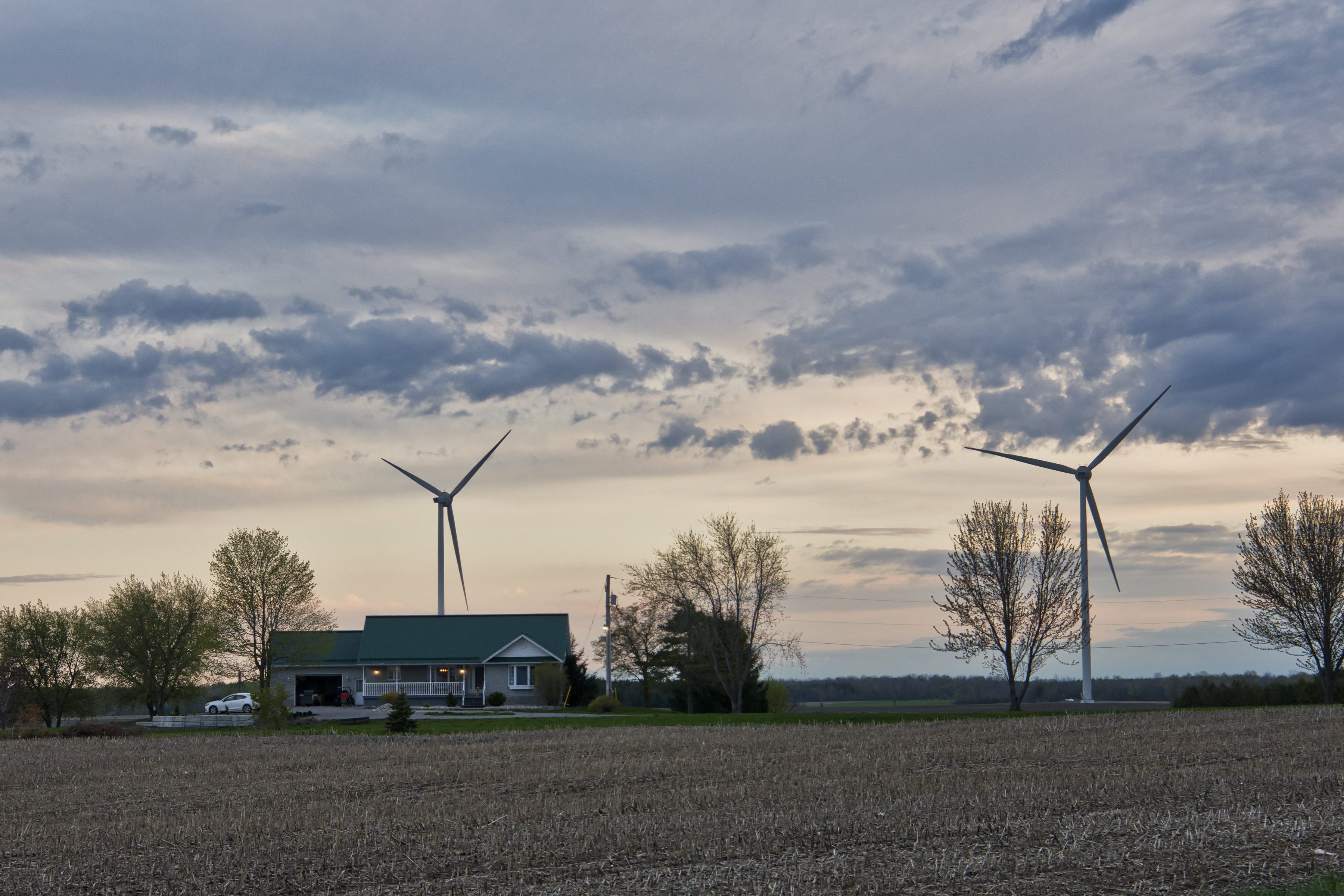
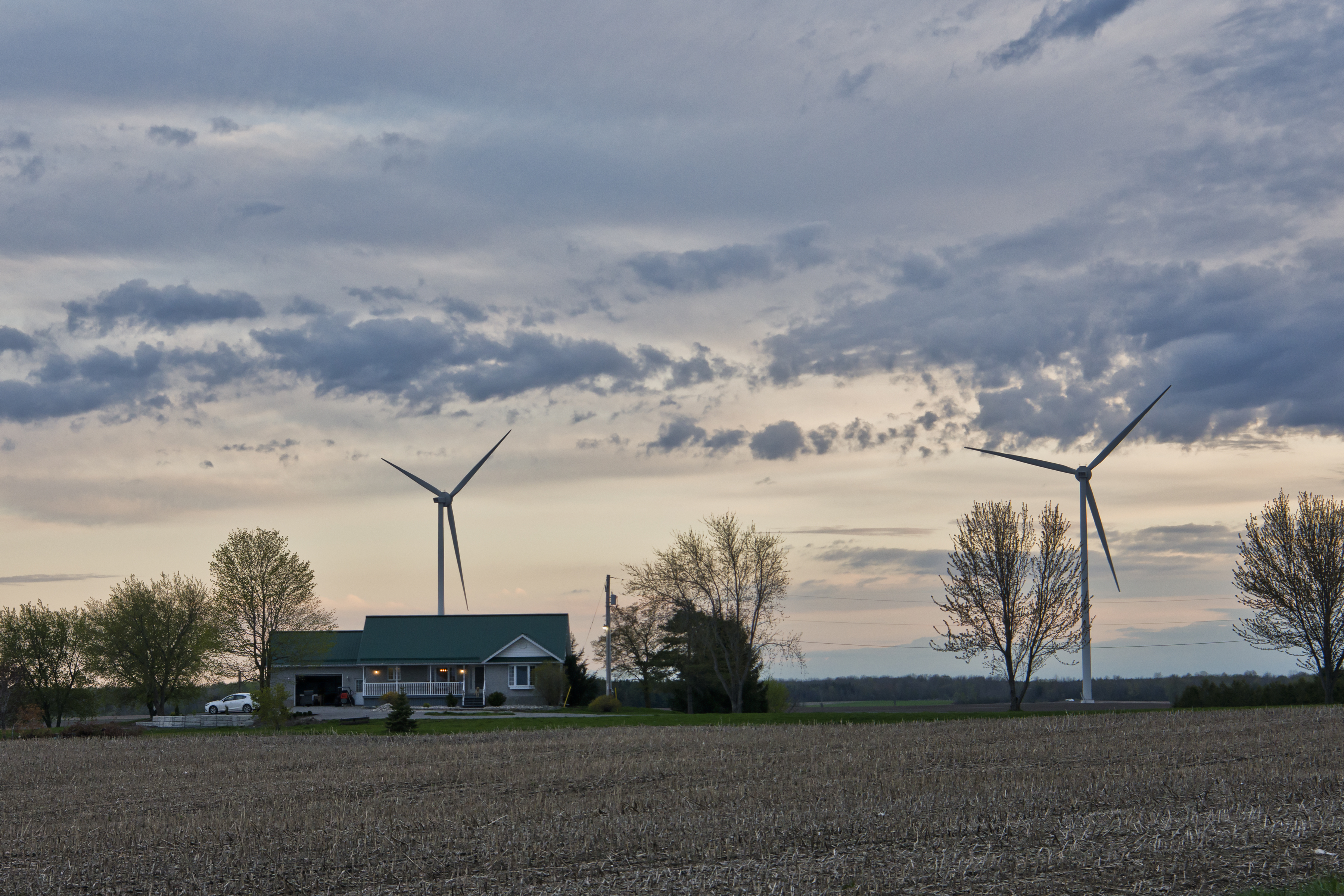
Photo: D. Larsen for Wind Concerns Ontario. Home inside Nation Rise power project, south of Ottawa

August 30, 2021

The founder of the Ottawa Renewable Energy Cooperative (OREC) has written a letter to the Globe and Mail calling for an entire grid of renewable energy, such as wind and solar, to replace the current system. An excerpt from the letter by Dick Bakker follows.

The traditional, unidirectional electricity system from big central generation sites, with top-down control, hopefully will be replaced with a new grid of distributed renewable generation, decarbonised and locally controlled. New entrants will bring the advanced technology that the traditional utilities resist and introduce local capital to address community level opportunities.

The regulators, pension funds and unions that have benefited from the past century or more of centralised planning must adapt, as their traditional solutions are simply too expensive and unreliable. Distributed renewables, with battery storage, optimized for the distribution network, and integrated with demand response are simply cheaper and more resilient.

Massive changes are coming to our electricity system; hopefully Canada can leap ahead of where we are today, by localizing most of the benefits.

The problem is, wind power for one is not cheap* and it is certainly not “reliable” as our experiences during the recent heat wave indicate. Ontario went more than eight days with barely a whisper of wind, yet we experienced peak demand periods. And that’s typical of wind power in Ontario: it comes during low demand periods of spring and fall.

As to “local” benefits, Mr. Bakker told participants in an online regional update meeting held by the Independent Electricity System Operator (IESO) last January, that anyone objecting to large-scale wind turbines was a “NIMBY”. They have some valid objections he said but in the main, opposition is “a knee-jerk reaction to industrialization.”

Industrialization.

He doesn’t plan to take into account any environmental or financial concerns Ottawa’s rural residents might have. His knee-jerk NIMBY response was in fact an answer to our question about the need for cost-benefit and impact analysis. He doesn’t want that. He won’t care if the people living in Kars, Osgoode, Carp, Dunrobin, KInburn or North Gower have concerns about noise, harm to wildlife, and impacts on our aquifer.

But the prime problem with this letter is that Mr. Bakker’s views ignore the reality of the electricity grid. Baseload power is needed, and wind and solar cannot do that, not can they replace anything. Wind did not replace coal in Ontario; nuclear and natural gas did.

The one word Mr. Bakker will not say is “nuclear” despite the fact that clean, efficient, reliable nuclear is a real answer to the Net Zero goal. Ontario’s power workers recently said, you can’t get to Net Zero without it.

Facts are simply beside the point for those pushing large-scale renewables.

*While wind power developers’ trade association the Canadian Renewable Energy Association or CanREA claims wind power is now inexpensive, they do not present truly levelized costing. Moreover, Eastern ONtario is a low wind resource area. Ottawa’s Pathway Study of Wind Power in Ottawa (2017) acknowledges that there will have to be financial incentives to lure wind power developers to the area.

OttawaWindConcerns@gmail.com

Open House for new Official Plan September 29

29 Sunday Aug 2021

Posted by Ottawa Wind Concerns in Uncategorized

≈ 1 Comment

Tags

Ottawa

The City of Ottawa has announced new dates for the revised Official Plan process.

Many citizens have provided comments on the new Plan. In a presentation by planning Staff on June 22nd, the City announced that plans for large-scale renewable energy power projects would be “directed” to Ottawa’s rural areas.

The revised draft Official Plan states that:

Renewable Energy Generation (in Section 4.11)

3) Renewable energy generation facilities that are subject to Provincial approvals will be permitted as a principal use within the following designations:

a) Rural Countryside;

b) Greenbelt Rural and Greenbelt Facility; and

c) Natural Environment Area sub-designation, subject to the policies of Subsection 7 .3.

4) Renewable energy generation facilities that are subject to provincial approvals and are subordinate to a principal use will be permitted within the following designations:

a) Agricultural Resource Area, only as an on-farm diversified use; and

 b) Rural Industrial and Logistics.

5) The following considerations will be used to establish zoning by-law provisions for such renewable energy generation facilities:

a) Limiting nuisance impacts. such as through siting and screening requirements;

b) Limiting impacts on significant natural heritage features and agricultural resource area lands; and

c) The ability to access the electricity transmission network and arterial roadways.

See the current version of Section 4, here

New date announcement:

In order to provide additional time for public review of the draft sections of the New Official Plan in advance of Committee and Council consideration of the final staff report, the Planning Committee co-Chairs and the Agriculture and Rural Affairs Committee Chair have agreed to move the joint statutory meeting of the Planning Committee and Agriculture and Rural Affairs Committee to October 14, 2021.

Please be advised of the following revised dates in respect of the consideration of the comprehensive final draft of the New Official Plan:

  • Wednesday, September 29th – Public Open House. The location and format of this meeting is to be determined. Details will be communicated at a later date.
  • Thursday, October 14th – Joint statutory meeting of the Planning Committee and Agriculture and Rural Affairs Committee, under the Planning Act, convened in accordance with Subsection 88 of the Procedure By-law pursuant to the delegated authority granted by City Council at its meeting on February 10, 2021. The location and format of this meeting is to be determined. Details will be communicated at a later date.
  • Wednesday, October 27th – City Council Consideration of the report on the final draft of New Official Plan.

It is our view that industrial-scale wind turbines are an industrial use of the land and should not be a permitted use.

Industrial-scale wind power is not “community” power

27 Friday Aug 2021

Posted by Ottawa Wind Concerns in Uncategorized

≈ 1 Comment

Tags

Ottawa, wind power

August 27, 2021

In a recent edition of Ontario Farmer, editor Paul Mahon mused about what it would be like if one or more Ontario communities could demonstrate local power generation. It would be a community effort, he said and worth a try.

Wind Concerns Ontario president and Ottawa resident Jane Wilson wrote this letter to the Ontario Farmer on the topic, which appears in the August 24th edition.

“Thank you for your comments in your most recent editorial, Ghost towns of Ontario. 


You said it would be interesting if “one village or small town [could be] a showcase for how community energy could work…a far better visual than all those wind turbines sitting idle in a steady breeze”.


That would be interesting; some municipalities have already tried it. Bancroft for example developed a hydro-electric facility that would have powered the town. It got no support from the McGuinty government and was dismantled, at a loss to the citizens.


Near Ottawa, the hamlet of Burritt’s Rapids proposed a run of river hydro facility that would provide reliable, clean power to its residents. What happened? Nothing. The Wynne and McGuinty governments were more interested in awarding huge above-market FIT and LRP contracts to large multinational wind power developers, for intermittent, unreliable power.


The City of Ottawa has embarked on a demonstration of clean power too, though it plans to encourage more intermittent wind and solar power with development being ‘directed’ to the rural areas in the city’s large rural area, and in nearby regions, the Planning department said in a bombshell announcement in June. No cost-benefit analysis, no impact analysis, and no review of how well wind turbines served Ontario in the years after the Green Energy Act in 2009. (A failure.) Most Ottawa rural residents are completely unaware of the City’s $57B energy transition plan, and of the fact that it includes 20 megawatts of turbines to be built within the next four years.


Somehow the meaning of the word “community” has been lost. Instead, more valuable farmland will be lost, and Ontario’s rural villages are threatened with industrialization and becoming energy resource plantations.”

Ottawawindconcerns@gmail.com

Wind power: not a solution to climate change

10 Tuesday Aug 2021

Posted by Ottawa Wind Concerns in Uncategorized

≈ 10 Comments

Tags

energy poverty, Ottawa

August 10, 2021

With the release of the latest report from the International Panel on Climate Change (IPCC) yesterday, which forecast more dire consequences from climate change, there may be more calls for wind power as a source of electricity.

The City of Ottawa’s “Energy Evolution” document calls for as much electrification as possible by 2050, and proposes the installation of as much as 3,200 megawatts of wind power (more than 700 wind turbines) to do that.

It won’t work.

Ontario has already gone through the experience of incorporating wind power into its power generation mix with disastrous results. Two Auditors General noted the lack of any cost-benefit analysis for the rush to wind power (Ottawa hasn’t proposed any such study either) and the enormous cost of wind power. To date, wind makes up less than 10 percent of Ontario’s power supply and its intermittency due to being dependent on weather means it often shows up when not needed.

Ontario has lost billions selling off surplus wind power we don’t need, and we regularly pay generators not to produce.

While people may call for the “clean” “green” expansion of wind power there are facts that must be acknowledged:

  • Wind power generation is intermittent and produced out of phase with demand
  • Wind power has a huge impact on the environment in terms of the harm to wildlife, the altered landscapes and the danger to wildlife as well as the introduction of harmful noise pollution to the environment
  • Wind turbines require a massive amount of land and represent “energy sprawl” in comparison with other forms of generation
  • Wind power projects are socially divisive as they must be forced on quiet rural communities, in effect industrializing them
  • Wind can’t “replace” anything. Coal was replaced in Ontario by nuclear and natural gas.
  • Wind power development cannot exist without subsidy and is very costly to electricity customers (i.e., everybody)

In short, wind doesn’t work.

So, while we are looking for ways to adapt to and perhaps mitigate climate change, or to take a more holistic approach, do everything we can to protect the environment, there are other alternatives.

Wind power is not the future: it is the product of a vigorous marketing program to which well-meaning people have fallen prey.

Let’s do better.

ottawawindconcerns@gmail.com

#energypoverty #winddoesntwork #energysprawl #environment #noise

City to work on wind turbine zoning regulations

28 Wednesday Jul 2021

Posted by Ottawa Wind Concerns in Uncategorized

≈ 2 Comments

Tags

environment, Health, noise, Ottawa, wind energy, wind turbines

bungalow2turbines

Too big, too close, too noisy: Ontario wind turbine regulations have failed rural communities. Will Ottawa be a leader in protecting health and safety?

July 28, 2021

In a letter to Ottawa Wind Concerns from Alain Miguelez, Ottawa’s Manager of Planning Policy and Resiliency, the timeline for the new Official Plan and public consultation is laid out. And, we have a better idea of when the zoning that will apply to wind power projects will be developed.

Here’s what he said:

The revised version of Ottawa’s new Official Plan will be posted on the Official Plan webpage very shortly. The new Official Plan will include policies that will:


·           Generally direct where large-scale renewable energy generation projects are to be located in the rural area;

·           Be consistent with the Provincial Policy Statement for renewable energy generation in prime agricultural areas; and  

·            Provide direction to establish zoning by-law provisions for renewable energy generation facilities to address impacts such as noise and shadowing.*

 Although other municipalities have more detailed policies about wind for their Official Plans, Ottawa will address this level of detail through the subsequent zoning bylaw as noted in the third bullet above.

 When the new Official Plan is released, additional detail will be provided about how to make public delegations at the statutory public meeting expected later this summer and at the Joint Planning and Agricultural and Rural Affairs Committee meeting, currently scheduled September 13-15. 

 Following Council adoption of the Official Plan, work will begin on the zoning bylaw.  Public and stakeholder consultation will be undertaken on any new proposed zoning provisions, including those related to wind. The new Official is not subject to appeal but the new zoning regulations will be.**

(*With respect to Mr. Miguelez, this statement is not correct: it is possible, we believe, to appeal sections of and amendments to the Official Plan though not, as he says, the entire Plan itself. ** There are many other impacts from wind power generators and the associated infrastructure.)

We have already written to Mr. Miguelez offering to provide information that we and Wind Concerns Ontario have about setbacks and noise regulations employed in other jurisdictions, including the European Union. We also recommend that the City talk to officials in other municipalities where people are already living with wind turbines, to find out what the issues are.

Again, the Ontario regulations for noise limits and setbacks are not adequate; they were established in 2009 (with more than a little input from the wind power industry) and have not changed in 12 years, despite province-wide problems with turbines.

The approvals process needs change, too, as does the process to appeal a wind power project approval—the current one is restrictive and unjust. We sent a letter to Ontario’s new environment minister yesterday, requesting change.

Ottawa has an opportunity to be a leader in developing zoning bylaws that will truly protect health and safety, and the environment.

OTTAWA WIND CONCERNS

ottawawindconcerns@ottawawindconcerns

Follow us on Twitter @northgowerwind and email us to join our email list

Ottawa’s Energy Evolution plan trashes city Healthy Environments policy

22 Thursday Jul 2021

Posted by Ottawa Wind Concerns in Uncategorized

≈ 3 Comments

Tags

environment, noise, Ottawa, Ottawa wind concerns, wind turbines

Industrializing rural areas and causing division among neighbours doesn’t make for a healthy, happy place [Photo Dorothea Larsen]

July 22, 2021

The City of Ottawa’s public health department has spent time putting together ideas for a healthy “built environment” which broadly includes where people live, work, and go to school, as well as areas in which “food systems” operate. The City has laid out characteristics that are important to a “healthy” built environment:

  • Promote being active, eating healthy and other healthy habits;
  • Encourage social connectedness;
  • Prevent injuries and promote safety;
  • Improve air, water and soil quality;
  • Provide access to natural and green spaces;
  • Ensure all members of the community have good opportunities to be healthy regardless of their age, income level, gender, ethnic background, or any other social or economic reasons.

However, there is a glitch.

The City’s Energy Evolution document, which calls for 20 megawatts of wind turbines (five or six 60-storey towers that are power generators) by 2025, 200 megawatts sometime thereafter, and a massive 3,200 megawatts (more than 700 industrial wind turbines) by 2050.

In a presentation on June 22nd, City planning staff confirmed that these renewable energy projects would be “directed” to Ottawa’s rural communities. Of course: these structures are so huge and problematic, it is impossible to locate them in the urban area, so rural citizens will get them.

Here’s the problem:

Wind turbine siting depends mostly on finding willing landowners (Eastern Ontario is a poor wind resource, so siting is not dependent on where there is more wind) which means the landowners who choose to allow them on their land are sacrificing their neighbours’ quiet enjoyment of their property—that doe not aid “social connectedness.”

There are safety concerns due to turbine blade failures, ice throw and fires; plus, the noise emissions are linked to stress or distress and can indirectly result in adverse health effects.

Next, turbines do not improve the quality of the air, water and soil: in North Kent Ontario, wind turbine construction and operation has been linked to water well failures. This is currently under a formal public health investigation. And, noise is a form of pollution.

Green spaces? Forget it: wind turbines are an industrial use of the land.

Last, wind turbines do not ensure health and equality; there will be dramatic stress as a result of the urban-rural divide, as quite rural communities will suddenly have huge industrial power generators forced on them.

So, out of six points needed for a healthy environment, the City’s plan to “direct” wind turbines to the rural communities (“That energy has to come from somewhere,” planning manager Alain Miguelez said in the June 22 presentation) violates five of them.

This plan should not even start without a cost-benefit analysis, impact analysis, public consultation and the finalization of protective zoning bylaws to regulate noise and setbacks between wind turbines and houses.

Now.

Read the Energy Evolution document here.

energy-transition-reportDownload

ottawawindconcerns@gmail.com

NOT a NO: Ottawa city staff respond on wind turbines

14 Wednesday Jul 2021

Posted by Ottawa Wind Concerns in Uncategorized

≈ 2 Comments

Tags

noise pollution, Ottawa, Ottawa wind concerns, renewable energy, wind power, wind turbines

City not procuring wind power directly, but open to developers [Photo Dorothea Larsen, turbines in North Stormont]

July 14, 2021

noise pollution, Ottawa, Ottawa wind concerns, renewable energy, wind power, wind turbines

Ottawa City staff have responded to queries about whether the City is planning wind turbines in the rural areas. Here is the response from a manager in the Climate Change and Resiliency Section.

Key point: the City of Ottawa is not directly procuring wind turbines BUT they are looking at where the turbines could go when developers come forward with proposals. That is a YES.

Response:

The City of Ottawa is not planning and does not have any intention of developing or installing large scale wind or solar renewable energy generation projects.

My team is responsible for developing and coordinating strategic policies, programs and plans to reduce greenhouse gas emissions and build resiliency to climate change in Ottawa.   As part of this work, my team leads the Climate Change Master Plan and is supporting the development of the new Official Plan.  Below is background information about both relate to wind projects.


Climate Change Master Plan


The City’s Climate Change Master Plan provides Ottawa’s overarching framework to reduce greenhouse gas (GHG) emissions and respond to the current and future effects of climate change.  As part of the plan, City Council aims to reduce GHG emission 100% by 2050. Energy Evolution is the action plan for how Ottawa will meet those targets.  It modelled 39 actions and their relative GHG emissions reductions to achieve the targets and identifies 20 priority projects* to accelerate action and investment over the next five years (2020 – 2025).  Both the Climate Change Master Plan and Energy Evolution identify embedding climate considerations in the new Official Plan as a priority project.


On January 1, 2019, the Green Energy Act was repealed which restored municipal authority over the siting of new renewable energy generation projects through amendments to the Planning Act. Residential and agricultural concerns about the siting of projects are now expected to be addressed through local municipal approvals. The current Official Plan and Zoning By-law are silent on renewable energy generation (REG).


Official Plan


The Draft Official Plan was released in November 2020 included REG as a Generally Permitted Use, but it did not specify where REG was permitted.  Through public consultation, staff received feedback that renewable energy generation policies in the Official Plan should align with Energy Evolution.


Since the Draft Official Plan was released in November 2020, staff has worked to add policies to direct where large-scale renewable energy generation projects can be located in the rural area.  The following describes the revisions:


The proposed policies direct where large-scale renewable energy generation projects as well as bio-energy projects are to be located in the rural area. It should be noted that such projects would also require a Renewable Energy Approval from the province.

The proposed policies are consistent with the Provincial Policy Statement for renewable energy generation in prime agricultural areas.

The proposed policies provide direction to establish zoning by-law provisions for renewable energy generation facilities to address nuisance impacts such as noise and shadowing. Public and stakeholder consultation will be undertaken on any new proposed zoning provisions following Council adoption of the Official Plan.


The revisions to the new Official Plan will be posted on the Official Plan webpage later this month.  When it is released, additional detail will be provided about how to make public delegations at the statutory public meeting expected later this summer.


Upon approval of the new Official Plan, large scale projects that are initiated by energy developers would still require approval by the Province (i.e. under the Renewable Energy Approval or Environmental Activity Site Registry process). However, there is currently no provincial policy or procurement mechanism that allows renewable electricity to be sold to the grid (i.e., there is no immediate opportunity for large scale wind or solar development in Ottawa). Staff are currently undertaking a preliminary assessment of renewable energy generation potential within the rural areas identified in the new Official Plan to better understand how the potential compares to the Energy Evolution model requirements.  This study is expected to be complete this summer.

………………..

So City staff are trying to deflect interest in and concern about high-impact wind power generation in our rural communities with a lot of words about the Official Plan.

The people of Ottawa generally and especially rural residents need to be able to discuss these proposals NOW. We also need the protective zoning bylaws NOW—if the City waits until proposals are made, they will be unable to enact anything, or the power developers can take legal action.

*One of the 20 projects is 20 megawatts of wind by 2025

WHAT YOU CAN DO:

Go to the City’s website and read the Official Plan draft Section 4.11 HERE.

Comment on it at newOP@ottawa.ca and copy your City councillor

If you can donate to our sign campaign, please send a cheque to Ottawa Wind Concerns with a note “Signs” to

Wind Concerns Ontario

PO Box 91047

RPO SIGNATURE CTR

KANATA ON K2T 0A3

Thank you!!!!!

(We are using WCO’s mailbox as we don’t have one)

Contact: ottawawindconcerns@gmail.com

Ottawa’s bombshell announcement to rural communities

23 Wednesday Jun 2021

Posted by Ottawa Wind Concerns in Uncategorized

≈ 1 Comment

Tags

Ottawa, renewables, rural, wind farm, wind turbines

Turbines near home in Nation Rise power project south of Ottawa. New setback rules needed. [Photo: Dorothea Larsen]

June 23, 2021

Last night the City of Ottawa announced in a meeting to update rural communities on the revised Official Plan that the development of industrial-scale wind power facilities will be encouraged, and that these will be “directed” to Ottawa’s rural communities.

Staff claimed that renewable energy development — wind and solar — are a provincial direction, and the City has no choice but to pursue this.

“That is completely false,” says Jane Wilson, resident of North Gower and chair of community group Ottawa Wind Concerns. “The province is actually committed to affordable and reliable electricity —that’s not weather-dependent intermittent wind power.

“The City seems to ignore the disaster that wind power was for Ontario, and the role it played in creating energy poverty by boosting electricity bills by 270 percent,” Wilson said. “Wind turbines also have high impact on the environment, producing disturbing noise emissions, and killing birds and bats, which are important to the ecosystem.”

In fact, Ottawa’s Energy Evolution report proposes as much as 3,200 megawatts of wind power for the capital area, as many as 700 powerful turbines. The plan calls for 20 megawatts by 2025.

“There is no cost-benefit or impact analysis in that report, and no full, honest accounting to the people of Ottawa as to how much this will cost us all. Funding is supposed to come from the federal government so every Canadian taxpayer as Ottawa repeats the failed Ontario experiment with wind power,” Wilson said.

Contact: Jane Wilson, OTTAWA WIND CONCERNS

ottawawindconcerns@gmail.com

While you were thinking about COVID, this happened

15 Tuesday Jun 2021

Posted by Ottawa Wind Concerns in Uncategorized

≈ 1 Comment

Tags

Ottawa, renewable energy

user

Taxpayers on the hook for Ottawa’s $57B plan for “energy transition”: Wind turbines, heat pumps and a 100 percent chance your electricity bills will go up … a lot. [Photo: Dorothea Larsen]

June 14, 2021

A few weeks ago, at the launch of the Ottawa Climate Action Fund, event chair Diana Fox Carney commented that probably, few people in Ottawa have actually read the city’s climate action strategy.

She is correct.

People should read it.

They really should.

The City has a Climate Change Master Plan, and last fall, while most of us were worrying about the pandemic, Council accepted a document titled Energy Evolution: Ottawa’s Community Energy Transition Strategy.

There is plenty to read in the 101-page document, but what concerned us was the strategy to achieve Net Zero by 2050 in part by using grid-scale or industrial-scale wind power. In fact, the strategy document calls for 20 megawatts (MW) of wind power by 2025 (see page 17). In today’s terms, with new turbines over 3 MW, that would be probably 6-8 large wind turbines.

But the document doesn’t stop there. In order to get to 100% emissions-free, Ottawa would have to do this:

“Wind generation reaches 3,218 MW by 2050 (approximately 710 large scale turbines)”. (See page 68, Energy Evolution)

The Energy Evolution document contains no cost-benefit analysis, no impact analysis in terms of what those turbines would do to the rural communities forced to have them (there will be no turbines in the Glebe), no full honest review of the cost to consumers of such a venture, and no analysis of environmental effects such as noise pollution, danger to wildlife, damage to aquifers, etc.

In fact, Energy Evolution completely ignores the entire Ontario experience with grid-scale wind power which has been a disaster, forcing electricity bills up 270 percent and creating “energy poverty.” It also repeats false claims for wind power job creation; that didn’t happen for Ontario, (high electricity costs drove business OUT), and it won’t for Ottawa. Look south to Nation Rise/Crysler Wind Farm where 130 MW of turbines will result in two jobs.

Climate action is the goal but several of the statements in this document are odd, and political in nature. Ottawa has to go 100-percent renewable, it says, to “offset” emitting sources of power on the provincial grid. If by that they mean natural gas, the opposite is true: because wind power is intermittent, weather-dependent and generated out of phase with demand, more wind power means more natural gas. Wind can’t replace anything. It didn’t replace coal in Ontario; nuclear and natural gas did that.

Higher electricity bills. More burden on taxpayers at all levels. Less reliable power. Industrialization of quiet communities and takeover of important foodland.

That’s what will happen if this goes ahead.

You should read this report.

Find it here: Energy Transition Report


OTTAWA WIND CONCERNS

ottawawindconcerns@gmail.com


Return of land-use planning for renewable energy means action needed now, Ottawa committee told

04 Thursday Apr 2019

Posted by Ottawa Wind Concerns in Ottawa, Renewable energy, Wind power

≈ 1 Comment

Tags

Ford governent, Green Energy Act, noise, Ottawa, Ottawa wind concerns, rural, Scott Moffatt Ottawa, Wind Concerns Ontario, wind energy, wind turbines

April 4, 2019

The medical report supporting Ontario’s wind turbine noise regulations is now 10 years old–the regulations need to be updated

Ottawa Wind Concerns executive members Jane Wilson and Michael Baggott spoke at the meeting of the Ottawa Agricultural and Rural Affairs Committee (ARAC) today, and alerted the Committee that action is needed following new amendments to regulations on wind turbines by the Ford government.

A wind power project was proposed in 2008 for the North Gower-Richmond area, with potential to spread to Osgoode. The project did not proceed when the Germany-based proponent failed to qualify for the last round of proposals under the Wynne government. It would have exposed hundreds of people to wind power generator noise — that fact was acknowledged at the time by the power developer.

“Today, we know a lot more about wind power,” said Ottawa Wind Concerns Chair Jane Wilson. “We know that many wind turbines in Ontario were sited improperly and we know that many mistakes were made — the former Energy Minister said that in 2017. And, we know there are thousands of records of noise complaints in Ontario, that have not been resolved, and are waiting on enforcement of regulations.”

Now, the new Ontario government is making changes but they require action from Ontario municipalities. Four new amendments to regulations are in response to Ontario municipalities demanding a return of local land-use planning powers, which were stripped from municipalities by the McGuinty government and the Green Energy Act.

“The amendments have not been proclaimed yet,” Wilson said, “but we need to be ready in the event a wind power proposal is made in future.”

One of the proposals is that power developers must balance any environmental impacts against the benefit of their proposed power project. “The problem is,” Wilson told the Committee, “Ontario’s rules on wind turbine noise and setbacks for safety are inadequate and out of date. The supporting document the previous government used is now ten years old, and does not reflect practices in other countries around the world.”

She added that the Ontario regulations on noise do not meet new guidelines published last fall by the World Health Organization.

“You have to remember that wind turbines produce a range of noise emissions— it’s not like barking dogs, or traffic.”

The amended regulations also require power developers to prove their project meets all zoning regulations locally. This is a problem, Wilson said, because under the Green Energy Act, municipalities had no say, so there was no reason for them to have any such zoning or bylaws as would apply to the huge wind power projects.

Ottawa Wind Concerns referred to a comment document prepared by Wind Concerns Ontario, which recommended municipalities ask the Ford government for a transition period in which they could begin the work on bylaws, and to develop new, adequate rules for setbacks between homes and turbines, and new noise limits for wind turbines.

Ottawa has already shown leadership Wilson said, in passing a bylaw asking for “substantive” input to wind turbine projects, and now is the time to take action to protect residents from the industrial-scale wind power projects.

Councillor Scott Moffatt thanked the presenters for the information, and also Wind Concerns Ontario for its work to protect rural communities.

Several North Gower residents attended the meeting.

OttawaWindConcerns@gmail.com

Presentation here: NOTES FOR ARAC presentation-Apr4-2019

Wind Concerns Ontario regulation summary document: Summary of Regulation Changes jan 3

← Older posts
Newer posts →

Recent Posts

  • Open letter to CAFES Ottawa
  • Ottawa Wind Concerns supports West Carleton residents
  • What does wind ‘farm’ construction really look like?
  • Unwilling Host communities surround Ottawa
  • How many birds do wind turbines kill?

Follow me on Twitter

My Tweets

Enter your email address to follow this blog and receive notifications of new posts by email.

Tags

Bob Chiarelli Green Energy Act IESO Ontario Ottawa Ottawa wind concerns wind energy wind farm wind power wind turbines

Contact us

PO Box 3 North Gower ON K0A 2T0

Blog at WordPress.com.

Privacy & Cookies: This site uses cookies. By continuing to use this website, you agree to their use.
To find out more, including how to control cookies, see here: Cookie Policy
  • Subscribe Subscribed
    • Ottawa Wind Concerns
    • Join 379 other subscribers
    • Already have a WordPress.com account? Log in now.
    • Ottawa Wind Concerns
    • Subscribe Subscribed
    • Sign up
    • Log in
    • Report this content
    • View site in Reader
    • Manage subscriptions
    • Collapse this bar
 

Loading Comments...