
Tags
agriculture, CAFES, farmland, food, food security, noise pollution, Ottawa, Ottawa wind concerns, rural, wildlife, wind power, wind turbines
We ask the question, How can an “environmental” organization claiming to protect the environment and support “sustainability” be promoting invasive industrial wind power?

March 3, 2025
CAFES Ottawa
Re: March newsletter and comments on renewable energy
We have just seen your most recent Bulletin to your followers and have several serious concerns about the content as regards “renewable energy” in Ottawa.
You say that City Council paused the siting of renewable energy projects, “effectively banning renewable energy projects.”
This is not accurate. The intent of that motion passed in 2023 was to protect the people of Ottawa in the event that proposals for industrial-scale wind power and solar power projects were made, in the absence of up-to-date, appropriate zoning protection.
This is the exact wording:
BE IT FURTHER RESOLVED that all future requests for MSRs continue to rise through the appropriate Committee of Council to allow for public engagement and consultation, including for LT2 RFP and all future IESO procurements, until such time as new direction is provided by Council
The motion was not a permanent “ban” as you so dramatically put it, but rather, a step taken to ensure that the City has appropriate regulations in place to protect citizens.
Instead of supporting a rigorous, detailed process to ensure appropriate siting, you say that CAFES wants to “minimize delay” and allow for approvals of industrial-scale or grid-scale power generation projects. This is very curious and would seem to conflict with your organizations’ other goals, namely protection of the environment and “sustainability.”
How is it that during the presentations to the Agricultural and Rural Affairs Committee on the Ferry Road property, CAFES spoke about saving the “frogs and turtles” but is also advocating for pushing through approvals of gigantic wind turbines which we know introduce harmful noise pollution to the environment, and pose a grave risk to wildlife including birds and bats?
You also say that communities across North America already have wind power sites that are “regulated and safe technologies.” This is far from the truth. Ontario now has 157 municipalities who have gone so far as to pass motions at Council designating themselves to be “Unwilling Hosts” to new wind power sites. In the main, these are communities that already have wind turbines, or are adjacent to jurisdictions that do, and they are acutely aware of the problems.
And in the United States, there is a running total of communities that have rejected new wind power sites outright, mainly due to environmental impacts. At present, the tally is 427 municipalities in the U.S.
Ontario’s environment ministry has more than 7,000 files of wind turbine noise complaints, including hundreds for the nearby Nation Rise wind power site, which had more than 140 complaints even before the project started commercial operation.
The problems with wind turbines are not limited to noise pollution. The municipality of Chatham-Kent has officially requested the Ontario government to take action on contaminated well water which an independent science panel found to be connected to the construction and operation of industrial-scale wind turbines in North Kent.
The American Bird Conservancy has stated that wind turbines are a serious threat to North American bird populations and advises officials to take great care in siting new power generation projects. Ottawa is on a major migratory bird pathway, and several species of bats (Important to the ecosystem and agriculture) are already endangered.
A recent cost-benefit analysis done by an economist showed that for Ontario at least, with its low wind resource, if you want effective action against climate change, and to provide a reliable source of power generation, wind power is not the answer. Add to that, wind power is an incredibly low power density source, meaning it uses up a great deal of land for little return.
I ask again, How can CAFES be supporting a rush to approvals for this industrial land use which offers little real benefit except profits for a few power developers and investors, with your other goals of environmental protection and sustainability?
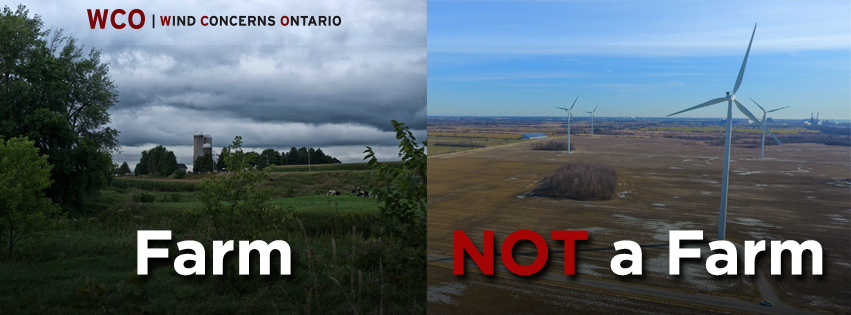
Security of our food supply is becoming a more important issue every day in Canada. Wind power is a low-density form of power generation which uses up a lot of land — how can you justify that along with your goal of promoting “sustainability”?
I invite you to reassess this situation and realize we have interests in common. Why not support making Ottawa a leader in environmental protection by choosing more effective, efficient forms of clean power generation, and ensuring people, wildlife and the environment overall have the best protection?

Jane Wilson
Chair, Ottawa Wind Concerns
ottawawindconcerns@gmail.com
 Ottawa Wind Concerns