• About
  • Donate!
  • EVENTS
  • Ottawa’s “Energy Evolution”: wind turbines coming to rural communities
  • Thinking of signing a wind turbine lease?
  • Wind Concerns Ontario
  • Wind turbines: what you need to know

Ottawa Wind Concerns

~ A safe environment for everyone

Ottawa Wind Concerns

Tag Archives: Battery storage

Community discussions marred by NIMBY insults in Ottawa

05 Tuesday Dec 2023

Posted by Ottawa Wind Concerns in Uncategorized

≈ 1 Comment

Tags

Battery storage, BESS, George Darouze, IESO, lithium battery fires, NIMBY, ONtario Landowners, Ottawa, Ottawa Wind Concerns Ottawa

Ottawa’s rural residents were concerned about proposals for huge battery storage installations. They didn’t get answers to their questions about risks and impacts—for that, they got called NIMBY [Photo: D. Larsen]

December 5, 2023

During the discussions about proposals for Battery Energy Storage Systems or BESS last week, it was disappointing to see the “NIMBY” insult being employed, especially by so-called environmentalists and community leaders.

One is a “Director of Emotional Health” for a community association, who thought it was perfectly healthy and supportive to brand her fellow West Carleton residents as “NIMBYs” just for expressing concern about the environment, health and the safety of cropland.

The NIMBY epithet was so prevalent in presentations to Ottawa’s Agricultural and Rural Affairs Committee (ARAC) that ARAC chair George Darouze said “We are not NIMBYs” and then went on with an elegant and important discussion of how rural residents are concerned about environmental impact for not just rural communities but for all of Ottawa.

He said rural residents were especially “sensitive” to environmental issues, which is why they had questions about the battery proposals.

Using the NIMBY insult says a lot about you

The term NIMBY is not just an insult to those who are concerned about a particular type of development, it also speaks volumes about the people who use it.

Environmental lawyer McRoberts:

To urban-based environmentalists, resistance to wind and solar farms is often seen as nothing more than Not in My Backyard attitudes (NIMBYism), and turbine opponent concerns are trivialised. … [M]any communities opposed to these projects have genuine concerns about impacts on environmental integrity, viewscapes, food production, and social fabric. … Moreover, the supposed “NIMBY syndrome” has been criticised by environmental justice scholars and others as an oversimplification of opposition that more accurately is based on a complex mix of factors including perceptions about a lack of procedural and distributive justice in approval processes. (McRobert, D., Tennent-Riddell, J. and Walker, C. (2016) Ontario’s Green Economy and Green Energy Act: Why a Well-Intentioned Law Is Mired in Controversy and Opposed by Rural Communities. Renewable Energy Law and Policy, 7, 99.)

So what were people who live in Ottawa’s rural wards worried about? Mainly environmental concerns, specifically from the risk of fire in a battery storage unit, and pollution from chemicals and water. They were also worried about noise and light pollution, and they had concerns about the proposed locations The battery storage installations would be an industrial land use, yet in many of the proposals were to be located near homes.

The risk of fire was not addressed satisfactorily by the proponents at the public meetings which, people felt, were rushed and held without wider notice.

The technology is new and there simply was not enough time to learn about it, or to get answers to very important questions about the risk of fire. At the ARAC meeting November 30, the leaders of 

Ottawa Fire Services said that the fire risk is a concern for fire services across Ontario. The Ontario Fire Marshal will release a report but it is not available yet — nevertheless, residents and municipal governments were expected to grant support in spite of questions about that risk.

Battery storage: myth or solution?

What are the battery installations supposed to do, anyway?

Shirley Dolan, appearing at ARAC as a Director with the Ontario Landowners Association, said that there had been no cost-benefit analysis presented for any battery storage proposal. In short, she said, there was no rationale for the installations, no explanation of costs or other impacts, no details beyond basic claims that the batteries would provide power during outages, and no reasons given for the locations proposed.

The claim that the batteries are needed for power outages warrants examination.

If we lose power as the result of a storm, the usual cause is damage to electricity infrastructure such as downed power lines. That was confirmed by Hydro One’s CEO earlier this year. So, if we have power lines or other features such as transformers damaged and not functional, the power (maximum of FOUR HOURS, by the way, not days) still cannot reach our homes.

So, again: what is the benefit? Where is the cost-benefit analysis to support these proposals?

NIMBY? or objection to a flawed process?

People in communities where battery storage was proposed said they were interested in the concept of the technology, but were concerned about the process created by the IESO. There was little opportunity for public input, as the comments and questions from the public at the proponent meetings don’t go anywhere and are not recorded—no response is necessary from the proponent. As Mr. Darouze pointed out, the process was rushed and provided very little information to both the public and the municipal government, which was expected to evaluate the proposals and grant support.

He said, correctly, that the city’s own assessment process is far more rigorous for any type of development than is required by the IESO. That is not acceptable, many thought.

As McRoberts wrote, what might be branded as NIMBYism is a concern about justice in procedural and approval processes. Much has been written about the public engagement process for energy development in Ontario, and the conclusion is that it has been seriously flawed. Two Auditors General in Ontario said that any energy proposal ought to have a cost-benefit analysis done: this has never happened, and is still not being done.

In his paper, “NIMBYs are not the problem”, Ottawa professor Stewart Fast wrote:

“If conflict is to be minimized and decisions given greater legitimacy, the public must be involved in the process. Unfortunately, Ontario’s approach to building wind generators and other renewable energy projects has ignored this tenet. Instead of more public participation, there has been less. … The approach was designed in the conviction that Ontario’s citizens were not to be trusted, and that anyone opposing wind energy was simply in the grip of NIMBYism. … Policy-makers must realize that not all citizens are selfish NIMBYs.” (Stewart Fast, Policy Options, IRPP.org, 2017)

The way forward in my view is to provide the public and our elected representatives with all the facts we all need to make a responsible, informed decision. One Rideau Lakes resident told Ottawa Wind Concerns, “Last week, I never even heard of BESS. This week, I’m going to meetings and writing letters!” (The project there has been withdrawn in the face of public opposition.)

Battery storage technology on grid-scale is relatively new and already there have been problems. A worldwide database documenting battery fires and failures lists more than 80 events so far. Battery storage developers say there is low risk, but not no risk.

Ottawa Fire Services told ARAC that there is no option but to let a battery fire burn while working to keep other equipment cool and to keep the fire from spreading.

Meanwhile, the emissions from battery fires include carbon monoxide, hydrogen fluoride, hydrogen chloride, and corrosive nitrogen dioxide. But to the “environmentalists”, their citizen neighbours and fellow rural residents who are concerned about these emissions are NIMBYs?

We ask, if the people and organizations who claim to want to help with climate change and protect the environment do NOT support protection of health, safety, and sanctity of the ecosystem, what IS their agenda?

ottawawindconcerns@gmail.com


Ottawa councillor on battery storage: better consultation needed, time to evaluate

17 Friday Nov 2023

Posted by Ottawa Wind Concerns in Uncategorized

≈ 1 Comment

Tags

Battery storage, BESS, clarke kelly, environment, fire, IESO, Ottawa

November 17, 2023

West Carleton Ward 5 Councillor Clarke Kelly has published his ward newsletter with a reasonable, well thought out comment on the Battery Energy Storage System (BESS) proposals now before the City of Ottawa.

An excerpt:

Battery Energy Storage Systems (BESS) 

There has been much talk in our community about Battery Energy Storage Systems, commonly called BESS. Over the last several weeks, I have been made aware of 3 different proposals situated in Ward 5 being brought forward to the IESO for consideration. As I have mentioned in previous statements, I am not opposed to the use of this technology. In fact, I believe that electricity storage will be vital in strengthening our power grid and essential to diversifying our energy sources through renewable energy sources. Last spring, I brought forward a motion that passed and did provide municipal support for a BESS system in our ward. However, the size of that proposed system was very small, being placed at a site that already had a small solar farm, no trees were being cut down, the proponent held multiple public meetings, and no concerns were raised amongst residents in the area. Given its minimal size, the good consultation work undertaken by the applicant, and the lack of public concern, I thought it was an excellent opportunity to see how these systems work and gauge the risks on a small scale.

The applications we are currently looking at are due in early December, yet the applicants waited until the last several weeks to engage with the public. One of the applicants has not held a public meeting or had any communication with my office, so they certainly are not getting my support. The result of these poor consultation decisions is that we are basically out of time to address the numerous and legitimate concerns in a real and meaningful way. At recent meetings, the community had some basic questions around fire safety, direct benefits to the community, the effect on wildlife and wetlands on or around the property in question, and end of life plans for the units. I don’t believe the answers provided had the level of detail, clarity, or certainty required to gain public support and put concerns at ease.

As I have stated, I am not fundamentally opposed to these systems and think the idea of storing power overnight when demand is low and using it during peak demand instead of selling it to the US at a loss is a good idea. But, I also place a lot of value on public consultation and respect for the community in which these companies wish to operate, and given that this technology is relatively new and that there have been serious documented challenges with these projects around the world, my expectation would be that consultation would be meaningful and respectful. In one case, the application hasn’t bothered at all, and in the other two, they clearly missed the mark when it comes to engaging the community and ensuring their concerns are addressed.

I really would like to support one of these projects as I believe in the idea and see the need. I also believe these companies should have come to the table six months ago to be able to answer questions in a detailed fashion and be prepared to present the necessary information and solutions ready to put in place. Many of these groups had not engaged with the Ottawa Fire Services before presenting to the public, and fire is a genuine concern with this technology. They also were astoundingly unable to explain to the community what they were getting in return for having this in their neighborhood or even how the tax uplift would work, given that the site would be taking up only a portion of privately held land. To put it bluntly, all three applicants were unprepared to address the concerns and questions of the community, which gives the sense that public consultation as an aspect of these projects is just a box to tick as part of their standard process. That’s not good enough for the people of West Carleton-March, and any company wishing to get our community’s support, or support from me as Councillor in the future, will come to the community much earlier and much more prepared; otherwise, they can expect the same response.

Not all of the feedback I have gotten about these systems has been negative, and I will soon be meeting with a group of people in our ward who support these systems. I look forward to that and future conversations with the community on how and where we can make these work. I will be supporting a Municipal Support Resolution for a BESS system close to the Trail Road Landfill Site in Ward 21, as will the ward councillor. Residents in that ward feel that it is an appropriate place for a system such as this, particularly in the early days of this technology when comprehensive solutions to the challenges they pose are still being refined and perfected.

So the Councillor is saying, the community has not been given enough time to evaluate the benefits and risks of these projects, and that while we might want to support them, we are simply now “out of time.” Note too that the Councillor echoes the advice we posted earlier this week, when economist Robert Lyman said Ontario needs to pilot a few battery storage projects to see how well they work, how much they cost, and how we can manage any risks associated with them.

Ottawa energy economist on battery storage: we need to know how much it costs

14 Tuesday Nov 2023

Posted by Ottawa Wind Concerns in Uncategorized

≈ 3 Comments

Tags

Battery storage, BESS, electricity bills Ontario, energy costs, IESO, noise, Ottawa, Robert Lyman, rural

And whether it will work. The Ottawa area has four active Battery Energy Storage proposals. But nobody knows whether BESS will do what the proponents say it will

November 14, 2023

The idea of Battery Energy Storage Systems or BESS has hit so fast, people don’t know what to make of it…and that’s the problem for proponents. (Most of whom are current and former wind power developers.)

There simply are not enough details about these projects from the technology used, to the risk of fire and other environmental hazards, noise, and impact on communities. That’s what proponents are hearing at the mandatory “community engagement” meetings held in rural Ottawa.

A big question is the cost, and whether these multi-million-dollar projects will be worth the price to Ontario’s electricity consumers. Proponents are currently vying for contracts with the Ontario Independent Electricity System Operator or IESO. Submissions are due December 12.

When wind and solar were being marketed as the solution to climate change, two Ontario Auditors General recommended to the McGuinty-Wynne governments that cost-benefit analyses should be done.

But it never was.

And now, here we go again.

Ottawa energy economist Robert Lyman says figures from the U.S. show that battery storage will be expensive, no question.

How much?

And at the moment, batteries can only provide power for a few hours at most. So, do they even work?

Here’s his comment:

Any plan to power an electrical grid with wind and solar generation and to eliminate the backup security of supply provided by fossil fuels like coal and natural gas must address the cost and feasibility of the battery storage needed. 

The only battery storage technology that is widely available for grid scale storage is lithium-ion. The US federal government’s National Renewable Energy Laboratory produces periodic reports on the current and projected costs of utility-scale batteries of the lithium-ion type. The most recent edition, from June 2021, gives the current average cost as approximately US $350 per kilowatt-hour. It projects declining costs over time, but those projections are speculative and do not recognize the actual trends in recent battery costs. For example, in 2020-2021, the average costs for lithium ion battery installations in New York state was US$464/kwh and in 2022, the price for contracts actually awarded increased to US$567/kwh.

Storage is extremely expensive and if generally used will drive up electricity costs significantly. They are by far the largest part of the costs of an electricity system that relies upon wind and solar generation for essential supplies. They also give rise to the need for much more transmission facilities, which also adds to the costs, although these costs are rarely if ever made public in advance. 

Lithium-ion batteries provide backup capacity for relatively short periods, usually measured in hours. However, variations in the demand for and supply of electricity due to weather or other events can occur over periods of days, weeks or even whole seasons. Lithium-ion batteries are incapable of providing such service yet, “long duration” battery technologies do not yet exist and are still at the research or pilot project stage.  

The system-wide addition of lithium-ion batteries could increase electricity bills by up to 20 times depending on how much storage is needed. Research on possible long-duration batteries is at the earliest stages, and nobody has any idea what, if any, technology might work or how much it might cost. 

 Before the province of Ontario starts building several battery-storage plants, it might be a good idea to build one pilot to find out if the darn thing works and is affordable.

–Robert Lyman, Ottawa

ottawawindconcerns@gmail.com

What do we know about Battery Energy Storage? Not much

01 Wednesday Mar 2023

Posted by Ottawa Wind Concerns in Ottawa, Renewable energy, Uncategorized, Wind power

≈ 3 Comments

Tags

Battery storage, Evolugen, IESO, Ottawa, renewables, Wind ConcernsOntario, wind power, wind turbines

And we better learn, fast.

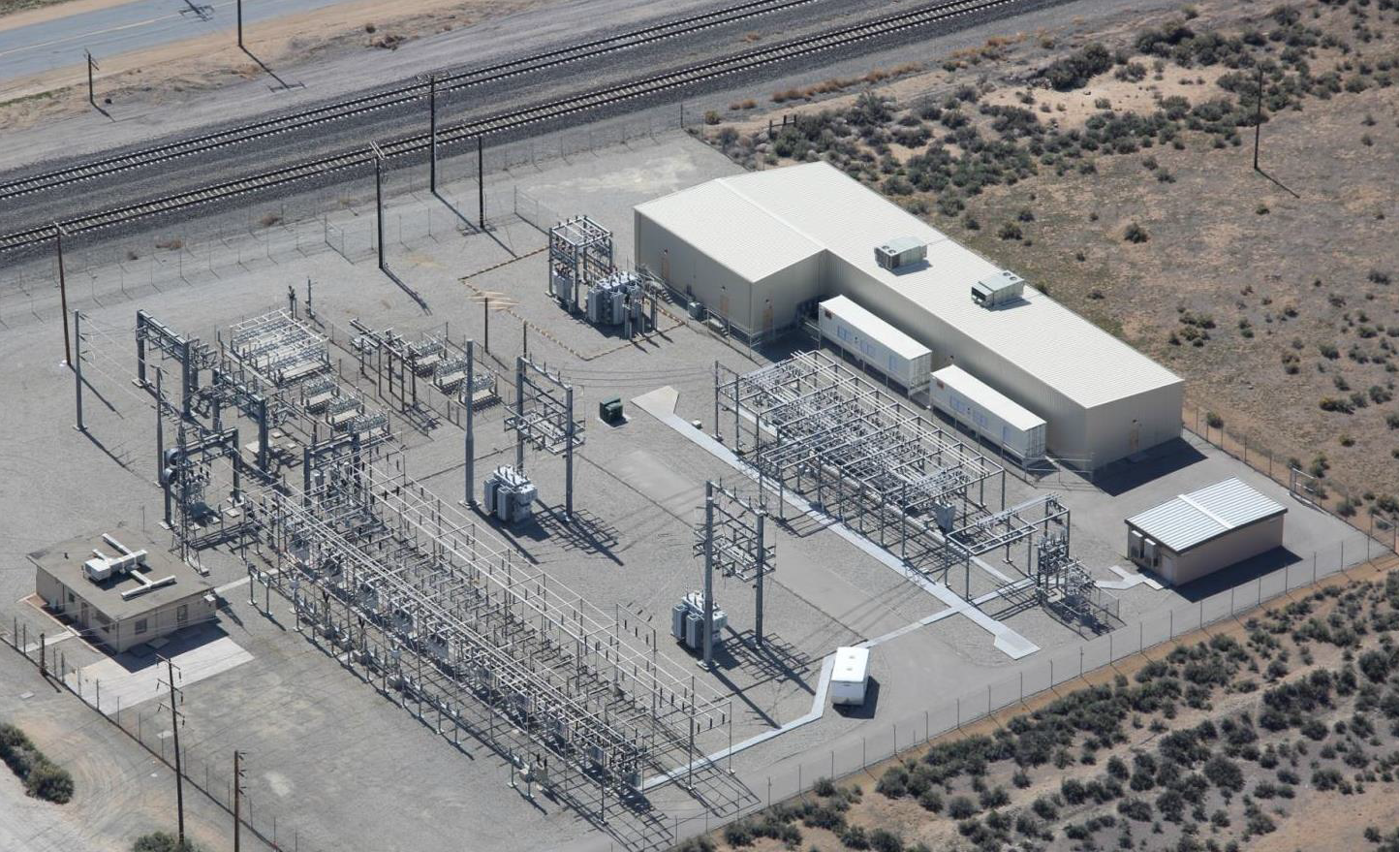
Overhead_View_of_Tehachapi_Energy_Storage_Project,_Tehachapi,_CA

Overhead view of 8-megawatt battery storage facility in Tehachapi, USA-Wikipedia image

March 1, 2023

Green energy’s newest fad is Battery Energy Storage Systems or BESS, which is being promoted as an add-on to existing renewable power generation facilities to counteract intermittency and unreliability.

Lobbyist the former Canadian Wind Energy Association, now the Canadian Renewable Energy Association or CanREA is actively pushing BESS, and has even gone so far as to add storage to its corporate banner as in, Wind- Solar- Storage.

CanREA is pushing for TEN TIMES the amount of wind and solar we already have in Canada (won’t that look pretty? And cost us all, too) which they say will work with storage.

However, even the influential lobbyist points to concerns. First, there is a need to develop technical requirements for connecting and operating battery storage facilities CanREA says in its document, Laying the Foundation:

“In many jurisdictions, the technical details may be included in the operating documents of the crown owned utility. However, there are other elements, such as the scope of safety and environmental reviews, that will need legislated descriptions or will need to be included in the regulatory documents of the relevant ministry or government department.” (Page 10)

And, CanREA says, regulating authorities may need to get ready for BESS and develop new competencies:

“In most jurisdictions, the mandate and/or rules of the regulating authority (for example the Alberta Utilities Commission) may need to be enhanced. Regulatory authorities will need sufficient expertise to fairly evaluate proposed energy-storage installations.”

Most people don’t know what they are

In response to inquiries from members and the public, and because BESS is being proposed as an add-on to existing wind power installations, Wind Concerns Ontario undertook a review of experiences with BESS around the world, and reports of citizen concerns, as well as the current regulatory environment.

As one Ontario mayor said, most people don’t even know what they are.

Wind Concerns Ontario prepared a report, with the following conclusions:

  • Standards needed for emergencies – As BESS technology is relatively new, standards are rapidly changing in response to emergency situations encountered. Even projects developed by companies with extensive battery experience have experienced serious emergency situations.
  • Not enough information – The requirements for submissions to the IESO and to municipalities when requesting support for the project include few, if any, details on the actual project. The process appears to assume that once a company is awarded an IESO contract based largely on price, it will then proceed to develop the real proposal which will be submitted into an undefined permitting process or processes. Based on information submitted, it is not clear how the IESO will be able to distinguish between proposals with higher prices because they meet high standards for development and those with lower prices because the proposal includes the minimal safety standards.
  • Renewable energy or not? – BESS systems are neither defined as a Renewable Energy project by Regulation 359/09, nor are they included in the list of excluded projects. The intention may be to omit further provincial review of these projects and to proceed directly to the municipal permitting process but this would be a recipe for substantial delay as the building officials in each host municipality (many of which are small rural municipalities) individually develop the expertise needed to assess and approve these projects.
  • Safety regulations? – While Ontario Hydro has defined setbacks from BESS installations to protect their infrastructure, there are no setbacks for BESS installations established in Regulation 359/09 to protect other buildings and activities. Similarly, there are no noise standards for these systems which could create a new enforcement challenge for Ministry of Environment, Conservation and Parks field staff.
  • Potential for support to be withdrawn – As the submissions to municipalities have included minimal information, there is potential for municipalities to rescind their support resolution once they learn the risks associated with these projects and the municipal resources that will be potentially required to deal with emergency situations.

Clearly, there are significant issues to be addressed.

Ottawa area BESS

Here in Ottawa, a BESS facility was proposed for the recent Independent Electricity System Operator (IESO) Request for Proposals for new power generation. Located on Upper Dwyer Hill Road in the West Carleton-March ward of the city, the project is unheard of for most people. The company proposing the project held a public meeting in December but no one showed up. The IESO allows proponents to simply post a notice on their project website. If you don’t even know about the project, how do you know to check for announcements?

Here are the minutes for the “public” meeting:

MINUTES OF PUBLIC COMMUNITY ENGAGEMENT City of Ottawa Public Meeting Location: Alexander Community Centre, 960 Silver St, Ottawa, ON K1Z 6H5 Time: 6-7 pm, January 12th, 2023

Long-Term Reliability Project Name: 548

Site Address: 650 Upper Dwyer Hill Road, Ottawa, ON K0A 1A0

Facility: Battery Energy Storage Systems (BESS)

Size: 4.99-megawatt/19.96-megawatt hour


Proponents Name: 1000234763 Ontario Inc.

Attendance: • 0 community members •

Proponent – 1000234763 Ontario Inc., representative: o John Kozak, COO • Proponent’s Contractor, SolarBank Corporation (previously, Abundant Solar Energy Inc.) o Tracy Zheng, CAO o Mila Simon, Project Coordinator 6ii

6:00 PM: meeting called to order. Proponent and SolarBank waited for 45 minutes for attendees. No community members showed.

6:45 PM: Meeting adjourned.

Another BESS proposal is in development in Cumberland, that would be ten times the capacity of the Upper Dwyer Hill Rd facility. In response an email inquiry, developer Evolugen (a division of huge power developer Brookfield) replied:

We are still in the process of assessing potential sites for a battery storage energy system in the Cumberland area to respond to two announced procurements (expedited and long-term RFP). The two public meetings were held to gauge at a high level the type of reaction that this type of project would receive in this area. We don’t record public meetings because they are drop-in format rather than a presentation with a Q and A. But we are always available for one-on-one meetings. The IESO released the final RFP document in early December, but had released a series of documents (including a draft RFP) in preceding months to provide project proponents with a general idea of what public outreach requirements were required.  

As we have more information – we will continue to update our project specific website: Rabbit Battery Energy Storage Project – Brookfield Renewable (evolugen.com)

Nick Best, Director, Public Affairs

Another inquiry, this time to the Cumberland Community Association, revealed the association knew nothing about the proposal. Or the public meetings that were held.

Time to ask questions

Doubtless, still more BESS proposals are coming with the IESO set to open up yet another RFP later this year, this time for almost twice as much new power generation.

We need to learn more to be able to ask questions about the impact of these installations on our communities, the environment, and our economy.

ottawawindconcerns@gmail.com


Prince Edward County rejects battery storage proposal

24 Tuesday Jan 2023

Posted by Ottawa Wind Concerns in Renewable energy

≈ 1 Comment

Tags

Battery storage, IESO, noise pollution, prince Edward County, Wind Concerns Ontario

RISK OF NOISE, FIRE, ENVIRONMENTAL CONTAMINATION FROM BATTERY STORAGE SYSTEM IS TOO GREAT, SAY RESIDENTS. FEW DETAILS AVAILABLE ON A LARGE ENERGY PROPOSAL: “A PIG IN A POKE”

January 24, 2023

Prince Edward County’s council voted to reject a proposal for a battery storage facility last week, responding to citizen concerns about safety and risk to the environment.

A Battery Energy Storage System or BESS was proposed by Compass Energy, a 250-megawatt facility that would require 15 acres of land.

Ontario’s Independent Electricity System Operator or IESO currently has a Request for Proposals for new power sources; the IESO is looking for 1,500 megawatts of power which can include new projects such as natural gas or wind, and battery storage. The proviso is that the power must be available immediately, and “can deliver a continuous amount of electricity to a connection point on a distribution system or transmission system for at least four consecutive hours,” according to the IESO website.

The Alliance to Protect Prince Edward County or APPEC* made a presentation to council with their concerns about the proposal.

“When we first became aware of the Picton BESS proposal a few months ago, we thought the scale of the project warranted evaluation,” says APPEC president and County resident Orville Walsh.

“We anticipated that [the proponents’] community meeting in early December would provide many of the project details. That turned out not to be the case. According to the project website, they will only be designing or planning the project after obtaining a contract from the IESO.”

Walsh told Prince Edward County Council that on investigation of available information about the project, APPEC concluded that there is no information on the type of equipment that will be used, battery manufacturer, or other electrical components; no information on the HVAC systems to be utilized; no information on fire detection systems, fire suppression systems and equipment; and no noise studies or estimates of environmental noise, which can be significant.

“We can only imagine the noise that could be generated on a warm summer night by 250 HVAC units,” Walsh told Council.

There are few specifics about this project, Walsh explained, “not a single drawing or illustration that is reflective of the scale of the project.  

“Giving support to a project lacking basic information is like buying a pig in a poke,” he said.

Residents of The County were also concerned about the loss of prime agricultural land to the power project, which contravened both the Ontario government’s statements and requirements of the local Official Plan to preserve valuable farmland.

Fire a significant risk

The danger of fire is an “unacceptable risk” from the lithium-ion batteries, say residents. Quoted in a report in the Picton Gazette, resident “Don Wilford spoke to council detailing the environmental devastation that would occur should a fire break out at a 250 megawatt BESS along with the immediate risk to the local population. ‘Lithium-ion batteries are susceptible to fires. At the scale proposed, the fire would cause vast damage to wetlands, the toxic gas plume requiring evacuation of Picton only 5 km away and potential loss of firefighters’ lives,’ Wilford stated.”

Others wondered why the Prince Edward County location was chosen as it is not near major population centres, or power generation facilities. (We can tell you: willing landowners, nothing else.)

Company competence in battery storage

Citizens also noted that the proponent had no experience with battery storage facility construction or operation. Resident Don Wilford presented background information about proponent Compass Energy: it is owned by Irving, which in turn is a subsidiary of Icon Infrastructure, a financial investment firm based in the U.K., he said.

“None of these companies have experience with battery storage,” said Wilford. “It appears Ontario is not only ignoring safer zinc battery tech but outsourcing a key component of its electricity infrastructure to financial companies that will outsource the tech to a systems integrator, which will, in turn, repackage lithium-ion units from major suppliers in China.”

It was also noted that the developer admitted there would be “zero” long term employment opportunities for people in Prince Edward County.

Valuable farmland would be lost

Sophiasburgh Councillor Bill Roberts tabled an amendment to deny the request from Compass Energy, listing all the concerns expressed by community members, adding that the Prince Edward Federation of Agriculture was also no in favour of the project.

“I’m opposed to the use of prime agricultural land for this purpose,” he said according to the story in the Picton Gazette.  “I support the Prince Edward Federation of Agriculture in their opposition to non-agricultural development on prime farmland. I hear convincing and alerting information from the audience,” said Roberts.

Roberts repeated the concerns about the risk of fire: “I find the potential fire and contamination risks compelling. Since 2017 there have been 50 such failures including five at large BESS installations. One in Australia required 150 firefighters and four days to extinguish,” decried Roberts. “I don’t get a sense the proponents have the experience to complete and operate such a giant BESS project. I was particularly struck by the IESO’s own connection site identification, wherein at least 166 sites were deemed preferable.”

Roberts amended motion was seconded by councillor John Hirsch and passed by council.

Battery storage proposals are popping up in various locations throughout the province, with varying degrees of success.

Other projects proposed include solar power facilities. One developer put forward a proposal to the council in Sault Ste Marie but declined to tell the elected representatives where the project might actually be located. At another meeting, the proponent claimed full support by local indigenous communities, which turned out not to be true: there had been some conversations including email exchanges, but there had been no formal expression of support.

In the U.S., energy commentator Robert Bryce says that community opposition to large wind and solar power projects is rising; people understand that wind and solar (and now, battery storage) do little to help the environment or alter climate change, but they do have significant environmental impacts, and cause electricity bills to rise. Bryce maintains a database of community rejections of large renewable energy projects.

Comment: frankly, we cannot understand why any company would want to take on the folks in Prince Edward County. They spent more than 10 years, and more than $1.5 million after-tax dollars to defend the County against four wind power projects, all of which would have endangered wildlife, wetlands, and the fragile topography of the area, as well as having a negative impact on tourism, for which the area is rightly famous.

contact@windconcernsontario.ca

*APPEC is a corporate community group member of Wind Concerns Ontario

REPOSTED FROM WIND CONCERNS ONTARIO with permission

Recent Posts

  • Open letter to CAFES Ottawa
  • Ottawa Wind Concerns supports West Carleton residents
  • What does wind ‘farm’ construction really look like?
  • Unwilling Host communities surround Ottawa
  • How many birds do wind turbines kill?

Follow me on Twitter

My Tweets

Enter your email address to follow this blog and receive notifications of new posts by email.

Tags

Bob Chiarelli Green Energy Act IESO Ontario Ottawa Ottawa wind concerns wind energy wind farm wind power wind turbines

Contact us

PO Box 3 North Gower ON K0A 2T0

Create a free website or blog at WordPress.com.

Privacy & Cookies: This site uses cookies. By continuing to use this website, you agree to their use.
To find out more, including how to control cookies, see here: Cookie Policy
  • Subscribe Subscribed
    • Ottawa Wind Concerns
    • Join 379 other subscribers
    • Already have a WordPress.com account? Log in now.
    • Ottawa Wind Concerns
    • Subscribe Subscribed
    • Sign up
    • Log in
    • Report this content
    • View site in Reader
    • Manage subscriptions
    • Collapse this bar
 

Loading Comments...