• About
  • Donate!
  • EVENTS
  • Ottawa’s “Energy Evolution”: wind turbines coming to rural communities
  • Thinking of signing a wind turbine lease?
  • Wind Concerns Ontario
  • Wind turbines: what you need to know

Ottawa Wind Concerns

~ A safe environment for everyone

Ottawa Wind Concerns

Category Archives: Wind power

Dairy farmer sues wind farm in France for harm to cows, business loss

10 Thursday Dec 2015

Posted by Ottawa Wind Concerns in Health, Renewable energy, Wind power

≈ 1 Comment

Tags

animal cruelty, infrasound wind farm, noise wind farm, wind farm, wind power

French dairy farmer sues over harm to cows from wind farm infrasound

Voice of America News, December 10, 2015

French Farmer Sues Wind Farm Over Stressed Cows

Published December 10, 2015

France, host of the U.N. climate conference, prides itself on being one of the world’s top innovators in wind energy technology, and wind turbines have become a symbol of the country’s commitment to clean energy. But the French government is coming under fire from farmers and others who say the proximity of some of the turbines is hurting wildlife and cattle. VOA Europe Correspondent Luis Ramirez went to a dairy farm in the northern Picady region to get one farmer’s story.

Click here for video report.

Related story here.

More unwanted turbines for Eastern Ontario?

02 Wednesday Dec 2015

Posted by Ottawa Wind Concerns in Renewable energy, Wind power

≈ 2 Comments

Tags

Eastern Ontario wind farms, Farmers Forum, leasing land for wind turbines, wind mills

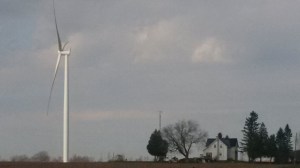
Wind turbine and home, Brinston, Ontario. Photo by Ray Pilon.

Wind turbine and home, Brinston, Ontario, south of Ottawa. Photo by Ray Pilon.

Unwilling host status no guarantee against provincial green energy push

Farmers Forum, December 2015

By Tom Collins
NORTH FRONTENAC — The province will announce new wind turbine projects by the end of the year — as many as 100 turbines or more —  but seven out of eight Eastern Ontario municipalities that could be impacted by those submissions voted against the projects.

The lone wolf was Addington Highlands Township, which approved two turbine projects with a combined 370 MW capacity in July.

Wind turbine developers submitted 27 wind turbine projects by the Sept. 1 deadline. Those proposals equal 2,246.8 megawatts (MW), but the province will approve only 300 MW this year, translating to about 100 large turbines.

North Frontenac mayor Ron Higgins is 80 per cent confident there won’t be turbines in his township as it has declared itself “an unwilling host” but says the province can ignore that designation. Ninety-one of 444 Ontario municipalities have declared themselves unwilling hosts to wind turbines.

Higgins hopes the province will choose to put turbines where they are wanted. The province says wind developers that came to an agreement with a municipality have top priority for approval.
North Stormont Township councillor and Avonmore dairy farmer Jim Wert said there is no upside to turbines for his municipality, but has no confidence that North Stormont will not be getting wind energy.

“I think the track record of this decision-making process speaks for itself,” he said. “If you take a look at the number of municipalities that have had unwilling host status in the past and the number of them that now have windmills, I think that speaks volumes.”

According to numbers compiled by the municipality last year, 89 per cent of wind turbines are operating in municipalities that don’t want them as 25 of 28 municipalities that have turbines declared themselves unwilling hosts.

Wind turbines are a divisive issue for farmers, said Wert. With turbines bringing in around $30,000 a year per turbine, farmers who have the option of having wind turbines are in favour of them, while neighbours who can’t have turbines may be upset about the potential impact on property values.

South Dundas Coun. Bill Ewing said his municipality is against turbines unless the province can justify a need for it. He didn’t believe municipalities would be successful in stopping turbines if they all joined forces.

“That would be like trying to stop the snow from falling,” he said. “They missed the boat when the province first said, ‘you shall.’ (Municipalities) should have all got together and said ‘whoa, stop this.’ It became a dictatorship then.”

The successful applicants are expected to be announced later this month. The seven applications for Eastern and East-Central Ontario include:

  • 35 to 100 turbines for a 200-megawatt project in Addington Highlands Township.
  • 40 to 60 turbines for a 170-megawatt project in Addington Highlands Township.
  • 35 to 50 turbines for a 150-megawatt project in the Nation Municipality, Russell Township, North Stormont Township, and Alfred and Plantagenet Township.
  • 29 to 50 turbines for a 100-megawatt project in North Stormont Municipality.
  • 50 turbines for a 100-megawatt project in North Frontenac Township.
  • 40 turbines for a 75-megawatt project in South Dundas Municipality.
  • 15 turbines for a 40-megawatt project in Nation Municipality and Champlain Township.

On that list, the Nation, North Stormont, North Frontenac and South Dundas have declared themselves as unwilling hosts. Russell Township has approved a powerline through part of its township, but not wind turbines. Champlain Township voted in favour of allowing a substation in its township, but not turbines. Alfred and Plantagenet Township wouldn’t have turbines as part of the project, and they have not made a decision on whether to support wind turbines. Alfred and Plantagenet Township originally approved the project on July 20, but rescinded its decision on Aug. 12 once they discovered the Nation — which would have the turbines — was against it.

According to the Canadian Wind Energy Association, there were 76 Ontario wind developments running as of September, with a total of 2,150 turbines and 4,042 MW capacity.

There are three operating wind turbine projects in Eastern Ontario — 86 turbines at Wolfe Island, 10 at Brinston south of Winchester and five at Loyalist Township west of Kingston.

The province has approved eight other Eastern Ontario projects that are not yet up and running.


OTTAWA WIND CONCERNS EDITOR’S NOTE: There are 8 turbines at Brinston, not 10. Of the eight projects approved for Eastern Ontario, all are under appeal.

Please see today’s news story on the Auditor General’s report on the surplus of power in Ontario, and how much wind power has cost the citizens of Ontario.

Wolfe Island “most dangerous” wind farm in North America for birds, experts testify at appeal hearing

02 Wednesday Dec 2015

Posted by Ottawa Wind Concerns in Renewable energy, Wind power

≈ 3 Comments

Tags

birds Ontario, endangered species Ontario, environmental damage wind farms, green energy, Ontario wildlife, wind farm, wind power, Wolfe Island, WPD Canada

South Shore Prince Edward County: how did a power plant get approved for this? [Photo Point 2 Point Foundation]

South Shore Prince Edward County: how did a power plant get approved for this? [Photo Point 2 Point Foundation]

This is a report from the appellant in the ongoing appeal of the 29-turbine White Pines project approved for Prince Edward County. Yesterday saw several avian experts testify, giving amazing testimony as to what damage could be done by turbines inside an Important Bird Area for migratory species.

Note the testimony about Wolfe Island (the turbines there are now relatively small compared to what is being built and planned) and how many birds are being killed; compare to the wind power developer’s consultant opinion. Not even close.

Report on Environmental Review Tribunal Hearing on White Pines Wind Project‏‎

December 1

by

Paula Peel, APPEC

 
On Day 15 three experts testified at the Environmental Review Tribunal (ERT) that the White Pines wind project will cause serious and irreversible harm to birds and bats.  All had concerns with the project location on a migratory path on Lake Ontario’s shoreline.
Dr. Michael Hutchins, Director of the American Bird Conservancy’s Bird Smart Wind Energy Campaign, was qualified as a biologist with specialization in animal behaviour and with expertise in the impact of wind energy projects on birds and bats.  Hutchins told the ERT that one function of the Bird Smart Campaign is to educate decision-makers so turbines are properly sited.   White Pines is in a high-risk location.  The U.S. Fish and Wildlife Service recommends three-mile setbacks from the Great Lakes.

​
​

Hutchins cited a recent U.S. study showing significant displacement of breeding grassland birds in mid-western states after turbine construction.  White Pines will displace protected Bobolink, Eastern Meadowlark, and Eastern Whip-poor-will, and the impact could easily result in local extirpation.

​
​

Bill Evans has researched the impact of wind projects on birds and bats for 20 years.   Evans was qualified as an expert in avian acoustic monitoring and nocturnal bird migration.  He said that a number of species in Ontario, including the Purple Martin, have been in long-term decline, but Stantec did no surveys of Purple Martins during late summer when large numbers gather to roost.  Evans noted that Purple Martin collision fatalities are increasing at Ontario wind facilities and made up 6.09% of all bird fatalities in 2014, higher than in 2012.

​
​

Dr. Shawn Smallwood was qualified as an ecologist with expertise in avian wildlife behaviour and conservation.   In addition to 70 peer-reviewed publications Smallwood has done research at the Altamont Pass Wind Resource Area (WRA), a California wind project notorious for its high raptor mortality.

Smallwood told the ERT that impact monitoring at Wolfe Island indicates the highest avian fatality rates in North America other than at Altamont Pass WRA.   Based on methods commonly used across the rest of North America, Smallwood estimates that Wolfe Island kills 21.9 birds per turbine per year.  This is nearly twice the number reported by Stantec using searches only within a 50-foot radius, less than half of standard practice.  Smallwood considers Wolfe Island one of the most dangerous wind projects on the American continent.
Smallwood predicts similar or higher fatality rates at the White Pines project because the peninsula is targeted by migrating birds as a stopover site and because the project is surrounded by wetlands and woodlands intensively used by birds.  Moreover, many threatened and endangered species occur at the site.  Stantec surveys for White Pines foster a high level of uncertainty because 19 hours of field work is so minimal that it’s impossible to know much about the large project area, and no surveys were done for migratory bats.

​
​

Smallwood recommends that serious and irreversible harm be assessed from a biological perspective, not from population analyses.   Fatalities cause harm not only to the individuals killed but also to mates, dependent young, and social connections.  Serious and irreversible harm should not be based only on body counts.

The ERT resumes Thursday, December 3, 10 a.m., at the Prince Edward Community Centre, 375 Main St., Picton.

Group files court documents for Judicial Review of wind farm approval

01 Tuesday Dec 2015

Posted by Ottawa Wind Concerns in Ottawa, Renewable energy, Wind power

≈ 1 Comment

Tags

CCSAGE, climate change, endangered species Ontario, environment, Environmental Review Tribunal, Garth Manning, green energy, Green Energy Act, prince Edward County, wind energy, wind farm, wind farm approvals, wind power

South Shore Prince Edward County: how did a power plant get approved for this? [Photo Point 2 Point Foundation]

South Shore Prince Edward County: how did a power plant get approved for this? [Photo Point 2 Point Foundation]

Canada Newswire

Community Group Files Request for Judicial Review of Wind Farm Approval Process

<!– newsBody:PICTON, ON, Nov. 30, 2015 /CNW/ – CCSAGE Naturally Green (CCSAGE-NG) filed notice in Divisional Court at Ottawa today for a Judicial Review of the Renewable Energy Approval process for the White Pines wind power project in Prince Edward County.

The power project was approved by the Ontario Ministry of the Environment and Climate Change in 2015. Part of that approval included a permit issued by the Minister of Natural Resources and Forests to “kill, harm and harass” endangered or threatened wildlife species.

CCSAGE cited institutional bias, lack of evidence-based studies, disallowance of municipal input, and denial of natural justice in its court filing, which is supported by 1,500 pages of evidence showing that the government’s approval process violated the constitutional rights of citizens and communities as well as international treaties and agreements.

Ontario’s Green Energy Act permits appeals of wind power approvals only on grounds of serious harm to humans, or serious and irreversible harm to animal and/or plant life and to the natural environment, but not on other grounds such as a biased approval process, violation of constitutional rights, harm to local economies, harm to heritage features, diminution of property values, or violation of international treaties and agreements.

CCSAGE NG Chair Anne Dumbrille said that because the existing appeal process is biased in favour of the wind power developers, the group’s only choice was court: “The Environmental Review Tribunal is a government-appointed panel that follows government rules with the result that it allows destruction of environmentally sensitive areas.  Our only recourse is to Canada’s courts, where rules of justice prevail,” she said.

CCSAGE NG was aided by research done by five students from the Osgoode Hall Law School at York University.

CCSAGE NG is a federally incorporated not-for-profit corporation working to ensure that “Green Energy” initiatives of governments and industry are safe and appropriate for the citizens, wildlife and the natural and heritage environments of Prince Edward County.

SOURCE Wind Concerns Ontario

–>

Wind farm appeal an eye-opener on government oversight of wind power approvals

01 Tuesday Dec 2015

Posted by Ottawa Wind Concerns in Renewable energy, Wind power

≈ 1 Comment

Tags

Alliance to protect Prince Edward County, endangered species Ontario, green energy, Ontario, Ontario Ministry of NAtural Resources, Ostrander Point, White Pines, wind energy, wind farm appeals, wind farm environmental damage, wind power

Birds? What birds? MNRF "biologist" misses the fact the South Shore of Prince Edward County is a designated Important Bird Area. It is slated for a 29-turbine wind power project.

Birds? What birds? MNRF “biologist” misses the fact the South Shore of Prince Edward County is a designated Important Bird Area. It is slated for a 29-turbine wind power project.

There have been many appeals of wind power project approvals in Ontario —in fact, almost EVERY approval since 2009 has been appealed—but the two appeals ongoing in Prince Edward County currently are interesting as they focus on the approval process for power projects, and the expert oversight citizens expect is part of it.

The truth? There isn’t any oversight.

If the wind power developer says there are not at-risk or endangered species in the project area then, well, they must be right. According to the government, that is.

The Ostrander Point appeal is now in its fifth phase as the appeal has bounced from the quasi-judicial Environmental Review Tribunal to court and back; we learned there that the Ontario Ministry of Natural Resources at-risk species expert recommended a permit NOT be granted for the power project.

And now, testimony at the White Pines appeal, also in Prince Edward County, is showing that the developer and the government relied on inadequate and incomplete consulting reports, and the government never bothered to check. At yesterday’s hearing, the MNRF “biologist” (she has a BA in environmental studies) stated that she was “unaware” that the County’s South Shore was a site for thousands of migratory birds, or that the power project site had several species of at-risk or endangered wildlife.

We invite you to follow along the excellent reports of the White Pines appeal (Ostrander Point has now heard all the evidence and will see final submissions in mid-January) at both Wind Concerns Ontario and the Alliance to Protect Prince Edward County (APPEC).

It’s an eye-opener.

[To donate to APPEC’s legal fight click here.]

Don’t repeat Ontario’s wind farm mistakes: Den Tandt to Liberals

01 Tuesday Dec 2015

Posted by Ottawa Wind Concerns in Health, Renewable energy, Wind power

≈ 1 Comment

Tags

green energy, Green Energy Act, Michael Den Tandt, wind farm noise, wind farms, wind power, wind power cost, Wynne government Ontario

3-MW turbine south of Ottawa at Brinston: Ontario not protecting citizens or economy [Photo by Ray Pilon, Ottawa]

3-MW turbine south of Ottawa at Brinston: Ontario not protecting citizens or economy [Photo by Ray Pilon, Ottawa]

From Wind Concerns Ontario http://www.windconcernsontario.ca

Writing in yesterday’s National Post and for Postmedia, Michael Den Tandt puts the climate change discussion into perspective and in particular, has some advice for the new federal government on “clean” energy:

The Liberals will also need to take pains to avoid the multi-billion-dollar waste and anti-democratic outrages of Ontario’s Green Energy Act, which foisted inefficient, hugely expensive and environmentally harmful wind turbines on rural communities that in many cases did and do not want them.

Expensive.

Inefficient.

Actually harm the environment they are supposed to be saving—that’s the lesson to be learned from Ontario about wind turbines. Only Ontario hasn’t learned it, as the government contracts for 300 more megawatts of wind in 2015 (well, turns out we have to wait now until 2016 to learn which communities are on the chopping block), and another 200 megawatts in 2016.

Worse, Big Wind has convinced the Ontario government that the 3-megawatt machines are actually “quieter” and so, new regulations for turbine noise, to be released shortly, will have zero mention of low-frequency noise or infrasound, because Big Wind says it isn’t a problem. Meanwhile, anecdotal reports out of communities where the 3-megawatt behemoths have begun operating show that people are getting sicker, faster.

Analysts such as Tom Adams, Scott Luft and Parker Gallant repeatedly offer data that shows wind power is not only high impact on the environment it is for very little benefit, and is costing Ontario in terms of competitiveness, and standard of living.

Ontario has a lot to learn, not the least of which is how to protect its citizens.

All residents in Prince Edward County turbine zone will be affected: acoustics expert

24 Tuesday Nov 2015

Posted by Ottawa Wind Concerns in Health, Renewable energy, Wind power

≈ 1 Comment

Tags

infrasound wind farms, Ontario Ministry of the Environment and Climate Change, White Pines appeal, wind energy, wind farm, wind farm noise, wind power, wind turbines, windmills

All residents in White Pines project area will be affected by noise: top acoustician testimony

Report on Environmental Review Tribunal Hearing on White Pines Wind Project

November 20, 2015

by

 Paula Peel, Alliance to Protect Prince Edward County (APPEC)

APPEC’s health appeal continued on Day 10 with expert witness Dr. Paul Schomer testifying before the Environmental Review Tribunal (ERT) on the White Pines wind project.  The remainder of the day was spent making adjustments to the schedule following WPD’s abrupt announcement that it was dropping an appeal of the disallowance of two turbines (T7 and T11) by the Ministry of Environment and Climate Change (MOECC).

Dr. Schomer, a former Standards Director of the Acoustical Society of America with 48 years’ experience in noise measurement, was qualified by the ERT as an expert in acoustics.  He told the Tribunal that all residents in the White Pines project area will be affected by audible and inaudible sound and a number of residents will be seriously affected.  The effects reported by people living near wind projects are similar in nature to the effects experienced by participants in a 1985 University of Toronto study on infrasound.  At lower levels and at higher levels of pure tone some participants experienced nausea and dizziness.  However, when overtones were added at higher levels, participants experienced headaches and fatigue.

Dr. Schomer considers that internationally-accepted noise standards and protocols are being flouted in Ontario.  For example, A-weighting is not supposed to be relied on when sounds have low-frequency content such as those emitted by industrial wind turbines.  Canada is one of the countries that voted for this rule.  He also calls for changes in current Ontario regulations to adjust up to 10 db(A) for wind turbine noise in rural areas.  Other suggested adjustments include up to 3 db(A) for weather conditions and 3 to 4 db(A) for locations downwind of turbines.   Dr. Schomer is highly critical of WPD’s current predicted average sound as it merely indicates that 50% of the time 50% of the residents will be exposed to sound above or below the limit.  The wind industry should be held to a higher level of accountability: db(A) limits should be met 95% of the time.

Dr. Schomer pointed to a very important figure in the Health Canada Report.  Only 1% of people are shown to be highly annoyed at 30 – 35 db(A) sound levels.  However, at 35 – 40 db(A) the number jumps to 40%.  Dr. Schomer sees this as evidence of a community response to wind turbine noise, and that what Health Canada says, what independent acoustic experts say, and what communities say should carry weight in Ontario.

Through experience Dr. Schomer has found that when community responses disagree with the physics, the physics is usually wrong.  This has been confirmed by his involvement in six studies of wind farms, including the 8-turbine Shirley Wind Farm in Wisconsin where three families abandoned their homes and about 60 other people reported adverse health effects.

The ERT continues next week. 

Wind farm bid announcement postponed to March 2016

24 Tuesday Nov 2015

Posted by Ottawa Wind Concerns in Renewable energy, Wind power

≈ 1 Comment

Tags

FIT contracts, IESO, Large Renewable Power projects, wind farm bids, wind farms Ontario

Re-posted from Wind Concerns Ontario

As if the process for wind power siting and approval wasn’t slanted enough in the favour of the corporate wind power developers, now the Independent Electricity Systems Operator (IESO) has announced that because so many bids were received for contracts, it needs more time to determine the successful bidders.

That means, Ontario communities will not know until March 2016, whether they have been selected to be transformed into an industrial power location.

See the IESO announcement here.

IESO may be contacted at LRP@ieso.ca

Ontario turbine noise regulations not adequate for health WCO tells MOECC

24 Tuesday Nov 2015

Posted by Ottawa Wind Concerns in Health, Renewable energy, Wind power

≈ 2 Comments

Tags

acoustics, expert testimony turbine noise, Ontario health, Ontario Ministry of the Environment and Climate Change, White Pines appeal, wind farm, wind farm noise, wind turbine noise

Listen to experts on turbine noise to protect health: Wind Concerns Ontario to MOECC

November 24, 2015

Wind Concerns Ontario has written to the Green Energy Approvals section of the Ministry of the Environment and Climate Change, following testimony from acoustics experts at the appeal of the White Pines wind power project last week. We demanded that the MOECC review the testimony of the witnesses, specifically that Ontario’s noise regulations are inadequate to protect health, and apply the information to the current review of noise regulations for wind turbines in Ontario.

The letter has been received and acknowledged.

The letter follows.

Stephanie Liu

Senior Program Advisor

Ministry of the Environment and Climate Change

Environmental Programs Division, Modernization of Approvals Branch, Green Energy Approvals,

135 St. Clair Avenue West Toronto Ontario M4V 1P5

November 20, 2015

RE: NOISE GUIDELINES FOR WIND POWER PROJECTS

We are aware that the comment period for the proposed amendments to current noise guidelines for wind power projects has closed; however, there is testimony being given at the appeal of the White Pines project in Prince Edward County that is germane to your review, and should not be overlooked.

Several experts in acoustics, who have technical experience measuring the noise and low frequency noise emissions from wind power projects, have testified over the last few days to the following key points:

  1. The Ontario regulations are inadequate to protect health
  2. The Ontario regulations rely heavily on A-weighted measurement which is not adequate or appropriate (this fact was already mentioned in the federal government funded report from the Council of Canadian Academies)
  3. Wind power developers’ predictions for noise are not always accurate and again, seek to conform to the inadequate regulations of the Ontario government
  4. The Health Canada study of wind turbine noise and health clearly shows there are problems after 35 dB


What follows is a citizen report of testimony given by Dr Paul Schomer, an eminent acoustics professional.

APPEC’s health appeal continued on Day 10 with expert witness Dr. Paul Schomer testifying before the Environmental Review Tribunal (ERT) on the White Pines wind project.  The remainder of the day was spent making adjustments to the schedule following WPD’s abrupt announcement that it was dropping an appeal of the disallowance of two turbines (T7 and T11) by the Ministry of Environment and Climate Change (MOECC).

Dr. Schomer, a former Standards Director of the Acoustical Society of America with 48 years’ experience in noise measurement, was qualified by the ERT as an expert in acoustics.  He told the Tribunal that all residents in the White Pines project area will be affected by audible and inaudible sound and a number of residents will be seriously affected.  The effects reported by people living near wind projects are similar in nature to the effects experienced by participants in a 1985 University of Toronto study on infrasound. 

At lower levels and at higher levels of pure tone some participants experienced nausea and dizziness.  However, when overtones were added at higher levels, participants experienced headaches and fatigue. Dr. Schomer considers that internationally-accepted noise standards and protocols are being flouted in Ontario.  For example, A-weighting is not supposed to be relied on when sounds have low-frequency content such as those emitted by industrial wind turbines.

  Canada is one of the countries that voted for this rule.  He also calls for changes in current Ontario regulations to adjust up to 10 db(A) for wind turbine noise in rural areas.  Other suggested adjustments include up to 3 db(A) for weather conditions and 3 to 4 db(A) for locations downwind of turbines.   

Dr. Schomer is highly critical of WPD’s current predicted average sound as it merely indicates that 50% of the time 50% of the residents will be exposed to sound above or below the limit.  The wind industry should be held to a higher level of accountability: db(A) limits should be met 95% of the time.

Dr. Schomer pointed to a very important figure in the Health Canada Report.  Only 1% of people are shown to be highly annoyed at 30 – 35 db(A) sound levels.  However, at 35 – 40 db(A) the number jumps to 40%.  Dr. Schomer sees this as evidence of a community response to wind turbine noise, and that what Health Canada says, what independent acoustic experts say, and what communities say should carry weight in Ontario.

Through experience Dr. Schomer has found that when community responses disagree with the physics, the physics is usually wrong.  This has been confirmed by his involvement in six studies of wind farms, including the 8-turbine Shirley Wind Farm in Wisconsin where three families abandoned their homes and about 60 other people reported adverse health effects.   

We would ask that the Ministry be certain to review and consider this important evidence in its review of the noise guidelines for wind power projects, which are in no way “farms.”

Just this past week, Wind Concerns Ontario has learned of seven families forced to leave their homes in the area of the Goshen project; another half-dozen families are leaving their homes behind in West Grey. This is all due to the noise experienced.

This is a matter of grave concern, and we hope the government is sincere when it says its mission is to “protect the environment” which also means, the environment people live in.

Thank you.

Jane Wilson, RN

President

Wind Concerns Ontario

windconcerns@gmail.com

PO BOX 509 250 Main Street Wellington Ontario

Environmental groups “shockingly silent” on wind farm bird slaughter says Senator

17 Tuesday Nov 2015

Posted by Ottawa Wind Concerns in Renewable energy, Wind power

≈ 1 Comment

Tags

bird kills wind farms, Bob Runciman, David Suzuki Foundation, environment, Important Bird Areas, wind energy, wind power, wind turbines, World Wildlife Fund Canada, Wynne government

Birds killed by hundreds of thousands, including hawks and eagles. Cats kill more, says pro-wind

Birds killed by hundreds of thousands, including hawks and eagles. Cats kill more, says pro-wind

Kingston Whig-Standard, November 16, 2015

A Conservative senator is calling out large environmental groups for their silence on the impact of wind turbines on bird populations.

Ontario Senator Bob Runciman, who in 2011 introduced a motion that was unanimously passed by the Senate calling for a moratorium on wind turbine developments in Important Bird Areas, said large environmental groups, such as the World Wildlife Fund and the David Suzuki Foundation have not addressed one of the biggest criticisms of wind energy.

“Thousands of birds are being needlessly slaughtered simply because these industrial wind farms are located in the wrong places,” Runciman wrote in a letter Monday. “Yet the very organizations dedicated to protecting wildlife have been shockingly silent. I’d like to know why.”

In an interview with the Whig, Runciman said the impacts on bird and bat populations has been ignored by groups such as the World Wildlife Fund Canada and the David Suzuki Foundation.

“Organizations that have essentially been silent on this. I think that has had a positive political impact for the government,” Runciman said.

“There’s simply not the recognition levels raised and no real effort to make people aware of it or express concern themselves as an organization.”

Runciman said those groups do not want to be appear to be opposed to green energy and do not want to get on the wrong side of the Liberal government.

Runciman also said larger environmental groups are based in large urban centres, such as Toronto, while wind energy projects are being proposed or built mainly in rural areas.

“I’m not talking about green energy itself, I’m talking about putting these turbines in these areas where they are going to kill thousands and thousands of birds and bats and jeopardize a significant amount of endangered species,” Runciman said.

Gideon Forman, a climate change policy analyst with the David Suzuki Foundation, agreed that wind turbines shouldn’t be placed in sensitive bird and bat areas.

But Forman said the impact on bird and bat populations should not be used to derail efforts to introduce more renewable energy in Ontario.

“Windmills do kill some birds but you need to put that in context,” Forman said.

“The greatest threat to birds, and indeed other wildlife, will be climate change so we absolutely need to ramp up properly sited renewables. We need to transition away from fossil fuels to renewable energy source, among them wind.

“We do need to put them in the right places. An important bird area is not the right place.”

Forman said research has indicated the number of birds killed by windmills is “tiny” compared to the number killed by flying into buildings and high tension power lines, pesticide use, vehicles and house cats.

“You need to put it in that context.”

Forman said the Suzuki Foundation is a charity and is non-partisan and has members in all areas of the country.

The provincial government is currently evaluating proposals from more than 40 companies bidding for large renewable energy contracts. Of the 565 megawatts of renewable energy the contracts are expected to produce, 300 megawatts is to come from wind energy.

Wind energy projects have been proposed, approved or built for areas stretching from Prince Edward County, Greater Napanee, Amherst Island, off shore near Main Duck Island and on Wolfe Island.

elliot.ferguson@sunmedia.ca

← Older posts
Newer posts →

Recent Posts

  • The stats tell the story: wind doesn’t work
  • Wind power locally: reliably unreliable
  • Has Ottawa lost its focus on city priorities?
  • Pro-wind groups in Ottawa collaborate to “educate”
  • Thinking of signing for a wind turbine lease? Better get informed to protect yourself

Follow me on Twitter

My Tweets

Enter your email address to follow this blog and receive notifications of new posts by email.

Tags

Bob Chiarelli Green Energy Act IESO Ontario Ottawa Ottawa wind concerns wind energy wind farm wind power wind turbines

Contact us

PO Box 3 North Gower ON K0A 2T0

Blog at WordPress.com.

Privacy & Cookies: This site uses cookies. By continuing to use this website, you agree to their use.
To find out more, including how to control cookies, see here: Cookie Policy
  • Subscribe Subscribed
    Ottawa Wind Concerns
    Join 377 other subscribers

    Have a WordPress.com account? Log in now.

  • Ottawa Wind Concerns
    View site in Reader
    Manage subscriptionsSign upLog in
    Report this content
    Collapse this bar
Loading Comments...