
• About
  • Donate!
  • EVENTS
  • Ottawa’s “Energy Evolution”: wind turbines coming to rural communities
  • Thinking of signing a wind turbine lease?
  • Wind Concerns Ontario
  • Wind turbines: what you need to know

Ottawa Wind Concerns

~ A safe environment for everyone

Ottawa Wind Concerns

Category Archives: Rural issues

Local investor consortium plans bids for power contracts

05 Monday Aug 2024

Posted by Ottawa Wind Concerns in Ottawa, Renewable energy, Rural issues, Uncategorized, Wind power

≈ 4 Comments

Tags

IESO, noise pollution, OREC, Ottawa, Ottawa wind concerns, rural, unwilling host, wind energy, wind turbines

Just “another form of farming” investor group claims, says it will bid in next IESO round
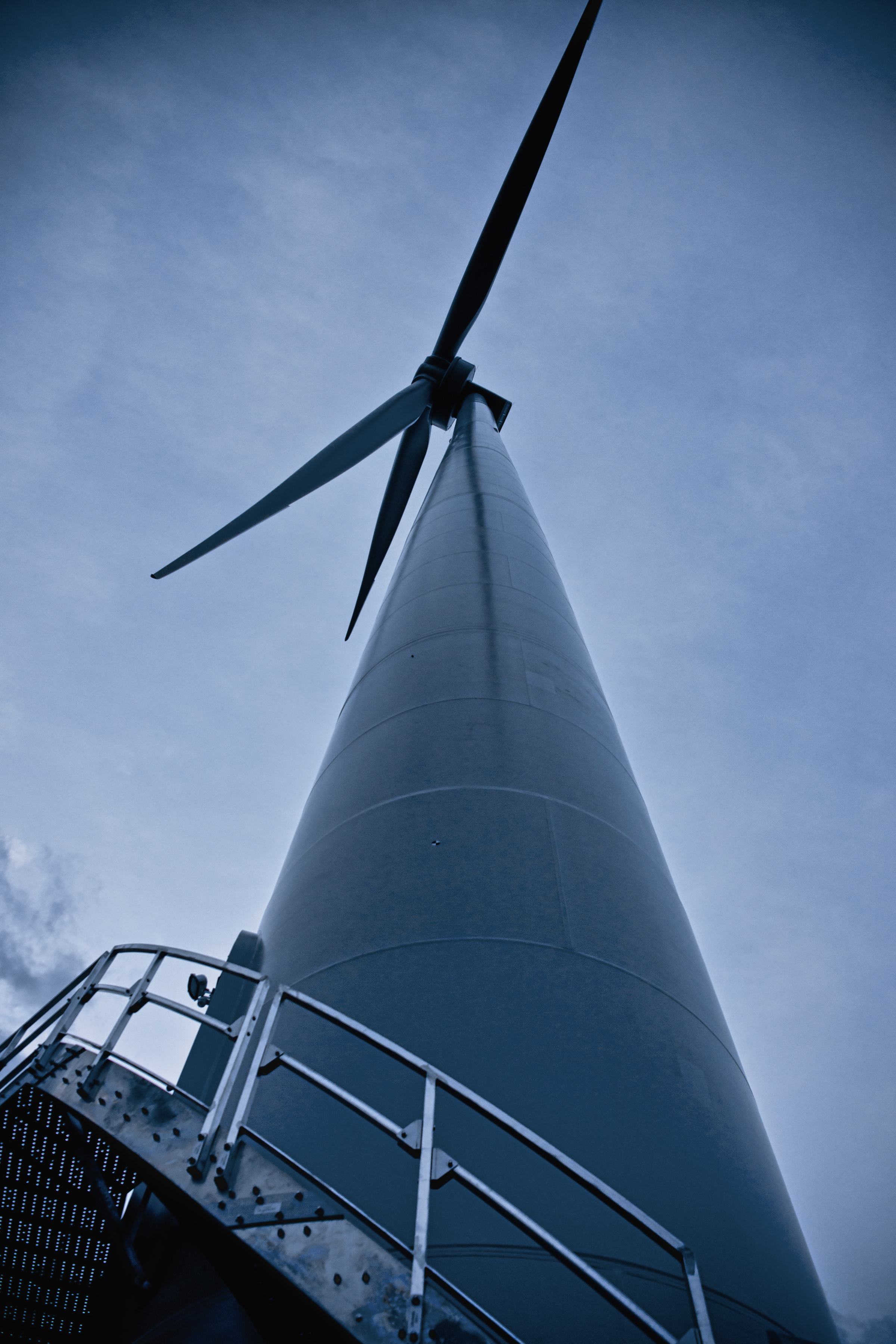
Industrial wind turbine just south of Ottawa: industrial land use

Following a web event held by the Independent Electricity System Operator or IESO a few weeks ago, Ottawa-based investor consortium Ottawa Renewable Energy Cooperative filed a comment in which it stated the group plans to bid for renewable energy projects, when the IESO releases its next Request For Proposals.

OREC already has invested in 24 renewable energy projects in Ontario, mostly solar, but also two small wind turbines, in the Kincardine and Bluewater areas of western Ontario (Huron County).

OREC’s comments to the IESO include the claim that it intends to bid for contracts. It acknowledges community opposition to some types of renewable energy development but claims it can avoid that by building smaller projects that will not attract opposition. The group correctly states that opposition to the Battery Energy Storage Systems or BESS was aided by the inability of developers to provide answers to citizen concerns.

OREC’s comments follow. Emphasis in italics is ours.

Concern 1: We previously noted a qualification bias in LT2 material in favour of indigenous engagement, including indigenous participation as co-proponents. We wish again to request that community-based investment entities such as OREC will be granted equivalency to indigenous participation in terms of rated criteria points as well as set-asides, particularly if such set-asides will be structured to incentivise partnership with indigenous communities. Our question is, “why not community groups too?”

Concern 2: Rural Ottawa is still reverberating from the process of approving large BESS contracts in LT1. Much negative feeling has grown since November 2023 when a plethora of Open House events were held in Ottawa’s rural areas and developers were not ready with adequate answers about appropriate project scale and risks to communities. OREC is monitoring continuing conversations among opponents and their municipal representatives, and we anticipate greater opposition to LT2 projects. OREC believes a development model involving multiple small projects on distribution lines, funded by community investors, will attract significant interest within municipalities. This approach will attract municipal councils to the benefits of local economic activity, and the virtuous loop of generating energy locally, thereby relying less on large energy sources from outside community boundaries. OREC believes that scaling generation and BESS units such as OREC is proposing, meaning smaller, more widely distributed locally owned projects will attract positive attitudes, especially within rural areas, to what is effectively another form of farming. OREC recommends to the IESO that future energy procurements accommodate smaller scale projects, particularly clusters of small projects that have commonality of ownership and regional proximity. Clustered projects on different but proximate distribution feeder lines could be considered as single projects. OREC further recommends that the IESO include rating criteria that reward developers who partner with community-based organizations, similar to indigenous engagement criteria.

Our comments:

Community support: OREC is requesting that community groups supposedly representing local residents should get the same consideration as Indigenous peoples. First, although OREC claims to be “local” its membership is unknown, and in fact the consortium actively reached out to residents in Huron County to invest, as well as Ottawa area residents. So, what is “local”? But more important, OREC misses the point of the IESO’s initiatives regarding Indigenous communities. The goal is to assist these communities with a “clean, reliable and affordable” energy, such as, for example, reducing communities’ reliance of diesel generators for power supply.

Community opposition: After acknowledging the problems of the BESS proposals in the fall of 2023 (a rushed process with little information available), OREC says it anticipates more community opposition. Instead of acknowledging citizen concerns about loss of farmland, industrialization of rural communities, and the significant environmental impact that industrial wind turbines can have, OREC says it has the answer — “multiple small projects.”

OREC has demonstrated grid illiteracy in the past and this is more of the same. Former energy minister Todd Smith commented in February of this year that the addition of renewables (wind and solar) under the McGuinty-Wynne governments created “a lot of instability” on the power grid. The answer, Minister Smith said, was to build a supply of “clean, reliable, baseload power” and the best way to do that was to use Canada’s proven nuclear technology to build large power sites.

Creating multiple small sources of intermittent power generation will not provide reliable power for Ottawa, and it may add to grid instability. That’s not good for anyone.

Citing a “virtuous loop” of local power generation, OREC seems to imply that cute little windmills operating in the area will be like locally grown food. It is not.

Local benefits: OREC claims there are “local benefits” to renewable energy projects. What are they? There are no jobs after the construction phase (and few of those unless you drive trucks), and few if any jobs afterward. Wind turbine maintenance and monitoring is done from remote centres, with a few highly trained technicians on the ground. As the president of Canadians for Nuclear Energy Dr Chris Keefer commented, There are no employee parking lots for wind farms. There are plenty of problems with wind turbines, which is why in Ontario there are currently 157 municipalities that have passed resolutions declaring themselves to be Unwilling Hosts to industrial wind power sites. Most of the Unwilling Hosts either have wind turbines already or are nearby jurisdictions that dothey know the problems, such as noise pollution, risk to wildlife, and irreversible damage to aquifers.

Farming: While possibly drawing analogies to local food production OREC purposely ignores a very big question about wind and solar power development—they use up a lot of land. Good land. Wind and solar are both “low density” forms of power generation because they require so much land for very little power generation. Ottawa’s Official Plan states that renewables cannot be sited on prime farmland, but in truth, all classes of farmland have value. This goes against the public’s wish to encourage local food production. OREC counters with the preposterous claim that operating industrial wind and solar power sites is ”another form of farming.” No, it isn’t. It’s industrialization.*

While OREC promotes itself as a “green” organization, interested in “sustainability,” the fact is, it is an investor group, interested in making money. They have shown little concern, even disdain for citizen concerns (see note below) about the environment and community well-being.

While OREC presents dreamy ideas about “local” power generation as if it were sweet corn, we are ready with the facts: wind power is ineffective, intermittent, unreliable, and expensive —it doesn’t make sense for Ottawa.

OTTAWA WIND CONCERNS

ottawawindconcerns@gmail.com

*OREC founder and Board member Dick Bakker spoke at an Ottawa IESO web event several years ago and when citizen concerns about the environment were raised, he angrily snapped that people who objected to industrialization of their communities were just “NIMBYs.” Industrialization. Acknowledged.

Wind power lobbyist opposes protection of prime agricultural land

12 Friday Apr 2024

Posted by Ottawa Wind Concerns in Ottawa, Renewable energy, Rural issues, Wind power

≈ 4 Comments

Tags

agriculture, climate change, environment, farming, IESO, Ontario, Ontario Ministry of Energy, prime agricultural, Renewable energy, Todd Smith, wind energy, wind farm, wind turbines

Farmland Trust warns that current use of prime agricultural land is “unsustainable” while wind power developers make threats if they don’t get access to it for power generation. And money. (Don’t forget the money.)

Berwick area farm: 29 huge industrial wind turbines now operate, despite community opposition [Photo D. Larsen]

The Independent Electricity System Operator or IESO is preparing to launch a new Request for Proposals in 2025, and is gearing up now with consultations for municipalities and stakeholders, prior to releasing final documents.

At issue is the policy of the Ontario government —and the City of Ottawa —that prime agricultural land must be protected.

The wind power industry sees this policy as an obstacle and is fighting back. With some success. In a recent IESO web event, a spokesperson said the question of protecting prime ag land is a topic of “active discussion” in government.

Meanwhile, the Canadian Renewable Energy Association, which is not an environmental organization but a trade association and lobbyist, had this to say in a comment to the IESO. (The emphasis is ours.)

“CanREA recommends that Ontario consider orienting agricultural land use policy in a manner similar
to Alberta’s recently announced ‘agriculture first’ approach for renewable energy project approvals.
This approach allows wind and solar generation on Class 1 and 2 lands if they can demonstrate that
they can co-exist with agriculture
.


“We believe that this is a sensible approach. CanREA’s law firm members who represent Ontario
farmers in negotiations with renewable energy developers describe numerous cases where siting of
renewable energy projects on agricultural lands has provided additional income to allow farmers to
stay on the land – making farming careers sustainable for them and their families.


“Should additional restrictions be imposed, renewable energy development would be forced into less
desirable areas with lower wind and solar potential, located further away from load centres. This
would result in system inefficiency, reduced levels of project investment and higher cost solutions for
Ontario ratepayers.”

Very clever wording on their part and not without active threats to the Ontario government, even going so far as to mention the association’s “law firm members.” Phrases like “additional restrictions” are meant to foreshadow legal action if CanREA doesn’t get what it wants, which is unfettered access to Ontario’s farmland for profit.

People want farm land protected

The lobbyist is out of step with Ontario’s citizens and the primacy of protecting our food supply. At a time when “eat local” echoes throughout the province, and the COVID experience of interrupted food supply is fresh in everyone’s mind, the protection of Ontario’s cropland is important.

The Ontario Farmland Trust has this warning for us:

“Every day in Ontario, we lose 319 acres of farmland to non-agricultural land uses like urban development and aggregate extraction; this rate of farmland loss is unsustainable and cannot be allowed to continue. Everyone in Ontario relies on agriculture, from the food we eat, to the jobs in our communities.Without strong protections in place for our farmland, we may not be able to provide enough food to feed our growing population.”

Wind power developers: we want the money

Several wind power developers lined up to file comments with the IESO too—any resemblance to the comments from CanREA are not accidental. Here is Capital Power.

“Broad, overarching limitations or restrictions for specific classifications of agricultural land or
technology types will likely limit the development of cost-effective projects in locations near existing
energy infrastructure. It will also result in a loss of potential non-agricultural income for farmers.
Capital Power submits that the appropriate use of land and potential impacts on agricultural use is
most effectively determined between landowners, developers, and through current project approval
processes. No further limitations, rated criteria, or other considerations needs to be considered for
LT-2 or potential projects.”

Translation: hands off our negotiations with farm owners.

Similarly, U.S.-based Invenergy commented:

“We would work with the landowners to minimize impact to
the land and form an agreement to return land to its
original state. Some projects may be able to allow for the
same productivity levels of the agricultural land like a wind
facility.”

Invenergy also said restricting prime agricultural land mean that municipalities would lose out on tax revenues from wind power projects. That is true but with the tax rates currently capped, the amount paid is a pittance in comparison to wind power operator profits, and would need to be assessed along with municipal costs such as the need for fire services, inspections, etc. It is not possible to return land fully to its “original state”—wind turbines require massive concrete and rebar foundations that cannot be removed.

Wind power developers also under-represent the amount of land used for wind turbines. At least one developer currently claims a turbine uses only 0.2 of an acre but obviously, this does not take into account access roads and other infrastructure.

You can read more industry comments here but make no mistake: they want that prime farm land and will do anything, and say anything to get it.

Get ready for Ottawa’s Rural Summit!

04 Thursday Apr 2024

Posted by Ottawa Wind Concerns in Ottawa, Renewable energy, Rural issues

≈ Leave a comment

Tags

Ottawa, Ottawa wind concerns, rural, rural summit, wind turbines

The City has just posted dates for Ottawa’s rural communities to participate in the Rural Summit, a special opportunity to discuss issues of concern to rural residents.

Here are the dates and locations for the drop-in sessions and events:

The following in-person workshops are planned:

  • April 10 at 7 pm – Ward 19 workshop at Navan Memorial Centre and Arena (1295 Colonial Road)
  • April 19 at 7 pm – Ward 19 workshop at Sarsfield Community Hall (3585 Sarsfield Road). Bilingual workshop to be conducted primarily in French.
  • April 24 at 7 pm – Ward 20 workshop at Greely Community Centre (1448 Meadow Drive)
  • April 29 at 6:30 pm – Ward 21 workshop at Alfred Taylor Recreation Center (2300 Community Way). There will also be a drop-in session between 1 and 4 pm.
  • May 27 at 7 pm – Ward 1 workshop at R.J. Kennedy Community Centre and Arena (1115 Dunning Road)
  • June 1 at 9 am – Ward 5 workshop at West Carleton Community Complex (5670 Carp Road)

These workshops will help identify the challenges facing rural communities and highlight potential opportunities that could be addressed at the summit. All consultations and outreach will inform the agenda for Rural Summit 2024.

Take the survey

There is also a survey to gather info on issues of concern. The link to the survey is here:

https://engage.ottawa.ca/rural-summit-2024

(There is a question on wind turbines–be sure to answer!)

It’s a great idea to subscribe to get updates on the Summit too. Just use the link above for the survey, to find the SUBSCRIBE button, on the right (or at the bottom if on your smart phone)

ottawawindconcerns@gmail.com

Newer posts →

Recent Posts

  • The stats tell the story: wind doesn’t work
  • Wind power locally: reliably unreliable
  • Has Ottawa lost its focus on city priorities?
  • Pro-wind groups in Ottawa collaborate to “educate”
  • Thinking of signing for a wind turbine lease? Better get informed to protect yourself

Follow me on Twitter

My Tweets

Enter your email address to follow this blog and receive notifications of new posts by email.

Tags

Bob Chiarelli Green Energy Act IESO Ontario Ottawa Ottawa wind concerns wind energy wind farm wind power wind turbines

Contact us

PO Box 3 North Gower ON K0A 2T0

Create a free website or blog at WordPress.com.

Privacy & Cookies: This site uses cookies. By continuing to use this website, you agree to their use.
To find out more, including how to control cookies, see here: Cookie Policy
  • Subscribe Subscribed
    • Ottawa Wind Concerns
    • Join 377 other subscribers
    • Already have a WordPress.com account? Log in now.
    • Ottawa Wind Concerns
    • Subscribe Subscribed
    • Sign up
    • Log in
    • Report this content
    • View site in Reader
    • Manage subscriptions
    • Collapse this bar
Loading Comments...