
• About
  • Donate!
  • EVENTS
  • Ottawa’s “Energy Evolution”: wind turbines coming to rural communities
  • Thinking of signing a wind turbine lease?
  • Wind Concerns Ontario
  • Wind turbines: what you need to know

Ottawa Wind Concerns

~ A safe environment for everyone

Ottawa Wind Concerns

Tag Archives: Stephen Lecce

High-Speed Rail opposition in Rural Eastern Ontario: a lesson for wind power developers

20 Friday Feb 2026

Posted by Ottawa Wind Concerns in Ottawa, Renewable energy, Rural issues, Wind power

≈ Leave a comment

Tags

ALTO high speed rail, community opposition, Eastern Ontario, energy, environment, Frontenac, IESO, noise, Ottawa, Ottawa wind concerns, Renewable energy, Rideau Lakes, Stephen Lecce, unwilling host, Wind Concerns Ontario, wind farm, Wind power, wind turbines, windfarms

February 20, 2026

Small, rural communities are aware of impacts on the environment and wildlife, and the effect of industrial projects…and they’re saying NO. That likely means NO to huge, noisy, invasive, land gobbling wind turbines, too.
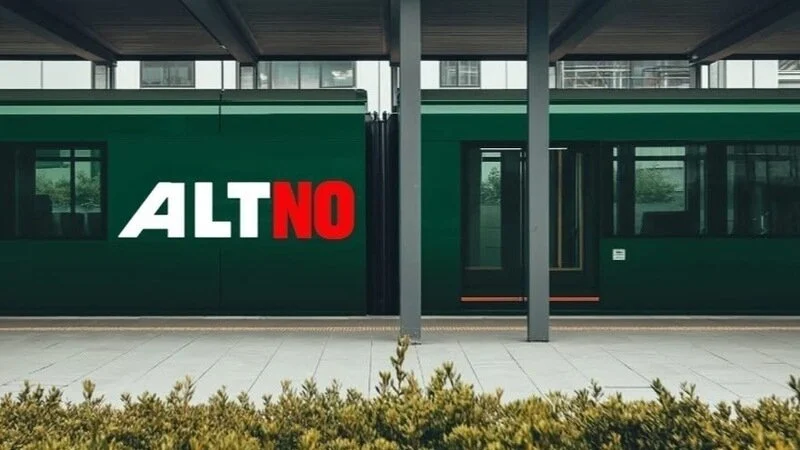
Opposition to high-speed rail through fragile environmental areas in Ontario sprang up fast … and hard.

Eastern Ontario rural communities just north of the St Lawrence River are buzzing with the news of a proposed, $90-billion high speed rail system.

In a matter of days, Facebook groups have been formed, community meetings held, petitions organized, and small municipalities (Rideau Lakes, Hawkesbury, Tyendinaga, more) have already seen councils voting against the project.

Several issues dominate the discussion: the outrageous cost of the proposal (estimate is $90B for the first stages, but a McGill U study says it’s more likely hundreds of billions, Chris Selley reports in the Financial Post, branding the proposal a “fantasy”), murky details about the project (engagement events are storyboard presentations, just like wind power developers use), there is no clear assurance of who would actually use the system at elevated fares, and last—the environment.

One of the proposed routes involves the South Frontenac and Rideau Lakes areas, geography familiar to many Ottawa residents, and would result in significant impacts to the Frontenac Arch and the UNESCO World Heritage Site the Rideau Canal.

Properties would be expropriated, farms divided, wildlife affected, noise introduced to quiet environments along with multiple other impacts.
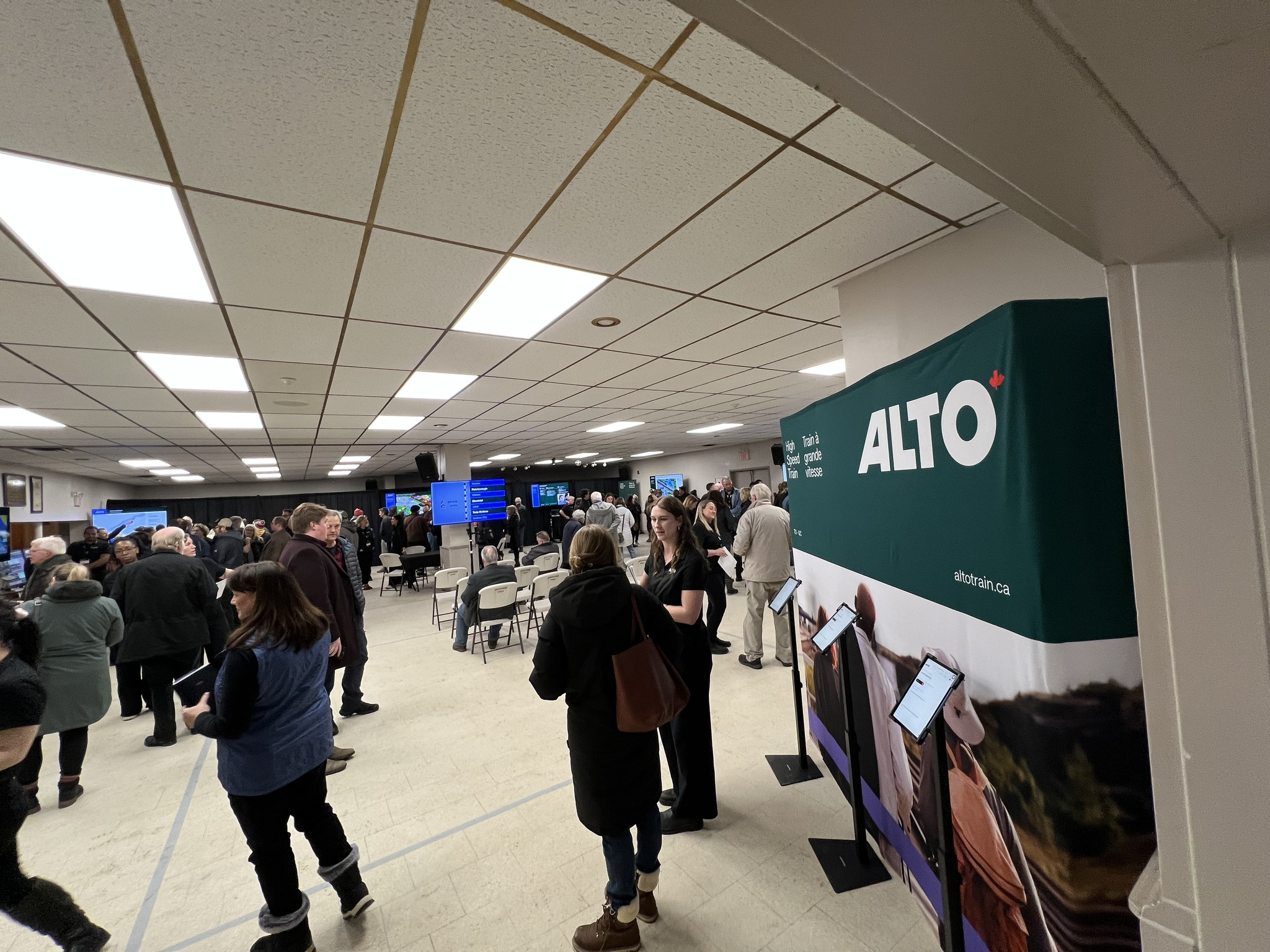
Active participation at recent ALTO community “engagement” event—same playbook as the wind power developers, where do citizen comments go?

Communities aware of the negatives

At the time of writing, information events are being held, petitions signed, even inventive “PIN pointing” opportunities so property owners can put their locations on the proposed route maps, and citizens are turning out to speak up—one event in Small-township Sunbury attracted 700-800 people over the course of the day, according to the spokesperson for Save South Frontenac.

To us, with yet another phase of the Independent Electricity System Operator (IESO) Long-Term 2 Request For Proposals looming in the months ahead, the High Speed Rail opposition may be a sign to any wind power developers out there cajoling landowners into signing up for 20-,40-, even 50-year leases: rural communities are sick of proposals for industrialization of natural environments and quiet communities, together with more lost farmland.

Out of possibly 20 proposals made last year for new wind power projects in Ontario, only ONE has proceeded to the submission stage. One hundred and fifty-nine Ontario municipalities are officially Unwilling Hosts to new windpower proposals.

Wind power is seen now as expensive, invasive, environmentally harmful, and erratic. It is not a cost-effective reliable source of electricity. Even the Ontario energy minister Stephen Lecce remarked in January (during a wind no-show in very cold weather) that, “You can’t run a full-time economy on part-time power.”

Recently, a community in Wales insisted on a cost-benefit analysis for a proposed wind power project. The result was that for five positive impacts (one of which was  the vague “we need clean energy”), there were sixteen negative impacts. Council voted NO.

Ottawa’s urban-dominated City Council ignored the environmental concerns of West Carleton residents over a recent Battery Storage project, and approved it anyway. Battery storage is a new development, but the impacts of massive, noisy, industrial wind turbines will be easier to understand, and environmental damage clear for all to see.

The renewables lobby works through so-called “environmental” groups. Last fall, Ottawa “environmental” network CAFES leader told the Agricultural and Rural Affairs Committee (ARAC) that existing approvals, i.e., environmental and impact assessments were too onerous and expensive for power developers. As reported in local news media West Carleton Online, Angela Keller-Herzog advised getting rid of pesky approval requirements altogether and instead using “good neighbour” agreements for nearby residents. That is an inappropriate site-specific approach that purposely ignores the fact that industrial wind power projects affect the entire city. The noise and low frequency emissions alone, for example, can be detected as far as 5, even 10 kms away.

In short, the fairy tale is over. Rural communities are ready and willing to take on corporations to protect the environment, wildlife and the economy from unjustified industrialization.

Energy Minister Stephen Lecce speaks out on renewable power sources wind and solar; emphasizes cost, reliability

29 Thursday Jan 2026

Posted by Ottawa Wind Concerns in Renewable energy, Wind power

≈ 3 Comments

Tags

energy, IESO, Ontario, Ottawa, polar vortex, power grid, Renewable energy, renewables, Stephen Lecce, Wind Concerns Ontario, wind energy, Wind power, wind turbines

“You can’t power a full-time economy on part-time power,” says Stephen Lecce in searing response to anti-nuclear, so-called “environmental” groups. “Reliability and system costs matter.”

IESO DATA FROM JANUARY 24, 2026: WIND NOT THERE WHEN NEEDED

January 25, 2026

With this weekend marking the coldest winter weather in years, and wind power not showing up in its characteristic avoidance of high-demand periods (summer and winter), it was a tough time for the pro-wind power crowd.

All the usual, “clean” “green” and especially “cheap” arguments for intermittent, unreliable, low-density power seemed not to matter as Ontario power demand went over 20,000 megawatts but wind power could contribute only 3 percent yesterday.

On Wind Concerns Ontario’s Facebook page, things were obviously so bad that some commenters accused WCO of making up the numbers—ahem, the stats came from the Independent Electricity System Operator or IESO. So if things looked bad, they really were that bad. No emphasis needed.

But still, the pro-wind, anti-nuclear faction continued, and Friday and Yesterday, Ontario Energy Minister Stephen Lecce had had enough with the winter fairy tales. Posting on both X and Facebook, he laid bare the nonsense that wind power is the lowest cost option. Today, he hit on the reliability of wind power (it doesn’t have any), and aimed in particular at the Ontario Clean Air Alliance (OCAA) which is rabidly anti-nuclear.

Last week, the OCAA pitched its no nuclear, no natural gas power to Port Hope municipal council, and urged council to reject the Ontario government plans for new nuclear at Wesleyville. (OCAA leader Jack Gibbons also once again pitched his idea of covering the Great Lakes with wind turbines.)

That was too much for Stephen Lecce.

On Friday he posted this:

“Every critic claims renewables are “cheaper.” The facts say otherwise:

* Renewables last ~20 years; nuclear delivers ~80 years of clean power (including refurbishment)

* Renewables are intermittent (~30% capacity); nuclear provides 24/7 baseload reliability

* ~60% of solar and ~80% of wind tech is made in China; ~90–95% of nuclear supply is Canadian

Take Pickering B: 2,200 MW of always-on, clean power.

The IESO – Ontario’s Independent Electricity System Operator found that to match its reliability and output, Ontario would need 10× more wind, solar, and batteries — plus ~2,400 km² of land, nearly 4× the size of Toronto.

For SMRs, the story is the same.

To match 1,200 MW from SMRs, IESO estimates Ontario would need 4–8× more renewables — and up to 1,300 km² of land, 260× more than the SMR footprint at Darlington.

As Bruce Power advances ‘Bruce C’, the Ontario Chamber of Commerce report confirmed it will ADD $238 billion to the national economy and create 10K permanent jobs.

How many jobs will be created with the always romanticized alternative resource? Jobs in China, perhaps, but few here at home.

And the economics? The Ontario Energy Board consistently finds nuclear among the lowest-cost options per MWh.

We have to face the reality that Ontario needs at least 65% more power to grow our economy. The question is, what is the most reliable and affordable long-term resource to keep our economy strong?

Those who stand against this Canadian industrial success story are blinded by ideology. This can be one of Canada’s most consequential investments in our economic and industrial sovereignty, leveraging a mature nuclear supply chain that employs 80K Ontarians.

Under FordNation, Ontario is doubling down on made-in-Canada nuclear to keep the lights on — and bills down. We won’t repeat others’ mistakes.”

And today:

“You can’t power a full-time economy on part-time power.

On one of the coldest days of the year, Ontario families stayed warm because our system worked exactly as designed.

Nuclear operated 24/7, hydro delivered steady baseload, and natural gas stepped in to meet peak demand — the reliability backbone of a northern, industrial economy.

At the same time, wind delivered less than 3% of its installed capacity. That’s not ideology — that’s system data.

Ontario is technology agnostic. But reliability and system costs still matter. The Opposition and groups like the so-called “Clean Air Alliance” keep pushing the false claim that intermittent renewables alone can power a modern economy. They can’t.

Replacing firm nuclear and gas capacity with wind alone would require hundreds of thousands of MW of installed capacity, tens of thousands of turbines, massive transmission expansion, and system costs measured in the hundreds of billions of dollars — while still requiring backup for winter days like yesterday.

This approach would drive up hydro bills, decrease system reliability, forcing us to become more dependent on imports, and ultimately destroy Canada’s great industrial nuclear success story and the 80,000 jobs that come with it.

This type of dogma, embraced by the Wynne and Trudeau governments, was firmly rejected by the people who pay the bills.

There is a reason industrial economies and democracies are turning back to 24/7 nuclear power: Germany, Italy, Belgium, South Korea, Japan, the Philippines, Sweden, Denmark, the Netherlands, and the list goes on and on.

Energy policy must be rooted in reliability, affordability, and economic sovereignty — not ideological delusion.”

Mr Lecce referred to the work of economist Edgardo Sepulveda in that post, who earlier today posted an analysis of yesterday’s dismal numbers for wind power on his own Facebook page.

All we can say is “Wow.” And, “finally.”

Vindication for Ontario rural communities that in 2025 stood up against new wind power proposals and said, Why? Wind isn’t worth the sacrifice we would have to make. Which is why, perhaps, only two out of 20 proposals made ton the IESO LT2-RFP in 2025 are going forward to consideration, and why 159 Ontario municipalities are Unwilling Hosts to new wind power projects.

Bravo to the Minister!

Note that Ottawa’s $57B Energy Evolution plan, which is still city policy to this day, calls for 3,200 megawatts of intermittent, expensive, unreliable, land-gobbling wind turbines.

You may contact Minister Lecce at MinisterEnergy@ontario.ca

Reposted from Wind Concerns Ontario

#ottcity #EnergyEvolution

Recent Posts

  • High-Speed Rail opposition in Rural Eastern Ontario: a lesson for wind power developers
  • Land use conflict prompts citizen legal action over West Carleton battery storage site
  • Energy Minister Stephen Lecce speaks out on renewable power sources wind and solar; emphasizes cost, reliability
  • Open letter to CAFES Ottawa
  • Ottawa Wind Concerns supports West Carleton residents

Follow me on Twitter

My Tweets

Enter your email address to follow this blog and receive notifications of new posts by email.

Tags

Bob Chiarelli Green Energy Act IESO Ontario Ottawa Ottawa wind concerns wind energy wind farm wind power wind turbines

Contact us

PO Box 3 North Gower ON K0A 2T0

Blog at WordPress.com.

Privacy & Cookies: This site uses cookies. By continuing to use this website, you agree to their use.
To find out more, including how to control cookies, see here: Cookie Policy
  • Subscribe Subscribed
    • Ottawa Wind Concerns
    • Join 380 other subscribers
    • Already have a WordPress.com account? Log in now.
    • Ottawa Wind Concerns
    • Subscribe Subscribed
    • Sign up
    • Log in
    • Report this content
    • View site in Reader
    • Manage subscriptions
    • Collapse this bar
 

Loading Comments...