
Tags
aquifer, Battery electricity storage, BESS, Carleton Landowners, energy, Evolugen, farm, fire, noise, Ottawa, Ottawa wind concerns, pollution, Renewable energy, rural, West Carleton
Concerns for environment, water supply with proposal for 250-megawatt battery storage system

Source: Stop West Carleton BESS
February 23, 2025
Ottawa Wind Concerns released a statement yesterday expressing support for the residents of West Carleton who are concerned about the potential negative impacts on the environment from a proposed large battery energy storage system or BESS, currently planned for the Marchurst Road area near Dunrobin. The power developer is Evolugen, a division of Brookfield Renewables.
“We share resident concerns about the proposal for a large Battery Energy Storage System on farmland in West Carleton,” said Ottawa Wind Concerns Chair Jane Wilson, in a letter sent to community group Stop West Carleton BESS, one of several opposing the project.
“Like large-scale industrial wind power sites that were forced on rural Ontario communities, the BESS raises concerns about negative impacts on the environment such as the risk of fire, and noise pollution.
“We echo the concerns of the local OFA in that even classes 4-6 of agricultural land have a role to play in food production and food security for the people of Ontario.
“The process for the BESS is the same as for wind and solar power installations which features limited public engagement, and the need for communities to approve this significant industrial land use with minimal details provided. “
The West Carleton residents are concerned about the potential for fire, due to multiple battery storage system fires around the world, including several in the U.S. A fire at the three-year-old Moss Landing battery facility in California, which resulted in toxic smoke and the evacuation of residents. The fire has reignited several times. There have been calls for more stringent safety rules for such installations.
In West Carleton, residents are concerned that in the event of a fire, the site would be far from City of Ottawa fire services, and first responders would be volunteer fire fighters, as is the case for most Ottawa rural communities. The chemicals used to fight a lithium battery fire could contaminate the aquifer, which would affect neighbouring farm properties.
Noise from the 250+ containers housing the batteries is another environmental concern.
Residents say they are not opposed necessarily to the battery storage technology, but are asking whether an industrial location close to services like fire would not be more appropriate for this industrial land use. They also note proximity of the site to area wetlands, some of which have been proposed for protection. (See illustration, above.)
The BESS is to be located on farmland currently used for hay, which is part of the food production cycle, says the local chapter of the Ontario Federation of Agriculture, which also supports the West Carleton resident concerns.
In a story presented by CTV News Ottawa today, https://www.ctvnews.ca/ottawa/article/proposed-battery-storage-site-in-ottawas-west-end-raises-safety-concerns-from-residents/ Stop West Carleton BESS representative and local farm owner Courtney Argue said, if there was a fire event and the groundwater was contaminated, “there is no remediation.”
Argue also said Evolugen surveyors were on her farm last month without permission.
Kanata North councillor Cathy Curry told CTV News that there was already a battery storage facility in her ward and that it was operating without problems; however, there are no grid-scale BESS installations in Ottawa. Evolugen proposed another BESS near the Trail Road landfill on land zoned industrial with did get CIty of Ottawa support. The West Carleton project however, has a contract from the Independent Electricity System Operator or IESO to sell power, but it does not have the municipal support resolution which is mandatory for the project to proceed. (See IESO, Section 11 at https://www.ieso.ca/Sector-Participants/Resource-Acquisition-and-Contracts/Long-Term-2-RFP )
The battery storage operators (many of whom also operate wind and solar generation projects and are paid for their power, whether it is needed or not) buy power in times of surplus, store it, then sell it back to the grid operator. In theory, they sell the power at one price, buy it back at a lower price, then sell it again at a higher price when power is needed.
Does battery storage work?
One U.K. analyst says battery storage units don’t do what the promoters say they will. In a video titled “Exposing the battery storage con,” released recently, Paul Burgess says that batteries will provide only minutes of power when needed, as they can only use 60 percent of the power stored. In times of “wind drought” which can last more than a week, he says, the battery power stored will have run out immediately. “It is one hair on a camel’s back relative to what’s required,” he says. Battery storage would not be adequate and will cost billions.
Stop West Carleton BESS currently has the support of the Carleton Landowners, and the Ontario federation of Agriculture, and is one of at least four community groups. A petition to the CIty of Ottawa is available and is approaching 1,000 signatures.
For more information email stopwestcarletonBESS@gmail.com
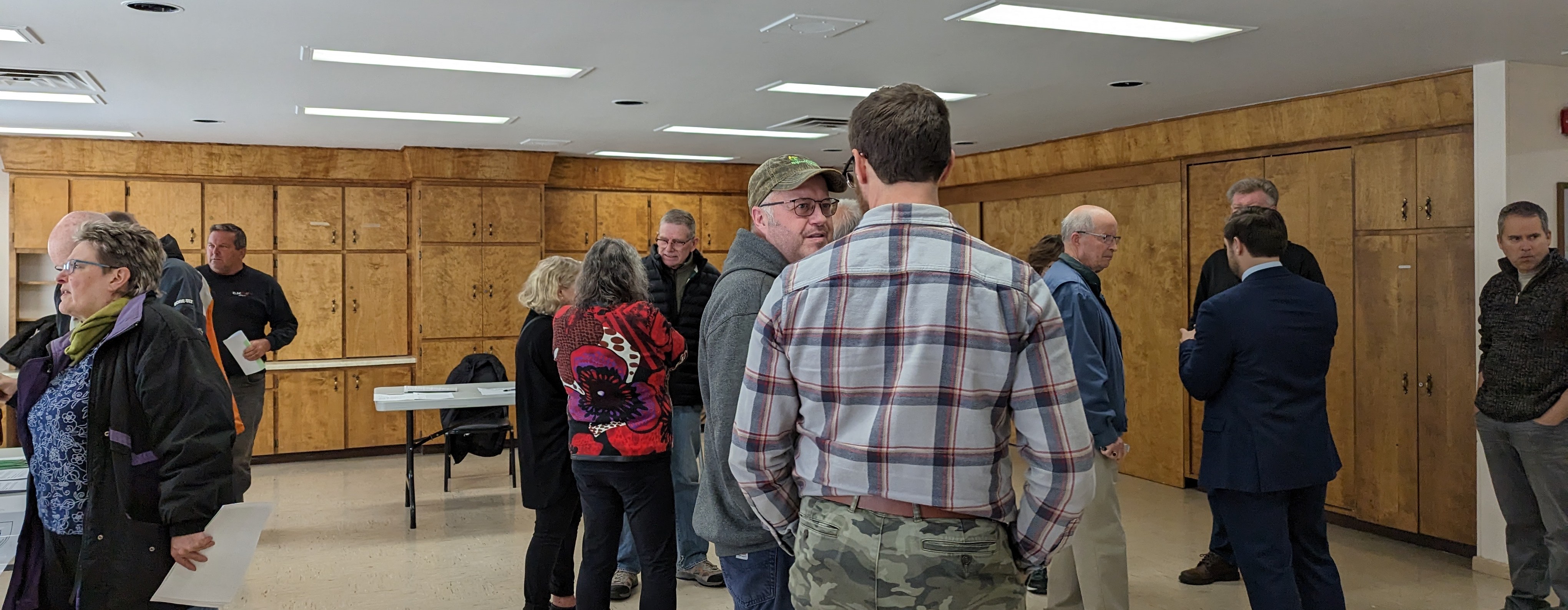
Former Ward 5 Councillor Eli El Chantiry signs the Stop West Carleton BESS petition at a community “pop up” signing opportunity



 Ottawa Wind Concerns