
• About
  • Donate!
  • EVENTS
  • Ottawa’s “Energy Evolution”: wind turbines coming to rural communities
  • Thinking of signing a wind turbine lease?
  • Wind Concerns Ontario
  • Wind turbines: what you need to know

Ottawa Wind Concerns

~ A safe environment for everyone

Ottawa Wind Concerns

Tag Archives: George Darouze

Take the survey!!!

25 Monday Mar 2024

Posted by Ottawa Wind Concerns in Ottawa, Renewable energy, Wind power

≈ Leave a comment

Tags

clarke kelly, david brown, George Darouze, Ottawa, Renewable energy, rural, wind turbines

Ottawa’s rural residents have a rare opportunity to express their views on city services and policies. (And there is a question on wind turbines, too!)

March 25, 2024

In advance of the 2024 Rural Summit, the City of Ottawa is offering a survey on issues and policies of interest to rural residents.

The City explains:

“In 2005, the City of Ottawa hosted a Rural Summit to address the results of the City’s Citizen Satisfaction Survey. This summit helped advance several successful initiatives in rural Ottawa. In 2008, another Rural Summit occurred, and this resulted in improved opportunities for rural residents. A Rural Summit has not occurred in over a decade due to the pandemic, a municipal election, and other priority projects. Recently, a new Official Plan was adopted, a Zoning By-law is being prepared, and the Rural Economic Strategy is being updated. In addition, the newly adopted City Strategic Plan supports stimulating growth in economic districts. These plans and regulations clearly impact rural Ottawa, and therefore it is an opportune time to consult with rural residents.

“At the City Council Meeting on December 14, 2022, Councillor Kelly brought forward a motion regarding the City of Ottawa hosting a Rural Summit. This motion noted that staff should be working to host the summit during the current term of council.

“The objective of Rural Summit 2024 is to recommend improvements to the provision of the City of Ottawa services to residents and communities of rural Ottawa.”

The survey is a mix of questions, and statements with which you can agree or disagree.

Of interest to many will be this statement:

Rural areas should be the primary location for wind turbines, waste management, solar farms and battery storage.

You are asked to agree or disagree on a scale of 1 to 5.

More to come

The City seems to be encouraging “engagement” before the Rural Summit—this is a good opportunity to express views as rural residents. More from the City:

“Your participation is crucial as it will help shape the content and focus of ward-specific workshops scheduled for this spring. These workshops will provide an opportunity for in-depth discussions on local issues and brainstorming solutions.

“The outcomes of these workshops will be integral in shaping the agenda for the Rural Summit 2024, slated for November. Your input will directly contribute to the development of strategies aimed at enhancing the well-being and prosperity of our rural communities.

“Your opinion matters, and we value your insights. Please take a few moments to complete the survey using the link provided below:

https://engage.ottawa.ca/embeds/projects/37643/survey-tools/45541

“In addition to the survey, Rural Workshops will take place in each of the rural wards in the hopes of to gain as much feedback as possible. These workshops will be in-person, are open to all residents of the respective ward, and we encourage all to attend.”

Please take this survey as soon as you can: our city needs to know rural residents are informed, and have opinions that matter.

Ottawa Wind Concerns

ottawawindconcerns@gmail.com
Community discussions marred by NIMBY insults in Ottawa

05 Tuesday Dec 2023

Posted by Ottawa Wind Concerns in Uncategorized

≈ 1 Comment

Tags

Battery storage, BESS, George Darouze, IESO, lithium battery fires, NIMBY, ONtario Landowners, Ottawa, Ottawa Wind Concerns Ottawa

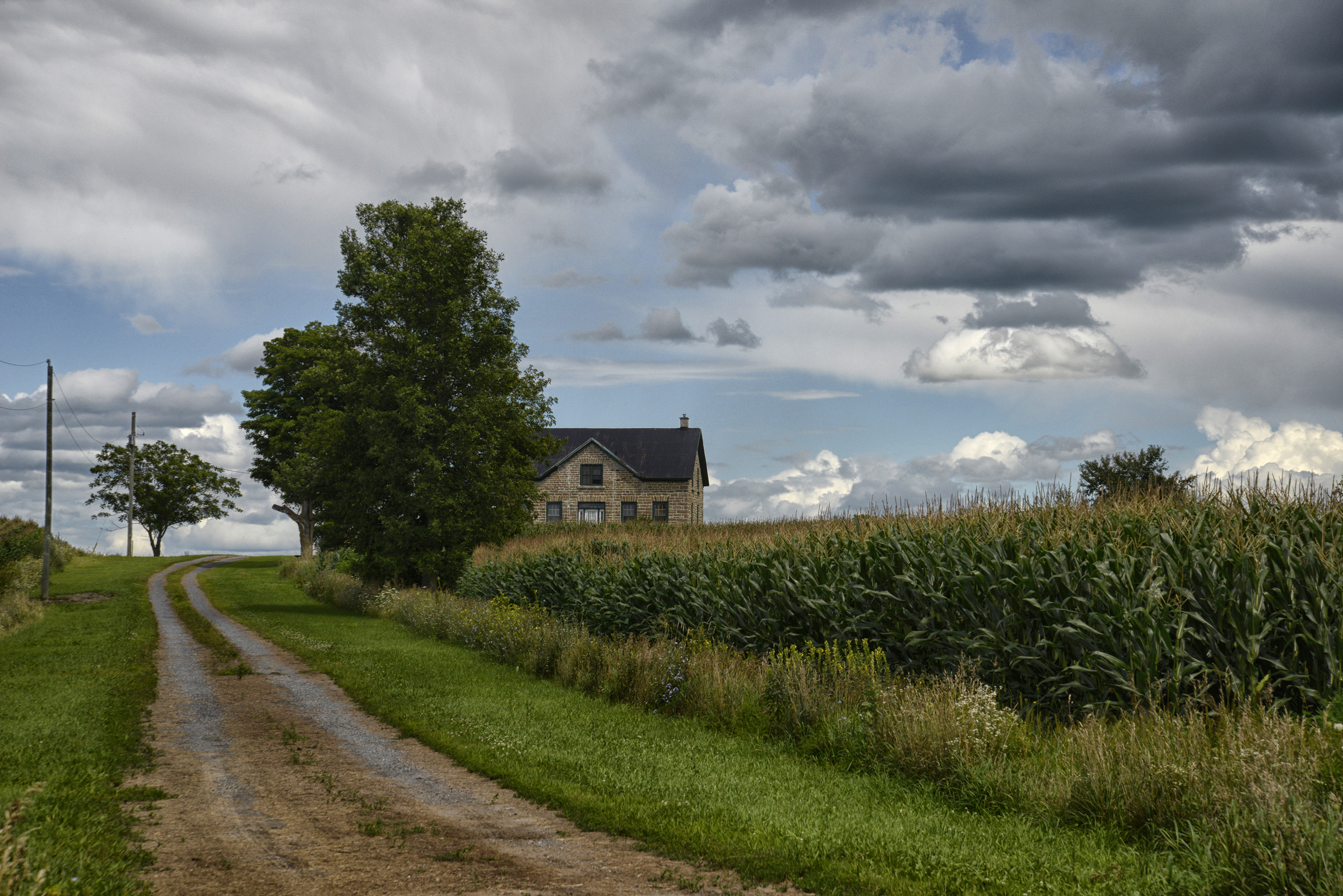
Ottawa’s rural residents were concerned about proposals for huge battery storage installations. They didn’t get answers to their questions about risks and impacts—for that, they got called NIMBY [Photo: D. Larsen]

December 5, 2023

During the discussions about proposals for Battery Energy Storage Systems or BESS last week, it was disappointing to see the “NIMBY” insult being employed, especially by so-called environmentalists and community leaders.

One is a “Director of Emotional Health” for a community association, who thought it was perfectly healthy and supportive to brand her fellow West Carleton residents as “NIMBYs” just for expressing concern about the environment, health and the safety of cropland.

The NIMBY epithet was so prevalent in presentations to Ottawa’s Agricultural and Rural Affairs Committee (ARAC) that ARAC chair George Darouze said “We are not NIMBYs” and then went on with an elegant and important discussion of how rural residents are concerned about environmental impact for not just rural communities but for all of Ottawa.

He said rural residents were especially “sensitive” to environmental issues, which is why they had questions about the battery proposals.

Using the NIMBY insult says a lot about you

The term NIMBY is not just an insult to those who are concerned about a particular type of development, it also speaks volumes about the people who use it.

Environmental lawyer McRoberts:

To urban-based environmentalists, resistance to wind and solar farms is often seen as nothing more than Not in My Backyard attitudes (NIMBYism), and turbine opponent concerns are trivialised. … [M]any communities opposed to these projects have genuine concerns about impacts on environmental integrity, viewscapes, food production, and social fabric. … Moreover, the supposed “NIMBY syndrome” has been criticised by environmental justice scholars and others as an oversimplification of opposition that more accurately is based on a complex mix of factors including perceptions about a lack of procedural and distributive justice in approval processes. (McRobert, D., Tennent-Riddell, J. and Walker, C. (2016) Ontario’s Green Economy and Green Energy Act: Why a Well-Intentioned Law Is Mired in Controversy and Opposed by Rural Communities. Renewable Energy Law and Policy, 7, 99.)

So what were people who live in Ottawa’s rural wards worried about? Mainly environmental concerns, specifically from the risk of fire in a battery storage unit, and pollution from chemicals and water. They were also worried about noise and light pollution, and they had concerns about the proposed locations The battery storage installations would be an industrial land use, yet in many of the proposals were to be located near homes.

The risk of fire was not addressed satisfactorily by the proponents at the public meetings which, people felt, were rushed and held without wider notice.

The technology is new and there simply was not enough time to learn about it, or to get answers to very important questions about the risk of fire. At the ARAC meeting November 30, the leaders of 

Ottawa Fire Services said that the fire risk is a concern for fire services across Ontario. The Ontario Fire Marshal will release a report but it is not available yet — nevertheless, residents and municipal governments were expected to grant support in spite of questions about that risk.

Battery storage: myth or solution?

What are the battery installations supposed to do, anyway?

Shirley Dolan, appearing at ARAC as a Director with the Ontario Landowners Association, said that there had been no cost-benefit analysis presented for any battery storage proposal. In short, she said, there was no rationale for the installations, no explanation of costs or other impacts, no details beyond basic claims that the batteries would provide power during outages, and no reasons given for the locations proposed.

The claim that the batteries are needed for power outages warrants examination.

If we lose power as the result of a storm, the usual cause is damage to electricity infrastructure such as downed power lines. That was confirmed by Hydro One’s CEO earlier this year. So, if we have power lines or other features such as transformers damaged and not functional, the power (maximum of FOUR HOURS, by the way, not days) still cannot reach our homes.

So, again: what is the benefit? Where is the cost-benefit analysis to support these proposals?

NIMBY? or objection to a flawed process?

People in communities where battery storage was proposed said they were interested in the concept of the technology, but were concerned about the process created by the IESO. There was little opportunity for public input, as the comments and questions from the public at the proponent meetings don’t go anywhere and are not recorded—no response is necessary from the proponent. As Mr. Darouze pointed out, the process was rushed and provided very little information to both the public and the municipal government, which was expected to evaluate the proposals and grant support.

He said, correctly, that the city’s own assessment process is far more rigorous for any type of development than is required by the IESO. That is not acceptable, many thought.

As McRoberts wrote, what might be branded as NIMBYism is a concern about justice in procedural and approval processes. Much has been written about the public engagement process for energy development in Ontario, and the conclusion is that it has been seriously flawed. Two Auditors General in Ontario said that any energy proposal ought to have a cost-benefit analysis done: this has never happened, and is still not being done.

In his paper, “NIMBYs are not the problem”, Ottawa professor Stewart Fast wrote:

“If conflict is to be minimized and decisions given greater legitimacy, the public must be involved in the process. Unfortunately, Ontario’s approach to building wind generators and other renewable energy projects has ignored this tenet. Instead of more public participation, there has been less. … The approach was designed in the conviction that Ontario’s citizens were not to be trusted, and that anyone opposing wind energy was simply in the grip of NIMBYism. … Policy-makers must realize that not all citizens are selfish NIMBYs.” (Stewart Fast, Policy Options, IRPP.org, 2017)

The way forward in my view is to provide the public and our elected representatives with all the facts we all need to make a responsible, informed decision. One Rideau Lakes resident told Ottawa Wind Concerns, “Last week, I never even heard of BESS. This week, I’m going to meetings and writing letters!” (The project there has been withdrawn in the face of public opposition.)

Battery storage technology on grid-scale is relatively new and already there have been problems. A worldwide database documenting battery fires and failures lists more than 80 events so far. Battery storage developers say there is low risk, but not no risk.

Ottawa Fire Services told ARAC that there is no option but to let a battery fire burn while working to keep other equipment cool and to keep the fire from spreading.

Meanwhile, the emissions from battery fires include carbon monoxide, hydrogen fluoride, hydrogen chloride, and corrosive nitrogen dioxide. But to the “environmentalists”, their citizen neighbours and fellow rural residents who are concerned about these emissions are NIMBYs?

We ask, if the people and organizations who claim to want to help with climate change and protect the environment do NOT support protection of health, safety, and sanctity of the ecosystem, what IS their agenda?

ottawawindconcerns@gmail.com


Hydro fix a Band-Aid

12 Monday Sep 2016

Posted by Ottawa Wind Concerns in Ottawa, Renewable energy, Wind power

≈ 1 Comment

Tags

Canadian Taxpayers Federation, CFRA, Christine van Geyn, Evan Solomon, George Darouze, Scott Moffatt, Wind Concerns Ontario


September 12, 2016

With more electricity bill increases to come, the Wynne government still planning to give out contracts for more wind and solar that the province doesn’t need, and the privatization of Hydro One ongoing, today’s proposed 8-percent rebate on electricity bills is nothing more than a “Band-Aid.”

Christine van Geyn of the Canadian Taxpayers Federation says that real change is needed to halt the dramatic rise in consumer electricity bills, including the halting of new contracts for wind and solar. See her statement from today, here.

Wind Concerns Ontario president Jane Wilson (also chair of Ottawa Wind Concerns) said that real changes to programs are needed. Contracts that could be cancelled now, should be, and the government should halt the new Large Renewable Procurement program, scheduled to begin in 2017.

Patrick Brown of the Progressive Conservative Party of Ontario told Evan Solomon on Ottawa Now (CFRA) that the Wynne government needs to stop giving out expensive contracts for wind power, and reverse the Green Energy Act.

Locally, councilor George Darouze, who has been collecting signatures for MPP Lisa MacLeod to take to the Legislature on blending Hydro Ottawa with Hydro One’s rural Ottawa customers, said the 8-percent rebate was a “joke.” Rural customers pay 30 percent more than urban Ottawa customers. “An 8 percent rebate isn’t going to close that gap,” he said on CFRA.

Meanwhile, Ontario municipalities have been passing resolutions and endorsing resolutions to demand the Wynne government return local land-use planning, removed by the Green Energy Act. Now 111 municipalities — one-quarter of all municipalities in Ontario — are asking that no contract for wind power be given without municipal support of the power project. Ottawa councilor Scott Moffatt, in presenting an motion to Ottawa City Council, said that municipalities are required to have an Official Plan, and that they know best what development is appropriate, and sustainable.

OttawaWindConcerns@gmail.com


Recent Posts

  • Open letter to CAFES Ottawa
  • Ottawa Wind Concerns supports West Carleton residents
  • What does wind ‘farm’ construction really look like?
  • Unwilling Host communities surround Ottawa
  • How many birds do wind turbines kill?

Follow me on Twitter

My Tweets

Enter your email address to follow this blog and receive notifications of new posts by email.

Tags

Bob Chiarelli Green Energy Act IESO Ontario Ottawa Ottawa wind concerns wind energy wind farm wind power wind turbines

Contact us

PO Box 3 North Gower ON K0A 2T0

Create a free website or blog at WordPress.com.

Privacy & Cookies: This site uses cookies. By continuing to use this website, you agree to their use.
To find out more, including how to control cookies, see here: Cookie Policy
  • Subscribe Subscribed
    • Ottawa Wind Concerns
    • Join 379 other subscribers
    • Already have a WordPress.com account? Log in now.
    • Ottawa Wind Concerns
    • Subscribe Subscribed
    • Sign up
    • Log in
    • Report this content
    • View site in Reader
    • Manage subscriptions
    • Collapse this bar
 

Loading Comments...