• About
  • Donate!
  • EVENTS
  • Ottawa’s “Energy Evolution”: wind turbines coming to rural communities
  • Thinking of signing a wind turbine lease?
  • Wind Concerns Ontario
  • Wind turbines: what you need to know

Ottawa Wind Concerns

~ A safe environment for everyone

Ottawa Wind Concerns

Tag Archives: endangered species Ontario

Ontario ignored recommendation not to build wind farm: government scientist

07 Monday Sep 2015

Posted by Ottawa Wind Concerns in Renewable energy, Wind power

≈ 2 Comments

Tags

Canadian Herpetology Society, Dalton McGuinty, endangered species Ontario, Environmental Review Tribunal, Eric Gillespie, green energy, Ontario Ministry of Natural Resources and Foresty, Ontario Ministry of the Environment, Ontario Nature, Ostrander Point, Prince Edward County Field Naturalists, wind farm, wind farm environmental damage, wind power

Did the McGuinty government ignore real science in favour of political ideology?

Did the McGuinty government ignore real science in favour of political ideology?

Report from the Prince Edward County Field Naturalists on stunning testimony at the Environmental Review Tribunal, September 4.

What began as a usual day in the extended Environmental Review Tribunal appeal of the Ministry of the Environment and Climate Change plan to allow development at Ostrander Point in the PEC South Shore Important Bird Area finished with an unexpected ruling.

The witness was Joe Crowley from the Ministry of Natural Resources and Forestry, who was qualified as a species at risk herpetologist with expertise in Blanding’s Turtles.  Mr. Crowley has a long history of interest in and working in the field of herpetology in Ontario and helped to develop the Ontario Herpetology Atlas, a citizen science project, while working with Ontario Nature before he started his tenure with MNRF.  At MNRF his responsibilities included being the species at risk expert on herpetology, giving advice to staff and partners and conservation groups on the development of species at risk protection plans.  He was instrumental in developing the provincial task team forestry policy regarding amphibians and reptiles. He is a member of the reptile and amphibian sub- committee of COSEWIC (Committee on the Status of Endangered Wildlife in Canada), reviewing reports for that committee of technical and scientific information which informs decisions regarding listing species at risk.  He is the Vice President of the Canadian Herpetology Society responsible for web site development and communication.

Mr. Crowley’s witness statement was concerned with the attempts to mitigate harm to the indigenous turtle population at Ostrander Point through the installation of gates on the turbine access roads and a program of monitoring, signage and staff training.  Mr. Crowley answered many questions about the effectiveness of the various mitigation measures proposed to protect the turtles.  Gates are proposed on about 6 road intersections on the site including the intersection of Helmer Rd and Petticoat Point Lane.  Mr. Crowley indicated that he felt that those gates would reduce the risk of turtle mortality to public vehicular traffic; however the presence of roads would increase the probability of turtles nesting in a place that would make them more vulnerable to predation and the roads were unlikely to deter poachers.

The unexpected part of the day came when Mr. Crowley was asked about his role in the granting of the Endangered Species Act permit granted allowing the proponent to “kill harm and harass” the Whip—poor-will and the Blanding’s Turtle at Ostrander point.  Mr. Crowley stated that his advice at the time was not to allow the permit because the project roads would prove a risk to the site’s indigenous Blanding’s Turtles.

This new information caused an abrupt halt in the proceedings.  The legal argument was made by PECFN counsel, Eric Gillespie that it appeared that a senior manager at MNRF had advised against approval of the Ostrander project at the very onset. Mr. Gillespie requested documentation of that advice. Mr. Crowley was unable to produce any documentation and asserted that the final decision on the project was not his. Ultimately after much legal discussion the Tribunal issued a ruling:

That the Ministry of Natural Resources and Forestry witnesses produce forthwith all papers and electronic correspondence to date relating to roads and/or Blanding’s Turtle and this renewable energy approved project and site.

The Tribunal resumes on September 23, 24 and 25.

– See more at: http://www.saveostranderpoint.org/september-4-2015-day-3-at-the-ert-hearing/#sthash.lokjWGkK.dpuf

Is Ontario’s push for giant wind farms killing the green energy movement?

02 Wednesday Sep 2015

Posted by Ottawa Wind Concerns in Renewable energy, Wind power

≈ 4 Comments

Tags

Algoma, Amherst Island, at-risk species Ontario, endangered species Ontario, Environmental Review Tribunal, green energy, Green Energy Act, Kathleen Wynne, Lake Ontario, LSARC, Nature Canada, Ontario, Ontario environment, Ontario Ministry of the Environment and Climate Change, Ostrander Point, Prince Edward County Field Naturalists, Pronce Edward County, Robert Quaiff, wind farm, wind farm environmental damage, wind power

Print

Is Ontario’s rush to wind power killing the green energy movement?

TORONTO, CAN, September 2, 2015

Ontario’s stance as an environmental activist province in Canada and would-be leader in climate change action is taking a beating after the government approved two controversial wind power projects, and continues to fight environmental groups and citizens on a third.

Last week, the Ontario Ministry of the Environment and Climate Change approved a 75-megawatt power project on tiny Amherst Island in Lake Ontario. The island is home to several species of wildlife declared endangered or at-risk by the same government, and is also a resting place for migrating birds. The birds attract eco-tourists from all over the world.

The threat of the wind power project to the heritage environment is so great that Heritage Canada’s National Trust named the island one of Canada’s Top Ten Endangered Places.

“There are some places where wind power projects shouldn’t go,” says Michele LeLay, spokesperson for the community group the Association to Protect Amherst Island. “This is one of them.”

Abundance of birds at risk

Also on Lake Ontario, is Prince Edward County where the province recently approved another large wind power generation project for the South Shore. The environmental danger is undeniable, says Cheryl Anderson, of the Prince Edward County Field Naturalists: “Data gathered over 20 years confirms the South Shore is a major migratory pathway for an astonishing diversity and abundance of birds. This unique blend of ecosystems supports numerous varieties of rare plants, eight species of at-risk turtles, Monarch butterflies and many amphibian species.  Because of its unique biodiversity, the value of Prince Edward County’s South Shore is unparalleled as an ecotourism venue.”

The Ontario government heads back to the quasi-judicial Environmental Review Tribunal in September, to hear the appeal of a wind power project at Ostrander Point, also in Prince Edward County, halted by the Tribunal in 2013 due to the danger to a rare species of turtle. After several sessions in court, the decision has been returned to the Tribunal where community groups are in the unusual position of spending hundreds of thousands to protect the environment from the Ministry of the Environment.

Prince Edward County Mayor Robert Quaiff is outraged at the approvals and has been trying to see the Premier of Ontario, so far with no luck. In a letter to her he said “efforts to implement the Green Energy Act [legislation pushing wind power] are becoming counter-productive through resulting negative impacts to endangered species, as well as the prosperity and well-being of rural Ontario Communities.”

The concern about Ontario’s pro-wind agenda and resulting environmental damage is not limited to the southern parts of the province. Canada is known around the world for its iconic landscapes in the Algoma region around Lake Superior, now also the site for unbridled wind power development. Hills and valleys made famous by Canada’s Group of Seven artists are now scarred by clear-cutting of trees, flattening of ridges, and the construction of roads and turbine foundations.

George Browne of Lake Superior Action Research Conservation (LSARC) says the devastation to the wilderness is immense. Wilderness, he says, “is a rare and unique feature, understood by many to represent the grandeur of nature; vastness is an essential part of the aesthetic appeal of the landscape. It is worthy of conservation.”

Approval of projects in fragile areas will tarnish green energy industry

Nature groups believe that Ontario’s inappropriate choices for wind power development will actually harm the green energy movement. Ontario Nature and Nature Canada jointly stated: “We sincerely believe [approval of the Amherst Island project] will further tarnish Ontario’s green energy industry, and ultimately undermine future projects in less controversial areas. The opposition of this project in the naturalist community is palpable. The risks of killing large numbers of raptors, swallows and bobolinks is high. Approval will further alienate a segment of Ontario’s population from the green energy agenda and tip an already fragile balance.”

Ontario is guilty of hypocrisy says Ontario’s premier community coalition, Wind Concerns Ontario. “The government’s recent decisions show they have lost their way,” says President Jane Wilson. “Killing birds and despoiling wilderness is not the way to save the environment.”

END

Contact: Wind Concerns Ontario www.windconcernsontario.ca

Email us here.

Prince Edward County South Shore: major pathway for migratory birds

Prince Edward County South Shore: major pathway for migratory birds

Nature Canada, field naturalists call for action to save Amherst Island

28 Sunday Jun 2015

Posted by Ottawa Wind Concerns in Renewable energy, Wind power

≈ 5 Comments

Tags

Algonquin Power, Amherst Island, Association to Protect Amherst Island, Blanding's Turtle, endangered species Ontario, investing wind power, m Important Bird Area, Nature Canada, Ontario MInisirty of the Environment, Ontario Ministry of NAtural Resources, wildlife Ontario, wind farm, Windlectric

Nature Canada and the Kingston Field Naturalists are calling for action to save Amherst Island, near Kingston, from a huge windpower generation project which will not only devastate the island community, but also endanger thousands of migratory birds and other at-risk or endangered species.

See this posting from the Association to Protect Amherst Island, below. Be sure to look at the project map below, too—how does the government excuse this in the name of “green”?

Kingston Field Naturalists Nature Canada
Dear Friend,

A 27-turbine wind power project proposed for internationally recognized Amherst Island, an Important Bird Area near Kingston Ontario, may be approved soon by the Ontario government.

The many Species at Risk on Amherst Island include birds (Short-eared Owl, Bobolink, Eastern Meadowlark, Eastern Whip-poo-rwill, Barn Swallow, Golden Eagle, Least Bittern, and Red Knot), Blanding’s Turtles, and Milk and Ribbon Snakes.

Amherst Island has an international reputation as one of the most outstanding places in North America to see concentrations of northern owls and is an important stopover for bats on their migratory path across Lake Ontario. Bats are becoming endangered in many places and in April 2015, Canada, the United States and Mexico signed an agreement to protect the pathways of migratory bats.

A wind turbine installation on this small island, as learned from the nearby Wolfe Island installation, would result in loss of habitat for Short-eared Owl and serious and irreversible harm to local populations of Bobolinks, Barn Swallows and Eastern Meadowlarks, and to breeding population of Red-tailed Hawk, breeding and roosting Purple Martins, and Osprey. Additionally significant breeding population of Blanding’s Turtle, Wilson’s Phalarope and Whip-poor-wills are also at risk. No one is considering the cumulative impact of this project and the many others that are operational or proposed for this important migration route on the vulnerable populations of birds and other wildlife.

More information about the Project and the Island can be found at: http://www.protectamherstisland.ca

This might the last opportunity to convince the Province to make the right decision and put an end to this project before it enters the expensive and draining cycle of legal challenges. It is time that Ontario’s green energy policy is balanced with its international obligations to protect biodiversity and that decision makers demonstrate genuine respect for the wishes of the overwhelming majority of community members. Please send letters to those listed below, asking that the wind-turbine project for Amherst Island be stopped completely – and permanently:

Ontario Premier, Kathleen Wynne, premier@ontario.ca

Minister of the Environment and Climate Change, Glen Murray, minister.moe@ontario.ca

Minister of Natural Resources and Forestry, Bill Mauro, minister.mnr@ontario.ca

Director, MOECC, Sarah Paul sarah.paul@ontario.ca

Senior Project Evaluator, MOECC, Susanne Edwards, susanne.edwards@ontario.ca

CC Association to Protect Amherst Island protectai@kos.net

Thank you,

Kingston Field Naturalists and Nature Canada


Site plan for the proposed power project:


Conservation area within North Stormont wind farm

13 Wednesday May 2015

Posted by Ottawa Wind Concerns in Renewable energy, Wind power

≈ 3 Comments

Tags

at-risk species, bird deaths wind farms, bird species, birds Ontario, Conservation Area, Crysler, EDP Renewables, endangered species Ontario, environmental damage wind farms, North Stormont, South Nation, Stormont-Dundas-Glengarry, wind farm, wind turbines

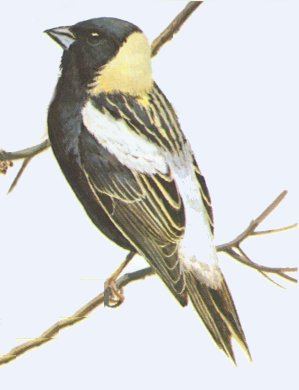
The Bobolink is an at-risk species in Ontario

The Bobolink is an at-risk species in Ontario

More than 100 bird species will be at risk from wind turbines


When multi-national wind power developer EDP Renewables revealed the project map at its Open House in Crysler last week, many attending were surprised to note that the project area covers and includes the Reveler Conservation Area.

The conservation area shelters more than 100 species of birds and offers a place for them to rest on their migrations twice a year. The spot is popular with bird enthusiasts and others who enjoy Nature.

Wind turbines are known for killing birds and bats, both of which are necessary parts of the eco-system. The wind “farm” at Wolfe Island is responsible for “shockingly high” numbers of bird deaths, said a report in the Globe and Mail.

The wetlands and woodlands of the South Nation watershed attract many species of wildlife.

EDP plans to erect 30-50 wind turbines in Stormont Dundas and Glengarry.

Wind developers typically claim that cats kill more birds than wind turbines, but the fact is that wind turbines are responsible for the death of many raptor species such as hawks and eagles, who are unlikely to be preyed upon by cats.

Ontario wind farm halted by endangered turtles

21 Tuesday Apr 2015

Posted by Ottawa Wind Concerns in Renewable energy, Wind power

≈ 1 Comment

Tags

Blanding's Turtle, endangered species Ontario, environmental damage wind farm, Eric Gillespie, Frederic Beaudry, Gilead Power, Ontario, Ontario Court of Appeal, Ontario Ministry of NAtural Resources, Ontario Ministry of the Environment, prince Edward County, Prince Edward County Field Naturalists, wind farm, wind power


Globe and Mail, April 21, 2015

A turtle that insists on crossing a road has put a stop to a massive wind-energy development in Eastern Ontario.

The Ontario Court of Appeal ruled on Monday that a 324-hectare, nine-turbine wind farm proposed for the south shore of Prince Edward County puts a population of endangered Blanding’s turtles at risk of dying out in that region’s wetland. The risk is posed not by the wind farm itself but by 5.4 kilometres of roads to and from the site. Experts said the turtles, which range widely as part of their natural life cycle, would inevitably try to cross those roads, exposing them to vehicles, predators and human poachers.

The ruling restores an environmental tribunal’s 2013 decision that the wind farm, while not posing a serious risk to human health, would cause “serious and irreversible” harm to the Blanding’s turtle. That ruling had been rejected by Ontario Divisional Court partly because the tribunal did not know how many turtles live in the provincially significant wetland.

But the Ontario Court of Appeal said the number of turtles at risk does not matter. “The number of Blanding’s turtles, no matter what that number is, satisfies the criteria” for being deemed threatened and endangered, the court said in a 3-0 ruling written by Justice Russell Juriansz. It cited testimony from Frédéric Beaudry, a wildlife ecologist at Alfred University in New York State, that the number is “likely small.”

The Court of Appeal ruling means the case now goes back to the environmental tribunal to decide what should happen with the project, including whether an alternative plan can be permitted that takes the turtles into account. The company involved, Ostrander Point Wind Energy LP, had proposed at an earlier stage to close the road to public access.

The ruling is a setback for Ontario’s multibillion-dollar wind energy business. “It will mean that, in future, wind companies are going to have to pay attention to some of these environmental effects,” said Stephen Hazell, director of conservation and a lawyer with Nature Canada, which supported the suit launched by the Prince Edward County Field Naturalists, a local conservancy group.

Mr. Hazell added that other groups with concerns about the impact of wind projects in their own jurisdictions now have “a legal test that in some cases they may be able to meet.”

During the initial hearing, conservationists argued that the wind project would have adverse effects on a number of species, including migratory birds, but the final decision came down to the Blanding’s turtle alone because of its extreme sensitivity to human activity, particularly roads.

With a bright yellow throat, a gentle disposition and an expression that resembles a perpetual smile, the species makes a tempting target for poaching, even by well-meaning individuals looking for an unusual pet. But Blanding’s turtles usually die once they are captured or released in a different location.

Ponderously slow to grow and mature, females of the species generally do not reproduce until they reach 18 years of age. Even then, they may only lay eggs every other year. The turtle’s long life span offsets its slow replacement rate – adults may live 90 years or more – but only in places when individuals have a good chance of avoiding lethal encounters along the way.

“Losing a couple of females can, in the long run, do a population in,” said Dr. Beaudry, a world expert on the species.

He added that he had no doubt the turtles would be crossing the roads if the wind project went ahead, as they typically travel for kilometres from the places where they hatch in search of food or mates.

Blanding’s turtles are considered globally endangered. Small populations are found in scattered pockets from the American Midwest to Nova Scotia.

OWC editor’s note: counsel for the Prince Edward County Field Naturalists was Eric Gillespie, environmental lawyer based in Toronto. Ottawa Wind Concerns has Mr Gillespie’s firm on retainer.

Ontario Ministry of Environment fails to protect endangered species in West Grey

17 Tuesday Mar 2015

Posted by Ottawa Wind Concerns in Renewable energy, Wind power

≈ 3 Comments

Tags

DACES, endangered species Ontario, How Green Is This, Ministry of the Environment, NextEra, Ontario Ministry of NAtural Resources, Ontario Ministry of the Environment, Redside Dace, West Grey, wind farm, wind farm environmental damage


The endangered Redside Dace: wildlife doesn’t matter when Big Wind comes along

(C) Metro Toronto Zoo

In an interesting juxtaposition of events, the Metro Toronto Zoo has a program to protect a little fish in Ontario, the endangered Redside Dace, by conserving its habitat in the Toronto area Rouge River, but the Ontario Ministry of Natural Resources, and the Ontario Ministry of the Environment are doing nothing whatever to protect the same fish in West Grey, where U.S.-based wind power developer NextEra is already at work on a wind power project.

The Ministry of the Environment actually has a taxpayer-funded “Recovery Strategy” for the little fish, which apparently doesn’t include standing up to a wind power developer.

But Ontario citizens are not letting this go: a West Grey community group called D.A.C.E.S. or, Dufferin Area Citizens for Endangered Species, are going to court this week to request a Judicial Review of the power project approval process which, they say, acknowledges the existence of the Endangered Species habitat, but which is allowing the power project to go ahead anyway.

Does legislation in Ontario mean nothing against Big Wind?

How can something that is (falsely) promoted as being “good” for the environment, be allowed to proceed when there is clear danger to the natural environment?

For more information on this project, on the court fight, and to donate to the struggle to protect Ontario’s environment against the Ministry of the Environment and Big Wind, go to: howgreenisthis.org

If you are in the area, or know someone who is, think about showing your support this Thursday morning: Brampton Courthouse, 7755 Hurontario Street, Brampton. Court begins at 10 a.m.


Have you seen this bird?

11 Friday Apr 2014

Posted by Ottawa Wind Concerns in Renewable energy, Wind power

≈ Leave a comment

Tags

Bobolink, endangered species Ontario, the Blackbird


bobolink (1)

The members of the Blackbird family–red-winged blackbirds and grackles–are returning to the Ottawa area. A lesser known member of the family is the Bobolink, which is endangered protected in Ontario.

If you see a Bobolink this spring, or at any time, please log the time, date and location you saw it—this may be needed at some point in future to audit wind power developers’ environmental assessments.


Wrong, wrong, wrong

27 Thursday Feb 2014

Posted by Ottawa Wind Concerns in Renewable energy, Wind power

≈ 1 Comment

Tags

Blanding's Turtle, CanWEA, endangered species Ontario, Gilead Power, James Bradley Environment, Ministry of Natural Resources, Ministry of the Environment Ontario, Ostrander Point, wind power and environment, wind power Ontario

The Times

Wrong to assume

Blanding-SmallThe Prince Edward County Field Naturalists are wrong. Ontario Nature. Nature Canada. Both wrong. Dr. Robert McMurtry is wrong. The South Shore Conservancy is wrong. So too is the Prince Edward Point Bird Observatory. Alvar, bird, butterfly, turtle and bat experts are all wrong. The municipality of Prince Edward is wrong. As are the majority of County residents who believed Crown Land at Ostrander Point should be preserved—rather than industrialized for the profit of one corporation.

And now we have learned that Ontario’s own Environmental Review Tribunal is wrong. A Toronto court has said so. This ought to keep Premier Kathleen Wynne up at night.

The Tribunal’s Robert Wright and Heather Gibbs spent more than 40 days hearing evidence, challenging testimony and witnesses and weighing competing claims. They began their task in a snowstorm in February; and delivered their decision on a hot July day last summer. Wright and Gibbs visited Ostrander Point. They walked around. They saw, with their own eyes, what was at stake.

They dug deep into the evidence. They weren’t satisfied that the Ministry of Natural Resources (MNR) had sufficiently scrutinized the developer’s plans before issuing it a permit to “harm, harass and kill” endangered species, including the Blanding’s turtle.

They discovered that mitigation measures proposed by the developer to ensure overall benefit to the species were untested and worse, according to evidence presented before them—unlikely to work, particularly for the population at Ostrander Point.

However, the Toronto court ruled that Wright and Gibbs should have given the MNR the benefit of doubt.

“In my view, the Tribunal ought to have assumed that the MNR would properly and adequately monitor compliance with the ESA (Endangered Species Act) permit,” wrote Justice Ian Nordheimer in the decision.

But Wright and Gibbs, after listening to 40 days of testimony and examining nearly 200 documents entered into evidence, concluded they could not make that assumption.

The Tribunal’s error was that it didn’t believe the MNR would adequately look out for the Blanding’s turtle.

Wright and Gibbs had gone backward and forward through the proposals prepared and submitted by the developer and accepted by the MNR. They concluded the “Blanding’s turtle at Ostrander Point Crown Land Block will not be effectively mitigated by the conditions of the REA [Renewable Energy Approval].”

The court didn’t say Wright and Gibbs were wrong about their conclusions, but that they should have “accepted the ESA permit at face value” or explained better why their conclusions were different than the MNR.

“The Tribunal was obliged to explain how the fact that the MNR had concluded under the ESA that the project would lead to an overall benefit to Blanding’s turtle (notwithstanding the harm that would arise from the project) could mesh with its conclusion that the project would cause irreversible harm to the same species,” wrote Justice Nordheimer.

This is the bit that ought to send a cold shiver through Premier Wynne and anyone else who is worries about the welfare of endangered species in this province.

Read the full article here.

Ontario citizens expect environment to be protected

25 Tuesday Feb 2014

Posted by Ottawa Wind Concerns in Renewable energy, Wind power

≈ 1 Comment

Tags

Blanding's Turtle, Bobolink, endangered species Ontario, environmental damage wind farms, James Bradley Environment, Ontario Ministry of the Environment, wind power and environment

Ontario citizens want wildlife protected from wind power plants

Monday, Feb 24, 2014

TORONTO, Feb. 20, 2014 /CNW/ – Ontario citizens expect government to protect wildlife, according to a recent poll. Results of an online public poll hosted by Wind Concerns Ontario showed that 97.38 percent of the more than 1,300 people responding said they did not support the killing of birds and animals for wind power development.

“We think Ontario citizens are unaware of the government’s policy on wildlife, even endangered species, and wind power,” said Jane Wilson, president, Wind Concerns Ontario. “They don’t know that wind power developers are allowed to show that the ‘overall benefit’ of their projects trumps the need to protect birds and animals.”

At the Ostrander Point wind power project to be built on Crown land, the developer proposed to build a “compensation area” for endangered Blanding’s turtles, Wilson said. “We’re not sure how the turtles were going to get the message about that,” Wilson said. “The real message is, this government supports wind power developers, no matter what the cost.”

SOURCE Wind Concerns Ontario

windconcerns@gmail.com

NOTE: the South Branch wind power plant, which is about to begin operations soon just south of Ottawa, received a permit to kill, harm or harass the protected Bobolink.

Newer posts →

Recent Posts

  • Open letter to CAFES Ottawa
  • Ottawa Wind Concerns supports West Carleton residents
  • What does wind ‘farm’ construction really look like?
  • Unwilling Host communities surround Ottawa
  • How many birds do wind turbines kill?

Follow me on Twitter

My Tweets

Enter your email address to follow this blog and receive notifications of new posts by email.

Tags

Bob Chiarelli Green Energy Act IESO Ontario Ottawa Ottawa wind concerns wind energy wind farm wind power wind turbines

Contact us

PO Box 3 North Gower ON K0A 2T0

Blog at WordPress.com.

Privacy & Cookies: This site uses cookies. By continuing to use this website, you agree to their use.
To find out more, including how to control cookies, see here: Cookie Policy
  • Subscribe Subscribed
    • Ottawa Wind Concerns
    • Join 379 other subscribers
    • Already have a WordPress.com account? Log in now.
    • Ottawa Wind Concerns
    • Subscribe Subscribed
    • Sign up
    • Log in
    • Report this content
    • View site in Reader
    • Manage subscriptions
    • Collapse this bar
 

Loading Comments...