
Tags
ALTO high speed rail, community opposition, Eastern Ontario, energy, environment, Frontenac, IESO, noise, Ottawa, Ottawa wind concerns, Renewable energy, Rideau Lakes, Stephen Lecce, unwilling host, Wind Concerns Ontario, wind farm, Wind power, wind turbines, windfarms
February 20, 2026
Small, rural communities are aware of impacts on the environment and wildlife, and the effect of industrial projects…and they’re saying NO. That likely means NO to huge, noisy, invasive, land gobbling wind turbines, too.
Eastern Ontario rural communities just north of the St Lawrence River are buzzing with the news of a proposed, $90-billion high speed rail system.
In a matter of days, Facebook groups have been formed, community meetings held, petitions organized, and small municipalities (Rideau Lakes, Hawkesbury, Tyendinaga, more) have already seen councils voting against the project.
Several issues dominate the discussion: the outrageous cost of the proposal (estimate is $90B for the first stages, but a McGill U study says it’s more likely hundreds of billions, Chris Selley reports in the Financial Post, branding the proposal a “fantasy”), murky details about the project (engagement events are storyboard presentations, just like wind power developers use), there is no clear assurance of who would actually use the system at elevated fares, and last—the environment.
One of the proposed routes involves the South Frontenac and Rideau Lakes areas, geography familiar to many Ottawa residents, and would result in significant impacts to the Frontenac Arch and the UNESCO World Heritage Site the Rideau Canal.
Properties would be expropriated, farms divided, wildlife affected, noise introduced to quiet environments along with multiple other impacts.
Communities aware of the negatives
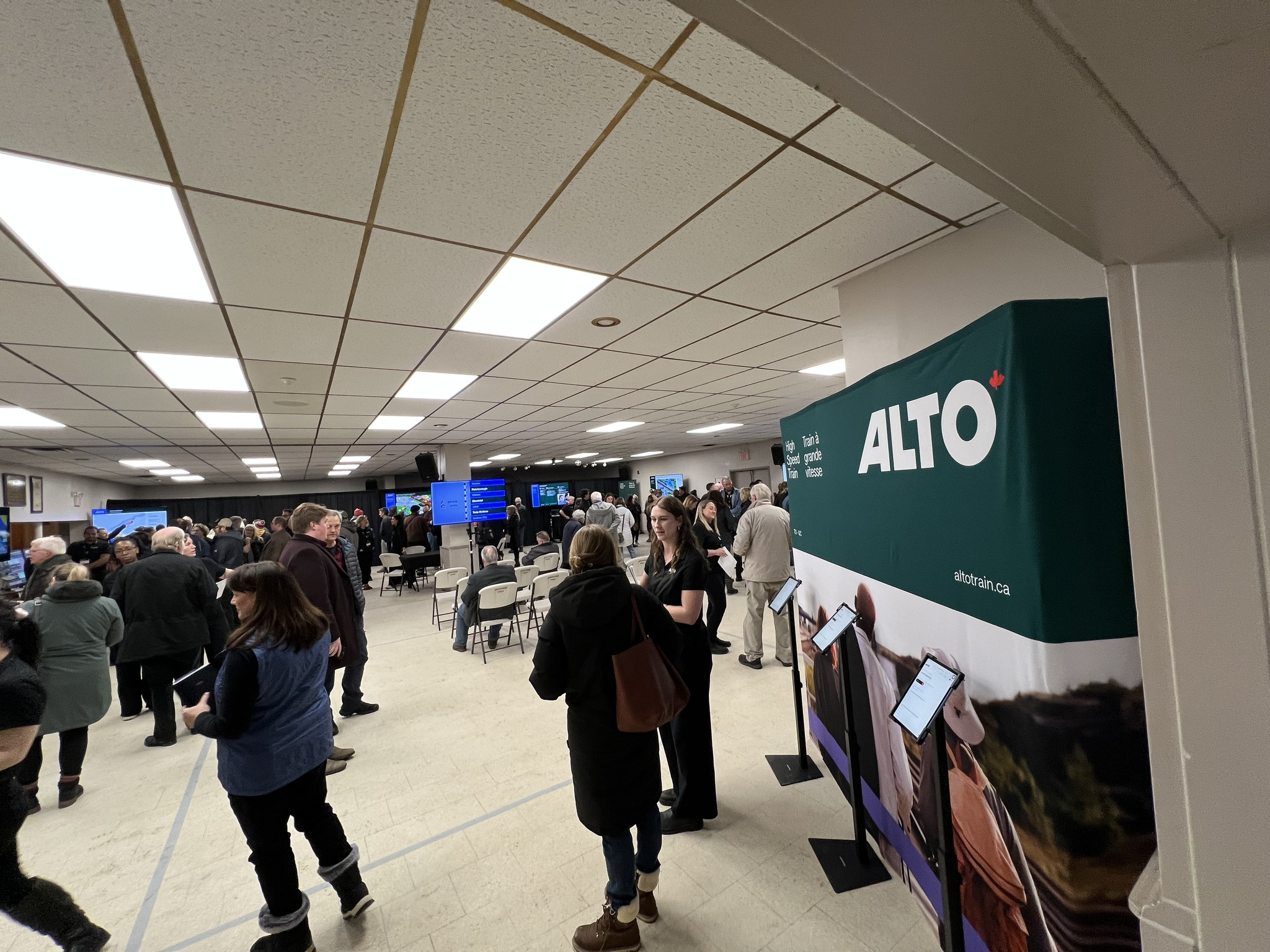
At the time of writing, information events are being held, petitions signed, even inventive “PIN pointing” opportunities so property owners can put their locations on the proposed route maps, and citizens are turning out to speak up—one event in Small-township Sunbury attracted 700-800 people over the course of the day, according to the spokesperson for Save South Frontenac.
To us, with yet another phase of the Independent Electricity System Operator (IESO) Long-Term 2 Request For Proposals looming in the months ahead, the High Speed Rail opposition may be a sign to any wind power developers out there cajoling landowners into signing up for 20-,40-, even 50-year leases: rural communities are sick of proposals for industrialization of natural environments and quiet communities, together with more lost farmland.
Out of possibly 20 proposals made last year for new wind power projects in Ontario, only ONE has proceeded to the submission stage. One hundred and fifty-nine Ontario municipalities are officially Unwilling Hosts to new windpower proposals.
Wind power is seen now as expensive, invasive, environmentally harmful, and erratic. It is not a cost-effective reliable source of electricity. Even the Ontario energy minister Stephen Lecce remarked in January (during a wind no-show in very cold weather) that, “You can’t run a full-time economy on part-time power.”
Recently, a community in Wales insisted on a cost-benefit analysis for a proposed wind power project. The result was that for five positive impacts (one of which was the vague “we need clean energy”), there were sixteen negative impacts. Council voted NO.
Ottawa’s urban-dominated City Council ignored the environmental concerns of West Carleton residents over a recent Battery Storage project, and approved it anyway. Battery storage is a new development, but the impacts of massive, noisy, industrial wind turbines will be easier to understand, and environmental damage clear for all to see.
The renewables lobby works through so-called “environmental” groups. Last fall, Ottawa “environmental” network CAFES leader told the Agricultural and Rural Affairs Committee (ARAC) that existing approvals, i.e., environmental and impact assessments were too onerous and expensive for power developers. As reported in local news media West Carleton Online, Angela Keller-Herzog advised getting rid of pesky approval requirements altogether and instead using “good neighbour” agreements for nearby residents. That is an inappropriate site-specific approach that purposely ignores the fact that industrial wind power projects affect the entire city. The noise and low frequency emissions alone, for example, can be detected as far as 5, even 10 kms away.
In short, the fairy tale is over. Rural communities are ready and willing to take on corporations to protect the environment, wildlife and the economy from unjustified industrialization.
 Ottawa Wind Concerns