
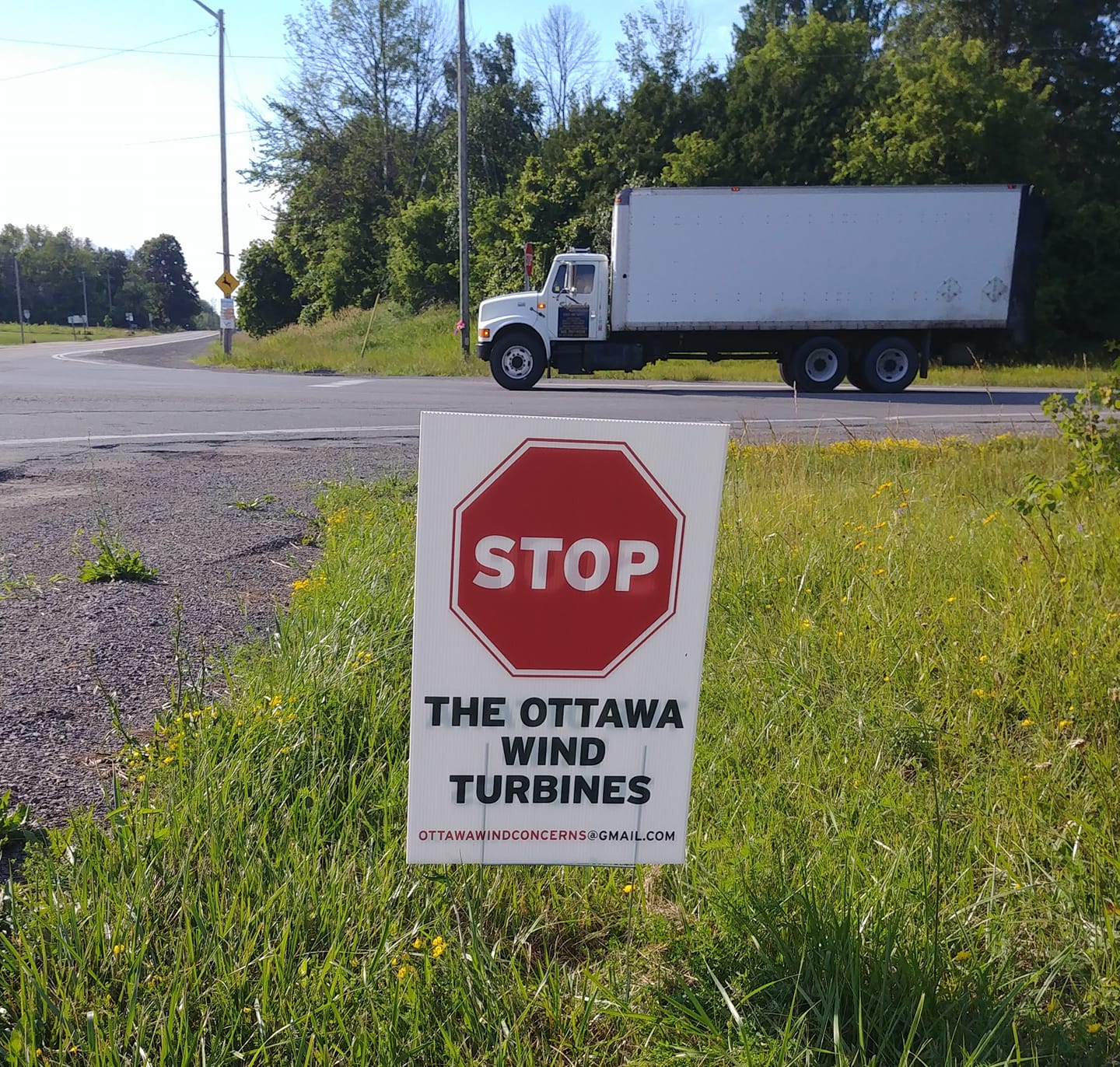
In the fall of 2020, while most people were worrying about COVID-19, a document called Energy Evolution was presented to, and accepted by, Ottawa City Council.
It is a $57-B plan to address climate change by retrofitting buildings, requiring vehicles to be electricity-powered, and for new renewable sources of power, to get to a goal of Net Zero emissions by 2050.
Council’s acceptance of the document means it is now City policy.
The staff-written document for ultimately, 3,200 megawatts of industrial-scale wind turbines. That translates to roughly 530 6-MW industrial wind turbines. The document is staff-written (except for the part about the 3,200 MW—that was written by activist Pollution Probe), and has few reputable references.
While municipal support is mandatory for any project proposal to proceed, there is pressure from so-called “environmental” groups to have few regulations and just process approvals as quickly as possible.
Our position is that the City is uninformed or being misled about wind power and its impacts; the City has no plans to conduct any sort of cost-benefit or impact analysis and has done no comprehensive review of the Ontario wind power program (a disaster).
No foundation for the plan
As well, many of the assumptions made in the Energy Evolution plan as regards electricity supply are either false, or now out of date. The authors refer only once to nuclear power and then only to say that Pickering Nuclear will end. That is not true now: Pickering will be refurbished and its life extended. New nuclear will be built in other locations in Ontario, including Bruce Power.
Former Ontario Energy Minister Todd Smith made clear in a far-reaching interview with Dr Chris Keefer in a Decouple podcast that Ontario’s goal is RELIABLE AFFORDABLE electricity …that’s not intermittent, weather-dependent wind power. Recently, Energy MInister Stephen Lecce confirmed: cost and reliability are critical. Relying on “renewables” does not guarantee a reliable power system.
Conflicting land use
Industrial-scale wind turbines are an industrial use of the land; their use should not be permitted on farmland and near rural communities. In 2023, Ottawa Wind Concerns recommended a 2-km setback between wind turbines and homes. The City contracted with wind power lobbyist member consulting firm Stantec to conduct a review of regulations for all types of renewable power projects: the conclusion of a draft memo we received in January 2026 is that current regulations are adequate and that not even site planning approval is needed.
Ottawa had a chance to be a leader in protecting citizens from any negative impacts of industrial wind power plants. It declined to accept this opportunity.
Read the (outdated but still policy) Energy Evolution document here. Pages of note re: industrial-scale wind power are 17 and 68.
Ottawawindconcerns@gmail.com
 Ottawa Wind Concerns