• About
  • Donate!
  • EVENTS
  • Ottawa’s “Energy Evolution”: wind turbines coming to rural communities
  • Thinking of signing a wind turbine lease?
  • Wind Concerns Ontario
  • Wind turbines: what you need to know

Ottawa Wind Concerns

~ A safe environment for everyone

Ottawa Wind Concerns

Category Archives: Renewable energy

SW Liberal ridings in trouble

21 Monday Apr 2014

Posted by Ottawa Wind Concerns in Renewable energy, Wind power

≈ 2 Comments

Tags

Chatham-Kent, Conservatives, job losses Ontario, Kathleen Wynne, Liberal government, Liberals, Ontario election 2014, Ontario Liberal government, rising electricity bills Ontario, wind farms, wind farms Ontario, wind power Ontario, wind turbines, Windsor Essex

Problem-plagued LIberals have lost support in 10 ridings in SW Ontario

April 20, 2014

Deborah Van Brenk

If the minority Liberal government can’t pass its budget next month, Ontario will be plunged into a widely expected spring election. Deb Van Brenk tested the early voter mood in the 10-riding London region, driving its Hwy. 401 backbone. Once almost solidly Liberal, the region now has only one Grit left standing. High power bills, the gas plants scandal, wind turbines — voters are chafing at many issues.

HOW THE REGION HAS VOTED

2011 (Liberal minority government):

Conservatives: 7

Liberals: 2 (MPP Chris Bentley later resigned in 2013)

NDP: 1 (gained Bentley’s London West seat in 2013 byelection)

2007 (Liberal majority)

Conservatives: 2

Liberals: 8

2003 (Liberal majority)

Conservatives: 1

Liberals: 9

Glen Ure says he doesn’t want wind turbines on his property, because of potential difficulties selling his farm near Chatham, not because he’s worried about any health issues as his farm is surrounded by the large structures. Mike Hensen/The London Free Press/QMI Agency

Where: Hwy 401 at Kent Bridge Rd. (Chatham-Kent-Essex riding)

Who: Farmer Glen Ure

From just this overpass, between the West Lorne and Chatham exits, 76 wind turbines are visible in the near and far horizon.

Some sprout just beyond the borders of Glen Ure’s farm, where he’s lived all his life and where his parents farmed before him.

Elsewhere in the region, others battle turbines out of health concerns but Ure rejected offers to be a wind landlord because he wasn’t satisfied with the wind companies’ answers to his many questions. Governments and energy companies control enough of his life and he’s not about to let them control his land, too.

Anyone looking for his vote will face a barrage of questions:

— Why have his power bills soared to $6,600 a year, even as he uses less electricity?

— Why spend more than $1 billion, as the Liberal government did, to relocate two gas plants because of city people’s concerns while ignoring rural issues?

— Why have taxes gone up without measurable benefit to him and his neighbours?

His biggest question? Why, in his 70 years of farming and then trucking and then farming and retirement, have governments promised the world but delivered less than dirt?

“An old farmer told me, when I was 10 years old, ‘politics is like pig farming. You get one person in, fatten him up and kick him out, get another one in, fatten them up and kick them out.’ You vote people in and think they’re going to do all right (but they don’t follow through).”

…

Read the full story and comments here.

Wind Concerns Ontario asks Ombudsman to look at wind power approval process

15 Tuesday Apr 2014

Posted by Ottawa Wind Concerns in Renewable energy, Wind power

≈ 1 Comment

Tags

Andre Marin, East Oxford Community Alliance, Green Energy Act, health effects wind farms, health effects wind turbines, James Bradley MInister of the Environment, leases wind turbines, North Gower wind farm, Not a Willing host, Ombudsman Ontario, Ontario Ministry of the Environment, Ottawa wind farm, Prowind, renewable power, Richmond wind farm, Wind Concerns Ontario, wind power, wind power approvals Ontario, wind power project, wind power projects, wind turbines

Wind Concerns Ontario has sent a letter to the Office of the Ombudsman of Ontario, asking that aspects of the approval process for wind power projects be looked at. The Ombudsman’s office has now had its role expanded to be able to look at issues of municipal concern, which may allow it to address the request of many municipalities throughout Ontario facing wind power developments and who are without any say in the siting of these projects. The Green Energy and Green Economy Act passed in 2009, over-rode 21 others Acts in Ontario, and removed local land use planning powers for Ontario municipalities with regard to renewable power projects. In the wake of municipal objections ever since, the Ontario government now says it will offer municipalities more “say” but still no veto.

That’s unacceptable says Wind Concerns Ontario, which refers to important issues:

  • documentation provided to the Ministry of the Environment is being “deemed complete” and then going to public comment; community groups performing audits on this documentation are finding, however, that the documents are often not complete and sometimes absent altogether—not acceptable
  • land leases are signed between the power developers and landowners, which means municipalities and residents can have no idea where turbines are going to be located until too late; this has the effect of halting real estate sales and “sterilizing” development
  • wind power developers (e.g., Samsung in Southgate) are now offering significant sums of money in return for municipal approval and other items such a building permits, road use, etc.
  • landowners are not being provided with the full range of information on the potential negative effects of having wind turbines on their properties

See the news release and link to the letter to the Ombudsman here.

In other news, the community near Woodstock Ontario, facing an 18-MW Prowind wind power project, has also filed a letter of complaint with the Ombudsman, citing deficiencies in documentation, and changes being made to documents AFTER the public comment period has closed. See the East Oxford Community Alliance story here. Prowind is the Germany-based developer that proposed a wind power project for the North Gower-Richmond area of Ottawa, which would have placed 10 turbines on local farm properties within 3 km of more than 1,000 families. The project is now on hold, waiting for the new large-scale renewable power procurement process to begin.

Email us at ottawawindconcerns@gmail.com

Economist: Ontario’s actions on electricity bills possibly illegal

12 Saturday Apr 2014

Posted by Ottawa Wind Concerns in Renewable energy, Wind power

≈ 3 Comments

Tags

Big Becky, Debt Retirement Charge, Dwight Duncan, electricity, Hydro One, Ontario, Ontario Electricity Act, Ontario electricity bills, Ontario government, Ontario Hydro, OPG, residual stranded debt Ontario, Robert Lyman

From Ottawa energy economist Robert Lyman:

THE $6.2 BILLION SLEIGHT-OF-HAND

 Parker Gallant is a retired banker who has done tremendous service to the people of Ontario by reporting publicly on the Ontario government’s mismanagement of the province’s electrical energy system. In an analysis he posted on April 11, 2014, Mr. Gallant applied his knowledge of financial management and accounting to reveal the damaging and possibly illegal actions of the Liberal government with respect to the Debt Retirement Charge included in the monthly electricity bills of Ontario residents. The analysis can be found online here:

http://ep.probeinternational.org/2014/04/11/parker-gallant-the-debt-retirement-charge-premier-wynnes-6-2-billion-revenue-tool-5/#more-12245

This note offers my explanation, in layperson’s terms, of what Mr. Gallant revealed.

Background

In 1998 the Ontario government launched a major restructuring of the province’s publicly-owned electricity industry. One aspect of this restructuring was the breakup of Ontario Hydro into five successor companies on April 1, 1999.

The Ontario Ministry of Finance determined that, on April 1, 1999, Ontario Hydro’s total debt and other liabilities stood at $38.1 billion, which greatly exceeded the estimated $17.2 billion market value of the assets being transferred to the new entities. The resulting shortfall of $20.9 billion was determined to be “stranded debt”, representing the total debt and other liabilities of Ontario Hydro that the Ministry judged could not be serviced in “a competitive electricity environment”. This total was subsequently reduced to $19.4 billion when it was adjusted for $1.5 billion of additional assets transferred to OEFC. Responsibility for servicing and managing the “legacy” debt of Ontario Hydro, which includes the stranded debt, was given to the Ontario Electricity Financial Corporation (OEFC), whose opening balance sheet reflected a stranded debt, or unfunded liability, of $19.4 billion. This was the difference between the $18.7 billion value of assets assumed by the OEFC and the $38.1 billion of Ontario Hydro legacy debt.

To retire the debt, the government established a long-term plan wherein the burden of debt repayment would be borne partly through dedicated revenues from the electricity sector companies – Ontario Power Generation (OPG), Hydro One, and Municipal Electrical Utilities – and partly by electricity consumers directly. (Bear in mind that all the revenues from the electricity sector companies come from electricity consumers, so electricity consumers pay all the costs, one way or the other.). The electricity companies would make “payments in lieu of taxes” to the OEFC (this is, in theory, the equivalent of corporate income taxes). It was projected that future revenues from OPG and Hydro One and municipal electricity distributors would generate $11.6 billion over the next eight to nine years.

To read the full article click here.THE $6.2 Billion Sleight-of-Hand

Email us at ottawawindconcerns@gmail.com

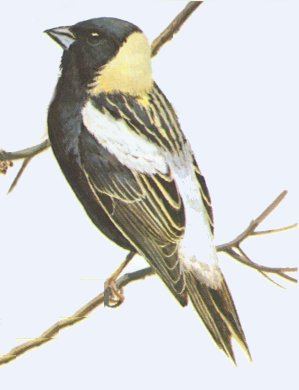
Have you seen this bird?

11 Friday Apr 2014

Posted by Ottawa Wind Concerns in Renewable energy, Wind power

≈ Leave a comment

Tags

Bobolink, endangered species Ontario, the Blackbird


bobolink (1)

The members of the Blackbird family–red-winged blackbirds and grackles–are returning to the Ottawa area. A lesser known member of the family is the Bobolink, which is endangered protected in Ontario.

If you see a Bobolink this spring, or at any time, please log the time, date and location you saw it—this may be needed at some point in future to audit wind power developers’ environmental assessments.


Economist: cancel the Feed In Tariff, Ontario

08 Tuesday Apr 2014

Posted by Ottawa Wind Concerns in Renewable energy, Wind power

≈ 1 Comment

Tags

Bob Chiarelli, cost wind power, Feed In Tariff program, FIT Ontario, Jack Mintz, Ontario finances, Ontario fiscal, wind farms Ontario

From today’s Financial Post, an opinion by economist Jack Mintz. Mintz holds the Palmer Chair in the School of Public Policy at the University of Calgary and is the former chair of the CD Howe Institute.

Canada’s sagging middle: Ontario
Ontario’s growth has lagged the rest of Canada, averaging less than 1% annually since 2009
With Quebec’s election over, we can turn to Ontario where a scandal-plagued Liberal government will soon present its 2014 budget – and possibly trigger a spring election. Ontario is sagging under the weight of monstrous public debt, uncompetitive energy prices and rising taxes. Given Ontario’s size, other regions of Canada are being hurt.
Ontario has only one way out: economic growth. Luckily, the American economic recovery will significantly benefit Ontario. However, it won’t be enough. The government needs to get its house in order.
Pushing aggregate demand with deficit spending won’t achieve growth. Economic stimulus might provide some short-term relief but won’t generate sustained expansion. Instead, growth will be attained with supply-side policies by reducing onerous regulations, providing some smart tax reforms and shifting to growth-oriented spending, especially to address the notorious Greater Toronto Area infrastructure problem.
Nor will growth come from expansionary public programs like the proposed Ontario pension plan. Forcing people to hold assets in a government-sponsored plan might be helpful to some but it will be just another form of new taxation for others, who are already have adequate savings for retirement.
Ontario’s growth has lagged the rest of Canada, averaging less than 1% annually since 2009. Employment since 2009 has increased by 375,000 but the employment rate has fallen to U.S.-levels of 61.4% as of March 2014, far less than Alberta’s at almost 70%.
Ontario‘s fiscal picture is also not pretty, with gross debt over $290-billion (net debt is $272-billion), requiring $10.6-billion in taxes to cover interest charges. This expense is enormous, about one-half of education expenditures.
The average Ontario debt interest rate is only 4% but interest rates are expected to rise within the next few years. Each point increase in interest rates will add at least another $3-billion in annual interest expense.
Ontario’s energy prices are soaring. Look at any bill and one can read added delivery charges, regulatory charges, debt retirement charges and HST, resulting in an average price of 12.48 cents per kwh in Toronto for households. Large power customers pay 10.89 cents per kwh in Toronto, less than New York but higher than most eastern U.S. and Canadian cities.
Ontario made real progress in 2009 by adopting the HST to replace the provincial sales tax and reducing Ontario’s corporate and personal taxes to ensure that revenues would not increase. However, the province reneged on tax cuts only two years later.
The Ontario corporate income tax rate is stuck at 11.5%, compared to the promised 2009 legislated rate of 10%. None of this helps the province’s poor investment climate. Ontario’s share of business capital spending is only 32% of Canadian investment, less than its share of population and dramatically less than a decade ago.
Personal income tax rates have also increased to almost 50% at the top end, third highest in Canada. There is a reason why many high-income taxpayers have moved Alberta with its top rate of 39%. Alberta’s rich households, with over $500,000 in family income, account for 15% of Alberta’s taxable personal income. This ratio is two-thirds higher than Ontario.
Add in Ontario sales taxes at a 13% rate (about the average Canadian rate), fuel taxes (Ontario’s at 14.7 cent per litre is one of the highest in the country) and property taxes (Ontario is on the high side especially for non-residential property) – it all adds up to a yoke on growth.
Ontario’s Minister of Finance is in a bind. He needs more growth but he also has to deal with a large debt mountain and an uncompetitive tax system. So what are his options? Here is a five-point plan.
First, focus spending on growth-oriented programs. Transportation infrastructure should be on the top of the list as GTA traffic results in unproductive use of time.
Second, kill off the feed-in tariff program for wind and solar that creates excessive electricity costs for households and companies. This would both improve growth and help reduce administrative costs….

Read the full article here.

Samsung project “dead” in Southgate

03 Thursday Apr 2014

Posted by Ottawa Wind Concerns in Health, Renewable energy, Wind power

≈ 4 Comments

Tags

Brian Milne, community opposition wind farms, Feed In Tariff, Not a Willing host, Samsung, Southgate, unwilling host, wind farms

Mayor says there were too many “issues” and not enough municipal control. Samsung’s proposed agreement demanded all building permits, access to roads and virtually everything they needed, in return for payments of $180,000 per year for the wind power project. Each of the 56 turbines would have netted Samsung $775,000 per year, under the government’s Feed In Tariff subsidy program.

The community held a meeting a few weeks ago, featuring a local Realtor who said property values in Southgate would disappear, and University of Guelph economics professor Ross McKitrick, who said wind power is expensive and ineffective as a reliable source of power.

Here is the news story.

News Centre

Samsung Project Dead

Thursday, April 3, 2014 8:28 AM by Jon Meyer

Southgate Council votes against the wind project with unwilling host status.

There is audio for this story.

MP3 - click to open click to open MP3 version

or click the play button to listen now.

(Southgate) – The large wind turbine project in Southgate has apparently been stopped.

Mayor Brian Milne says the Samsung, Pattern Energy project needed willing host status from the Township to move ahead.

At last night’s meeting, Milne says Council voted unanimously to stop the wind  project by declaring itself an unwilling host.

Milne says there was no way the township could resolve a number of issues it had with the project, without more control.

He says it was apparent the project would tear the community apart.

Samsung needed willing host status to move ahead with its 50 turbine, 120-megawatt wind farm proposal.

Milne applauds the Province for giving them that out clause, and the ability to say no.

But Milne wishes the Province gave them site plan control.

Instead, he says council had to say yes, with no conditions.

He says just three weeks ago Southgate was in the process of considering being a willing host.

But Milne says that was only if they could come to terms on a agreement on a number of issues — which included a good neighbour policy and issues around health and property values.

But Milne says they couldn’t come to those terms, and they had no choice but to stop the project.

The decision comes…

Read the full story here.

David Suzuki: turbines OK at my place (except I don’t really live there)

03 Thursday Apr 2014

Posted by Ottawa Wind Concerns in Renewable energy, Wind power

≈ 1 Comment

Tags

British Columbia coast, David Suzuki, dead birds wind farms, hydroelectric power, wind farms, wind farms bird kills, wind farms environmental damage, wind power

David Suzuki says he’s OK with wind farm near his cabin

David Suzuki: Supporting wind power makes sense

by David Suzuki on Apr 1, 2014 at 4:07 pm

I have a cabin on Quadra Island off the British Columbia coast that’s as close to my heart as you can imagine. From my porch you can see clear across the waters of Georgia Strait to the snowy peaks of the rugged Coast Mountains. It’s one of the most beautiful views I have seen. And I would gladly share it with a wind farm.

Sometimes it seems I’m in the minority. Across Europe and North America, environmentalists and others are locking horns with the wind industry over farm locations. In Canada, opposition to wind installations has sprung up from Nova Scotia to Ontario to Alberta to B.C. In the U.K., more than 100 national and local groups, led by some of the country’s most prominent environmentalists, have argued wind power is inefficient, destroys the ambience of the countryside and makes little difference to carbon emissions. And in the U.S., the Cape Wind Project, which would site 130 turbines off the coast of affluent Cape Cod, Massachusetts, has come under fire from famous liberals, including John Kerry and the late Sen. Edward Kennedy.
It’s time for some perspective. With the growing urgency of climate change, we can’t have it both ways. We can’t shout about the dangers of global warming and then turn around and shout even louder about the “dangers” of windmills. Climate change is one of the greatest challenges humanity will face this century. Confronting it will take a radical change in the way we produce and consume energy—another industrial revolution, this time for clean energy, conservation, and efficiency.
We’ve undergone such transformations before and we can again. But we must accept that all forms of energy have associated costs. Fossil fuels are limited in quantity, create vast amounts of pollution and contribute to climate change. Large-scale hydroelectric power floods valleys and destroys habitat. Nuclear power plants are expensive, create radioactive waste and take a long time to build.
Wind power also has its downsides. It’s highly visible and can kill birds. But any man-made structure (not to mention cars and house cats) can kill birds—houses, radio towers, skyscrapers. In Toronto alone, an estimated one million birds collide with the city’s buildings every year. In comparison, the risk to birds from well-sited wind farms is low. Even the U.K.’s Royal Society for the Protection of Birds says scientific evidence shows wind farms “have negligible impacts” on birds when they are appropriately located.
…

Read the full account here.

Hydro bill rally set for tomorrow

03 Thursday Apr 2014

Posted by Ottawa Wind Concerns in Renewable energy, Wind power

≈ 1 Comment

Tags

Bob Chiarelli, Carleton Land Owners, cost renewables, cost wind power, Energy Minister Bob Chiarelli, Ontario electricity bills, Ontario hydro bills

A number of people have organized a rally in front of Energy Minister Bob Chiarelli’s office at noon tomorrow, to protest Ontario’s rising electricity bills.

Despite the powerful wind power industry lobby group’s efforts to downplay the cost of renewables in Ontario’s electricity bills, the fact is that since Ontario launched its program to put wind and solar first to the grid, Ontario’s power prices to consumers is now the highest in North America. In fact, since wind and solar get preferential treatment, when supply exceeds demand, Ontario has been forced to waste power from other clean sources–hydro and nuclear–at great cost to the province.

See news story from Metro News on the Ottawa rally here. 

Note that there is also a rally planned for Carleton Place at 11 a.m.


We write to OFA rep Straathof

21 Friday Mar 2014

Posted by Ottawa Wind Concerns in Health, Renewable energy, Wind power

≈ 1 Comment

Tags

Debra pretty-Straathof, Green Energy Act, North Gower, OFA, Ontario Federation of Agriculture Executive Member Debra Pretty-Straathof, Ottawa wind concerns, wind farm and health, wind farm North Gower, wind farm Richmond, wind power, wind power Ontario, wind power project

We learned this week that Ontario Federation of Agriculture Executive Member Debra Pretty-Straathof made remarks that our community is “split” over the proposed wind power development.

Really.

So, Ottawa Wind Concerns wrote to Ms Straathof to correct her. Here is an excerpt of that letter.

It is possible you have not seen the news stories about this particular project, and in specific, the fact that the majority of voting age residents last year signed a legal petition which was then presented to and accepted by the City of Ottawa at Council; Council then went on to pass a resolution of support, and to demand that local land-use planning powers be returned to Ontario municipalities.

The petition was the result of a three-week long campaign, which began with a public meeting attended by 300 communities members; in the weeks that followed, dozens of community members gathered signatures on the legal document, and we held a final public event which again, attracted hundreds more residents. The signatures on the petition numbered more than 1,230—this was equal to the TOTAL NUMBER of residents [in North Gower] voting in the municipal election in 2010, according to our Councillor.

The event was reported on by the Ottawa Citizen, the CBC and CFRA, among other media outlets such as the local community papers.

It will also interest you to know that our MP Pierre Poilievre prepared his own petition back in 2012, gathered hundreds of signatures from North Gower residents, and then rose in the House of Commons to present it, and demand that the North Gower wind power project not be approved, or at least wait until the results of the Health Canada study are known.

Our community has been involved in the fight against this inappropriate wind power project for more than four years. Here’s why:

  • Ontario has a surplus of power generation and does not need this wind power project.
  • The project as proposed before the pause in procurement of large scale power projects, was to be a 20-megawatt facility with 8 wind turbines; the turbines would have been within 3 km of more than 1,000 homes—this is completely inappropriate siting.
  • According to property value research done in Ontario, the projected property value loss for the North Gower area would be $134 million. This would pose a hardship for residents, particularly young families and seniors, for whom their home is their prime investment.
  • Reports of health effects due to the environmental noise produced by these machines are mounting throughout Ontario, as you must know; if only 10 percent of North Gower residents were affected, that would still be hundreds of people, many of them children. As proposed, this project would have meant that some children would be exposed to the noise 24 hours a day.

Again, the message this community has given is clear and without argument: a wind power project so close to the village and area residents is not appropriate, not necessary, and not wanted.

Any opinions to the contrary are uninformed.

We have not had the courtesy of a response from the OFA rep as yet. OFA members may wish to write to her themselves and express concern at her lack of awareness on this important issue.

Email us at ottawawindconcerns@gmail.com

Documentary on wind power in Quebec

21 Friday Mar 2014

Posted by Ottawa Wind Concerns in Health, Renewable energy, Wind power

≈ 1 Comment

Tags

MP Pierre Poilievre, Parc eolier de l'erable, Pierre Poilievre, Quebec wind farms, turbine development, wind energy, wind farm noise and health, wind farms noise, wind power, wind power generation

MP Pierre Poilievre sent along this clip for us; it’s a documentary that aired last week on TVA, on the situation with wind power generation developments in Quebec.

It is in French, but here are some of the high points:

-the government noise regulations are that turbines cannot exceed 40 decibels; however, some have been measured at 55+

-“greed” is cited as a factor in the turbine development

-legal actions are ongoing, and citizens are requesting independent noise testing

The link to the documentary is here.


← Older posts
Newer posts →

Recent Posts

  • Pro-wind groups in Ottawa collaborate to “educate”
  • Thinking of signing for a wind turbine lease? Better get informed to protect yourself
  • High-Speed Rail opposition in Rural Eastern Ontario: a lesson for wind power developers
  • Land use conflict prompts citizen legal action over West Carleton battery storage site
  • Energy Minister Stephen Lecce speaks out on renewable power sources wind and solar; emphasizes cost, reliability

Follow me on Twitter

My Tweets

Enter your email address to follow this blog and receive notifications of new posts by email.

Tags

Bob Chiarelli Green Energy Act IESO Ontario Ottawa Ottawa wind concerns wind energy wind farm wind power wind turbines

Contact us

PO Box 3 North Gower ON K0A 2T0

Create a free website or blog at WordPress.com.

Privacy & Cookies: This site uses cookies. By continuing to use this website, you agree to their use.
To find out more, including how to control cookies, see here: Cookie Policy
  • Subscribe Subscribed
    • Ottawa Wind Concerns
    • Join 380 other subscribers
    • Already have a WordPress.com account? Log in now.
    • Ottawa Wind Concerns
    • Subscribe Subscribed
    • Sign up
    • Log in
    • Report this content
    • View site in Reader
    • Manage subscriptions
    • Collapse this bar
 

Loading Comments...